 Add to Chrome
 Add to Firefox
 Add to Edge
Prompt-Driven and Training-Free Forgetting Approach and Dataset for Large Language Models
Apr 17, 2025
The widespread adoption of diffusion models in image generation has increased the demand for privacy-compliant unlearning. However, due to the high-dimensional nature and complex feature representations of diffusion models, achieving selective unlearning remains challenging, as existing methods struggle to remove sensitive information while preserving the consistency of non-sensitive regions. To address this, we propose an Automatic Dataset Creation Framework based on prompt-based layered editing and training-free local feature removal, constructing the ForgetMe dataset and introducing the Entangled evaluation metric. The Entangled metric quantifies unlearning effectiveness by assessing the similarity and consistency between the target and background regions and supports both paired (Entangled-D) and unpaired (Entangled-S) image data, enabling unsupervised evaluation. The ForgetMe dataset encompasses a diverse set of real and synthetic scenarios, including CUB-200-2011 (Birds), Stanford-Dogs, ImageNet, and a synthetic cat dataset. We apply LoRA fine-tuning on Stable Diffusion to achieve selective unlearning on this dataset and validate the effectiveness of both the ForgetMe dataset and the Entangled metric, establishing them as benchmarks for selective unlearning. Our work provides a scalable and adaptable solution for advancing privacy-preserving generative AI.

A Diffusion-Based Framework for Terrain-Aware Remote Sensing Image Reconstruction
Apr 16, 2025Remote sensing imagery is essential for environmental monitoring, agricultural management, and disaster response. However, data loss due to cloud cover, sensor failures, or incomplete acquisition-especially in high-resolution and high-frequency tasks-severely limits satellite imagery's effectiveness. Traditional interpolation methods struggle with large missing areas and complex structures. Remote sensing imagery consists of multiple bands, each with distinct meanings, and ensuring consistency across bands is critical to avoid anomalies in the combined images. This paper proposes SatelliteMaker, a diffusion-based method that reconstructs missing data across varying levels of data loss while maintaining spatial, spectral, and temporal consistency. We also propose Digital Elevation Model (DEM) as a conditioning input and use tailored prompts to generate realistic images, making diffusion models applicable to quantitative remote sensing tasks. Additionally, we propose a VGG-Adapter module based on Distribution Loss, which reduces distribution discrepancy and ensures style consistency. Extensive experiments show that SatelliteMaker achieves state-of-the-art performance across multiple tasks.
Rainy: Unlocking Satellite Calibration for Deep Learning in Precipitation
Apr 15, 2025Precipitation plays a critical role in the Earth's hydrological cycle, directly affecting ecosystems, agriculture, and water resource management. Accurate precipitation estimation and prediction are crucial for understanding climate dynamics, disaster preparedness, and environmental monitoring. In recent years, artificial intelligence (AI) has gained increasing attention in quantitative remote sensing (QRS), enabling more advanced data analysis and improving precipitation estimation accuracy. Although traditional methods have been widely used for precipitation estimation, they face limitations due to the difficulty of data acquisition and the challenge of capturing complex feature relationships. Furthermore, the lack of standardized multi-source satellite datasets, and in most cases, the exclusive reliance on station data, significantly hinders the effective application of advanced AI models. To address these challenges, we propose the Rainy dataset, a multi-source spatio-temporal dataset that integrates pure satellite data with station data, and propose Taper Loss, designed to fill the gap in tasks where only in-situ data is available without area-wide support. The Rainy dataset supports five main tasks: (1) satellite calibration, (2) precipitation event prediction, (3) precipitation level prediction, (4) spatiotemporal prediction, and (5) precipitation downscaling. For each task, we selected benchmark models and evaluation metrics to provide valuable references for researchers. Using precipitation as an example, the Rainy dataset and Taper Loss demonstrate the seamless collaboration between QRS and computer vision, offering data support for AI for Science in the field of QRS and providing valuable insights for interdisciplinary collaboration and integration.
Automatic marker-free registration based on similar tetrahedras for single-tree point clouds
Nov 20, 2024

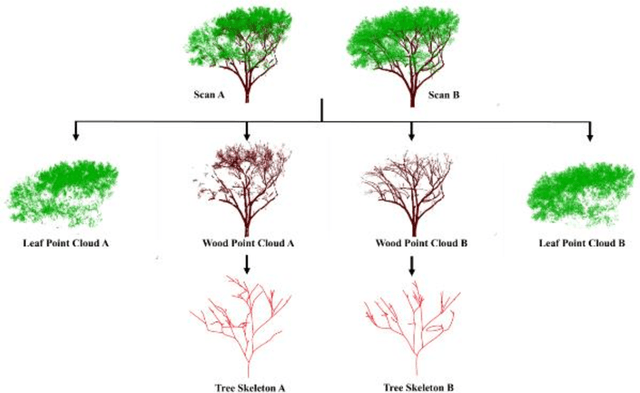

In recent years, terrestrial laser scanning technology has been widely used to collect tree point cloud data, aiding in measurements of diameter at breast height, biomass, and other forestry survey data. Since a single scan from terrestrial laser systems captures data from only one angle, multiple scans must be registered and fused to obtain complete tree point cloud data. This paper proposes a marker-free automatic registration method for single-tree point clouds based on similar tetrahedras. First, two point clouds from two scans of the same tree are used to generate tree skeletons, and key point sets are constructed from these skeletons. Tetrahedra are then filtered and matched according to similarity principles, with the vertices of these two matched tetrahedras selected as matching point pairs, thus completing the coarse registration of the point clouds from the two scans. Subsequently, the ICP method is applied to the coarse-registered leaf point clouds to obtain fine registration parameters, completing the precise registration of the two tree point clouds. Experiments were conducted using terrestrial laser scanning data from eight trees, each from different species and with varying shapes. The proposed method was evaluated using RMSE and Hausdorff distance, compared against the traditional ICP and NDT methods. The experimental results demonstrate that the proposed method significantly outperforms both ICP and NDT in registration accuracy, achieving speeds up to 593 times and 113 times faster than ICP and NDT, respectively. In summary, the proposed method shows good robustness in single-tree point cloud registration, with significant advantages in accuracy and speed compared to traditional ICP and NDT methods, indicating excellent application prospects in practical registration scenarios.
MTU-Bench: A Multi-granularity Tool-Use Benchmark for Large Language Models
Oct 15, 2024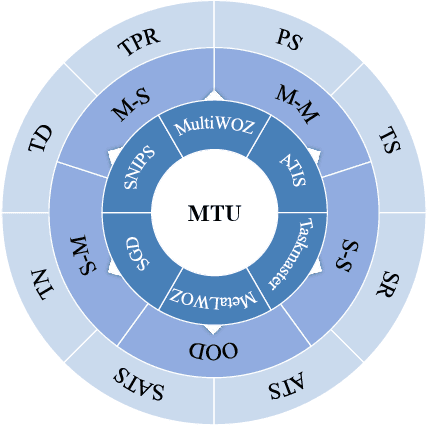
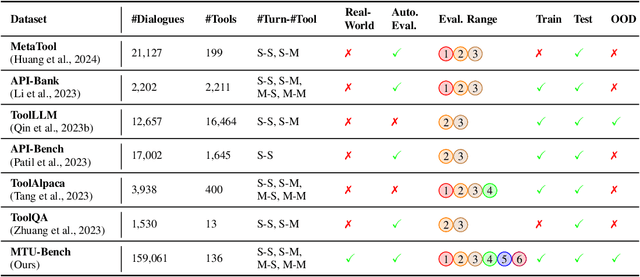

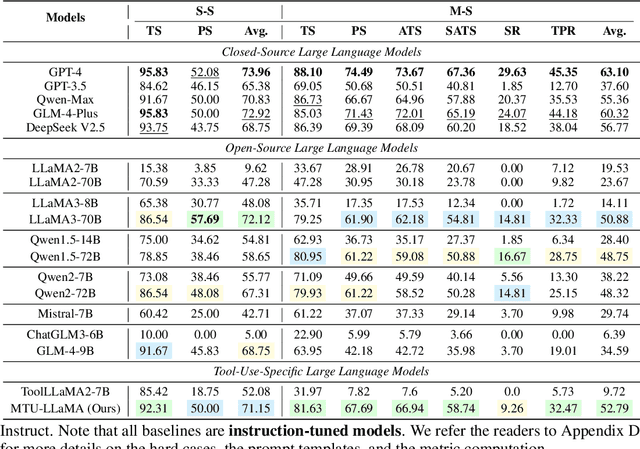
Large Language Models (LLMs) have displayed massive improvements in reasoning and decision-making skills and can hold natural conversations with users. Recently, many tool-use benchmark datasets have been proposed. However, existing datasets have the following limitations: (1). Insufficient evaluation scenarios (e.g., only cover limited tool-use scenes). (2). Extensive evaluation costs (e.g., GPT API costs). To address these limitations, in this work, we propose a multi-granularity tool-use benchmark for large language models called MTU-Bench. For the "multi-granularity" property, our MTU-Bench covers five tool usage scenes (i.e., single-turn and single-tool, single-turn and multiple-tool, multiple-turn and single-tool, multiple-turn and multiple-tool, and out-of-distribution tasks). Besides, all evaluation metrics of our MTU-Bench are based on the prediction results and the ground truth without using any GPT or human evaluation metrics. Moreover, our MTU-Bench is collected by transforming existing high-quality datasets to simulate real-world tool usage scenarios, and we also propose an instruction dataset called MTU-Instruct data to enhance the tool-use abilities of existing LLMs. Comprehensive experimental results demonstrate the effectiveness of our MTU-Bench. Code and data will be released at https: //github.com/MTU-Bench-Team/MTU-Bench.git.
Data-free Distillation with Degradation-prompt Diffusion for Multi-weather Image Restoration
Sep 05, 2024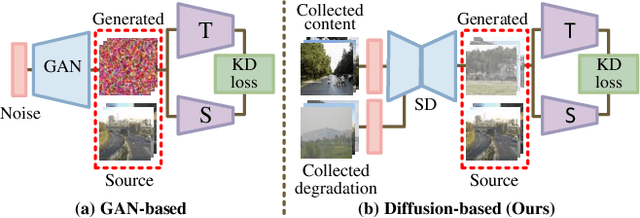


Multi-weather image restoration has witnessed incredible progress, while the increasing model capacity and expensive data acquisition impair its applications in memory-limited devices. Data-free distillation provides an alternative for allowing to learn a lightweight student model from a pre-trained teacher model without relying on the original training data. The existing data-free learning methods mainly optimize the models with the pseudo data generated by GANs or the real data collected from the Internet. However, they inevitably suffer from the problems of unstable training or domain shifts with the original data. In this paper, we propose a novel Data-free Distillation with Degradation-prompt Diffusion framework for multi-weather Image Restoration (D4IR). It replaces GANs with pre-trained diffusion models to avoid model collapse and incorporates a degradation-aware prompt adapter to facilitate content-driven conditional diffusion for generating domain-related images. Specifically, a contrast-based degradation prompt adapter is firstly designed to capture degradation-aware prompts from web-collected degraded images. Then, the collected unpaired clean images are perturbed to latent features of stable diffusion, and conditioned with the degradation-aware prompts to synthesize new domain-related degraded images for knowledge distillation. Experiments illustrate that our proposal achieves comparable performance to the model distilled with original training data, and is even superior to other mainstream unsupervised methods.
Impact of ChatGPT on the writing style of condensed matter physicists
Aug 30, 2024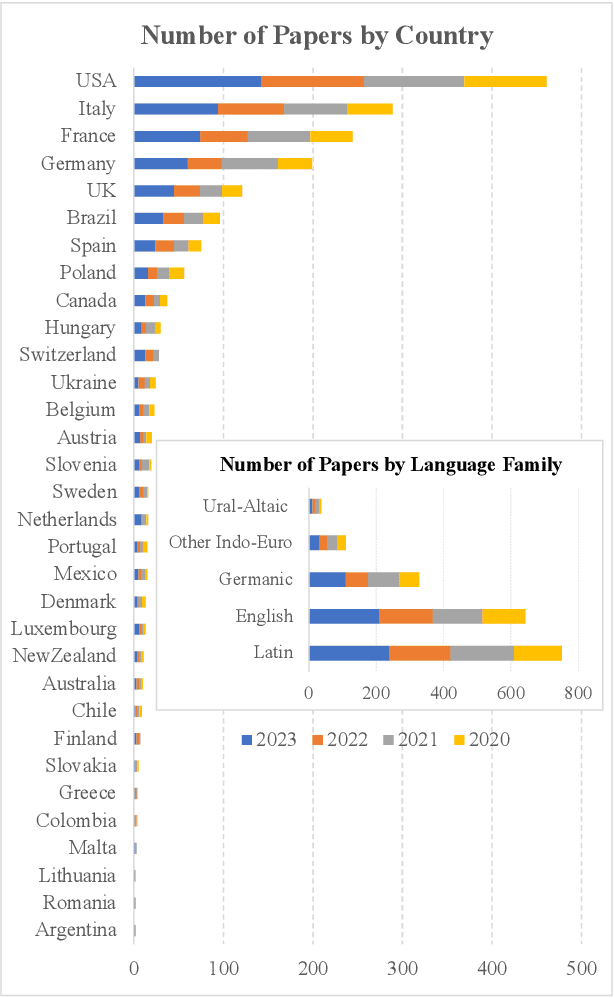
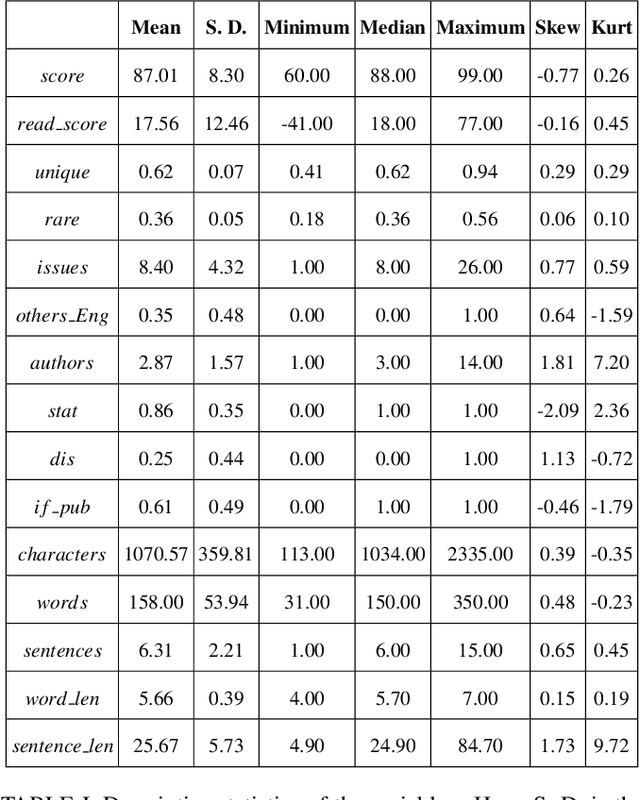
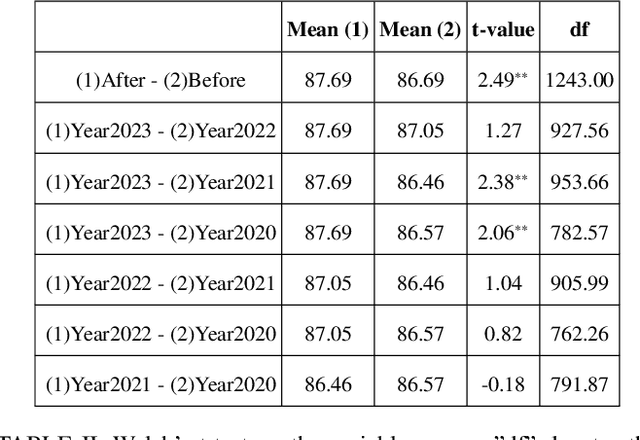
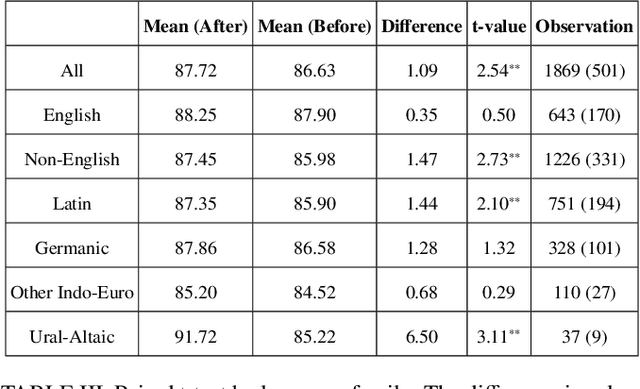
We apply a state-of-the-art difference-in-differences approach to estimate the impact of ChatGPT's release on the writing style of condensed matter papers on arXiv. Our analysis reveals a statistically significant improvement in the English quality of abstracts written by non-native English speakers. Importantly, this improvement remains robust even after accounting for other potential factors, confirming that it can be attributed to the release of ChatGPT. This indicates widespread adoption of the tool. Following the release of ChatGPT, there is a significant increase in the use of unique words, while the frequency of rare words decreases. Across language families, the changes in writing style are significant for authors from the Latin and Ural-Altaic groups, but not for those from the Germanic or other Indo-European groups.
WLC-Net: a robust and fast deep-learning wood-leaf classification method
May 29, 2024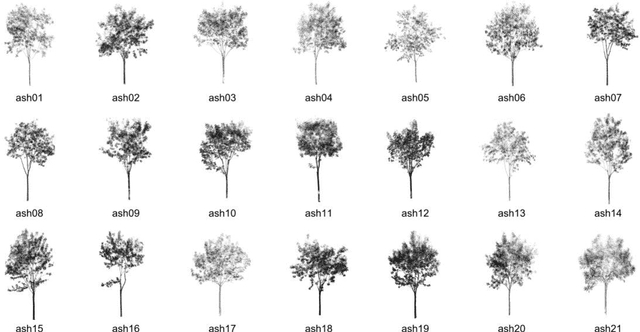
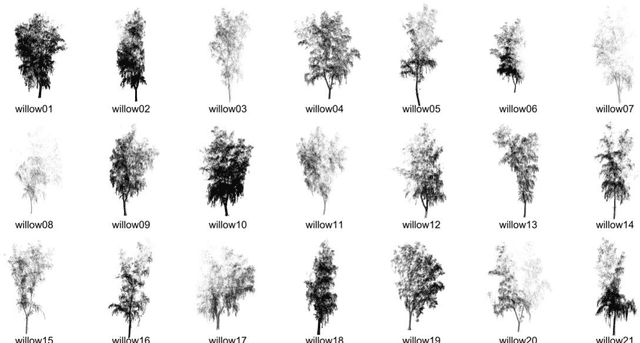
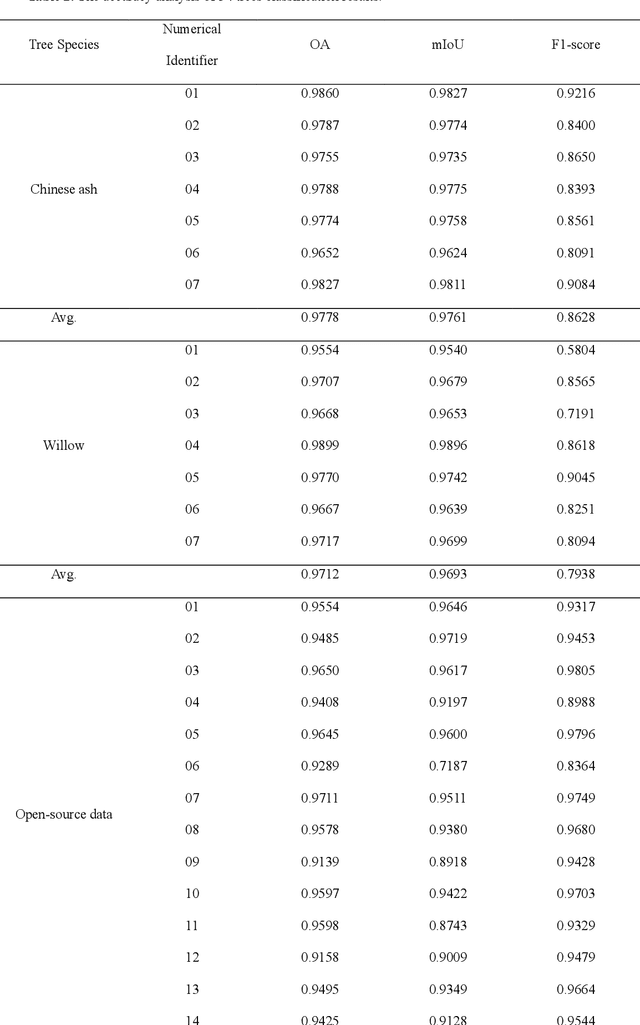
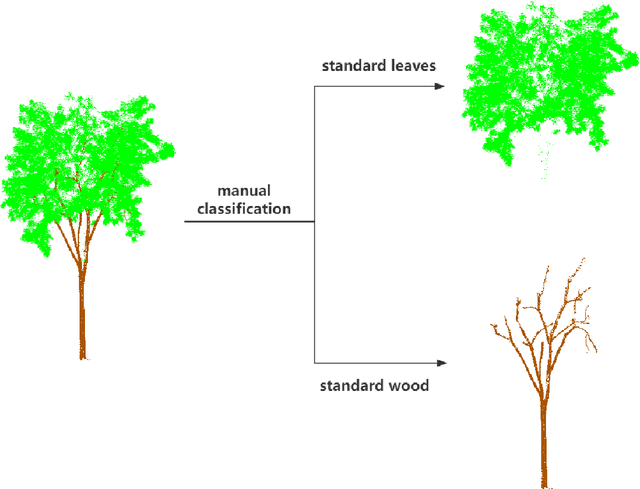
Wood-leaf classification is an essential and fundamental prerequisite in the analysis and estimation of forest attributes from terrestrial laser scanning (TLS) point clouds,including critical measurements such as diameter at breast height(DBH),above-ground biomass(AGB),wood volume.To address this,we introduce the Wood-Leaf Classification Network(WLC-Net),a deep learning model derived from PointNet++,designed to differentiate between wood and leaf points within tree point clouds.WLC-Net enhances classification accuracy,completeness,and speed by incorporating linearity as an inherent feature,refining the input-output framework,and optimizing the centroid sampling technique.WLC-Net was trained and assessed using three distinct tree species datasets,comprising a total of 102 individual tree point clouds:21 Chinese ash trees,21 willow trees,and 60 tropical trees.For comparative evaluation,five alternative methods,including PointNet++,DGCNN,Krishna Moorthy's method,LeWoS, and Sun's method,were also applied to these datasets.The classification accuracy of all six methods was quantified using three metrics:overall accuracy(OA),mean Intersection over Union(mIoU),and F1-score.Across all three datasets,WLC-Net demonstrated superior performance, achieving OA scores of 0.9778, 0.9712, and 0.9508;mIoU scores of 0.9761, 0.9693,and 0.9141;and F1-scores of 0.8628, 0.7938,and 0.9019,respectively.The time costs of WLC-Net were also recorded to evaluate the efficiency.The average processing time was 102.74s per million points for WLC-Net.In terms of visual inspect,accuracy evaluation and efficiency evaluation,the results suggest that WLC-Net presents a promising approach for wood-leaf classification,distinguished by its high accuracy. In addition,WLC-Net also exhibits strong applicability across various tree point clouds and holds promise for further optimization.
"Pass the butter": A study on desktop-classic multitasking robotic arm based on advanced YOLOv7 and BERT
May 27, 2024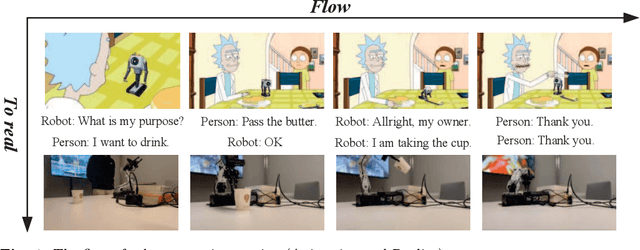
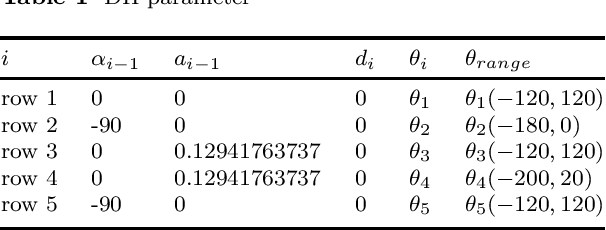
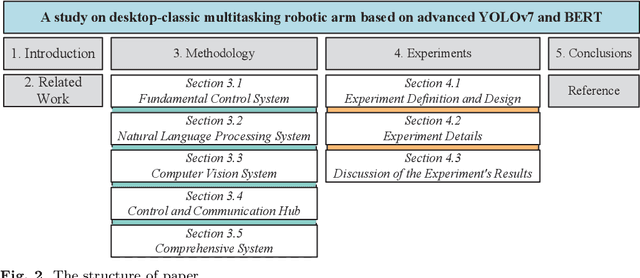
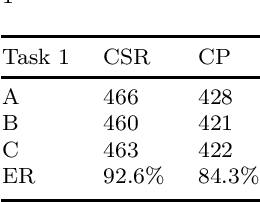
In recent years, various intelligent autonomous robots have begun to appear in daily life and production. Desktop-level robots are characterized by their flexible deployment, rapid response, and suitability for light workload environments. In order to meet the current societal demand for service robot technology, this study proposes using a miniaturized desktop-level robot (by ROS) as a carrier, locally deploying a natural language model (NLP-BERT), and integrating visual recognition (CV-YOLO) and speech recognition technology (ASR-Whisper) as inputs to achieve autonomous decision-making and rational action by the desktop robot. Three comprehensive experiments were designed to validate the robotic arm, and the results demonstrate excellent performance using this approach across all three experiments. In Task 1, the execution rates for speech recognition and action performance were 92.6% and 84.3%, respectively. In Task 2, the highest execution rates under the given conditions reached 92.1% and 84.6%, while in Task 3, the highest execution rates were 95.2% and 80.8%, respectively. Therefore, it can be concluded that the proposed solution integrating ASR, NLP, and other technologies on edge devices is feasible and provides a technical and engineering foundation for realizing multimodal desktop-level robots.
Mixed-Query Transformer: A Unified Image Segmentation Architecture
Apr 06, 2024


Existing unified image segmentation models either employ a unified architecture across multiple tasks but use separate weights tailored to each dataset, or apply a single set of weights to multiple datasets but are limited to a single task. In this paper, we introduce the Mixed-Query Transformer (MQ-Former), a unified architecture for multi-task and multi-dataset image segmentation using a single set of weights. To enable this, we propose a mixed query strategy, which can effectively and dynamically accommodate different types of objects without heuristic designs. In addition, the unified architecture allows us to use data augmentation with synthetic masks and captions to further improve model generalization. Experiments demonstrate that MQ-Former can not only effectively handle multiple segmentation datasets and tasks compared to specialized state-of-the-art models with competitive performance, but also generalize better to open-set segmentation tasks, evidenced by over 7 points higher performance than the prior art on the open-vocabulary SeginW benchmark.