 Add to Chrome
 Add to Firefox
 Add to Edge
Hourglass Tokenizer for Efficient Transformer-Based 3D Human Pose Estimation
Nov 20, 2023
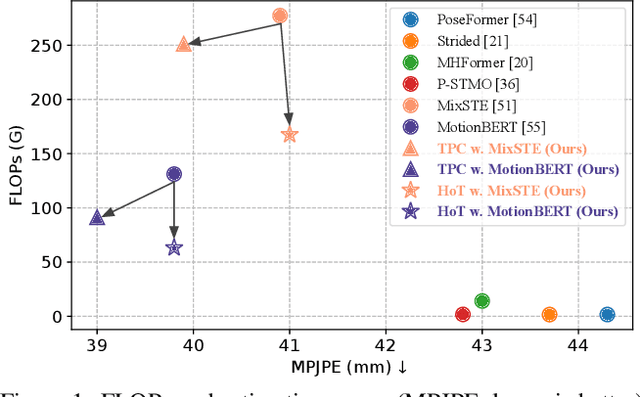
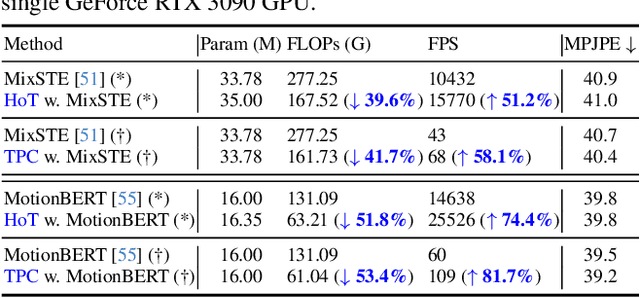
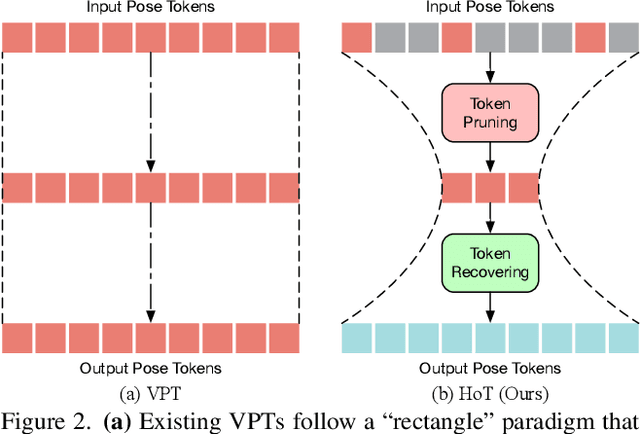
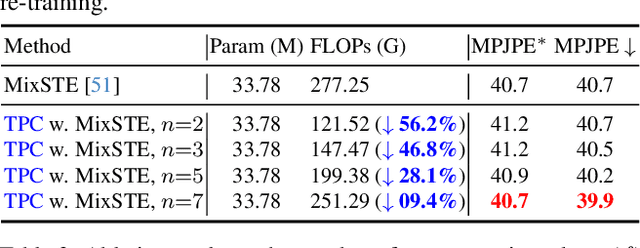
Transformers have been successfully applied in the field of video-based 3D human pose estimation. However, the high computational costs of these video pose transformers (VPTs) make them impractical on resource-constrained devices. In this paper, we present a plug-and-play pruning-and-recovering framework, called Hourglass Tokenizer (HoT), for efficient transformer-based 3D human pose estimation from videos. Our HoT begins with pruning pose tokens of redundant frames and ends with recovering full-length tokens, resulting in a few pose tokens in the intermediate transformer blocks and thus improving the model efficiency. To effectively achieve this, we propose a token pruning cluster (TPC) that dynamically selects a few representative tokens with high semantic diversity while eliminating the redundancy of video frames. In addition, we develop a token recovering attention (TRA) to restore the detailed spatio-temporal information based on the selected tokens, thereby expanding the network output to the original full-length temporal resolution for fast inference. Extensive experiments on two benchmark datasets (i.e., Human3.6M and MPI-INF-3DHP) demonstrate that our method can achieve both high efficiency and estimation accuracy compared to the original VPT models. For instance, applying to MotionBERT and MixSTE on Human3.6M, our HoT can save nearly 50% FLOPs without sacrificing accuracy and nearly 40% FLOPs with only 0.2% accuracy drop, respectively. Our source code will be open-sourced.

Improving Fairness using Vision-Language Driven Image Augmentation
Nov 02, 2023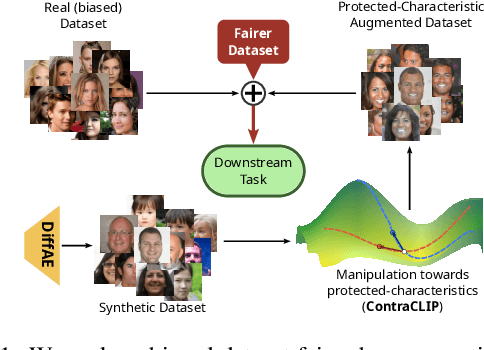
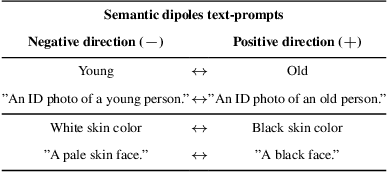
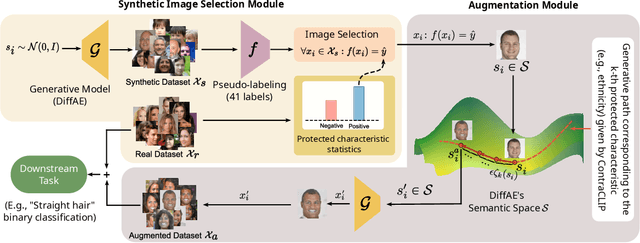
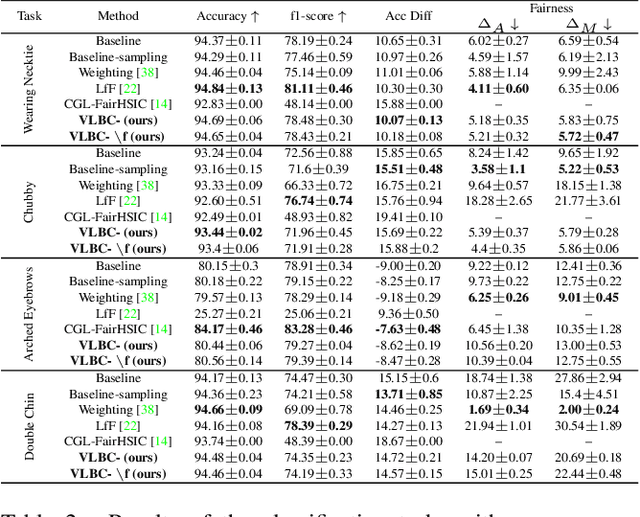
Fairness is crucial when training a deep-learning discriminative model, especially in the facial domain. Models tend to correlate specific characteristics (such as age and skin color) with unrelated attributes (downstream tasks), resulting in biases which do not correspond to reality. It is common knowledge that these correlations are present in the data and are then transferred to the models during training. This paper proposes a method to mitigate these correlations to improve fairness. To do so, we learn interpretable and meaningful paths lying in the semantic space of a pre-trained diffusion model (DiffAE) -- such paths being supervised by contrastive text dipoles. That is, we learn to edit protected characteristics (age and skin color). These paths are then applied to augment images to improve the fairness of a given dataset. We test the proposed method on CelebA-HQ and UTKFace on several downstream tasks with age and skin color as protected characteristics. As a proxy for fairness, we compute the difference in accuracy with respect to the protected characteristics. Quantitative results show how the augmented images help the model improve the overall accuracy, the aforementioned metric, and the disparity of equal opportunity. Code is available at: https://github.com/Moreno98/Vision-Language-Bias-Control.
CNNs for JPEGs: A Study in Computational Cost
Sep 22, 2023Convolutional neural networks (CNNs) have achieved astonishing advances over the past decade, defining state-of-the-art in several computer vision tasks. CNNs are capable of learning robust representations of the data directly from the RGB pixels. However, most image data are usually available in compressed format, from which the JPEG is the most widely used due to transmission and storage purposes demanding a preliminary decoding process that have a high computational load and memory usage. For this reason, deep learning methods capable of learning directly from the compressed domain have been gaining attention in recent years. Those methods usually extract a frequency domain representation of the image, like DCT, by a partial decoding, and then make adaptation to typical CNNs architectures to work with them. One limitation of these current works is that, in order to accommodate the frequency domain data, the modifications made to the original model increase significantly their amount of parameters and computational complexity. On one hand, the methods have faster preprocessing, since the cost of fully decoding the images is avoided, but on the other hand, the cost of passing the images though the model is increased, mitigating the possible upside of accelerating the method. In this paper, we propose a further study of the computational cost of deep models designed for the frequency domain, evaluating the cost of decoding and passing the images through the network. We also propose handcrafted and data-driven techniques for reducing the computational complexity and the number of parameters for these models in order to keep them similar to their RGB baselines, leading to efficient models with a better trade off between computational cost and accuracy.
Flow Factorized Representation Learning
Sep 22, 2023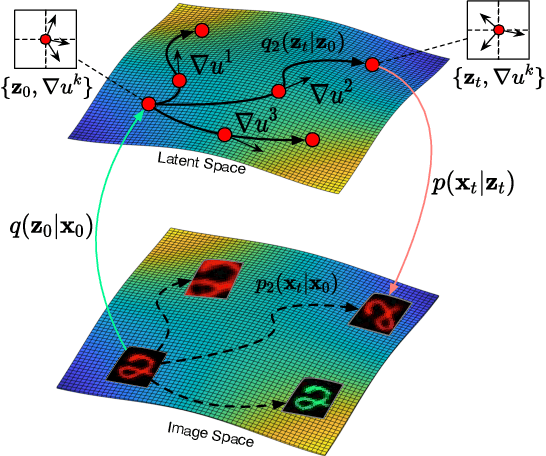
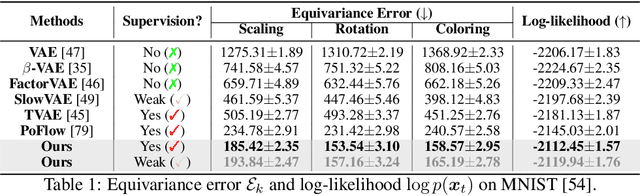
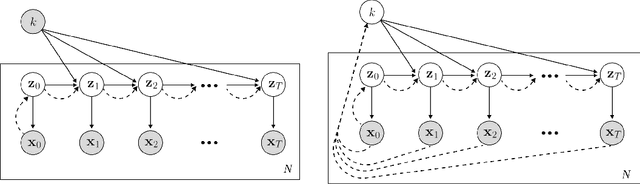
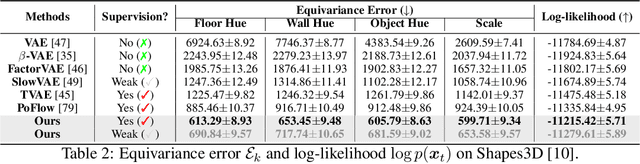
A prominent goal of representation learning research is to achieve representations which are factorized in a useful manner with respect to the ground truth factors of variation. The fields of disentangled and equivariant representation learning have approached this ideal from a range of complimentary perspectives; however, to date, most approaches have proven to either be ill-specified or insufficiently flexible to effectively separate all realistic factors of interest in a learned latent space. In this work, we propose an alternative viewpoint on such structured representation learning which we call Flow Factorized Representation Learning, and demonstrate it to learn both more efficient and more usefully structured representations than existing frameworks. Specifically, we introduce a generative model which specifies a distinct set of latent probability paths that define different input transformations. Each latent flow is generated by the gradient field of a learned potential following dynamic optimal transport. Our novel setup brings new understandings to both \textit{disentanglement} and \textit{equivariance}. We show that our model achieves higher likelihoods on standard representation learning benchmarks while simultaneously being closer to approximately equivariant models. Furthermore, we demonstrate that the transformations learned by our model are flexibly composable and can also extrapolate to new data, implying a degree of robustness and generalizability approaching the ultimate goal of usefully factorized representation learning.
Budget-Aware Pruning: Handling Multiple Domains with Less Parameters
Sep 20, 2023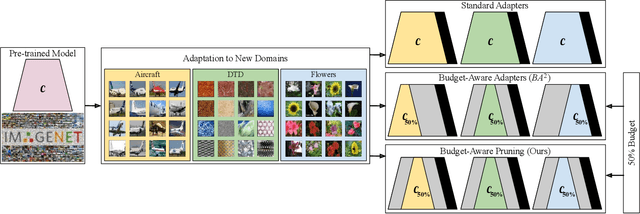

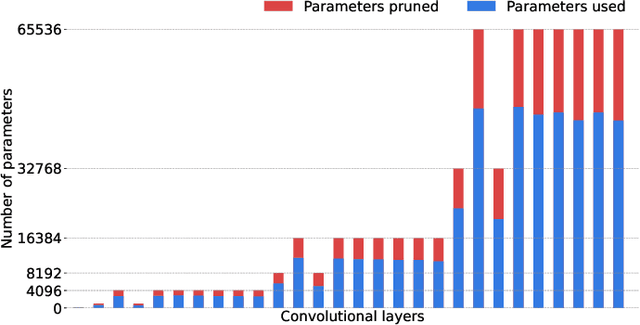

Deep learning has achieved state-of-the-art performance on several computer vision tasks and domains. Nevertheless, it still has a high computational cost and demands a significant amount of parameters. Such requirements hinder the use in resource-limited environments and demand both software and hardware optimization. Another limitation is that deep models are usually specialized into a single domain or task, requiring them to learn and store new parameters for each new one. Multi-Domain Learning (MDL) attempts to solve this problem by learning a single model that is capable of performing well in multiple domains. Nevertheless, the models are usually larger than the baseline for a single domain. This work tackles both of these problems: our objective is to prune models capable of handling multiple domains according to a user-defined budget, making them more computationally affordable while keeping a similar classification performance. We achieve this by encouraging all domains to use a similar subset of filters from the baseline model, up to the amount defined by the user's budget. Then, filters that are not used by any domain are pruned from the network. The proposed approach innovates by better adapting to resource-limited devices while, to our knowledge, being the only work that handles multiple domains at test time with fewer parameters and lower computational complexity than the baseline model for a single domain.
Tightening Classification Boundaries in Open Set Domain Adaptation through Unknown Exploitation
Sep 16, 2023Convolutional Neural Networks (CNNs) have brought revolutionary advances to many research areas due to their capacity of learning from raw data. However, when those methods are applied to non-controllable environments, many different factors can degrade the model's expected performance, such as unlabeled datasets with different levels of domain shift and category shift. Particularly, when both issues occur at the same time, we tackle this challenging setup as Open Set Domain Adaptation (OSDA) problem. In general, existing OSDA approaches focus their efforts only on aligning known classes or, if they already extract possible negative instances, use them as a new category learned with supervision during the course of training. We propose a novel way to improve OSDA approaches by extracting a high-confidence set of unknown instances and using it as a hard constraint to tighten the classification boundaries of OSDA methods. Especially, we adopt a new loss constraint evaluated in three different means, (1) directly with the pristine negative instances; (2) with randomly transformed negatives using data augmentation techniques; and (3) with synthetically generated negatives containing adversarial features. We assessed all approaches in an extensive set of experiments based on OVANet, where we could observe consistent improvements for two public benchmarks, the Office-31 and Office-Home datasets, yielding absolute gains of up to 1.3% for both Accuracy and H-Score on Office-31 and 5.8% for Accuracy and 4.7% for H-Score on Office-Home.
Turn Fake into Real: Adversarial Head Turn Attacks Against Deepfake Detection
Sep 03, 2023Malicious use of deepfakes leads to serious public concerns and reduces people's trust in digital media. Although effective deepfake detectors have been proposed, they are substantially vulnerable to adversarial attacks. To evaluate the detector's robustness, recent studies have explored various attacks. However, all existing attacks are limited to 2D image perturbations, which are hard to translate into real-world facial changes. In this paper, we propose adversarial head turn (AdvHeat), the first attempt at 3D adversarial face views against deepfake detectors, based on face view synthesis from a single-view fake image. Extensive experiments validate the vulnerability of various detectors to AdvHeat in realistic, black-box scenarios. For example, AdvHeat based on a simple random search yields a high attack success rate of 96.8% with 360 searching steps. When additional query access is allowed, we can further reduce the step budget to 50. Additional analyses demonstrate that AdvHeat is better than conventional attacks on both the cross-detector transferability and robustness to defenses. The adversarial images generated by AdvHeat are also shown to have natural looks. Our code, including that for generating a multi-view dataset consisting of 360 synthetic views for each of 1000 IDs from FaceForensics++, is available at https://github.com/twowwj/AdvHeaT.
Compositional Semantic Mix for Domain Adaptation in Point Cloud Segmentation
Aug 29, 2023

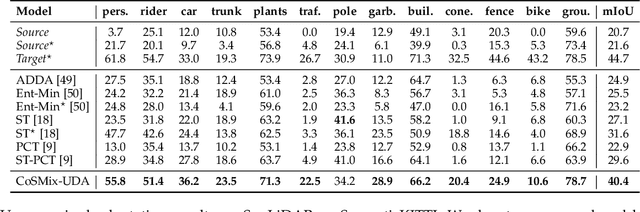

Deep-learning models for 3D point cloud semantic segmentation exhibit limited generalization capabilities when trained and tested on data captured with different sensors or in varying environments due to domain shift. Domain adaptation methods can be employed to mitigate this domain shift, for instance, by simulating sensor noise, developing domain-agnostic generators, or training point cloud completion networks. Often, these methods are tailored for range view maps or necessitate multi-modal input. In contrast, domain adaptation in the image domain can be executed through sample mixing, which emphasizes input data manipulation rather than employing distinct adaptation modules. In this study, we introduce compositional semantic mixing for point cloud domain adaptation, representing the first unsupervised domain adaptation technique for point cloud segmentation based on semantic and geometric sample mixing. We present a two-branch symmetric network architecture capable of concurrently processing point clouds from a source domain (e.g. synthetic) and point clouds from a target domain (e.g. real-world). Each branch operates within one domain by integrating selected data fragments from the other domain and utilizing semantic information derived from source labels and target (pseudo) labels. Additionally, our method can leverage a limited number of human point-level annotations (semi-supervised) to further enhance performance. We assess our approach in both synthetic-to-real and real-to-real scenarios using LiDAR datasets and demonstrate that it significantly outperforms state-of-the-art methods in both unsupervised and semi-supervised settings.
Interactive Neural Painting
Jul 31, 2023
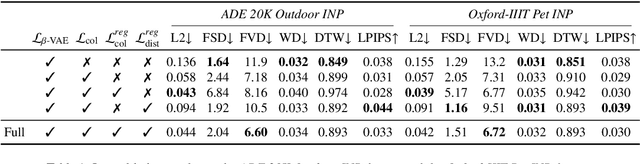

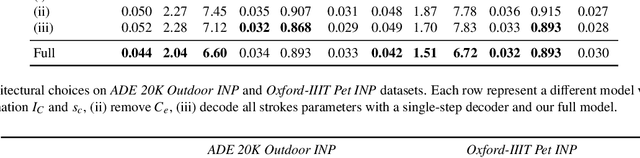
In the last few years, Neural Painting (NP) techniques became capable of producing extremely realistic artworks. This paper advances the state of the art in this emerging research domain by proposing the first approach for Interactive NP. Considering a setting where a user looks at a scene and tries to reproduce it on a painting, our objective is to develop a computational framework to assist the users creativity by suggesting the next strokes to paint, that can be possibly used to complete the artwork. To accomplish such a task, we propose I-Paint, a novel method based on a conditional transformer Variational AutoEncoder (VAE) architecture with a two-stage decoder. To evaluate the proposed approach and stimulate research in this area, we also introduce two novel datasets. Our experiments show that our approach provides good stroke suggestions and compares favorably to the state of the art. Additional details, code and examples are available at https://helia95.github.io/inp-website.
Edge Guided GANs with Multi-Scale Contrastive Learning for Semantic Image Synthesis
Jul 22, 2023We propose a novel ECGAN for the challenging semantic image synthesis task. Although considerable improvements have been achieved by the community in the recent period, the quality of synthesized images is far from satisfactory due to three largely unresolved challenges. 1) The semantic labels do not provide detailed structural information, making it challenging to synthesize local details and structures; 2) The widely adopted CNN operations such as convolution, down-sampling, and normalization usually cause spatial resolution loss and thus cannot fully preserve the original semantic information, leading to semantically inconsistent results (e.g., missing small objects); 3) Existing semantic image synthesis methods focus on modeling 'local' semantic information from a single input semantic layout. However, they ignore 'global' semantic information of multiple input semantic layouts, i.e., semantic cross-relations between pixels across different input layouts. To tackle 1), we propose to use the edge as an intermediate representation which is further adopted to guide image generation via a proposed attention guided edge transfer module. To tackle 2), we design an effective module to selectively highlight class-dependent feature maps according to the original semantic layout to preserve the semantic information. To tackle 3), inspired by current methods in contrastive learning, we propose a novel contrastive learning method, which aims to enforce pixel embeddings belonging to the same semantic class to generate more similar image content than those from different classes. We further propose a novel multi-scale contrastive learning method that aims to push same-class features from different scales closer together being able to capture more semantic relations by explicitly exploring the structures of labeled pixels from multiple input semantic layouts from different scales.