 Add to Chrome
 Add to Firefox
 Add to Edge
JEPA for AI-Native 6G: Predictive Representations and Open Challenges
Jul 09, 2026
Sixth-generation (6G) networks are moving toward AI-native operation, where learning modules are embedded across the radio access network (RAN), edge, and core. This transition requires learning from limited labels, heterogeneous wireless and network data, partial observations, non-stationary propagation, and latency-constrained control loops. Joint-embedding predictive architecture (JEPA) is a promising self-supervised paradigm for this setting because it predicts missing or future representations in latent space instead of reconstructing raw measurements or using contrastive negative samples. This article presents a wireless-oriented tutorial on JEPA for 6G intelligence. We define the JEPA training mechanism, describe how CSI, beam measurements, KPIs, topology graphs, and sensing observations can be tokenized and masked, and position the learned encoder as a predictive representation layer for RAN, O-RAN, edge, and core functions, with task-specific heads or controllers producing final decisions. Then we present an illustrative, beam-management case study suggesting that a wireless-aware target, specifically an auxiliary future beam-energy target during self-supervised pretraining, can improve label efficiency and robustness across shifted deployment conditions relative to a supervised source domain. Finally, we outline open challenges in multi-timescale prediction, action-conditioned modeling, distributed training, trustworthiness, efficient deployment, benchmarking, and standardization.

Cooperate to Compete: Strategic Data Generation and Incentivization Framework for Coopetitive Cross-Silo Federated Learning
Apr 16, 2026In data-sensitive domains such as healthcare, cross-silo federated learning (CFL) allows organizations to collaboratively train AI models without sharing raw data. However, practical CFL deployments are inherently coopetitive, in which organizations cooperate during model training while competing in downstream markets. In such settings, training contributions, including data volume, quality, and diversity, can improve the global model yet inadvertently strengthen rivals. This dilemma is amplified by non-IID data, which leads to asymmetric learning gains and undermines sustained participation. While existing competition-aware CFL and incentive-design approaches reward organizations based on marginal training contributions, they fail to account for the costs of strengthening competitors. In this paper, we introduce CoCoGen+, a coopetition-compatible data generation and incentivization framework that jointly models non-IID data and inter-organizational competition while endogenizing GenAI-based synthetic data generation as a strategic decision. Specifically, CoCoGen+ formulates each training round as a weighted potential game, where organizations strategically decide how much synthetic data to generate by balancing learning performance gains against computational costs and competition-caused utility losses. We then provide a tractable equilibrium characterization and derive implementable generation strategies to maximize social welfare. To promote long-term collaboration, we integrate a payoff redistribution-based incentive mechanism to compensate organizations for their contributions and competition-caused utility degradation. Experiments on varying learning tasks validate the feasibility of CoCoGen+. The results show how non-IID data, competition intensity, and incentives shape organizational strategies and social welfare, while CoCoGen+ outperforms baselines in efficiency.
Deep Learning-Driven Friendly Jamming for Secure Multicarrier ISAC Under Channel Uncertainty
Mar 05, 2026Integrated sensing and communication (ISAC) systems promise efficient spectrum utilization by jointly supporting radar sensing and wireless communication. This paper presents a deep learning-driven framework for enhancing physical-layer security in multicarrier ISAC systems under imperfect channel state information (CSI) and in the presence of unknown eavesdropper (Eve) locations. Unlike conventional ISAC-based friendly jamming (FJ) approaches that require Eve's CSI or precise angle-of-arrival (AoA) estimates, our method exploits radar echo feedback to guide directional jamming without explicit Eve's information. To enhance robustness to radar sensing uncertainty, we propose a radar-aware neural network that jointly optimizes beamforming and jamming by integrating a novel nonparametric Fisher Information Matrix (FIM) estimator based on f-divergence. The jamming design satisfies the Cramer-Rao lower bound (CRLB) constraints even in the presence of noisy AoA. For efficient implementation, we introduce a quantized tensor train-based encoder that reduces the model size by more than 100 times with negligible performance loss. We also integrate a non-overlapping secure scheme into the proposed framework, in which specific sub-bands can be dedicated solely to communication. Extensive simulations demonstrate that the proposed solution achieves significant improvements in secrecy rate, reduced block error rate (BLER), and strong robustness against CSI uncertainty and angular estimation errors, underscoring the effectiveness of the proposed deep learning-driven friendly jamming framework under practical ISAC impairments.
A Hybrid Quantum-Classical Autoencoder Framework for End-to-End Communication Systems
Dec 28, 2024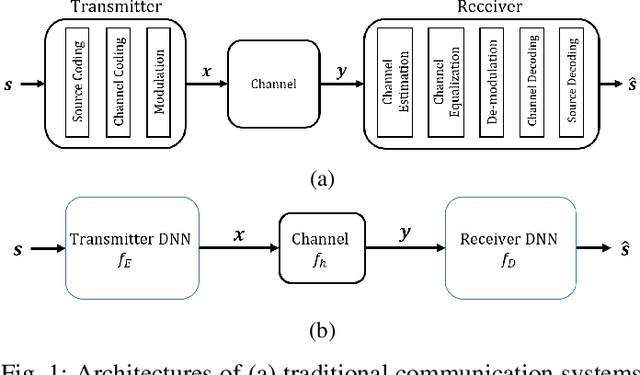
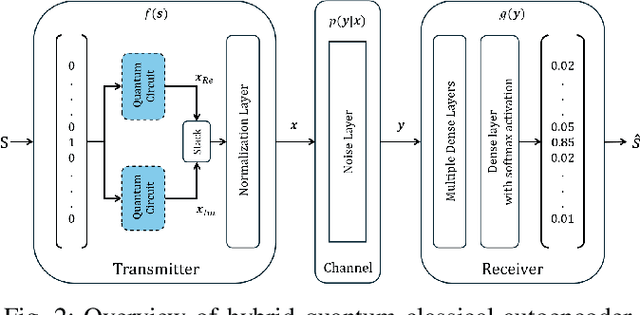
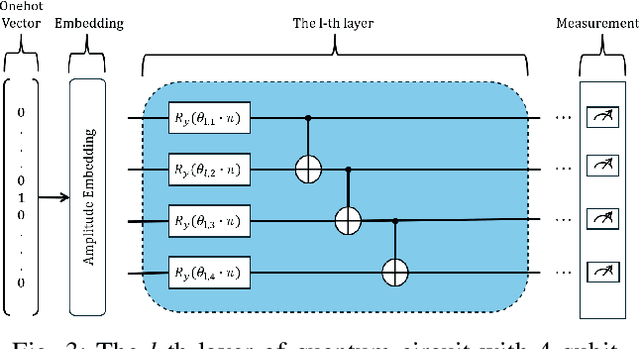
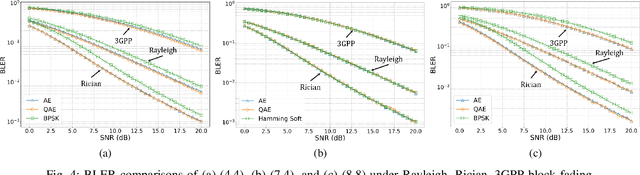
This paper investigates the application of quantum machine learning to End-to-End (E2E) communication systems in wireless fading scenarios. We introduce a novel hybrid quantum-classical autoencoder architecture that combines parameterized quantum circuits with classical deep neural networks (DNNs). Specifically, we propose a hybrid quantum-classical autoencoder (QAE) framework to optimize the E2E communication system. Our results demonstrate the feasibility of the proposed hybrid system, and reveal that it is the first work that can achieve comparable block error rate (BLER) performance to classical DNN-based and conventional channel coding schemes, while significantly reducing the number of trainable parameters. Additionally, the proposed QAE exhibits steady and superior BLER convergence over the classical autoencoder baseline.
Dynamic Spectrum Access for Ambient Backscatter Communication-assisted D2D Systems with Quantum Reinforcement Learning
Oct 23, 2024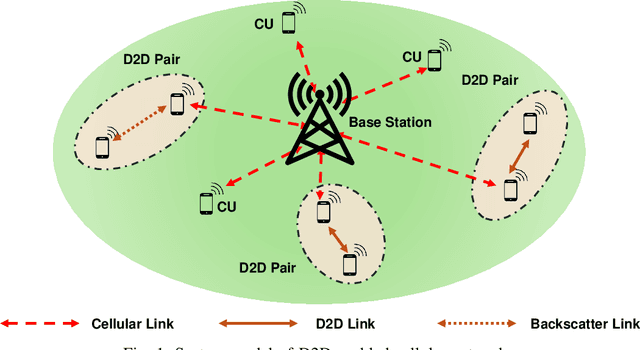


Spectrum access is an essential problem in device-to-device (D2D) communications. However, with the recent growth in the number of mobile devices, the wireless spectrum is becoming scarce, resulting in low spectral efficiency for D2D communications. To address this problem, this paper aims to integrate the ambient backscatter communication technology into D2D devices to allow them to backscatter ambient RF signals to transmit their data when the shared spectrum is occupied by mobile users. To obtain the optimal spectrum access policy, i.e., stay idle or access the shared spectrum and perform active transmissions or backscattering ambient RF signals for transmissions, to maximize the average throughput for D2D users, deep reinforcement learning (DRL) can be adopted. However, DRL-based solutions may require long training time due to the curse of dimensionality issue as well as complex deep neural network architectures. For that, we develop a novel quantum reinforcement learning (RL) algorithm that can achieve a faster convergence rate with fewer training parameters compared to DRL thanks to the quantum superposition and quantum entanglement principles. Specifically, instead of using conventional deep neural networks, the proposed quantum RL algorithm uses a parametrized quantum circuit to approximate an optimal policy. Extensive simulations then demonstrate that the proposed solution not only can significantly improve the average throughput of D2D devices when the shared spectrum is busy but also can achieve much better performance in terms of convergence rate and learning complexity compared to existing DRL-based methods.
Applications of Generative AI for Mobile and Wireless Networking: A Survey
May 30, 2024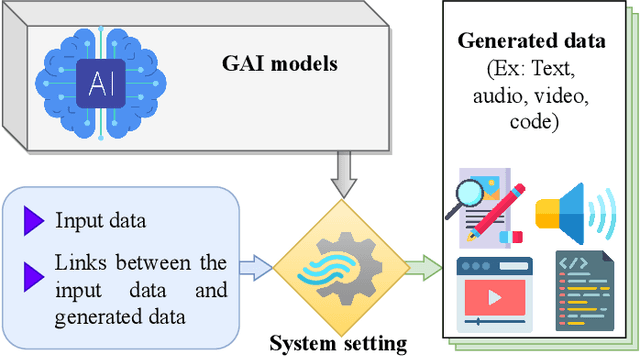
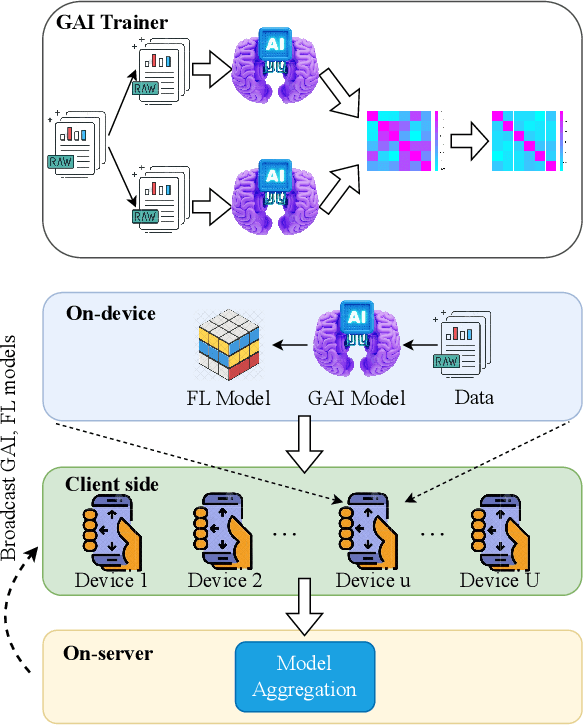
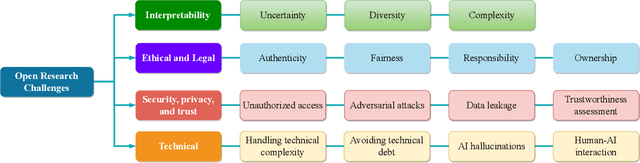
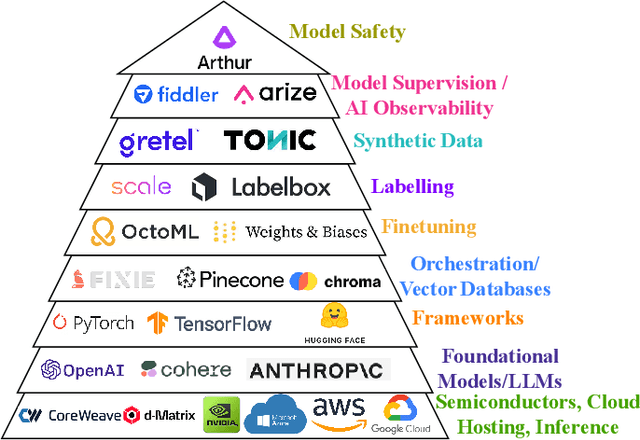
The success of Artificial Intelligence (AI) in multiple disciplines and vertical domains in recent years has promoted the evolution of mobile networking and the future Internet toward an AI-integrated Internet-of-Things (IoT) era. Nevertheless, most AI techniques rely on data generated by physical devices (e.g., mobile devices and network nodes) or specific applications (e.g., fitness trackers and mobile gaming). To bypass this circumvent, Generative AI (GAI), a.k.a. AI-generated content (AIGC), has emerged as a powerful AI paradigm; thanks to its ability to efficiently learn complex data distributions and generate synthetic data to represent the original data in various forms. This impressive feature is projected to transform the management of mobile networking and diversify the current services and applications provided. On this basis, this work presents a concise tutorial on the role of GAIs in mobile and wireless networking. In particular, this survey first provides the fundamentals of GAI and representative GAI models, serving as an essential preliminary to the understanding of the applications of GAI in mobile and wireless networking. Then, this work provides a comprehensive review of state-of-the-art studies and GAI applications in network management, wireless security, semantic communication, and lessons learned from the open literature. Finally, this work summarizes the current research on GAI for mobile and wireless networking by outlining important challenges that need to be resolved to facilitate the development and applicability of GAI in this edge-cutting area.
A Universal Deep Neural Network for Signal Detection in Wireless Communication Systems
Apr 03, 2024Recently, deep learning (DL) has been emerging as a promising approach for channel estimation and signal detection in wireless communications. The majority of the existing studies investigating the use of DL techniques in this domain focus on analysing channel impulse responses that are generated from only one channel distribution such as additive white Gaussian channel noise and Rayleigh channels. In practice, to cope with the dynamic nature of the wireless channel, DL methods must be re-trained on newly non-aged collected data which is costly, inefficient, and impractical. To tackle this challenge, this paper proposes a novel universal deep neural network (Uni-DNN) that can achieve high detection performance in various wireless environments without retraining the model. In particular, our proposed Uni-DNN model consists of a wireless channel classifier and a signal detector which are constructed by using DNNs. The wireless channel classifier enables the signal detector to generalise and perform optimally for multiple wireless channel distributions. In addition, to further improve the signal detection performance of the proposed model, convolutional neural network is employed. Extensive simulations using the orthogonal frequency division multiplexing scheme demonstrate that the bit error rate performance of our proposed solution can outperform conventional DL-based approaches as well as least square and minimum mean square error channel estimators in practical low pilot density scenarios.
Generative AI for Unmanned Vehicle Swarms: Challenges, Applications and Opportunities
Feb 28, 2024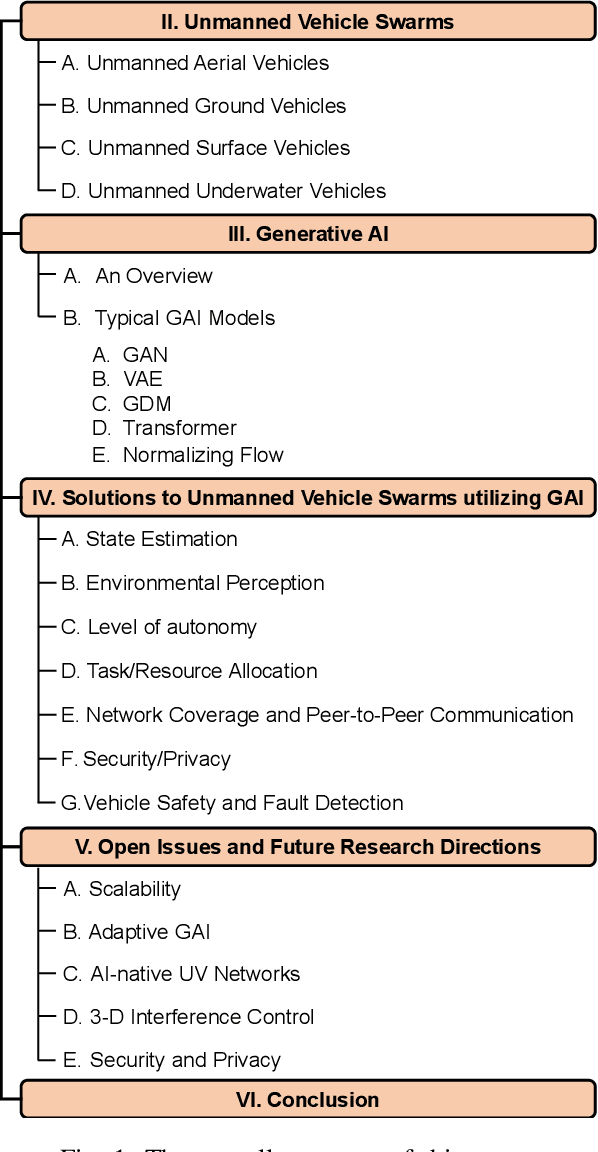
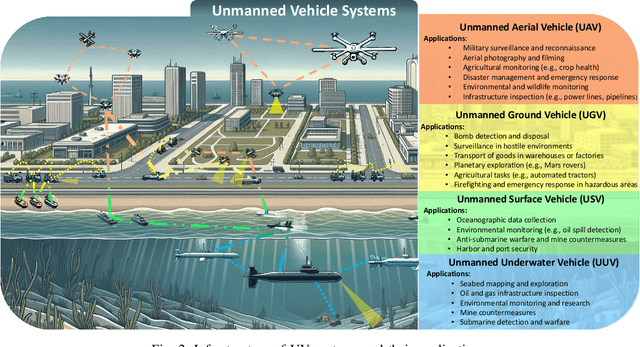
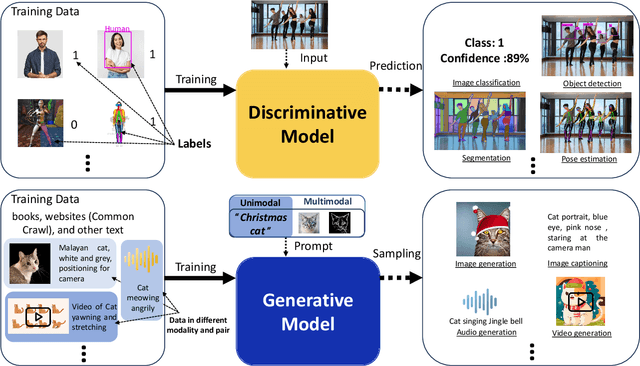

With recent advances in artificial intelligence (AI) and robotics, unmanned vehicle swarms have received great attention from both academia and industry due to their potential to provide services that are difficult and dangerous to perform by humans. However, learning and coordinating movements and actions for a large number of unmanned vehicles in complex and dynamic environments introduce significant challenges to conventional AI methods. Generative AI (GAI), with its capabilities in complex data feature extraction, transformation, and enhancement, offers great potential in solving these challenges of unmanned vehicle swarms. For that, this paper aims to provide a comprehensive survey on applications, challenges, and opportunities of GAI in unmanned vehicle swarms. Specifically, we first present an overview of unmanned vehicles and unmanned vehicle swarms as well as their use cases and existing issues. Then, an in-depth background of various GAI techniques together with their capabilities in enhancing unmanned vehicle swarms are provided. After that, we present a comprehensive review on the applications and challenges of GAI in unmanned vehicle swarms with various insights and discussions. Finally, we highlight open issues of GAI in unmanned vehicle swarms and discuss potential research directions.
Securing MIMO Wiretap Channel with Learning-Based Friendly Jamming under Imperfect CSI
Dec 12, 2023

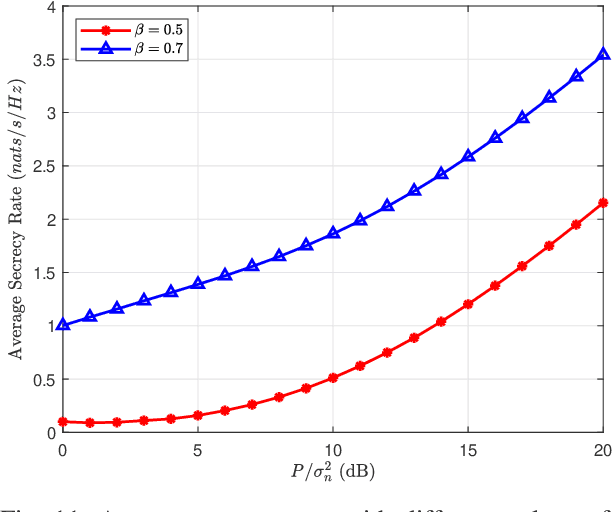
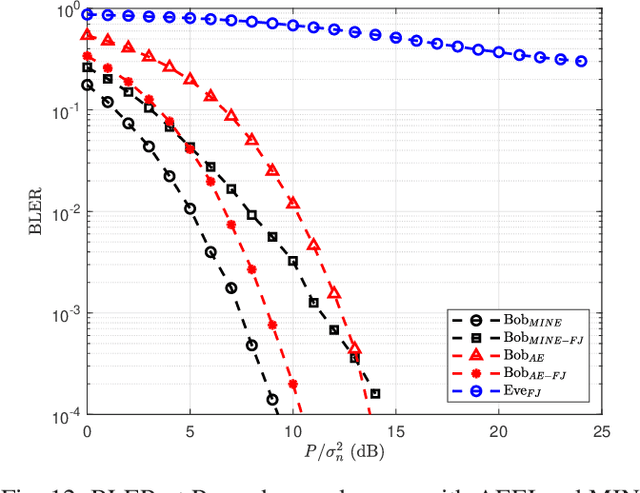
Wireless communications are particularly vulnerable to eavesdropping attacks due to their broadcast nature. To effectively deal with eavesdroppers, existing security techniques usually require accurate channel state information (CSI), e.g., for friendly jamming (FJ), and/or additional computing resources at transceivers, e.g., cryptography-based solutions, which unfortunately may not be feasible in practice. This challenge is even more acute in low-end IoT devices. We thus introduce a novel deep learning-based FJ framework that can effectively defeat eavesdropping attacks with imperfect CSI and even without CSI of legitimate channels. In particular, we first develop an autoencoder-based communication architecture with FJ, namely AEFJ, to jointly maximize the secrecy rate and minimize the block error rate at the receiver without requiring perfect CSI of the legitimate channels. In addition, to deal with the case without CSI, we leverage the mutual information neural estimation (MINE) concept and design a MINE-based FJ scheme that can achieve comparable security performance to the conventional FJ methods that require perfect CSI. Extensive simulations in a multiple-input multiple-output (MIMO) system demonstrate that our proposed solution can effectively deal with eavesdropping attacks in various settings. Moreover, the proposed framework can seamlessly integrate MIMO security and detection tasks into a unified end-to-end learning process. This integrated approach can significantly maximize the throughput and minimize the block error rate, offering a good solution for enhancing communication security in wireless communication systems.
Generative AI for Physical Layer Communications: A Survey
Dec 09, 2023The recent evolution of generative artificial intelligence (GAI) leads to the emergence of groundbreaking applications such as ChatGPT, which not only enhances the efficiency of digital content production, such as text, audio, video, or even network traffic data, but also enriches its diversity. Beyond digital content creation, GAI's capability in analyzing complex data distributions offers great potential for wireless communications, particularly amidst a rapid expansion of new physical layer communication technologies. For example, the diffusion model can learn input signal distributions and use them to improve the channel estimation accuracy, while the variational autoencoder can model channel distribution and infer latent variables for blind channel equalization. Therefore, this paper presents a comprehensive investigation of GAI's applications for communications at the physical layer, ranging from traditional issues, including signal classification, channel estimation, and equalization, to emerging topics, such as intelligent reflecting surfaces and joint source channel coding. We also compare GAI-enabled physical layer communications with those supported by traditional AI, highlighting GAI's inherent capabilities and unique contributions in these areas. Finally, the paper discusses open issues and proposes several future research directions, laying a foundation for further exploration and advancement of GAI in physical layer communications.