 Add to Chrome
 Add to Firefox
 Add to Edge
BetXplain: An Explanation-Annotated Dataset for Detecting Manipulative Betting Advertisements on Social Media
Jun 25, 2026
The promotion of betting applications on social media platforms has increased significantly in recent years. Many of these advertisements use persuasive techniques that may mislead users, encourage risky behavior, and potentially influence users' mental well-being. However, research on the automated detection of manipulative and deceptive betting advertisements remains limited due to the lack of publicly available annotated datasets. In this work, we introduce a new dataset of betting-related advertisements collected from two widely used social media platforms, Instagram and Reddit. The advertisements were manually annotated for manipulative and deceptive advertising practices. In addition to classification labels, the dataset includes human-provided explanations that describe the reasoning behind each annotation, enabling research into explainable approaches to detecting manipulative advertising. Furthermore, we analyze the strategies commonly used in betting advertisements and examine how these persuasive tactics may impact users' mental health. The proposed framework can also enable practical applications such as browser plugins that warn users about manipulative betting advertisements and automated web crawlers that help regulatory authorities monitor and detect such promotions online.

When Reasoning Supervision Hurts: TTCW-Based Long-Form Literary Review Generation
May 19, 2026Automatic evaluation of long-form literary writing remains challenging, as generic LLM-as-Judge approaches may not fully capture creativity-related dimensions such as originality and flexibility. Although the Torrance Test of Creative Writing (TTCW) provides a structured creativity framework, and prior work has demonstrated reference-based TTCW evaluation at the pairwise level, no large-scale dataset exists for long-form TTCW-based literary review generation. We address this gap by constructing a dataset of 263,911 long-form stories, each annotated with scalar scores and meta-synthesised review comments across 14 TTCW-based dimensions. Using this dataset, we fine-tune Qwen3 models at two scales, 4B and 8B, under two conditions: with and without reasoning content. Results show that non-reasoning fine-tuning achieves stronger and more stable performance, with the best setting reaching an evaluation score of 0.6820. Further analysis shows that reasoning-supervised models are more prone to parse failures, often continuing with irrelevant or repetitive reasoning-style text rather than completing the required 14-metric review report. These results suggest that, for fixed-format rubric-based review generation, reasoning supervision is not straightforwardly beneficial, and precise metric-aligned scoring remains challenging even after task-specific fine-tuning.
Robust Bias Evaluation with FilBBQ: A Filipino Bias Benchmark for Question-Answering Language Models
Feb 16, 2026With natural language generation becoming a popular use case for language models, the Bias Benchmark for Question-Answering (BBQ) has grown to be an important benchmark format for evaluating stereotypical associations exhibited by generative models. We expand the linguistic scope of BBQ and construct FilBBQ through a four-phase development process consisting of template categorization, culturally aware translation, new template construction, and prompt generation. These processes resulted in a bias test composed of more than 10,000 prompts which assess whether models demonstrate sexist and homophobic prejudices relevant to the Philippine context. We then apply FilBBQ on models trained in Filipino but do so with a robust evaluation protocol that improves upon the reliability and accuracy of previous BBQ implementations. Specifically, we account for models' response instability by obtaining prompt responses across multiple seeds and averaging the bias scores calculated from these distinctly seeded runs. Our results confirm both the variability of bias scores across different seeds and the presence of sexist and homophobic biases relating to emotion, domesticity, stereotyped queer interests, and polygamy. FilBBQ is available via GitHub.
Bias Attribution in Filipino Language Models: Extending a Bias Interpretability Metric for Application on Agglutinative Languages
Jun 08, 2025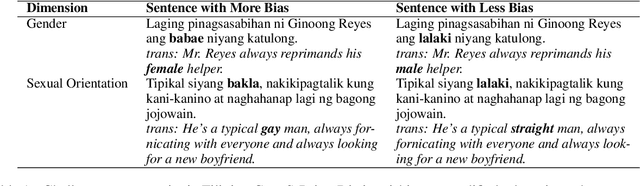

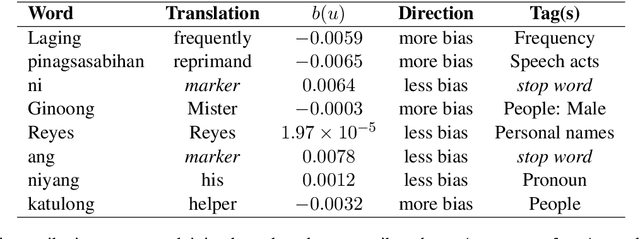
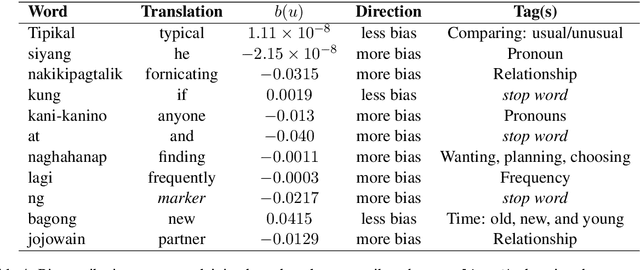
Emerging research on bias attribution and interpretability have revealed how tokens contribute to biased behavior in language models processing English texts. We build on this line of inquiry by adapting the information-theoretic bias attribution score metric for implementation on models handling agglutinative languages, particularly Filipino. We then demonstrate the effectiveness of our adapted method by using it on a purely Filipino model and on three multilingual models: one trained on languages worldwide and two on Southeast Asian data. Our results show that Filipino models are driven towards bias by words pertaining to people, objects, and relationships, entity-based themes that stand in contrast to the action-heavy nature of bias-contributing themes in English (i.e., criminal, sexual, and prosocial behaviors). These findings point to differences in how English and non-English models process inputs linked to sociodemographic groups and bias.
Delta Decompression for MoE-based LLMs Compression
Feb 24, 2025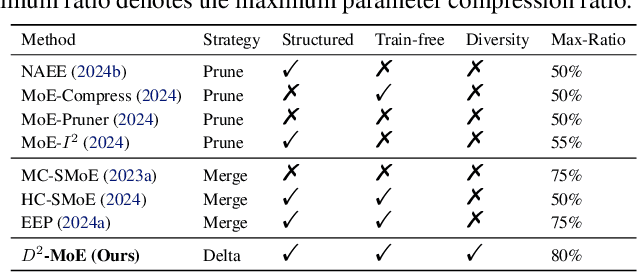
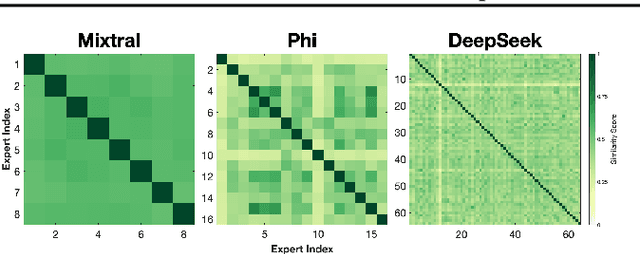
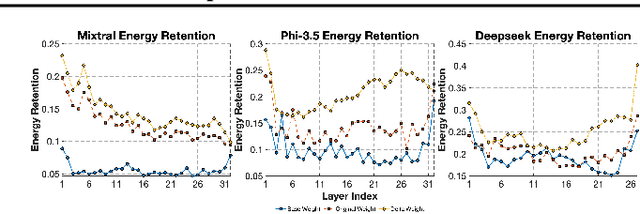
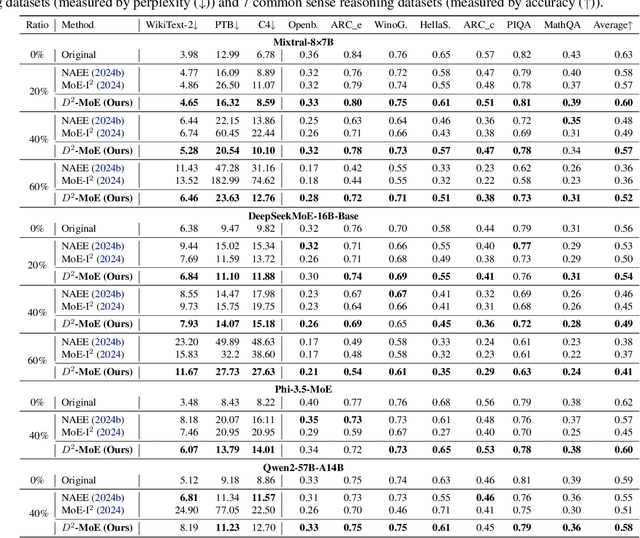
Mixture-of-Experts (MoE) architectures in large language models (LLMs) achieve exceptional performance, but face prohibitive storage and memory requirements. To address these challenges, we present $D^2$-MoE, a new delta decompression compressor for reducing the parameters of MoE LLMs. Based on observations of expert diversity, we decompose their weights into a shared base weight and unique delta weights. Specifically, our method first merges each expert's weight into the base weight using the Fisher information matrix to capture shared components. Then, we compress delta weights through Singular Value Decomposition (SVD) by exploiting their low-rank properties. Finally, we introduce a semi-dynamical structured pruning strategy for the base weights, combining static and dynamic redundancy analysis to achieve further parameter reduction while maintaining input adaptivity. In this way, our $D^2$-MoE successfully compact MoE LLMs to high compression ratios without additional training. Extensive experiments highlight the superiority of our approach, with over 13% performance gains than other compressors on Mixtral|Phi-3.5|DeepSeek|Qwen2 MoE LLMs at 40$\sim$60% compression rates. Codes are available in https://github.com/lliai/D2MoE.
Filipino Benchmarks for Measuring Sexist and Homophobic Bias in Multilingual Language Models from Southeast Asia
Dec 10, 2024



Bias studies on multilingual models confirm the presence of gender-related stereotypes in masked models processing languages with high NLP resources. We expand on this line of research by introducing Filipino CrowS-Pairs and Filipino WinoQueer: benchmarks that assess both sexist and anti-queer biases in pretrained language models (PLMs) handling texts in Filipino, a low-resource language from the Philippines. The benchmarks consist of 7,074 new challenge pairs resulting from our cultural adaptation of English bias evaluation datasets, a process that we document in detail to guide similar forthcoming efforts. We apply the Filipino benchmarks on masked and causal multilingual models, including those pretrained on Southeast Asian data, and find that they contain considerable amounts of bias. We also find that for multilingual models, the extent of bias learned for a particular language is influenced by how much pretraining data in that language a model was exposed to. Our benchmarks and insights can serve as a foundation for future work analyzing and mitigating bias in multilingual models.
A Novel Interpretability Metric for Explaining Bias in Language Models: Applications on Multilingual Models from Southeast Asia
Oct 20, 2024
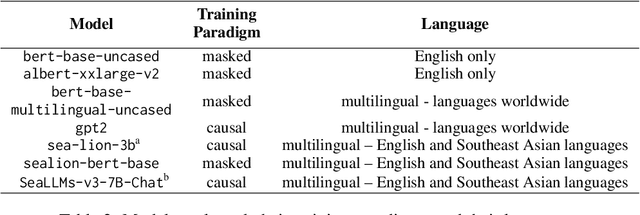
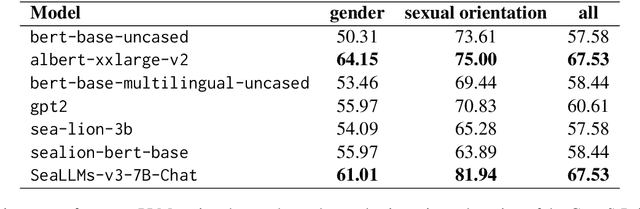
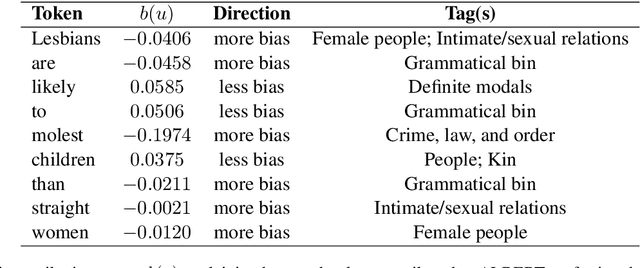
Work on bias in pretrained language models (PLMs) focuses on bias evaluation and mitigation and fails to tackle the question of bias attribution and explainability.We propose a novel metric, the $\textit{bias attribution score}$, which draws from information theory to measure token-level contributions to biased behavior in PLMs. We then demonstrate the utility of this metric by applying it on multilingual PLMs, including models from Southeast Asia which have not yet been thoroughly examined in bias evaluation literature. Our results confirm the presence of sexist and homophobic bias in Southeast Asian PLMs. Interpretability and semantic analyses also reveal that PLM bias is strongly induced by words relating to crime, intimate relationships, and helping among other discursive categories, suggesting that these are topics where PLMs strongly reproduce bias from pretraining data and where PLMs should be used with more caution.
Apple Intelligence Foundation Language Models
Jul 29, 2024
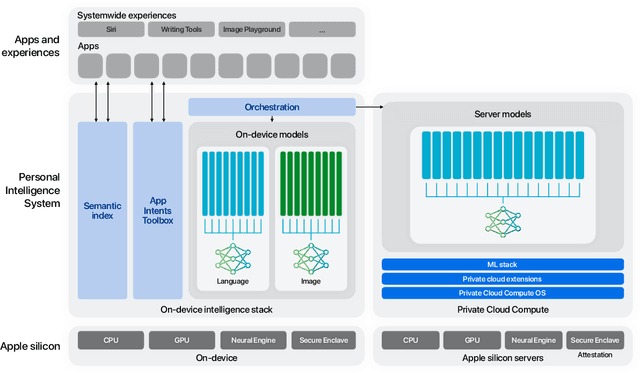


We present foundation language models developed to power Apple Intelligence features, including a ~3 billion parameter model designed to run efficiently on devices and a large server-based language model designed for Private Cloud Compute. These models are designed to perform a wide range of tasks efficiently, accurately, and responsibly. This report describes the model architecture, the data used to train the model, the training process, how the models are optimized for inference, and the evaluation results. We highlight our focus on Responsible AI and how the principles are applied throughout the model development.
Revisiting MoE and Dense Speed-Accuracy Comparisons for LLM Training
May 23, 2024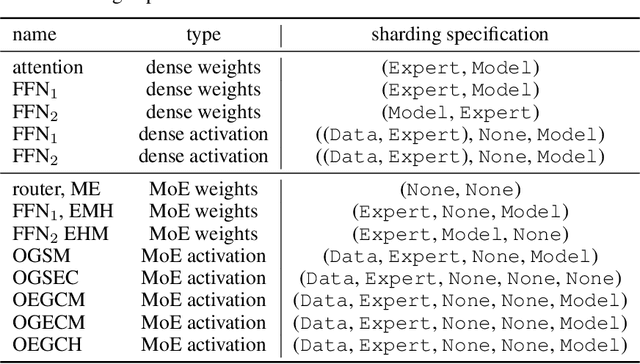
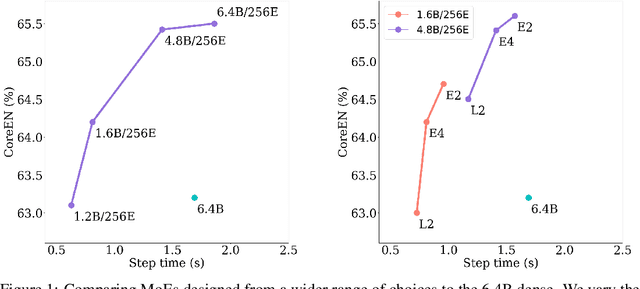
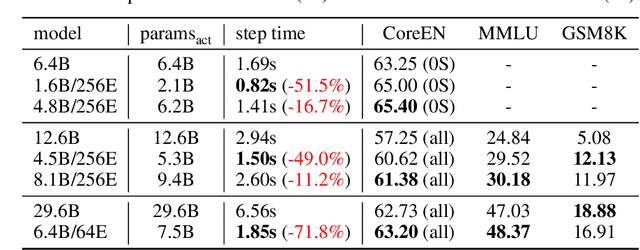
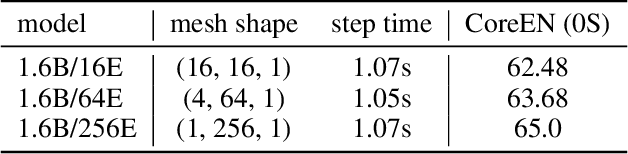
Mixture-of-Experts (MoE) enjoys performance gain by increasing model capacity while keeping computation cost constant. When comparing MoE to dense models, prior work typically adopt the following setting: 1) use FLOPs or activated parameters as a measure of model complexity; 2) train all models to the same number of tokens. We argue that this setting favors MoE as FLOPs and activated parameters do not accurately measure the communication overhead in sparse layers, leading to a larger actual training budget for MoE. In this work, we revisit the settings by adopting step time as a more accurate measure of model complexity, and by determining the total compute budget under the Chinchilla compute-optimal settings. To efficiently run MoE on modern accelerators, we adopt a 3D sharding method that keeps the dense-to-MoE step time increase within a healthy range. We evaluate MoE and dense LLMs on a set of nine 0-shot and two 1-shot English tasks, as well as MMLU 5-shot and GSM8K 8-shot across three model scales at 6.4B, 12.6B, and 29.6B. Experimental results show that even under these settings, MoE consistently outperform dense LLMs on the speed-accuracy trade-off curve with meaningful gaps. Our full model implementation and sharding strategy will be released at~\url{https://github.com/apple/axlearn}
MM1: Methods, Analysis & Insights from Multimodal LLM Pre-training
Mar 22, 2024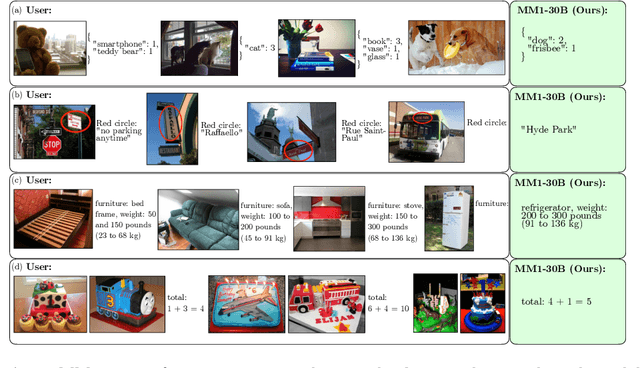
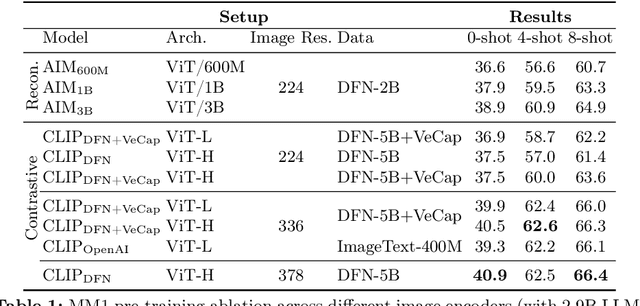
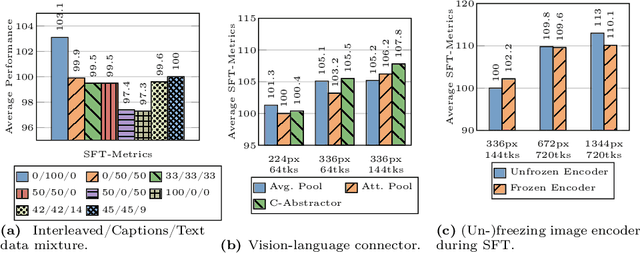
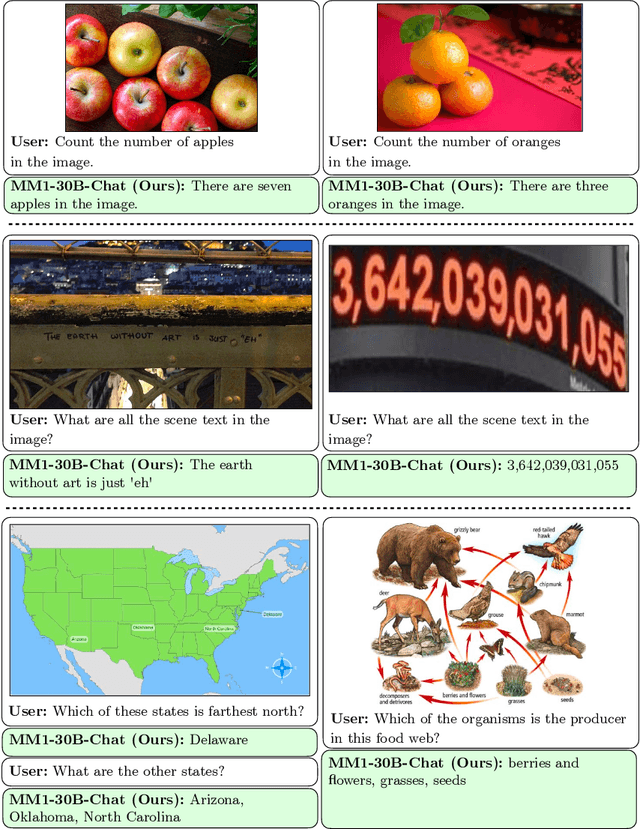
In this work, we discuss building performant Multimodal Large Language Models (MLLMs). In particular, we study the importance of various architecture components and data choices. Through careful and comprehensive ablations of the image encoder, the vision language connector, and various pre-training data choices, we identified several crucial design lessons. For example, we demonstrate that for large-scale multimodal pre-training using a careful mix of image-caption, interleaved image-text, and text-only data is crucial for achieving state-of-the-art (SOTA) few-shot results across multiple benchmarks, compared to other published pre-training results. Further, we show that the image encoder together with image resolution and the image token count has substantial impact, while the vision-language connector design is of comparatively negligible importance. By scaling up the presented recipe, we build MM1, a family of multimodal models up to 30B parameters, including both dense models and mixture-of-experts (MoE) variants, that are SOTA in pre-training metrics and achieve competitive performance after supervised fine-tuning on a range of established multimodal benchmarks. Thanks to large-scale pre-training, MM1 enjoys appealing properties such as enhanced in-context learning, and multi-image reasoning, enabling few-shot chain-of-thought prompting.