 Add to Chrome
 Add to Firefox
 Add to Edge
MistyPilot: Enabling Social-Robot Control through Multi-Agent LLM Skill Orchestration
Aug 16, 2026
Programming small social robots from natural-language instructions requires more than invoking isolated APIs. Interactive tasks combine reactive physical behaviors with stateful social behaviors, while existing interfaces often require developers to manually compose APIs into skills, configure their parameters, bind sensor events to skills, and manage task states at runtime. We present MistyPilot, a multi-agent LLM framework that interprets high-level natural-language instructions and orchestrates the corresponding skills on the Misty social robot. A Task Router dispatches each instruction to one of two specialized agents: a Physically Interactive Agent for sensor-triggered robot control and direct skill invocation, and a Social Interaction Agent for dialogue-oriented task-state management and context-dependent multimodal response generation. To improve efficiency, the Social Interaction Agent reuses previously generated results when applicable and invokes full generation otherwise. We evaluate MistyPilot on five component-level suites, with sensor bindings and skill invocations executed on the physical Misty robot, and a preliminary user study with 12 participants. MistyPilot attains high accuracy on routing, sensor-skill binding, task-state parsing, result reuse, and skill extension up to 100 skills, and lower variance than an otherwise identical single-agent baseline, while participants report positive perceptions of usability and interaction quality. The code will be made publicly available via the project page.

SteelDefectX: A Coarse-to-Fine Vision-Language Dataset and Benchmark for Generalizable Steel Surface Defect Detection
Mar 23, 2026Steel surface defect detection is essential for ensuring product quality and reliability in modern manufacturing. Current methods often rely on basic image classification models trained on label-only datasets, which limits their interpretability and generalization. To address these challenges, we introduce SteelDefectX, a vision-language dataset containing 7,778 images across 25 defect categories, annotated with coarse-to-fine textual descriptions. At the coarse-grained level, the dataset provides class-level information, including defect categories, representative visual attributes, and associated industrial causes. At the fine-grained level, it captures sample-specific attributes, such as shape, size, depth, position, and contrast, enabling models to learn richer and more detailed defect representations. We further establish a benchmark comprising four tasks, vision-only classification, vision-language classification, few/zero-shot recognition, and zero-shot transfer, to evaluate model performance and generalization. Experiments with several baseline models demonstrate that coarse-to-fine textual annotations significantly improve interpretability, generalization, and transferability. We hope that SteelDefectX will serve as a valuable resource for advancing research on explainable, generalizable steel surface defect detection. The data will be publicly available on https://github.com/Zhaosxian/SteelDefectX.
ConfusionBench: An Expert-Validated Benchmark for Confusion Recognition and Localization in Educational Videos
Mar 18, 2026Recognizing and localizing student confusion from video is an important yet challenging problem in educational AI. Existing confusion datasets suffer from noisy labels, coarse temporal annotations, and limited expert validation, which hinder reliable fine-grained recognition and temporally grounded analysis. To address these limitations, we propose a practical multi-stage filtering pipeline that integrates two stages of model-assisted screening, researcher curation, and expert validation to build a higher-quality benchmark for confusion understanding. Based on this pipeline, we introduce ConfusionBench, a new benchmark for educational videos consisting of a balanced confusion recognition dataset and a video localization dataset. We further provide zero-shot baseline evaluations of a representative open-source model and a proprietary model on clip-level confusion recognition, long-video confusion localization tasks. Experimental results show that the proprietary model performs better overall but tends to over-predict transitional segments, while the open-source model is more conservative and more prone to missed detections. In addition, the proposed student confusion report visualization can support educational experts in making intervention decisions and adapting learning plans accordingly. All datasets and related materials will be made publicly available on our project page.
InterventionLens: A Multi-Agent Framework for Detecting ASD Intervention Strategies in Parent-Child Shared Reading
Mar 14, 2026Home-based interventions like parent-child shared reading provide a cost-effective approach for supporting children with autism spectrum disorder (ASD). However, analyzing caregiver intervention strategies in naturalistic home interactions typically relies on expert annotation, which is costly, time-intensive, and difficult to scale. To address this challenge, we propose InterventionLens, an end-to-end multi-agent system for automatically detecting and temporally segmenting caregiver intervention strategies from shared reading videos. Without task-specific model training or fine-tuning, InterventionLens uses a collaborative multi-agent architecture to integrate multimodal interaction content and perform fine-grained strategy analysis. Experiments on the ASD-HI dataset show that InterventionLens achieves an overall F1 score of 79.44\%, outperforming the baseline by 19.72\%. These results suggest that InterventionLens is a promising system for analyzing caregiver intervention strategies in home-based ASD shared reading settings. Additional resources will be released on the project page.
MistyPilot: An Agentic Fast-Slow Thinking LLM Framework for Misty Social Robots
Mar 04, 2026With the availability of open APIs in social robots, it has become easier to customize general-purpose tools to meet users' needs. However, interpreting high-level user instructions, selecting and configuring appropriate tools, and executing them reliably remain challenging for users without programming experience. To address these challenges, we introduce MistyPilot, an agentic LLM-driven framework for autonomous tool selection, orchestration, and parameter configuration. MistyPilot comprises two core components: a Physically Interactive Agent (PIA) and a Socially Intelligent Agent (SIA). The PIA enables robust sensor-triggered and tool-driven task execution, while the SIA generates socially intelligent and emotionally aligned dialogue. MistyPilot further integrates a fast-slow thinking paradigm to capture user preferences, reduce latency, and improve task efficiency. To comprehensively evaluate MistyPilot, we contribute five benchmark datasets. Extensive experiments demonstrate the effectiveness of our framework in routing correctness, task completeness, fast-slow thinking retrieval efficiency, tool scalability,and emotion alignment. All code, datasets, and experimental videos will be made publicly available on the project webpage.
Policy Disruption in Reinforcement Learning:Adversarial Attack with Large Language Models and Critical State Identification
Jul 24, 2025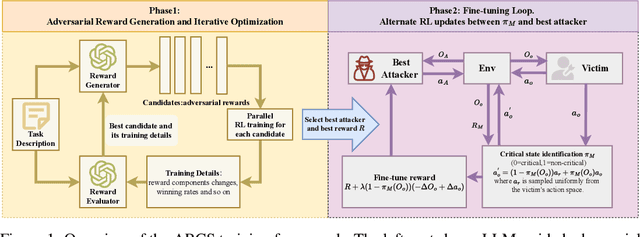
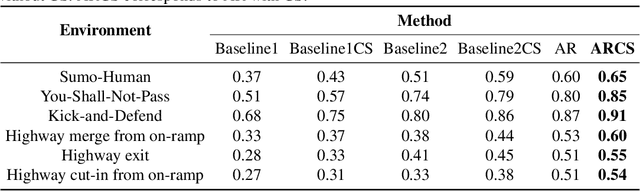
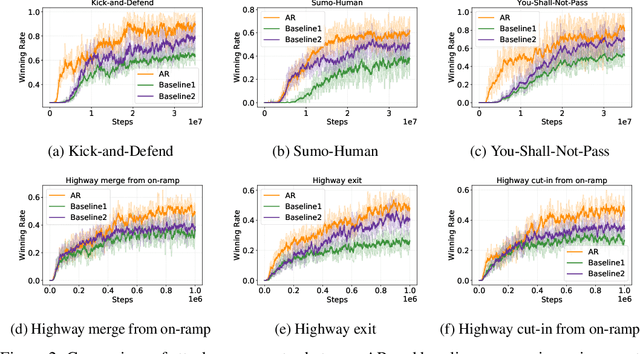
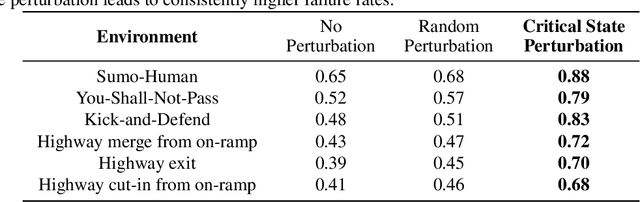
Reinforcement learning (RL) has achieved remarkable success in fields like robotics and autonomous driving, but adversarial attacks designed to mislead RL systems remain challenging. Existing approaches often rely on modifying the environment or policy, limiting their practicality. This paper proposes an adversarial attack method in which existing agents in the environment guide the target policy to output suboptimal actions without altering the environment. We propose a reward iteration optimization framework that leverages large language models (LLMs) to generate adversarial rewards explicitly tailored to the vulnerabilities of the target agent, thereby enhancing the effectiveness of inducing the target agent toward suboptimal decision-making. Additionally, a critical state identification algorithm is designed to pinpoint the target agent's most vulnerable states, where suboptimal behavior from the victim leads to significant degradation in overall performance. Experimental results in diverse environments demonstrate the superiority of our method over existing approaches.
Weakly Supervised Temporal Sentence Grounding via Positive Sample Mining
May 10, 2025The task of weakly supervised temporal sentence grounding (WSTSG) aims to detect temporal intervals corresponding to a language description from untrimmed videos with only video-level video-language correspondence. For an anchor sample, most existing approaches generate negative samples either from other videos or within the same video for contrastive learning. However, some training samples are highly similar to the anchor sample, directly regarding them as negative samples leads to difficulties for optimization and ignores the correlations between these similar samples and the anchor sample. To address this, we propose Positive Sample Mining (PSM), a novel framework that mines positive samples from the training set to provide more discriminative supervision. Specifically, for a given anchor sample, we partition the remaining training set into semantically similar and dissimilar subsets based on the similarity of their text queries. To effectively leverage these correlations, we introduce a PSM-guided contrastive loss to ensure that the anchor proposal is closer to similar samples and further from dissimilar ones. Additionally, we design a PSM-guided rank loss to ensure that similar samples are closer to the anchor proposal than to the negative intra-video proposal, aiming to distinguish the anchor proposal and the negative intra-video proposal. Experiments on the WSTSG and grounded VideoQA tasks demonstrate the effectiveness and superiority of our method.
A Survey on Small Sample Imbalance Problem: Metrics, Feature Analysis, and Solutions
Apr 21, 2025The small sample imbalance (S&I) problem is a major challenge in machine learning and data analysis. It is characterized by a small number of samples and an imbalanced class distribution, which leads to poor model performance. In addition, indistinct inter-class feature distributions further complicate classification tasks. Existing methods often rely on algorithmic heuristics without sufficiently analyzing the underlying data characteristics. We argue that a detailed analysis from the data perspective is essential before developing an appropriate solution. Therefore, this paper proposes a systematic analytical framework for the S\&I problem. We first summarize imbalance metrics and complexity analysis methods, highlighting the need for interpretable benchmarks to characterize S&I problems. Second, we review recent solutions for conventional, complexity-based, and extreme S&I problems, revealing methodological differences in handling various data distributions. Our summary finds that resampling remains a widely adopted solution. However, we conduct experiments on binary and multiclass datasets, revealing that classifier performance differences significantly exceed the improvements achieved through resampling. Finally, this paper highlights open questions and discusses future trends.
VideoChat-R1: Enhancing Spatio-Temporal Perception via Reinforcement Fine-Tuning
Apr 10, 2025Recent advancements in reinforcement learning have significantly advanced the reasoning capabilities of multimodal large language models (MLLMs). While approaches such as Group Relative Policy Optimization (GRPO) and rule-based reward mechanisms demonstrate promise in text and image domains, their application to video understanding remains limited. This paper presents a systematic exploration of Reinforcement Fine-Tuning (RFT) with GRPO for video MLLMs, aiming to enhance spatio-temporal perception while maintaining general capabilities. Our experiments reveal that RFT is highly data-efficient for task-specific improvements. Through multi-task RFT on spatio-temporal perception objectives with limited samples, we develop VideoChat-R1, a powerful video MLLM that achieves state-of-the-art performance on spatio-temporal perception tasks without sacrificing chat ability, while exhibiting emerging spatio-temporal reasoning abilities. Compared to Qwen2.5-VL-7B, VideoChat-R1 boosts performance several-fold in tasks like temporal grounding (+31.8) and object tracking (+31.2). Additionally, it significantly improves on general QA benchmarks such as VideoMME (+0.9), MVBench (+1.0), and Perception Test (+0.9). Our findings underscore the potential of RFT for specialized task enhancement of Video MLLMs. We hope our work offers valuable insights for future RL research in video MLLMs.
AutoMisty: A Multi-Agent LLM Framework for Automated Code Generation in the Misty Social Robot
Mar 09, 2025The social robot's open API allows users to customize open-domain interactions. However, it remains inaccessible to those without programming experience. In this work, we introduce AutoMisty, the first multi-agent collaboration framework powered by large language models (LLMs), to enable the seamless generation of executable Misty robot code from natural language instructions. AutoMisty incorporates four specialized agent modules to manage task decomposition, assignment, problem-solving, and result synthesis. Each agent incorporates a two-layer optimization mechanism, with self-reflection for iterative refinement and human-in-the-loop for better alignment with user preferences. AutoMisty ensures a transparent reasoning process, allowing users to iteratively refine tasks through natural language feedback for precise execution. To evaluate AutoMisty's effectiveness, we designed a benchmark task set spanning four levels of complexity and conducted experiments in a real Misty robot environment. Extensive evaluations demonstrate that AutoMisty not only consistently generates high-quality code but also enables precise code control, significantly outperforming direct reasoning with ChatGPT-4o and ChatGPT-o1. All code, optimized APIs, and experimental videos will be publicly released through the webpage: https://wangxiaoshawn.github.io/AutoMisty.html