 Add to Chrome
 Add to Firefox
 Add to Edge
GaussianSeed: Hierarchical Gaussian Seeding for High-Resolution 3D Occupancy Prediction
Jul 27, 2026
Vision-centric 3D occupancy prediction provides dense scene representations essential for autonomous driving and robotic navigation, yet existing methods struggle to scale to high voxel resolutions due to prohibitive computational costs. To address this, we introduce GaussianSeed, a progressive multi-scale Gaussian occupancy prediction framework that organizes primitives into a coarse-to-fine hierarchy. Benefiting from this hierarchical design, GaussianSeed effectively circumvents the memory bottlenecks inherent in dense representations, successfully scaling to a $0.1\text{m}$ spatial resolution while maintaining real-time inference capabilities. To comprehensively evaluate high-resolution geometric perception, we further construct TJScenes, a panoramic six-camera occupancy dataset with highly detailed $0.1\text{m}$ annotations. Extensive experiments on Occ3D-nuScenes and TJScenes demonstrate that GaussianSeed delivers the lowest latency among all evaluated methods while maintaining highly competitive accuracy, advancing the efficiency-quality frontier of high-resolution 3D occupancy prediction. Codes are available at https://github.com/Athameral/GUSD

A Comprehensive Survey and Systematic Real-World Evaluation of Embodied Vision-and-Language Navigation
Jul 09, 2026Navigation is a fundamental capability of autonomous systems, yet most existing approaches rely on highly structured models and strong prior assumptions, limiting their robustness in open and uncertain real-world environments. Vision-and-Language Navigation (VLN) offers a promising direction by enabling robots to integrate natural language understanding with visual perception in a data-driven manner. Although VLN has attracted increasing research attention, systematic methodological taxonomy and real-world validation remain limited. This survey presents a comprehensive review of VLN research. Specifically, state-of-the-art methods are organized along two orthogonal dimensions: action paradigms, including hierarchical and monolithic frameworks, and model paradigms, including discriminative and generative approaches. A critical analysis of their respective strengths and limitations is provided. Additionally, we conduct a systematic real-world evaluation of representative VLN system configurations on a physical robotic platform. Experiments across ten diverse real-world scenes show a substantial performance gap between simulation and real-world deployment under the tested configurations: a representative monolithic RGB-only method achieves 61% success in simulation but drops to 22% in real-world deployment, while a hierarchical framework achieves a higher real-world success rate of 51%, suggesting stronger robustness in our evaluation setting. Finally, we highlight key challenges in perception, decision-making, and control that must be addressed in future research.
MemPose: Category-level Object Pose Estimation with Memory
Jul 06, 2026In the pursuit of robust and generalizable category-level object pose estimation, most existing methods adopt parametric formulations that learn effective representations from data, yet they primarily encode category-level patterns into fixed shape priors or static parameter weights, which limits their scalability to highly diverse instances. In this paper, we rethink category-level pose estimation from a memory-centric perspective and present MemPose, a memory-augmented framework that explicitly incorporates category-level geometric memory into the pose estimation pipeline. We introduce an external memory buffer that stores and dynamically updates structural representations from previously observed instances, enabling the model to leverage accumulated experience to support current perception. Extensive experiments on four challenging benchmarks (REAL275, CAMERA25, Housecat6D and Wild6D) demonstrate the superiority of our proposed method over previous state-of-the-art approaches.
Evaluating Agentic Harness Systems for Autonomous Computational Pathology
Jul 01, 2026Autonomous computational pathology (ACP) converts high-level pathology analysis goals into executable, traceable and clinically bounded workflows. Realizing this capability requires adapting general agentic harness systems to pathology-specific tasks, tools, evidence standards and clinical claim boundaries. We contribute ACP-Bench, a framework that adapts existing harness systems from computational pathology support toward ACP workflow capability. ACP-Bench evaluates 41 pathology workflow tasks, including 24 biomarker, 7 morphology and 10 prognosis tasks spanning 6 body-system groups and 9 endpoint families. The benchmark evaluates 9 models and 3 harness groups (Claude Code, Codex and Open Code), yielding 369 complete trajectories. ACP-Bench evaluates each trajectory across workflow execution, diagnostic performance and clinical-boundary alignment, combining expert-adjudicated process audits, diagnostic assessment and pathologist-validated safety review. Across evaluated systems, workflow initiation, task interpretation and diagnostic reporting were more mature than tool-bound execution, result binding and reflective workflow revision, and formal end-to-end completion remained rare. ACP-Bench provides a reusable standard for auditing whether agentic systems can operationalize pathology workflows before claims of reliable clinical autonomy.
TACO: Towards Task-Consistent Open-Vocabulary Adaptation in Video Recognition
Jun 24, 2026Adapting CLIP for open-vocabulary video recognition necessitates a delicate balance between newly acquired video knowledge and the pretrained generalization. While existing studies pursue this generalization-specialization trade-off with additional regularizations or constraints, we argue that they overlook the deviation of representations beyond the fine-tuning data distribution, resulting in suboptimal adaptation effects. We believe such deviation is inherited from the inconsistency between the fine-tuning and evaluation objectives, where model optimization is restricted to the known training distribution but evaluated on unseen ones. In this paper, we introduce \emph{TACO}, a simple yet effective framework to mitigate the potential negative effects induced by this inconsistency. Our key insight is that adaptation should preserve OOD-relevant alignment beyond the training distribution. To this end, we propose \emph{Relative Structure Distillation}, which regularizes the relative geometry of the representation space and suppresses harmful alignment shift during training. We further decouple the representation space from the optimization space with a lightweight specialization projection, allowing task-specific adaptation without directly overspecializing the representations used at test time. \emph{TACO} establishes state-of-the-art performance on diverse benchmarks under cross-dataset and base-to-novel settings. Code will be released at https://github.com/ZMHH-H/TACO.
P2DNav: Panorama-to-Downview Reasoning for Zero-shot Vision-and-Language Navigation
May 19, 2026Vision-and-language navigation (VLN) requires an embodied agent to ground natural-language instructions into executable navigation actions in unseen environments. Existing zero-shot methods typically rely on additional waypoint prediction modules, which often entangle high-level directional reasoning with fine-grained local grounding, leading to error-prone and unstable decisions. In this paper, we propose P2DNav, a hierarchical framework for zero-shot vision-and-language navigation. P2DNav consists of three core components: Panorama-to-Downview (P2D), Sliding-Window Dialogue Memory (SDM), and Reflective Reorientation Mechanism (RRM). P2D explicitly decomposes navigation decision-making into two stages: panoramic direction selection and downview local grounding. It first selects the instruction-relevant direction from a 360° panorama, and then predicts a pixel-level target point from the downview RGB observation in that direction. In addition, SDM organizes navigation history as a multi-turn dialogue context and maintains recent visual observations within a sliding window to support long-horizon navigation. RRM further enables reflective reorientation by assessing the reliability of local grounding based on the downview observation and returning to panoramic direction selection when necessary. Experiments on the R2R-CE benchmark show that P2DNav achieves strong performance among zero-shot methods. In particular, compared with the state-of-the-art (SOTA) zero-shot waypoint-based and waypoint-free methods, P2DNav achieves SR gains of 146.6% and 58.9%, respectively, demonstrating the effectiveness of P2D, SDM, and RRM for zero-shot VLN. Code will be released for public use.
GroundVTS: Visual Token Sampling in Multimodal Large Language Models for Video Temporal Grounding
Apr 02, 2026Video temporal grounding (VTG) is a critical task in video understanding and a key capability for extending video large language models (Vid-LLMs) to broader applications. However, existing Vid-LLMs rely on uniform frame sampling to extract video information, resulting in a sparse distribution of key frames and the loss of crucial temporal cues. To address this limitation, we propose Grounded Visual Token Sampling (GroundVTS), a Vid-LLM architecture that focuses on the most informative temporal segments. GroundVTS employs a fine-grained, query-guided mechanism to filter visual tokens before feeding them into the LLM, thereby preserving essential spatio-temporal information and maintaining temporal coherence. Futhermore, we introduce a progressive optimization strategy that enables the LLM to effectively adapt to the non-uniform distribution of visual features, enhancing its ability to model temporal dependencies and achieve precise video localization. We comprehensively evaluate GroundVTS on three standard VTG benchmarks, where it outperforms existing methods, achieving a 7.7-point improvement in mIoU for moment retrieval and 12.0-point improvement in mAP for highlight detection. Code is available at https://github.com/Florence365/GroundVTS.
Deconfounded Lifelong Learning for Autonomous Driving via Dynamic Knowledge Spaces
Mar 15, 2026End-to-End autonomous driving (E2E-AD) systems face challenges in lifelong learning, including catastrophic forgetting, difficulty in knowledge transfer across diverse scenarios, and spurious correlations between unobservable confounders and true driving intents. To address these issues, we propose DeLL, a Deconfounded Lifelong Learning framework that integrates a Dirichlet process mixture model (DPMM) with the front-door adjustment mechanism from causal inference. The DPMM is employed to construct two dynamic knowledge spaces: a trajectory knowledge space for clustering explicit driving behaviors and an implicit feature knowledge space for discovering latent driving abilities. Leveraging the non-parametric Bayesian nature of DPMM, our framework enables adaptive expansion and incremental updating of knowledge without predefining the number of clusters, thereby mitigating catastrophic forgetting. Meanwhile, the front-door adjustment mechanism utilizes the DPMM-derived knowledge as valid mediators to deconfound spurious correlations, such as those induced by sensor noise or environmental changes, and enhances the causal expressiveness of the learned representations. Additionally, we introduce an evolutionary trajectory decoder that enables non-autoregressive planning. To evaluate the lifelong learning performance of E2E-AD, we propose new evaluation protocols and metrics based on Bench2Drive. Extensive evaluations in the closed-loop CARLA simulator demonstrate that our framework significantly improves adaptability to new driving scenarios and overall driving performance, while effectively retaining previous acquired knowledge.
RynnBrain: Open Embodied Foundation Models
Feb 13, 2026Despite rapid progress in multimodal foundation models, embodied intelligence community still lacks a unified, physically grounded foundation model that integrates perception, reasoning, and planning within real-world spatial-temporal dynamics. We introduce RynnBrain, an open-source spatiotemporal foundation model for embodied intelligence. RynnBrain strengthens four core capabilities in a unified framework: comprehensive egocentric understanding, diverse spatiotemporal localization, physically grounded reasoning, and physics-aware planning. The RynnBrain family comprises three foundation model scales (2B, 8B, and 30B-A3B MoE) and four post-trained variants tailored for downstream embodied tasks (i.e., RynnBrain-Nav, RynnBrain-Plan, and RynnBrain-VLA) or complex spatial reasoning tasks (i.e., RynnBrain-CoP). In terms of extensive evaluations on 20 embodied benchmarks and 8 general vision understanding benchmarks, our RynnBrain foundation models largely outperform existing embodied foundation models by a significant margin. The post-trained model suite further substantiates two key potentials of the RynnBrain foundation model: (i) enabling physically grounded reasoning and planning, and (ii) serving as a strong pretrained backbone that can be efficiently adapted to diverse embodied tasks.
VLNVerse: A Benchmark for Vision-Language Navigation with Versatile, Embodied, Realistic Simulation and Evaluation
Dec 22, 2025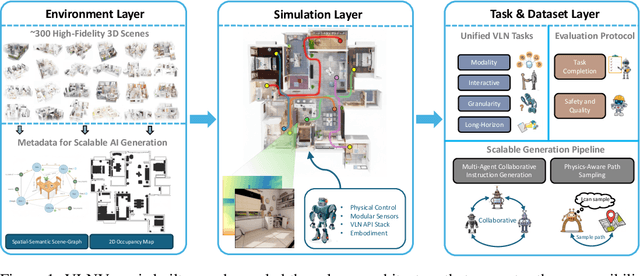
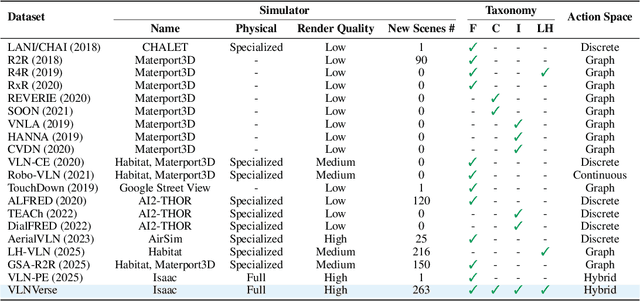
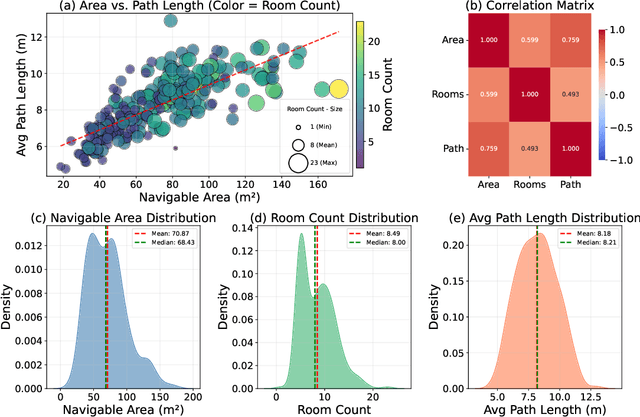
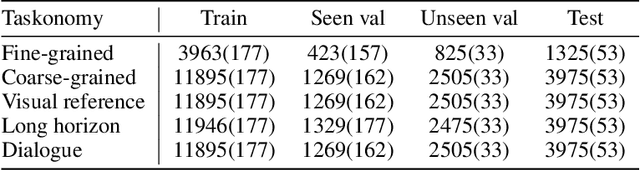
Despite remarkable progress in Vision-Language Navigation (VLN), existing benchmarks remain confined to fixed, small-scale datasets with naive physical simulation. These shortcomings limit the insight that the benchmarks provide into sim-to-real generalization, and create a significant research gap. Furthermore, task fragmentation prevents unified/shared progress in the area, while limited data scales fail to meet the demands of modern LLM-based pretraining. To overcome these limitations, we introduce VLNVerse: a new large-scale, extensible benchmark designed for Versatile, Embodied, Realistic Simulation, and Evaluation. VLNVerse redefines VLN as a scalable, full-stack embodied AI problem. Its Versatile nature unifies previously fragmented tasks into a single framework and provides an extensible toolkit for researchers. Its Embodied design moves beyond intangible and teleporting "ghost" agents that support full-kinematics in a Realistic Simulation powered by a robust physics engine. We leverage the scale and diversity of VLNVerse to conduct a comprehensive Evaluation of existing methods, from classic models to MLLM-based agents. We also propose a novel unified multi-task model capable of addressing all tasks within the benchmark. VLNVerse aims to narrow the gap between simulated navigation and real-world generalization, providing the community with a vital tool to boost research towards scalable, general-purpose embodied locomotion agents.