 Add to Chrome
 Add to Firefox
 Add to Edge
Multi-Teacher Multi-Objective Meta-Learning for Zero-Shot Hyperspectral Band Selection
Jun 12, 2024
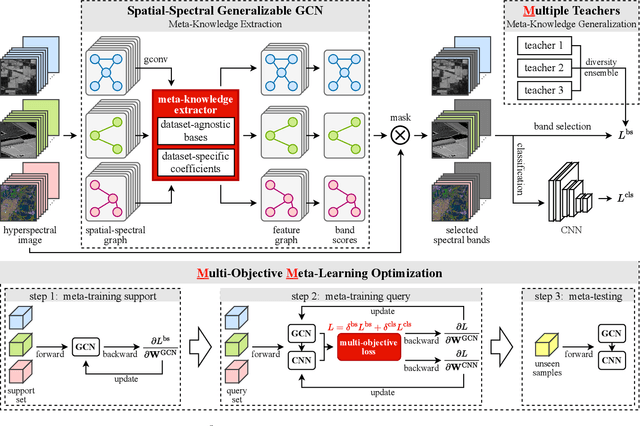
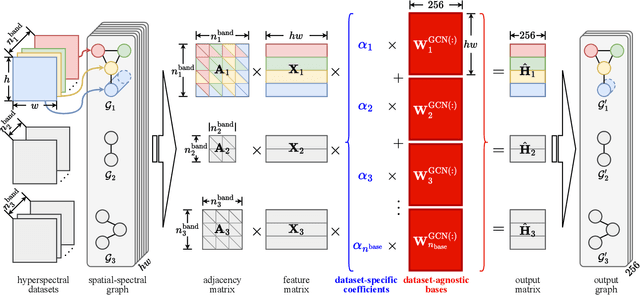
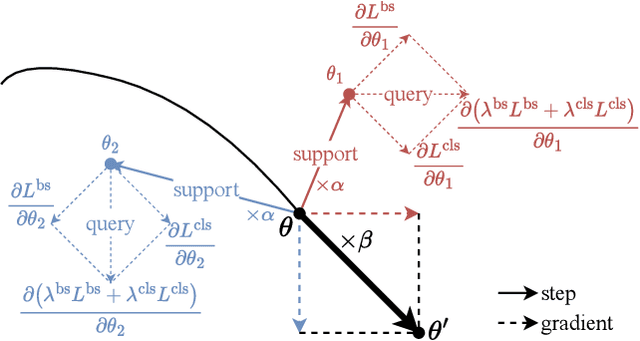
Band selection plays a crucial role in hyperspectral image classification by removing redundant and noisy bands and retaining discriminative ones. However, most existing deep learning-based methods are aimed at dealing with a specific band selection dataset, and need to retrain parameters for new datasets, which significantly limits their generalizability.To address this issue, a novel multi-teacher multi-objective meta-learning network (M$^3$BS) is proposed for zero-shot hyperspectral band selection. In M$^3$BS, a generalizable graph convolution network (GCN) is constructed to generate dataset-agnostic base, and extract compatible meta-knowledge from multiple band selection tasks. To enhance the ability of meta-knowledge extraction, multiple band selection teachers are introduced to provide diverse high-quality experiences.strategy Finally, subsequent classification tasks are attached and jointly optimized with multi-teacher band selection tasks through multi-objective meta-learning in an end-to-end trainable way. Multi-objective meta-learning guarantees to coordinate diverse optimization objectives automatically and adapt to various datasets simultaneously. Once the optimization is accomplished, the acquired meta-knowledge can be directly transferred to unseen datasets without any retraining or fine-tuning. Experimental results demonstrate the effectiveness and efficiency of our proposed method on par with state-of-the-art baselines for zero-shot hyperspectral band selection.

Stable Neighbor Denoising for Source-free Domain Adaptive Segmentation
Jun 10, 2024
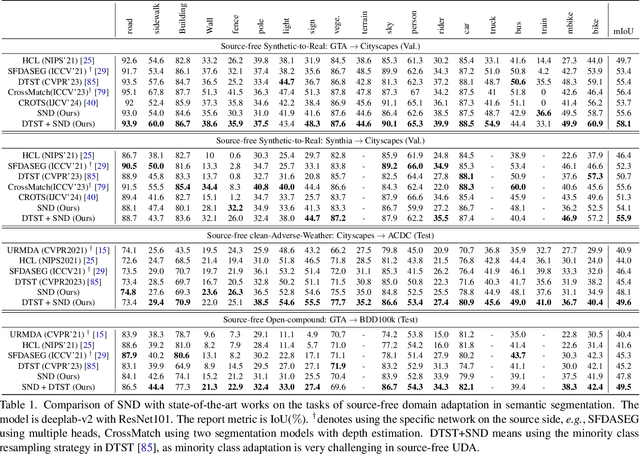
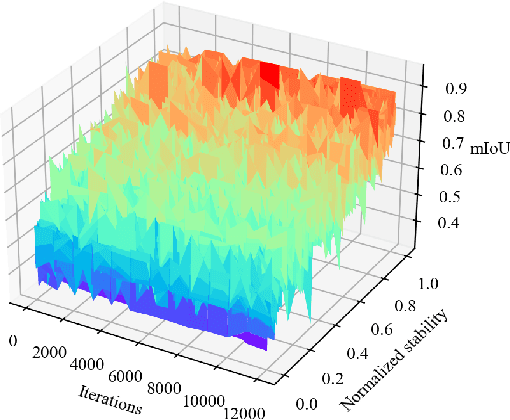
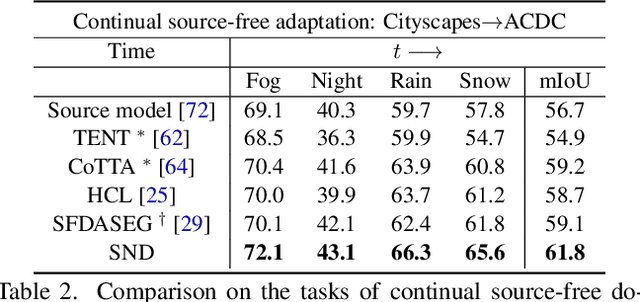
We study source-free unsupervised domain adaptation (SFUDA) for semantic segmentation, which aims to adapt a source-trained model to the target domain without accessing the source data. Many works have been proposed to address this challenging problem, among which uncertainty-based self-training is a predominant approach. However, without comprehensive denoising mechanisms, they still largely fall into biased estimates when dealing with different domains and confirmation bias. In this paper, we observe that pseudo-label noise is mainly contained in unstable samples in which the predictions of most pixels undergo significant variations during self-training. Inspired by this, we propose a novel mechanism to denoise unstable samples with stable ones. Specifically, we introduce the Stable Neighbor Denoising (SND) approach, which effectively discovers highly correlated stable and unstable samples by nearest neighbor retrieval and guides the reliable optimization of unstable samples by bi-level learning. Moreover, we compensate for the stable set by object-level object paste, which can further eliminate the bias caused by less learned classes. Our SND enjoys two advantages. First, SND does not require a specific segmentor structure, endowing its universality. Second, SND simultaneously addresses the issues of class, domain, and confirmation biases during adaptation, ensuring its effectiveness. Extensive experiments show that SND consistently outperforms state-of-the-art methods in various SFUDA semantic segmentation settings. In addition, SND can be easily integrated with other approaches, obtaining further improvements.
* 2024 Conference on Computer Vision and Pattern Recognition
Multiplane Prior Guided Few-Shot Aerial Scene Rendering
Jun 07, 2024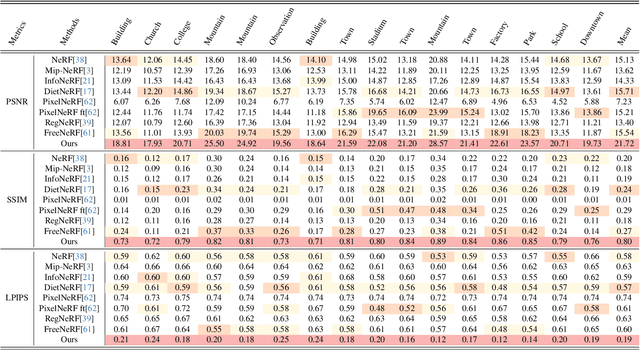
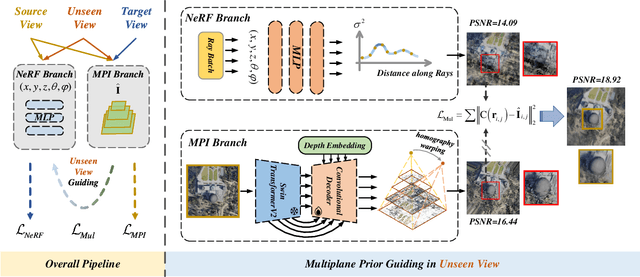


Neural Radiance Fields (NeRF) have been successfully applied in various aerial scenes, yet they face challenges with sparse views due to limited supervision. The acquisition of dense aerial views is often prohibitive, as unmanned aerial vehicles (UAVs) may encounter constraints in perspective range and energy constraints. In this work, we introduce Multiplane Prior guided NeRF (MPNeRF), a novel approach tailored for few-shot aerial scene rendering-marking a pioneering effort in this domain. Our key insight is that the intrinsic geometric regularities specific to aerial imagery could be leveraged to enhance NeRF in sparse aerial scenes. By investigating NeRF's and Multiplane Image (MPI)'s behavior, we propose to guide the training process of NeRF with a Multiplane Prior. The proposed Multiplane Prior draws upon MPI's benefits and incorporates advanced image comprehension through a SwinV2 Transformer, pre-trained via SimMIM. Our extensive experiments demonstrate that MPNeRF outperforms existing state-of-the-art methods applied in non-aerial contexts, by tripling the performance in SSIM and LPIPS even with three views available. We hope our work offers insights into the development of NeRF-based applications in aerial scenes with limited data.
* 17 pages, 8 figures, accepted at CVPR 2024
3rd Place Solution for MOSE Track in CVPR 2024 PVUW workshop: Complex Video Object Segmentation
Jun 06, 2024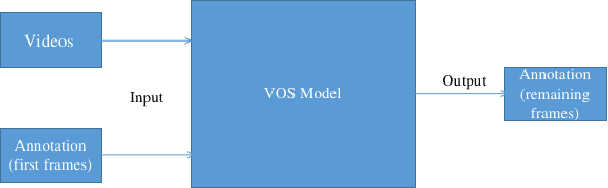
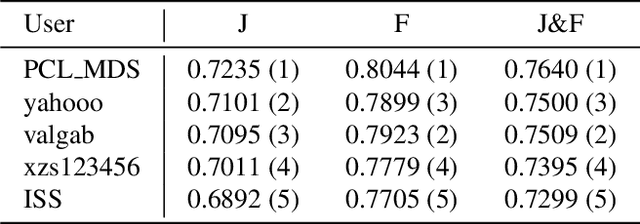
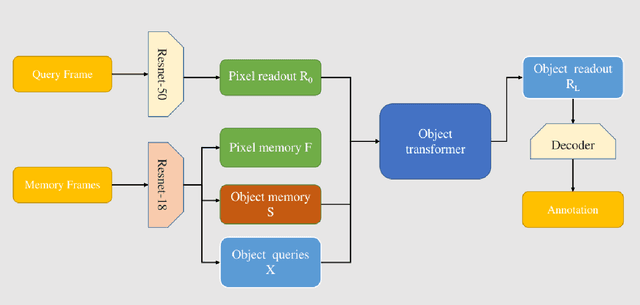
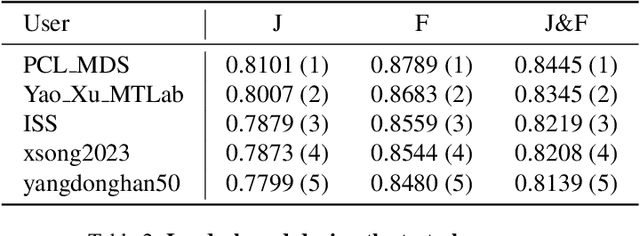
Video Object Segmentation (VOS) is a vital task in computer vision, focusing on distinguishing foreground objects from the background across video frames. Our work draws inspiration from the Cutie model, and we investigate the effects of object memory, the total number of memory frames, and input resolution on segmentation performance. This report validates the effectiveness of our inference method on the coMplex video Object SEgmentation (MOSE) dataset, which features complex occlusions. Our experimental results demonstrate that our approach achieves a J\&F score of 0.8139 on the test set, securing the third position in the final ranking. These findings highlight the robustness and accuracy of our method in handling challenging VOS scenarios.
Automatic Graph Topology-Aware Transformer
May 30, 2024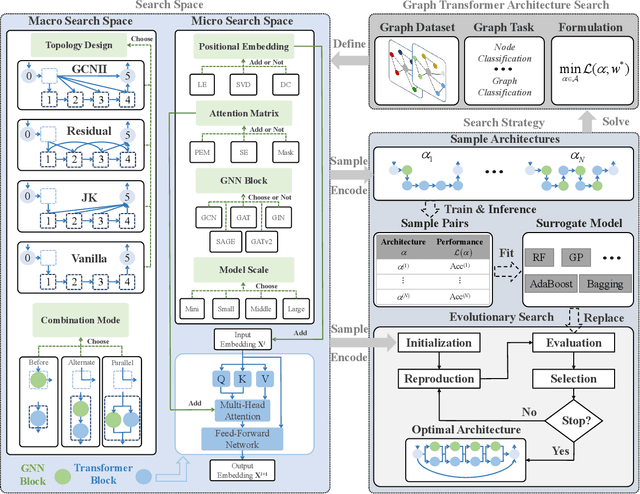
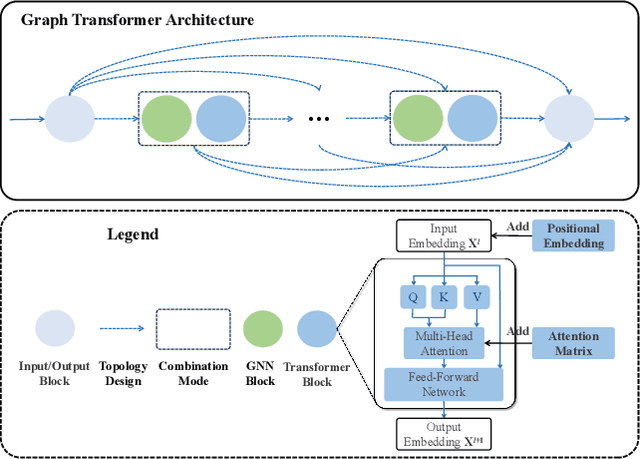
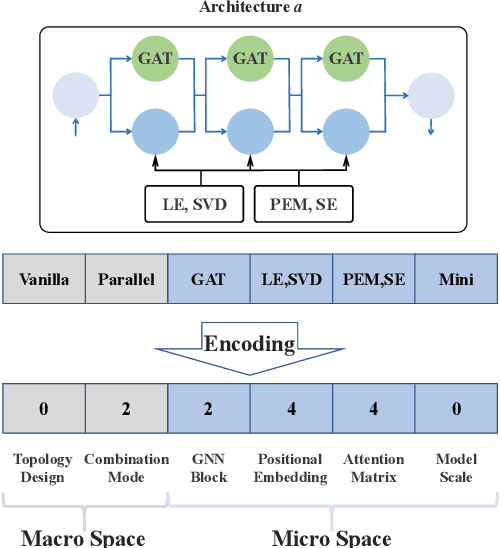
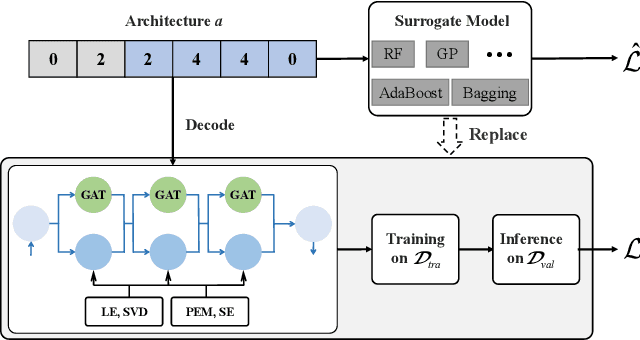
Existing efforts are dedicated to designing many topologies and graph-aware strategies for the graph Transformer, which greatly improve the model's representation capabilities. However, manually determining the suitable Transformer architecture for a specific graph dataset or task requires extensive expert knowledge and laborious trials. This paper proposes an evolutionary graph Transformer architecture search framework (EGTAS) to automate the construction of strong graph Transformers. We build a comprehensive graph Transformer search space with the micro-level and macro-level designs. EGTAS evolves graph Transformer topologies at the macro level and graph-aware strategies at the micro level. Furthermore, a surrogate model based on generic architectural coding is proposed to directly predict the performance of graph Transformers, substantially reducing the evaluation cost of evolutionary search. We demonstrate the efficacy of EGTAS across a range of graph-level and node-level tasks, encompassing both small-scale and large-scale graph datasets. Experimental results and ablation studies show that EGTAS can construct high-performance architectures that rival state-of-the-art manual and automated baselines.
Transcending Fusion: A Multi-Scale Alignment Method for Remote Sensing Image-Text Retrieval
May 29, 2024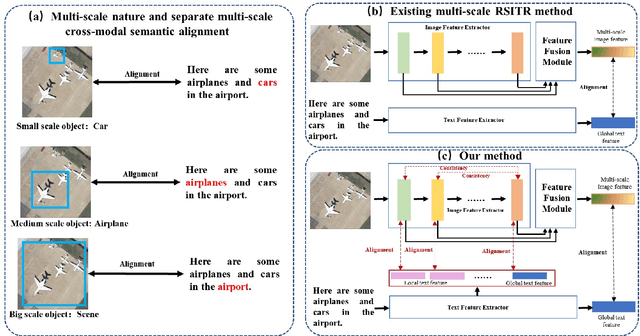
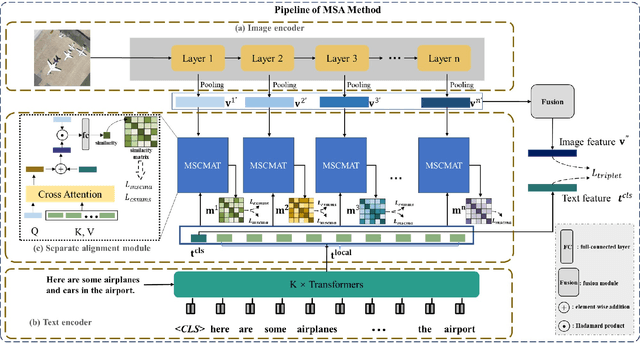
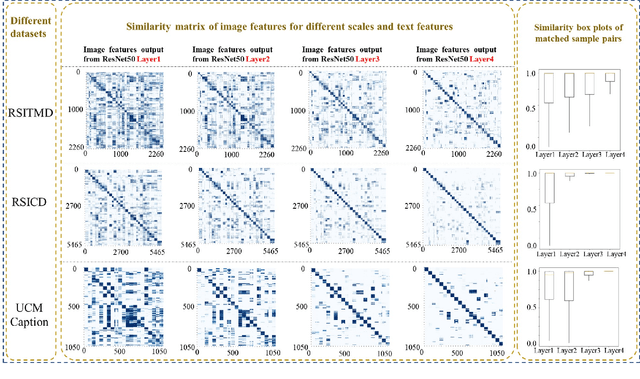
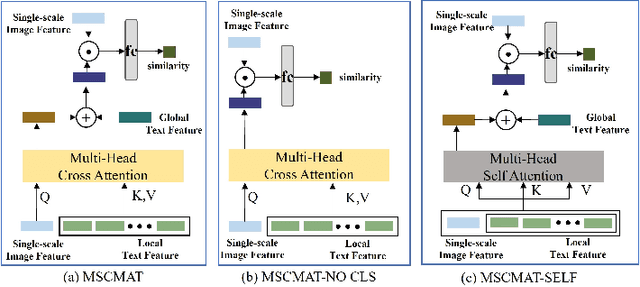
Remote Sensing Image-Text Retrieval (RSITR) is pivotal for knowledge services and data mining in the remote sensing (RS) domain. Considering the multi-scale representations in image content and text vocabulary can enable the models to learn richer representations and enhance retrieval. Current multi-scale RSITR approaches typically align multi-scale fused image features with text features, but overlook aligning image-text pairs at distinct scales separately. This oversight restricts their ability to learn joint representations suitable for effective retrieval. We introduce a novel Multi-Scale Alignment (MSA) method to overcome this limitation. Our method comprises three key innovations: (1) Multi-scale Cross-Modal Alignment Transformer (MSCMAT), which computes cross-attention between single-scale image features and localized text features, integrating global textual context to derive a matching score matrix within a mini-batch, (2) a multi-scale cross-modal semantic alignment loss that enforces semantic alignment across scales, and (3) a cross-scale multi-modal semantic consistency loss that uses the matching matrix from the largest scale to guide alignment at smaller scales. We evaluated our method across multiple datasets, demonstrating its efficacy with various visual backbones and establishing its superiority over existing state-of-the-art methods. The GitHub URL for our project is: https://github.com/yr666666/MSA
Edit-Your-Motion: Space-Time Diffusion Decoupling Learning for Video Motion Editing
May 07, 2024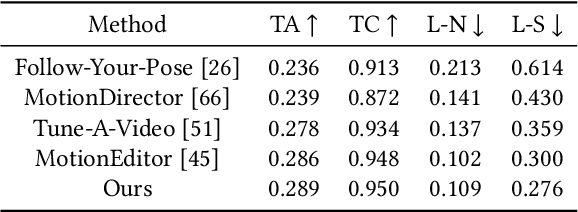
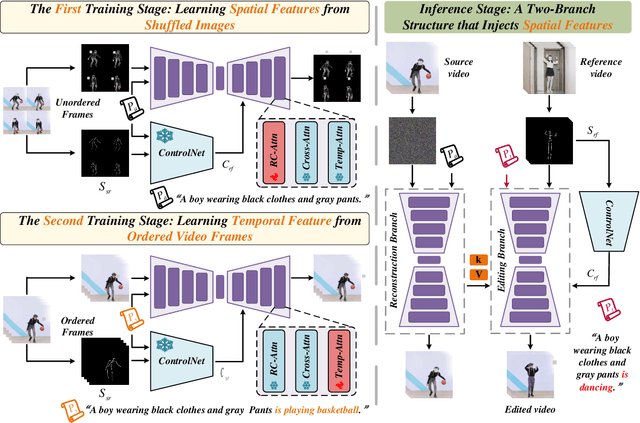
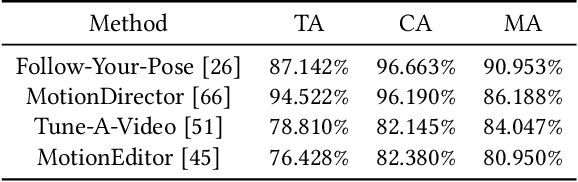
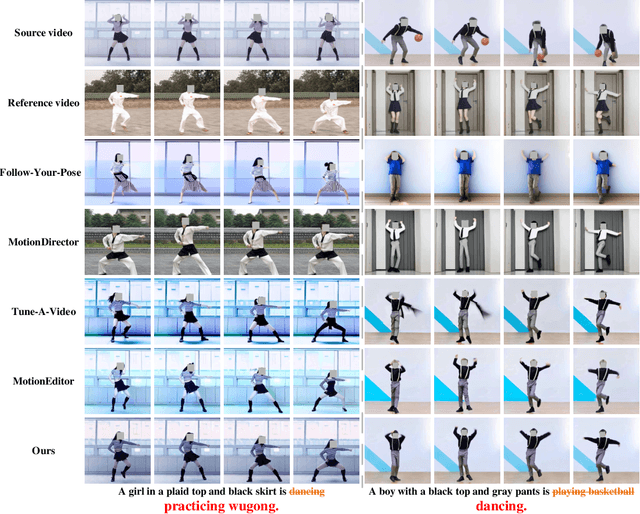
Existing diffusion-based video editing methods have achieved impressive results in motion editing. Most of the existing methods focus on the motion alignment between the edited video and the reference video. However, these methods do not constrain the background and object content of the video to remain unchanged, which makes it possible for users to generate unexpected videos. In this paper, we propose a one-shot video motion editing method called Edit-Your-Motion that requires only a single text-video pair for training. Specifically, we design the Detailed Prompt-Guided Learning Strategy (DPL) to decouple spatio-temporal features in space-time diffusion models. DPL separates learning object content and motion into two training stages. In the first training stage, we focus on learning the spatial features (the features of object content) and breaking down the temporal relationships in the video frames by shuffling them. We further propose Recurrent-Causal Attention (RC-Attn) to learn the consistent content features of the object from unordered video frames. In the second training stage, we restore the temporal relationship in video frames to learn the temporal feature (the features of the background and object's motion). We also adopt the Noise Constraint Loss to smooth out inter-frame differences. Finally, in the inference stage, we inject the content features of the source object into the editing branch through a two-branch structure (editing branch and reconstruction branch). With Edit-Your-Motion, users can edit the motion of objects in the source video to generate more exciting and diverse videos. Comprehensive qualitative experiments, quantitative experiments and user preference studies demonstrate that Edit-Your-Motion performs better than other methods.
S$^2$Mamba: A Spatial-spectral State Space Model for Hyperspectral Image Classification
Apr 28, 2024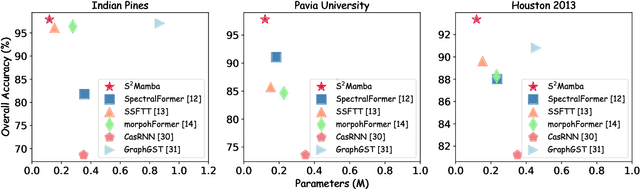
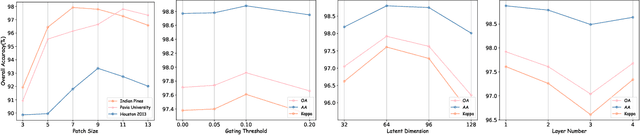
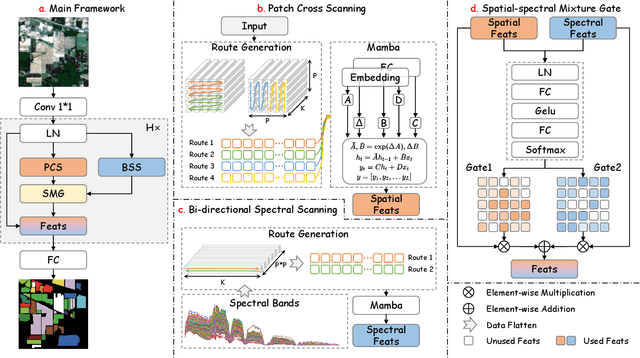
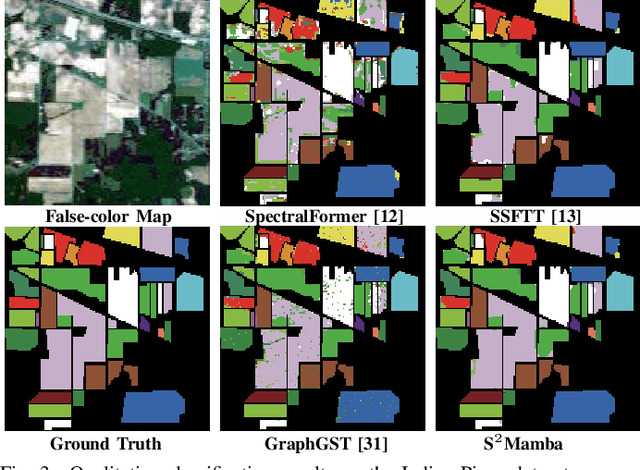
Land cover analysis using hyperspectral images (HSI) remains an open problem due to their low spatial resolution and complex spectral information. Recent studies are primarily dedicated to designing Transformer-based architectures for spatial-spectral long-range dependencies modeling, which is computationally expensive with quadratic complexity. Selective structured state space model (Mamba), which is efficient for modeling long-range dependencies with linear complexity, has recently shown promising progress. However, its potential in hyperspectral image processing that requires handling numerous spectral bands has not yet been explored. In this paper, we innovatively propose S$^2$Mamba, a spatial-spectral state space model for hyperspectral image classification, to excavate spatial-spectral contextual features, resulting in more efficient and accurate land cover analysis. In S$^2$Mamba, two selective structured state space models through different dimensions are designed for feature extraction, one for spatial, and the other for spectral, along with a spatial-spectral mixture gate for optimal fusion. More specifically, S$^2$Mamba first captures spatial contextual relations by interacting each pixel with its adjacent through a Patch Cross Scanning module and then explores semantic information from continuous spectral bands through a Bi-directional Spectral Scanning module. Considering the distinct expertise of the two attributes in homogenous and complicated texture scenes, we realize the Spatial-spectral Mixture Gate by a group of learnable matrices, allowing for the adaptive incorporation of representations learned across different dimensions. Extensive experiments conducted on HSI classification benchmarks demonstrate the superiority and prospect of S$^2$Mamba. The code will be available at: https://github.com/PURE-melo/S2Mamba.
Exploring Beyond Logits: Hierarchical Dynamic Labeling Based on Embeddings for Semi-Supervised Classification
Apr 26, 2024In semi-supervised learning, methods that rely on confidence learning to generate pseudo-labels have been widely proposed. However, increasing research finds that when faced with noisy and biased data, the model's representation network is more reliable than the classification network. Additionally, label generation methods based on model predictions often show poor adaptability across different datasets, necessitating customization of the classification network. Therefore, we propose a Hierarchical Dynamic Labeling (HDL) algorithm that does not depend on model predictions and utilizes image embeddings to generate sample labels. We also introduce an adaptive method for selecting hyperparameters in HDL, enhancing its versatility. Moreover, HDL can be combined with general image encoders (e.g., CLIP) to serve as a fundamental data processing module. We extract embeddings from datasets with class-balanced and long-tailed distributions using pre-trained semi-supervised models. Subsequently, samples are re-labeled using HDL, and the re-labeled samples are used to further train the semi-supervised models. Experiments demonstrate improved model performance, validating the motivation that representation networks are more reliable than classifiers or predictors. Our approach has the potential to change the paradigm of pseudo-label generation in semi-supervised learning.
Unveiling and Mitigating Generalized Biases of DNNs through the Intrinsic Dimensions of Perceptual Manifolds
Apr 22, 2024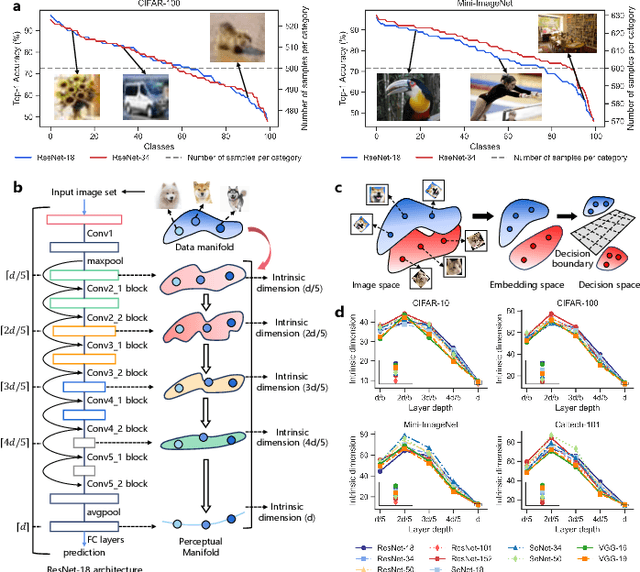
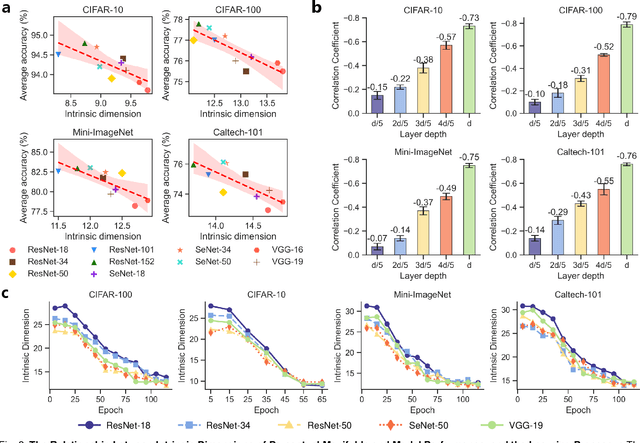
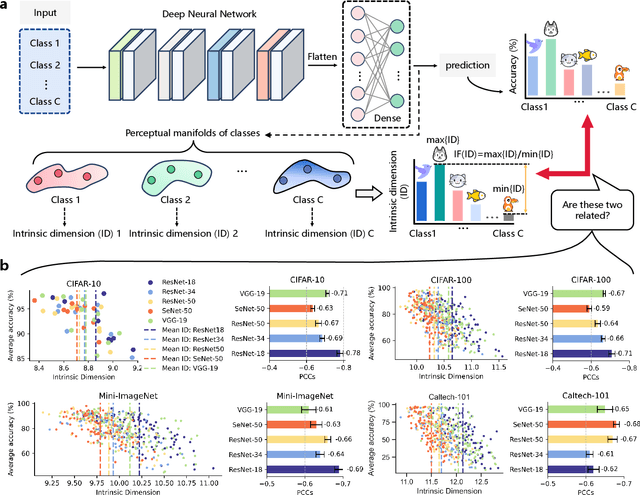
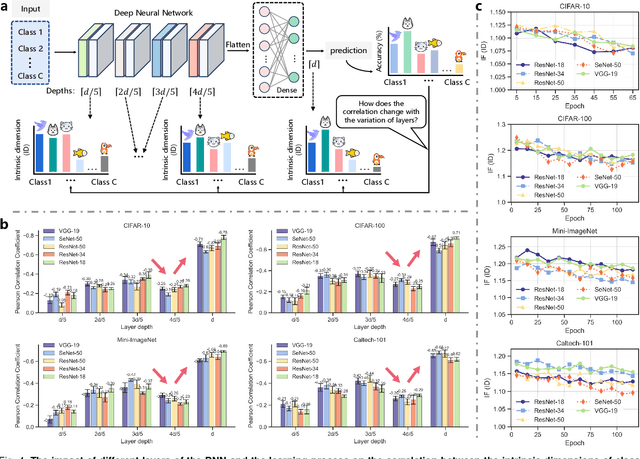
Building fair deep neural networks (DNNs) is a crucial step towards achieving trustworthy artificial intelligence. Delving into deeper factors that affect the fairness of DNNs is paramount and serves as the foundation for mitigating model biases. However, current methods are limited in accurately predicting DNN biases, relying solely on the number of training samples and lacking more precise measurement tools. Here, we establish a geometric perspective for analyzing the fairness of DNNs, comprehensively exploring how DNNs internally shape the intrinsic geometric characteristics of datasets-the intrinsic dimensions (IDs) of perceptual manifolds, and the impact of IDs on the fairness of DNNs. Based on multiple findings, we propose Intrinsic Dimension Regularization (IDR), which enhances the fairness and performance of models by promoting the learning of concise and ID-balanced class perceptual manifolds. In various image recognition benchmark tests, IDR significantly mitigates model bias while improving its performance.