 Add to Chrome
 Add to Firefox
 Add to Edge
Human-LLM Collaborative Inductive Coding for Conceptualizing K-12 Educator AI Use
Jul 30, 2026
Qualitative researchers increasingly encounter interaction corpora whose scale exceeds what manual coding alone can address, and large language models (LLMs) are frequently proposed as analytic assistants. The open questions are not whether LLMs can participate in qualitative analysis but to what extent, in what phases, and under what safeguards. This article provides a detailed procedural account of a multi-phase human-LLM collaborative pipeline that adapted open, axial, and selective coding to develop a hierarchical codebook from 45,000 messages exchanged between K-12 educators and a generative AI platform. Across three phases, LLMs generated candidate labels and structured annotations at scale, while human researchers retained conceptual authority over category definitions, merging decisions, and interpretive frameworks. The resulting instrument was then tested through systematic human coding, in which three trained coders with educational domain expertise applied the codebook to an independent sample of 2,560 messages, established reliability through iterative calibration using set-valued agreement measures appropriate for multi-label annotation, and extended the instrument with five codes that the LLM-assisted phases had not surfaced. The final codebook comprises 72 items within 19 categories and six domains. We reflect on the methodological decisions the pipeline required, including the choice of a conversational unit of analysis, the treatment of the LLM as a labeling instrument rather than an interpretive agent, the measurement of intercoder agreement under multi-label coding, and the conditions under which human domain expertise remained decisive. The account is offered as an auditable template for qualitative researchers considering LLM assistance in codebook development while preserving human interpretive authority.

Agreement Is Not Quality: Blind Expert Verification of Human and LLM Qualitative Coding When Human Consensus Is Not Ground Truth
Jul 30, 2026Evaluations of LLM-assisted qualitative coding almost universally measure model performance as agreement with human coders, a practice that presumes human coding is the standard to approximate. This study provides empirical evidence that the presumption fails in ways agreement metrics cannot detect. Five LLM systems and three trained human coders independently applied a 72-item hierarchical codebook to 2,560 educator messages from a K-12 AI platform. Beyond conventional agreement analysis, an independent domain expert judged 855 pairwise comparisons of code sets blind to source, treating human and machine sources symmetrically. The two evaluation approaches diverge in both directions. Human-LLM agreement (mean Jaccard 0.30) falls well below human-human agreement (0.52), which standard practice would read as inferior LLM coding, yet the blind verifier preferred human and LLM coding at indistinguishable rates (51.5% vs. 48.5%, p = 0.537), and a Bradley-Terry ranking placed two LLMs above two of three human coders. For several substantive codes, human consensus encoded shared bias that the verifier rejected in favor of the LLM interpretation. Agreement-based evaluation is therefore insufficient for automation decisions, and the study demonstrates a transferable verification protocol and a code-level division-of-labor framework.
GenAI for Systems: Recurring Challenges and Design Principles from Software to Silicon
Feb 16, 2026Generative AI is reshaping how computing systems are designed, optimized, and built, yet research remains fragmented across software, architecture, and chip design communities. This paper takes a cross-stack perspective, examining how generative models are being applied from code generation and distributed runtimes through hardware design space exploration to RTL synthesis, physical layout, and verification. Rather than reviewing each layer in isolation, we analyze how the same structural difficulties and effective responses recur across the stack. Our central finding is one of convergence. Despite the diversity of domains and tools, the field keeps encountering five recurring challenges (the feedback loop crisis, the tacit knowledge problem, trust and validation, co-design across boundaries, and the shift from determinism to dynamism) and keeps arriving at five design principles that independently emerge as effective responses (embracing hybrid approaches, designing for continuous feedback, separating concerns by role, matching methods to problem structure, and building on decades of systems knowledge). We organize these into a challenge--principle map that serves as a diagnostic and design aid, showing which principles have proven effective for which challenges across layers. Through concrete cross-stack examples, we show how systems navigate this map as they mature, and argue that the field needs shared engineering methodology, including common vocabularies, cross-layer benchmarks, and systematic design practices, so that progress compounds across communities rather than being rediscovered in each one. Our analysis covers more than 275 papers spanning eleven application areas across three layers of the computing stack, and distills open research questions that become visible only from a cross-layer vantage point.
AI as a Teaching Partner: Early Lessons from Classroom Codesign with Secondary Teachers
Dec 12, 2025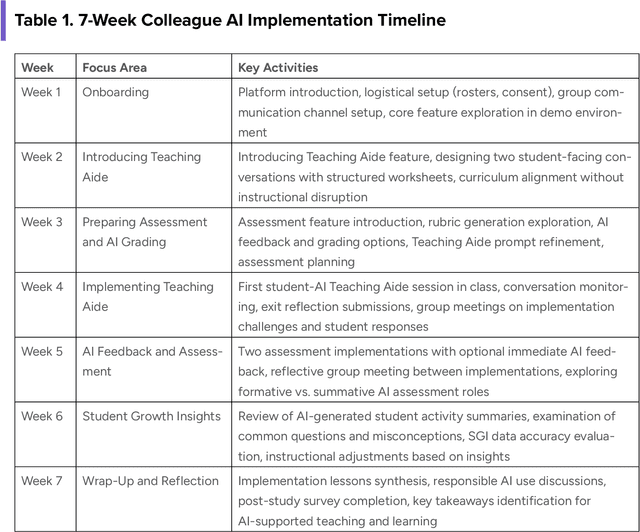
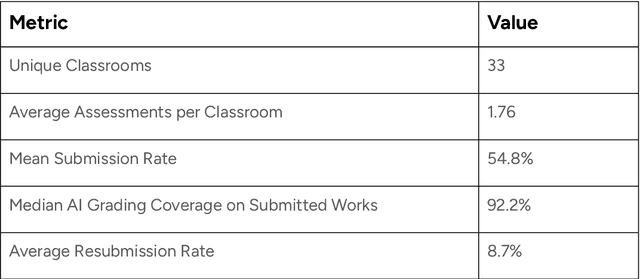
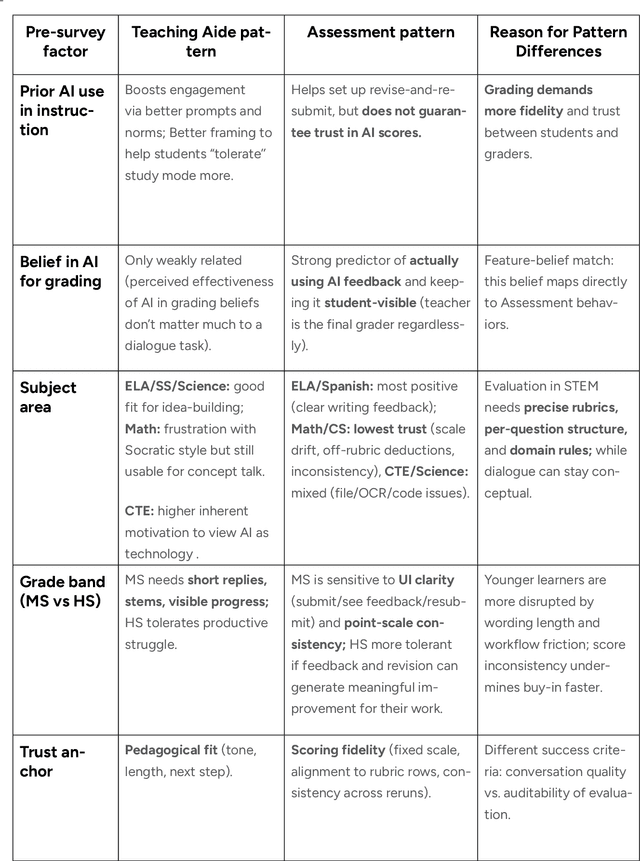
This report presents a comprehensive account of the Colleague AI Classroom pilot, a collaborative design (co-design) study that brought generative AI technology directly into real classrooms. In this study, AI functioned as a third agent, an active participant that mediated feedback, supported inquiry, and extended teachers' instructional reach while preserving human judgment and teacher authority. Over seven weeks in spring 2025, 21 in-service teachers from four Washington State public school districts and one independent school integrated four AI-powered features of the Colleague AI Classroom into their instruction: Teaching Aide, Assessment and AI Grading, AI Tutor, and Student Growth Insights. More than 600 students in grades 6-12 used the platform in class at the direction of their teachers, who designed and facilitated the AI activities. During the Classroom pilot, teachers were co-design partners: they planned activities, implemented them with students, and provided weekly reflections on AI's role in classroom settings. The teachers' feedback guided iterative improvements for Colleague AI. The research team captured rich data through surveys, planning and reflection forms, group meetings, one-on-one interviews, and platform usage logs to understand where AI adds instructional value and where it requires refinement.
Decoding Instructional Dialogue: Human-AI Collaborative Analysis of Teacher Use of AI Tool at Scale
Jul 23, 2025The integration of large language models (LLMs) into educational tools has the potential to substantially impact how teachers plan instruction, support diverse learners, and engage in professional reflection. Yet little is known about how educators actually use these tools in practice and how their interactions with AI can be meaningfully studied at scale. This paper presents a human-AI collaborative methodology for large-scale qualitative analysis of over 140,000 educator-AI messages drawn from a generative AI platform used by K-12 teachers. Through a four-phase coding pipeline, we combined inductive theme discovery, codebook development, structured annotation, and model benchmarking to examine patterns of educator engagement and evaluate the performance of LLMs in qualitative coding tasks. We developed a hierarchical codebook aligned with established teacher evaluation frameworks, capturing educators' instructional goals, contextual needs, and pedagogical strategies. Our findings demonstrate that LLMs, particularly Claude 3.5 Haiku, can reliably support theme identification, extend human recognition in complex scenarios, and outperform open-weight models in both accuracy and structural reliability. The analysis also reveals substantive patterns in how educators inquire AI to enhance instructional practices (79.7 percent of total conversations), create or adapt content (76.1 percent), support assessment and feedback loop (46.9 percent), attend to student needs for tailored instruction (43.3 percent), and assist other professional responsibilities (34.2 percent), highlighting emerging AI-related competencies that have direct implications for teacher preparation and professional development. This study offers a scalable, transparent model for AI-augmented qualitative research and provides foundational insights into the evolving role of generative AI in educational practice.
Human Misperception of Generative-AI Alignment: A Laboratory Experiment
Feb 20, 2025We conduct an incentivized laboratory experiment to study people's perception of generative artificial intelligence (GenAI) alignment in the context of economic decision-making. Using a panel of economic problems spanning the domains of risk, time preference, social preference, and strategic interactions, we ask human subjects to make choices for themselves and to predict the choices made by GenAI on behalf of a human user. We find that people overestimate the degree of alignment between GenAI's choices and human choices. In every problem, human subjects' average prediction about GenAI's choice is substantially closer to the average human-subject choice than it is to the GenAI choice. At the individual level, different subjects' predictions about GenAI's choice in a given problem are highly correlated with their own choices in the same problem. We explore the implications of people overestimating GenAI alignment in a simple theoretical model.
High-Throughput SAT Sampling
Feb 12, 2025In this work, we present a novel technique for GPU-accelerated Boolean satisfiability (SAT) sampling. Unlike conventional sampling algorithms that directly operate on conjunctive normal form (CNF), our method transforms the logical constraints of SAT problems by factoring their CNF representations into simplified multi-level, multi-output Boolean functions. It then leverages gradient-based optimization to guide the search for a diverse set of valid solutions. Our method operates directly on the circuit structure of refactored SAT instances, reinterpreting the SAT problem as a supervised multi-output regression task. This differentiable technique enables independent bit-wise operations on each tensor element, allowing parallel execution of learning processes. As a result, we achieve GPU-accelerated sampling with significant runtime improvements ranging from $33.6\times$ to $523.6\times$ over state-of-the-art heuristic samplers. We demonstrate the superior performance of our sampling method through an extensive evaluation on $60$ instances from a public domain benchmark suite utilized in previous studies.
Training-Aware Risk Control for Intensity Modulated Radiation Therapies Quality Assurance with Conformal Prediction
Jan 15, 2025Measurement quality assurance (QA) practices play a key role in the safe use of Intensity Modulated Radiation Therapies (IMRT) for cancer treatment. These practices have reduced measurement-based IMRT QA failure below 1%. However, these practices are time and labor intensive which can lead to delays in patient care. In this study, we examine how conformal prediction methodologies can be used to robustly triage plans. We propose a new training-aware conformal risk control method by combining the benefit of conformal risk control and conformal training. We incorporate the decision making thresholds based on the gamma passing rate, along with the risk functions used in clinical evaluation, into the design of the risk control framework. Our method achieves high sensitivity and specificity and significantly reduces the number of plans needing measurement without generating a huge confidence interval. Our results demonstrate the validity and applicability of conformal prediction methods for improving efficiency and reducing the workload of the IMRT QA process.
KL-divergence Based Deep Learning for Discrete Time Model
Aug 10, 2022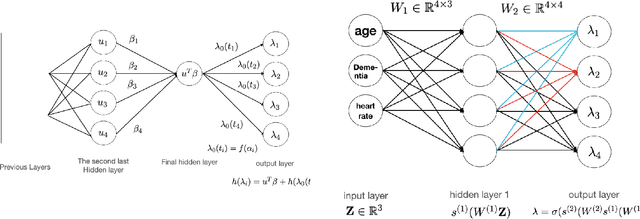
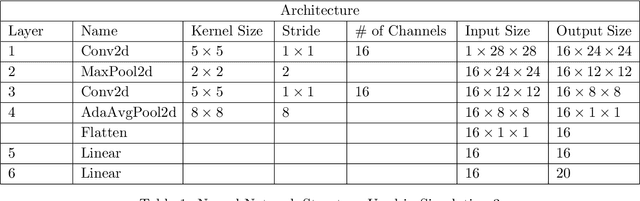
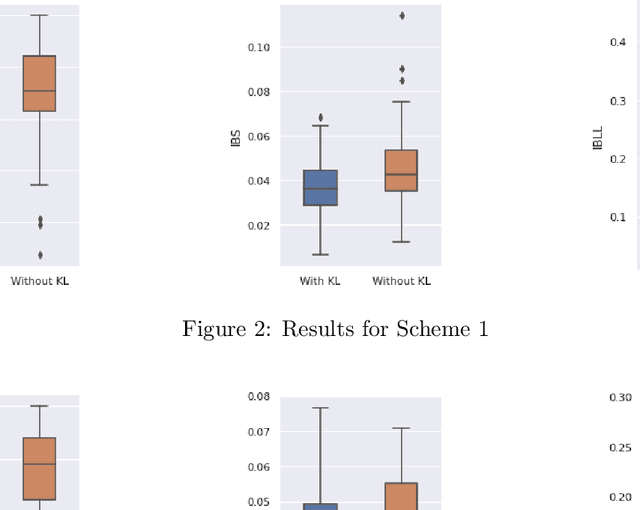
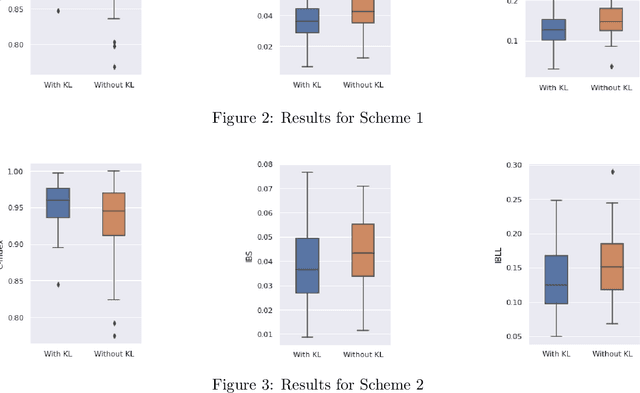
Neural Network (Deep Learning) is a modern model in Artificial Intelligence and it has been exploited in Survival Analysis. Although several improvements have been shown by previous works, training an excellent deep learning model requires a huge amount of data, which may not hold in practice. To address this challenge, we develop a Kullback-Leibler-based (KL) deep learning procedure to integrate external survival prediction models with newly collected time-to-event data. Time-dependent KL discrimination information is utilized to measure the discrepancy between the external and internal data. This is the first work considering using prior information to deal with short data problem in Survival Analysis for deep learning. Simulation and real data results show that the proposed model achieves better performance and higher robustness compared with previous works.
Covariance-Insured Screening
May 17, 2018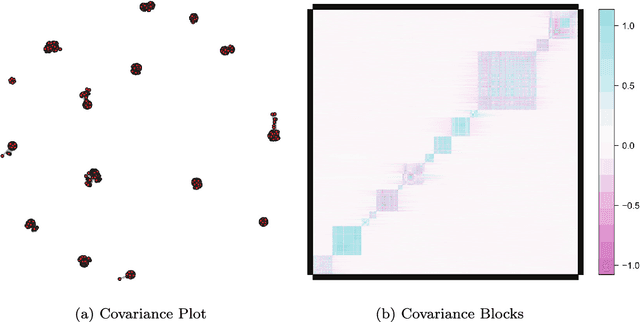
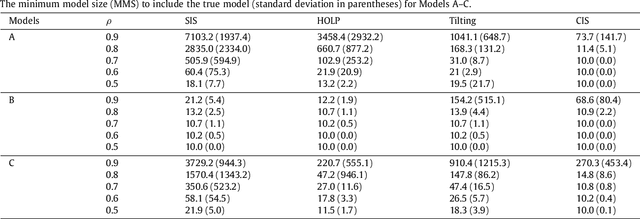
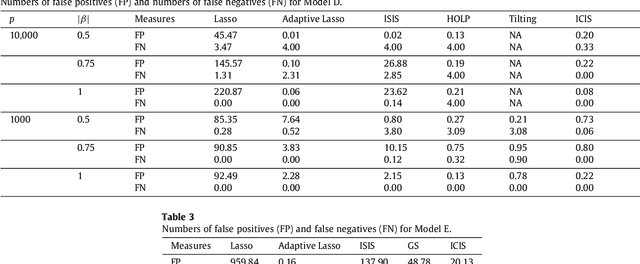
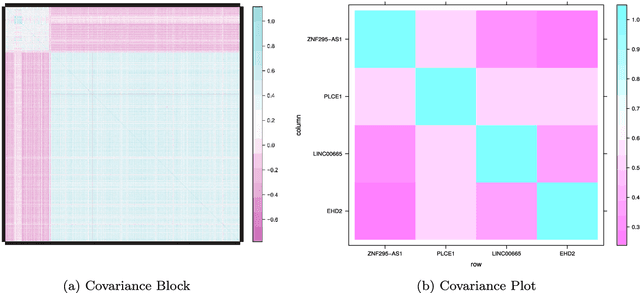
Modern bio-technologies have produced a vast amount of high-throughput data with the number of predictors far greater than the sample size. In order to identify more novel biomarkers and understand biological mechanisms, it is vital to detect signals weakly associated with outcomes among ultrahigh-dimensional predictors. However, existing screening methods, which typically ignore correlation information, are likely to miss these weak signals. By incorporating the inter-feature dependence, we propose a covariance-insured screening methodology to identify predictors that are jointly informative but only marginally weakly associated with outcomes. The validity of the method is examined via extensive simulations and real data studies for selecting potential genetic factors related to the onset of cancer.