 Add to Chrome
 Add to Firefox
 Add to Edge
AI as a Teaching Partner: Early Lessons from Classroom Codesign with Secondary Teachers
Dec 12, 2025
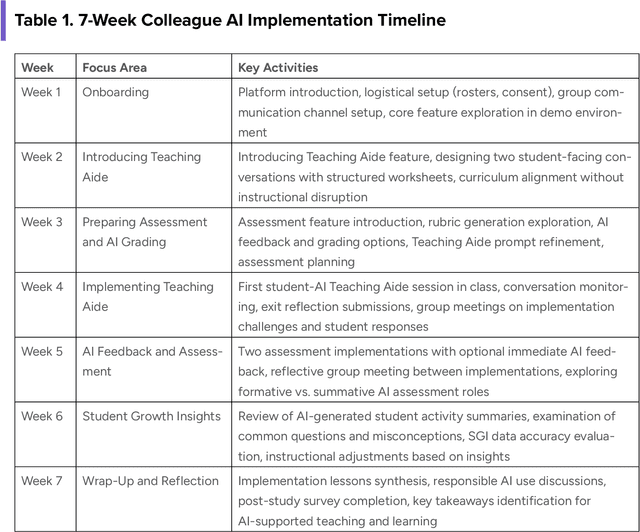
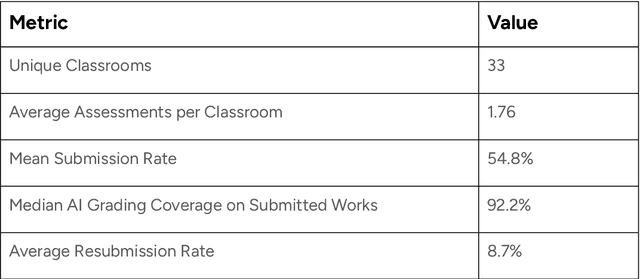
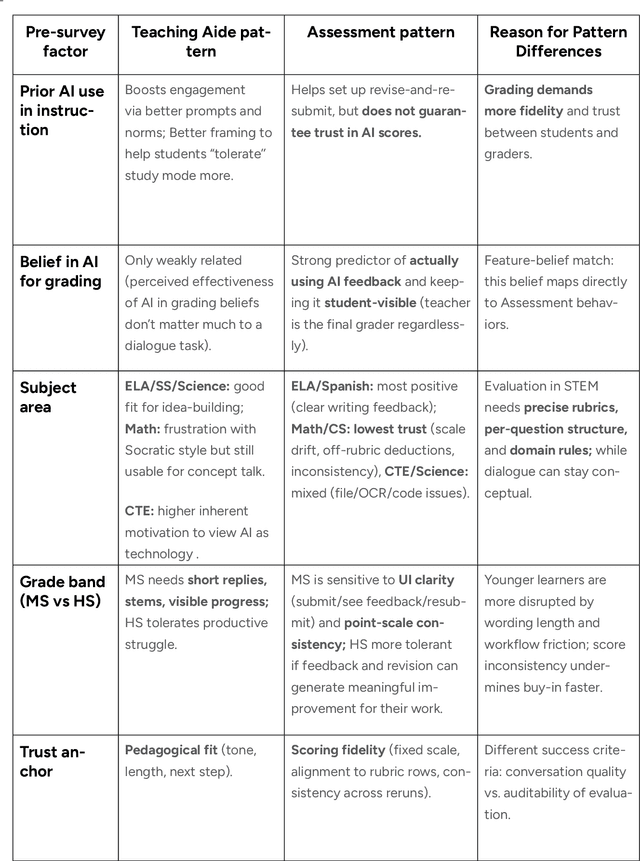
This report presents a comprehensive account of the Colleague AI Classroom pilot, a collaborative design (co-design) study that brought generative AI technology directly into real classrooms. In this study, AI functioned as a third agent, an active participant that mediated feedback, supported inquiry, and extended teachers' instructional reach while preserving human judgment and teacher authority. Over seven weeks in spring 2025, 21 in-service teachers from four Washington State public school districts and one independent school integrated four AI-powered features of the Colleague AI Classroom into their instruction: Teaching Aide, Assessment and AI Grading, AI Tutor, and Student Growth Insights. More than 600 students in grades 6-12 used the platform in class at the direction of their teachers, who designed and facilitated the AI activities. During the Classroom pilot, teachers were co-design partners: they planned activities, implemented them with students, and provided weekly reflections on AI's role in classroom settings. The teachers' feedback guided iterative improvements for Colleague AI. The research team captured rich data through surveys, planning and reflection forms, group meetings, one-on-one interviews, and platform usage logs to understand where AI adds instructional value and where it requires refinement.

Enhancing Instructional Quality: Leveraging Computer-Assisted Textual Analysis to Generate In-Depth Insights from Educational Artifacts
Mar 06, 2024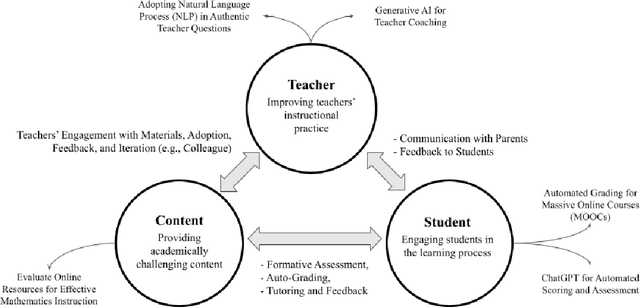
This paper explores the transformative potential of computer-assisted textual analysis in enhancing instructional quality through in-depth insights from educational artifacts. We integrate Richard Elmore's Instructional Core Framework to examine how artificial intelligence (AI) and machine learning (ML) methods, particularly natural language processing (NLP), can analyze educational content, teacher discourse, and student responses to foster instructional improvement. Through a comprehensive review and case studies within the Instructional Core Framework, we identify key areas where AI/ML integration offers significant advantages, including teacher coaching, student support, and content development. We unveil patterns that indicate AI/ML not only streamlines administrative tasks but also introduces novel pathways for personalized learning, providing actionable feedback for educators and contributing to a richer understanding of instructional dynamics. This paper emphasizes the importance of aligning AI/ML technologies with pedagogical goals to realize their full potential in educational settings, advocating for a balanced approach that considers ethical considerations, data quality, and the integration of human expertise.