 Add to Chrome
 Add to Firefox
 Add to Edge
When to Personalize Household Object Search: A Rigidity-Gated Hybrid Policy
Jun 18, 2026
Service robots searching for household objects rely on spatial priors to reduce search cost, yet object locations can vary with resident traits. Collecting longitudinal, trait-specific in-home trajectories is invasive and hard to scale. We study when personalization helps and propose PerSim, a rigidity-gated hybrid policy that combines a trait-conditioned prior with a population-frequency baseline, personalizing only when placement behavior is variable. To scale resident-conditioned dynamics, we employ a human-calibrated simulation pipeline to generate and validate object-placement transitions in diverse home layouts, and train a predictor that injects continuous Big Five vectors to output room-level priors and within-room co-occurrence cues. In a unified human study (N=200), dual-layer validation shows that (i) synthetic transitions are judged behaviorally plausible (mean 3.85/5, p < 1e-6), and (ii) in a blinded A/B comparison, personalization is favored primarily for low-rigidity objects (p=0.005), while the population-frequency baseline remains strong for universally placed items, yielding a decision rule for when to personalize. In an offline objective test, we observe a small but significant improvement on unseen continuous trait vectors over nearest discrete configuration matching (p=0.035), supporting interpolation in five-dimensional trait space. Finally, in a home digital twin we show that PerSim reduces expected search cost by combining room visitation effort with within-room cue checking, demonstrating end-to-end gains beyond isolated prediction metrics.

Structure-Adaptive Sparse Diffusion in Voxel Space for 3D Medical Image Enhancement
Apr 20, 2026Three-dimensional (3D) medical image enhancement, including denoising and super-resolution, is critical for clinical diagnosis in CT, PET, and MRI. Although diffusion models have shown remarkable success in 2D medical imaging, scaling them to high-resolution 3D volumes remains computationally prohibitive due to lengthy diffusion trajectories over high-dimensional volumetric data. We observe that in conditional enhancement, strong anatomical priors in the degraded input render dense noise schedules largely redundant. Leveraging this insight, we propose a sparse voxel-space diffusion framework that trains and samples on a compact set of uniformly subsampled timesteps. The network predicts clean data directly on the data manifold, supervised in velocity space for stable gradient scaling. A lightweight Structure-aware Trajectory Modulation (STM) module recalibrates time embeddings at each network block based on local anatomical content, enabling structure-adaptive denoising over the shared sparse schedule. Operating directly in voxel space, our framework preserves fine anatomical detail without lossy compression while achieving up to $10\times$ training acceleration. Experiments on four datasets spanning CT, PET, and MRI demonstrate state-of-the-art performance on both denoising and super-resolution tasks. Our code is publicly available at: https://github.com/mirthAI/sparse-3d-diffusion.
A Fast AI Surrogate for Coastal Ocean Circulation Models
Oct 19, 2024


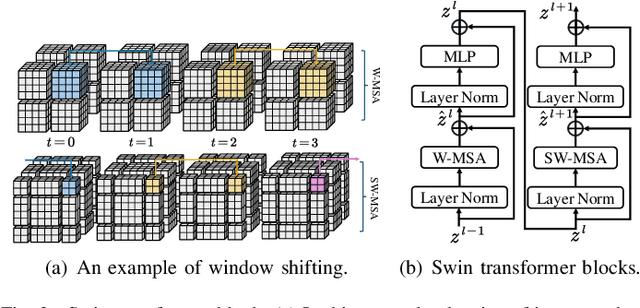
Nearly 900 million people live in low-lying coastal zones around the world and bear the brunt of impacts from more frequent and severe hurricanes and storm surges. Oceanographers simulate ocean current circulation along the coasts to develop early warning systems that save lives and prevent loss and damage to property from coastal hazards. Traditionally, such simulations are conducted using coastal ocean circulation models such as the Regional Ocean Modeling System (ROMS), which usually runs on an HPC cluster with multiple CPU cores. However, the process is time-consuming and energy expensive. While coarse-grained ROMS simulations offer faster alternatives, they sacrifice detail and accuracy, particularly in complex coastal environments. Recent advances in deep learning and GPU architecture have enabled the development of faster AI (neural network) surrogates. This paper introduces an AI surrogate based on a 4D Swin Transformer to simulate coastal tidal wave propagation in an estuary for both hindcast and forecast (up to 12 days). Our approach not only accelerates simulations but also incorporates a physics-based constraint to detect and correct inaccurate results, ensuring reliability while minimizing manual intervention. We develop a fully GPU-accelerated workflow, optimizing the model training and inference pipeline on NVIDIA DGX-2 A100 GPUs. Our experiments demonstrate that our AI surrogate reduces the time cost of 12-day forecasting of traditional ROMS simulations from 9,908 seconds (on 512 CPU cores) to 22 seconds (on one A100 GPU), achieving over 450$\times$ speedup while maintaining high-quality simulation results. This work contributes to oceanographic modeling by offering a fast, accurate, and physically consistent alternative to traditional simulation models, particularly for real-time forecasting in rapid disaster response.
Open-FinLLMs: Open Multimodal Large Language Models for Financial Applications
Aug 20, 2024


Large language models (LLMs) have advanced financial applications, yet they often lack sufficient financial knowledge and struggle with tasks involving multi-modal inputs like tables and time series data. To address these limitations, we introduce \textit{Open-FinLLMs}, a series of Financial LLMs. We begin with FinLLaMA, pre-trained on a 52 billion token financial corpus, incorporating text, tables, and time-series data to embed comprehensive financial knowledge. FinLLaMA is then instruction fine-tuned with 573K financial instructions, resulting in FinLLaMA-instruct, which enhances task performance. Finally, we present FinLLaVA, a multimodal LLM trained with 1.43M image-text instructions to handle complex financial data types. Extensive evaluations demonstrate FinLLaMA's superior performance over LLaMA3-8B, LLaMA3.1-8B, and BloombergGPT in both zero-shot and few-shot settings across 19 and 4 datasets, respectively. FinLLaMA-instruct outperforms GPT-4 and other Financial LLMs on 15 datasets. FinLLaVA excels in understanding tables and charts across 4 multimodal tasks. Additionally, FinLLaMA achieves impressive Sharpe Ratios in trading simulations, highlighting its robust financial application capabilities. We will continually maintain and improve our models and benchmarks to support ongoing innovation in academia and industry.