 Add to Chrome
 Add to Firefox
 Add to Edge
Partial Rank Similarity Minimization Method for Quality MOS Prediction of Unseen Speech Synthesis Systems in Zero-Shot and Semi-supervised setting
Oct 08, 2023
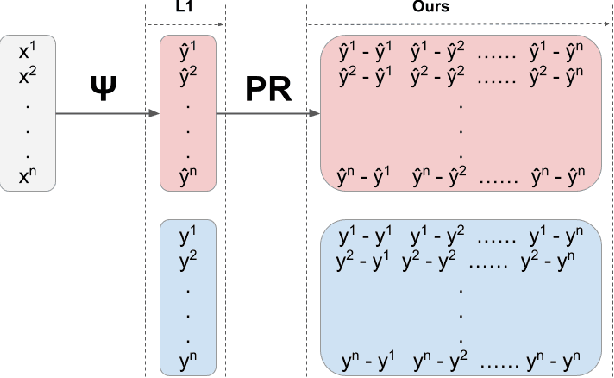

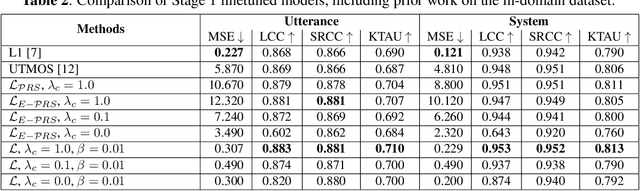
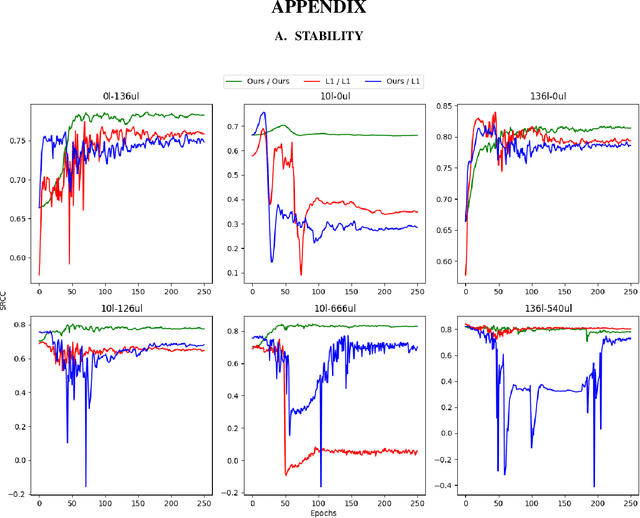
This paper introduces a novel objective function for quality mean opinion score (MOS) prediction of unseen speech synthesis systems. The proposed function measures the similarity of relative positions of predicted MOS values, in a mini-batch, rather than the actual MOS values. That is the partial rank similarity is measured (PRS) rather than the individual MOS values as with the L1 loss. Our experiments on out-of-domain speech synthesis systems demonstrate that the PRS outperforms L1 loss in zero-shot and semi-supervised settings, exhibiting stronger correlation with ground truth. These findings highlight the importance of considering rank order, as done by PRS, when training MOS prediction models. We also argue that mean squared error and linear correlation coefficient metrics may be unreliable for evaluating MOS prediction models. In conclusion, PRS-trained models provide a robust framework for evaluating speech quality and offer insights for developing high-quality speech synthesis systems. Code and models are available at github.com/nii-yamagishilab/partial_rank_similarity/

The VoiceMOS Challenge 2023: Zero-shot Subjective Speech Quality Prediction for Multiple Domains
Oct 07, 2023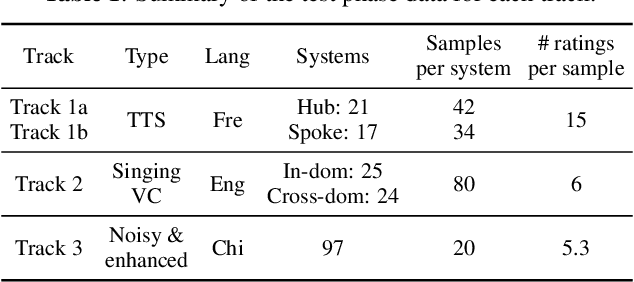

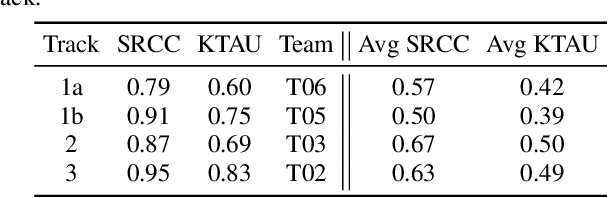
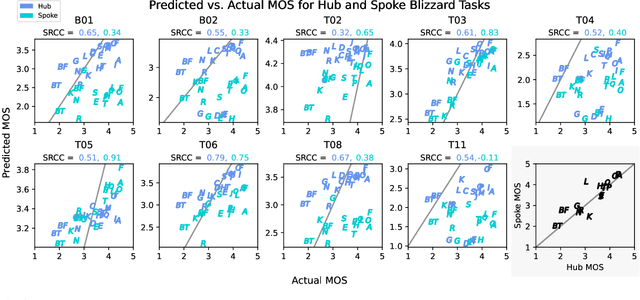
We present the second edition of the VoiceMOS Challenge, a scientific event that aims to promote the study of automatic prediction of the mean opinion score (MOS) of synthesized and processed speech. This year, we emphasize real-world and challenging zero-shot out-of-domain MOS prediction with three tracks for three different voice evaluation scenarios. Ten teams from industry and academia in seven different countries participated. Surprisingly, we found that the two sub-tracks of French text-to-speech synthesis had large differences in their predictability, and that singing voice-converted samples were not as difficult to predict as we had expected. Use of diverse datasets and listener information during training appeared to be successful approaches.
How Close are Other Computer Vision Tasks to Deepfake Detection?
Oct 02, 2023In this paper, we challenge the conventional belief that supervised ImageNet-trained models have strong generalizability and are suitable for use as feature extractors in deepfake detection. We present a new measurement, "model separability," for visually and quantitatively assessing a model's raw capacity to separate data in an unsupervised manner. We also present a systematic benchmark for determining the correlation between deepfake detection and other computer vision tasks using pre-trained models. Our analysis shows that pre-trained face recognition models are more closely related to deepfake detection than other models. Additionally, models trained using self-supervised methods are more effective in separation than those trained using supervised methods. After fine-tuning all models on a small deepfake dataset, we found that self-supervised models deliver the best results, but there is a risk of overfitting. Our results provide valuable insights that should help researchers and practitioners develop more effective deepfake detection models.
Spoofing attack augmentation: can differently-trained attack models improve generalisation?
Sep 18, 2023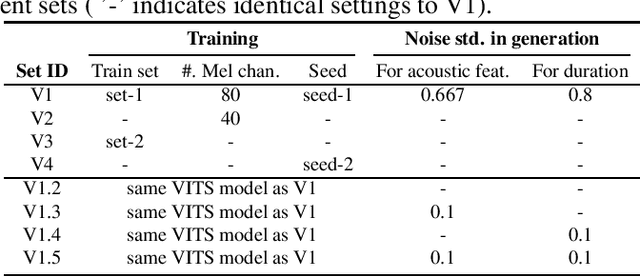
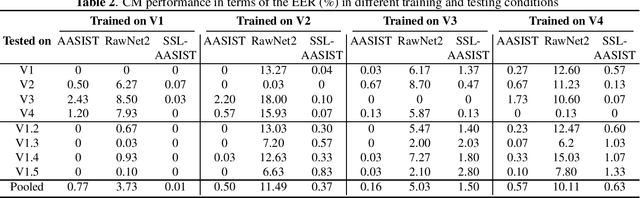
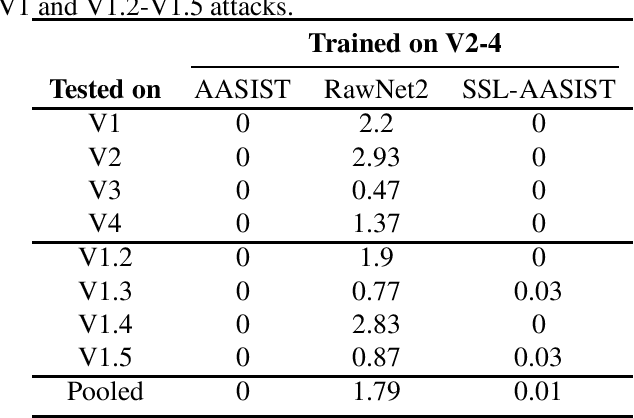
A reliable deepfake detector or spoofing countermeasure (CM) should be robust in the face of unpredictable spoofing attacks. To encourage the learning of more generaliseable artefacts, rather than those specific only to known attacks, CMs are usually exposed to a broad variety of different attacks during training. Even so, the performance of deep-learning-based CM solutions are known to vary, sometimes substantially, when they are retrained with different initialisations, hyper-parameters or training data partitions. We show in this paper that the potency of spoofing attacks, also deep-learning-based, can similarly vary according to training conditions, sometimes resulting in substantial degradations to detection performance. Nevertheless, while a RawNet2 CM model is vulnerable when only modest adjustments are made to the attack algorithm, those based upon graph attention networks and self-supervised learning are reassuringly robust. The focus upon training data generated with different attack algorithms might not be sufficient on its own to ensure generaliability; some form of spoofing attack augmentation at the algorithm level can be complementary.
DDSP-based Neural Waveform Synthesis of Polyphonic Guitar Performance from String-wise MIDI Input
Sep 14, 2023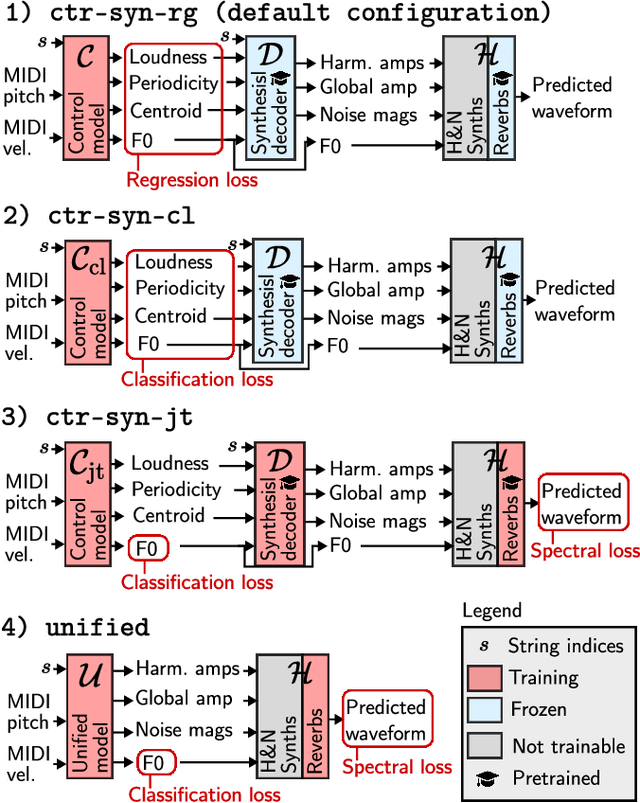
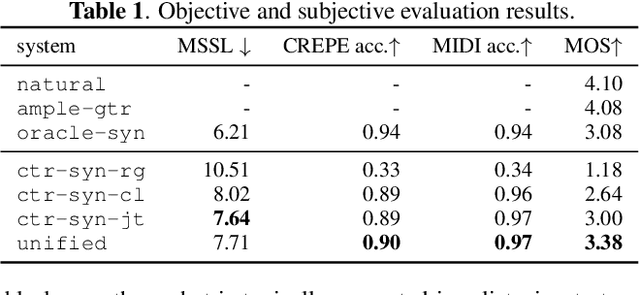
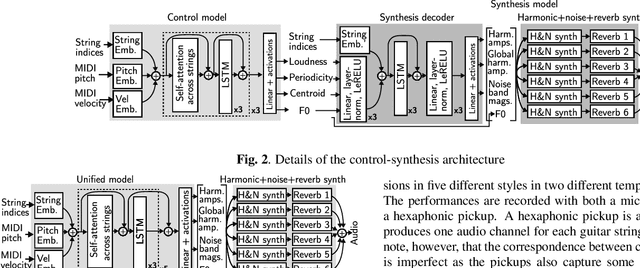
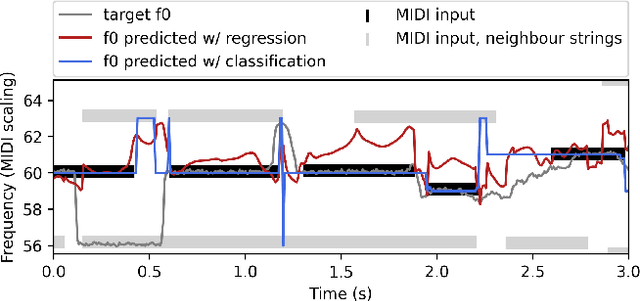
We explore the use of neural synthesis for acoustic guitar from string-wise MIDI input. We propose four different systems and compare them with both objective metrics and subjective evaluation against natural audio and a sample-based baseline. We iteratively develop these four systems by making various considerations on the architecture and intermediate tasks, such as predicting pitch and loudness control features. We find that formulating the control feature prediction task as a classification task rather than a regression task yields better results. Furthermore, we find that our simplest proposed system, which directly predicts synthesis parameters from MIDI input performs the best out of the four proposed systems. Audio examples are available at https://erl-j.github.io/neural-guitar-web-supplement.
SynVox2: Towards a privacy-friendly VoxCeleb2 dataset
Sep 12, 2023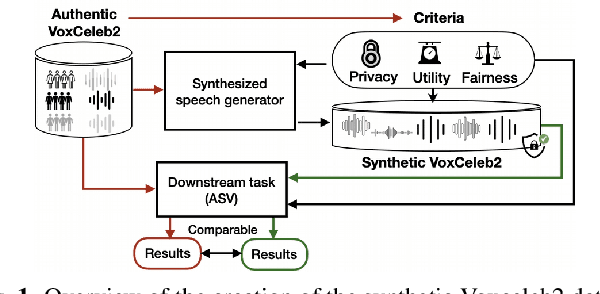
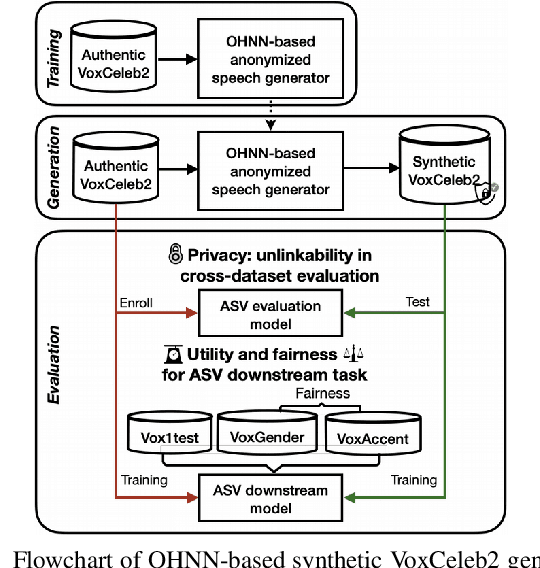
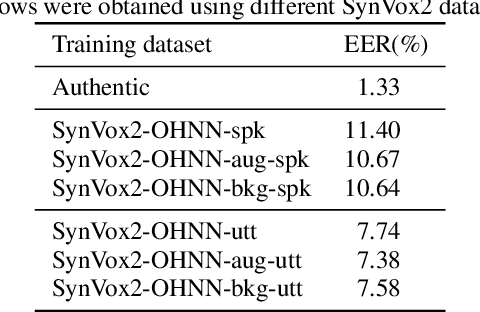
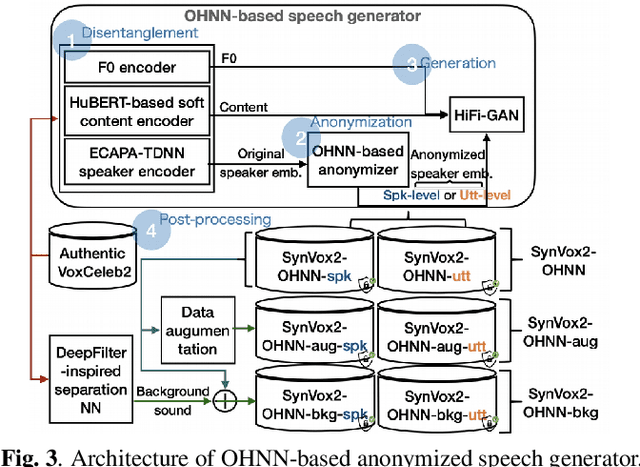
The success of deep learning in speaker recognition relies heavily on the use of large datasets. However, the data-hungry nature of deep learning methods has already being questioned on account the ethical, privacy, and legal concerns that arise when using large-scale datasets of natural speech collected from real human speakers. For example, the widely-used VoxCeleb2 dataset for speaker recognition is no longer accessible from the official website. To mitigate these concerns, this work presents an initiative to generate a privacy-friendly synthetic VoxCeleb2 dataset that ensures the quality of the generated speech in terms of privacy, utility, and fairness. We also discuss the challenges of using synthetic data for the downstream task of speaker verification.
Can large-scale vocoded spoofed data improve speech spoofing countermeasure with a self-supervised front end?
Sep 12, 2023A speech spoofing countermeasure (CM) that discriminates between unseen spoofed and bona fide data requires diverse training data. While many datasets use spoofed data generated by speech synthesis systems, it was recently found that data vocoded by neural vocoders were also effective as the spoofed training data. Since many neural vocoders are fast in building and generation, this study used multiple neural vocoders and created more than 9,000 hours of vocoded data on the basis of the VoxCeleb2 corpus. This study investigates how this large-scale vocoded data can improve spoofing countermeasures that use data-hungry self-supervised learning (SSL) models. Experiments demonstrated that the overall CM performance on multiple test sets improved when using features extracted by an SSL model continually trained on the vocoded data. Further improvement was observed when using a new SSL distilled from the two SSLs before and after the continual training. The CM with the distilled SSL outperformed the previous best model on challenging unseen test sets, including the ASVspoof 2019 logical access, WaveFake, and In-the-Wild.
Exploring Isolated Musical Notes as Pre-training Data for Predominant Instrument Recognition in Polyphonic Music
Jun 15, 2023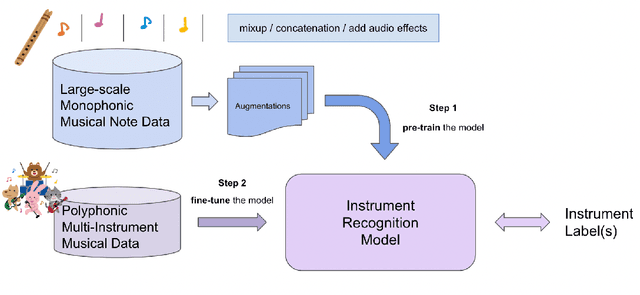
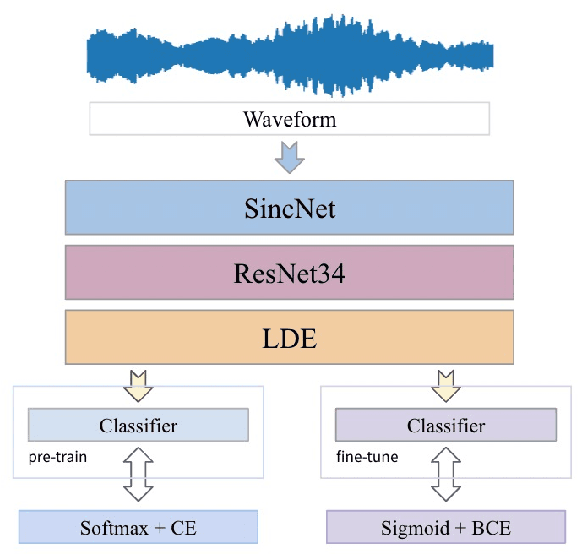
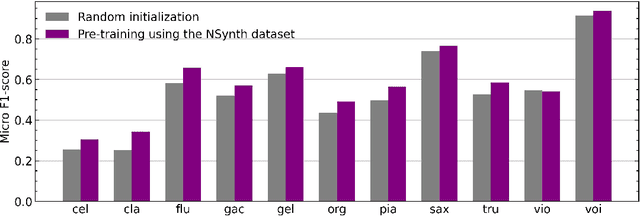
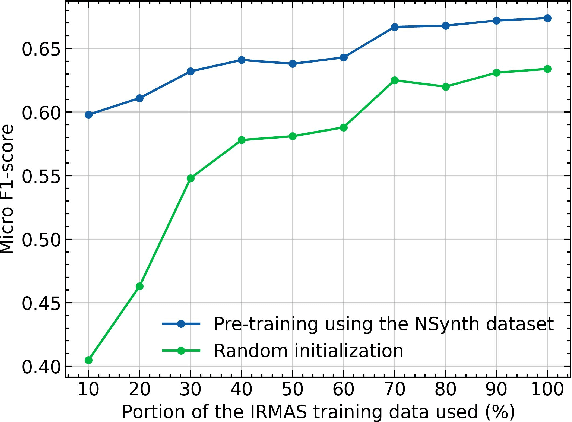
With the growing amount of musical data available, automatic instrument recognition, one of the essential problems in Music Information Retrieval (MIR), is drawing more and more attention. While automatic recognition of single instruments has been well-studied, it remains challenging for polyphonic, multi-instrument musical recordings. This work presents our efforts toward building a robust end-to-end instrument recognition system for polyphonic multi-instrument music. We train our model using a pre-training and fine-tuning approach: we use a large amount of monophonic musical data for pre-training and subsequently fine-tune the model for the polyphonic ensemble. In pre-training, we apply data augmentation techniques to alleviate the domain gap between monophonic musical data and real-world music. We evaluate our method on the IRMAS testing data, a polyphonic musical dataset comprising professionally-produced commercial music recordings. Experimental results show that our best model achieves a micro F1-score of 0.674 and an LRAP of 0.814, meaning 10.9% and 8.9% relative improvement compared with the previous state-of-the-art end-to-end approach. Also, we are able to build a lightweight model, achieving competitive performance with only 519K trainable parameters.
Towards single integrated spoofing-aware speaker verification embeddings
Jun 01, 2023


This study aims to develop a single integrated spoofing-aware speaker verification (SASV) embeddings that satisfy two aspects. First, rejecting non-target speakers' input as well as target speakers' spoofed inputs should be addressed. Second, competitive performance should be demonstrated compared to the fusion of automatic speaker verification (ASV) and countermeasure (CM) embeddings, which outperformed single embedding solutions by a large margin in the SASV2022 challenge. We analyze that the inferior performance of single SASV embeddings comes from insufficient amount of training data and distinct nature of ASV and CM tasks. To this end, we propose a novel framework that includes multi-stage training and a combination of loss functions. Copy synthesis, combined with several vocoders, is also exploited to address the lack of spoofed data. Experimental results show dramatic improvements, achieving a SASV-EER of 1.06% on the evaluation protocol of the SASV2022 challenge.
Language-independent speaker anonymization using orthogonal Householder neural network
May 30, 2023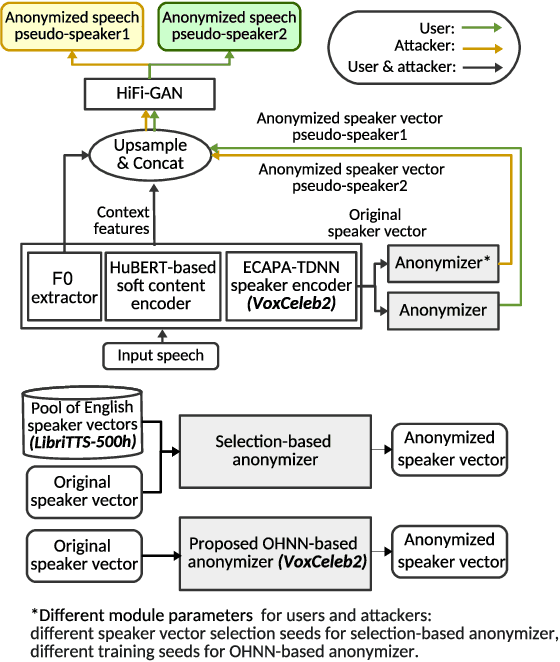
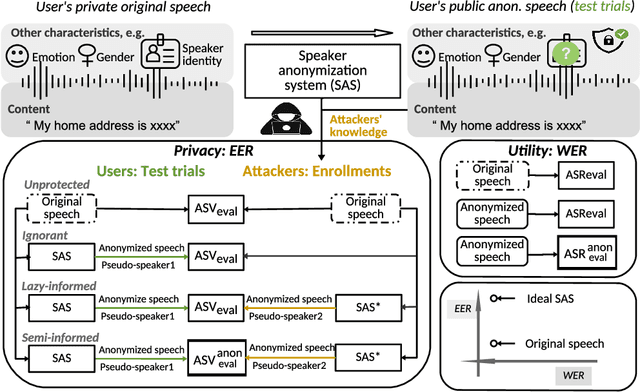
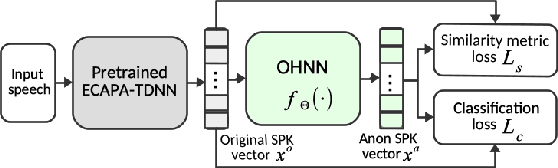
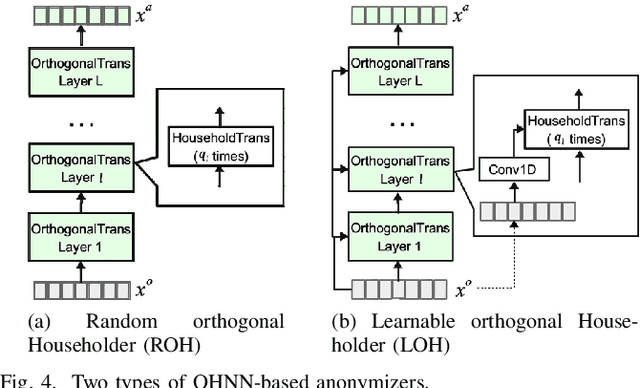
Speaker anonymization aims to conceal a speaker's identity while preserving content information in speech. Current mainstream neural-network speaker anonymization systems disentangle speech into prosody-related, content, and speaker representations. The speaker representation is then anonymized by a selection-based speaker anonymizer that uses a mean vector over a set of randomly selected speaker vectors from an external pool of English speakers. However, the resulting anonymized vectors are subject to severe privacy leakage against powerful attackers, reduction in speaker diversity, and language mismatch problems for unseen language speaker anonymization. To generate diverse, language-neutral speaker vectors, this paper proposes an anonymizer based on an orthogonal Householder neural network (OHNN). Specifically, the OHNN acts like a rotation to transform the original speaker vectors into anonymized speaker vectors, which are constrained to follow the distribution over the original speaker vector space. A basic classification loss is introduced to ensure that anonymized speaker vectors from different speakers have unique speaker identities. To further protect speaker identities, an improved classification loss and similarity loss are used to push original-anonymized sample pairs away from each other. Experiments on VoicePrivacy Challenge datasets in English and the AISHELL-3 dataset in Mandarin demonstrate the proposed anonymizer's effectiveness.