 Add to Chrome
 Add to Firefox
 Add to Edge
Spoof Diarization: "What Spoofed When" in Partially Spoofed Audio
Jun 12, 2024
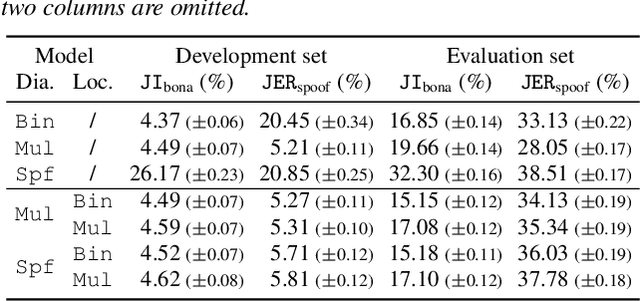
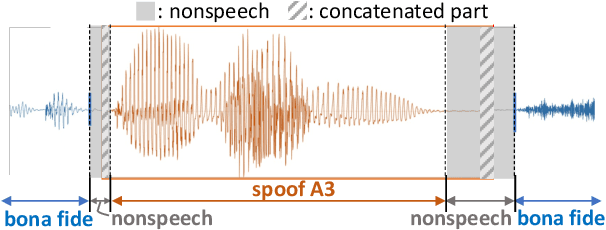
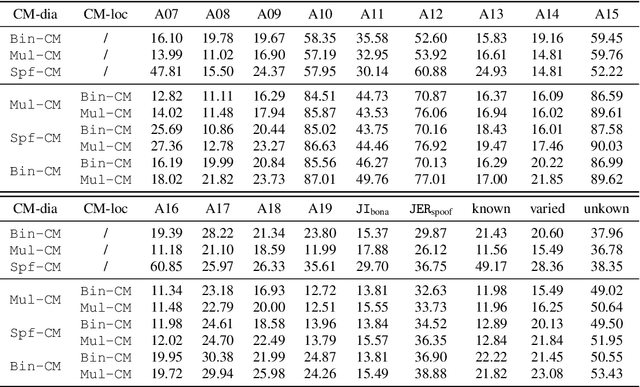
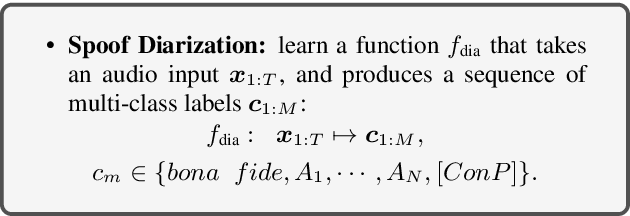
This paper defines Spoof Diarization as a novel task in the Partial Spoof (PS) scenario. It aims to determine what spoofed when, which includes not only locating spoof regions but also clustering them according to different spoofing methods. As a pioneering study in spoof diarization, we focus on defining the task, establishing evaluation metrics, and proposing a benchmark model, namely the Countermeasure-Condition Clustering (3C) model. Utilizing this model, we first explore how to effectively train countermeasures to support spoof diarization using three labeling schemes. We then utilize spoof localization predictions to enhance the diarization performance. This first study reveals the high complexity of the task, even in restricted scenarios where only a single speaker per audio file and an oracle number of spoofing methods are considered. Our code is available at https://github.com/nii-yamagishilab/PartialSpoof.

To what extent can ASV systems naturally defend against spoofing attacks?
Jun 08, 2024The current automatic speaker verification (ASV) task involves making binary decisions on two types of trials: target and non-target. However, emerging advancements in speech generation technology pose significant threats to the reliability of ASV systems. This study investigates whether ASV effortlessly acquires robustness against spoofing attacks (i.e., zero-shot capability) by systematically exploring diverse ASV systems and spoofing attacks, ranging from traditional to cutting-edge techniques. Through extensive analyses conducted on eight distinct ASV systems and 29 spoofing attack systems, we demonstrate that the evolution of ASV inherently incorporates defense mechanisms against spoofing attacks. Nevertheless, our findings also underscore that the advancement of spoofing attacks far outpaces that of ASV systems, hence necessitating further research on spoofing-robust ASV methodologies.
Exploring Self-Supervised Vision Transformers for Deepfake Detection: A Comparative Analysis
May 01, 2024This paper investigates the effectiveness of self-supervised pre-trained transformers compared to supervised pre-trained transformers and conventional neural networks (ConvNets) for detecting various types of deepfakes. We focus on their potential for improved generalization, particularly when training data is limited. Despite the notable success of large vision-language models utilizing transformer architectures in various tasks, including zero-shot and few-shot learning, the deepfake detection community has still shown some reluctance to adopt pre-trained vision transformers (ViTs), especially large ones, as feature extractors. One concern is their perceived excessive capacity, which often demands extensive data, and the resulting suboptimal generalization when training or fine-tuning data is small or less diverse. This contrasts poorly with ConvNets, which have already established themselves as robust feature extractors. Additionally, training and optimizing transformers from scratch requires significant computational resources, making this accessible primarily to large companies and hindering broader investigation within the academic community. Recent advancements in using self-supervised learning (SSL) in transformers, such as DINO and its derivatives, have showcased significant adaptability across diverse vision tasks and possess explicit semantic segmentation capabilities. By leveraging DINO for deepfake detection with modest training data and implementing partial fine-tuning, we observe comparable adaptability to the task and the natural explainability of the detection result via the attention mechanism. Moreover, partial fine-tuning of transformers for deepfake detection offers a more resource-efficient alternative, requiring significantly fewer computational resources.
The VoicePrivacy 2024 Challenge Evaluation Plan
Apr 03, 2024


The task of the challenge is to develop a voice anonymization system for speech data which conceals the speaker's voice identity while protecting linguistic content and emotional states. The organizers provide development and evaluation datasets and evaluation scripts, as well as baseline anonymization systems and a list of training resources formed on the basis of the participants' requests. Participants apply their developed anonymization systems, run evaluation scripts and submit evaluation results and anonymized speech data to the organizers. Results will be presented at a workshop held in conjunction with Interspeech 2024 to which all participants are invited to present their challenge systems and to submit additional workshop papers.
Bridging Textual and Tabular Worlds for Fact Verification: A Lightweight, Attention-Based Model
Mar 26, 2024FEVEROUS is a benchmark and research initiative focused on fact extraction and verification tasks involving unstructured text and structured tabular data. In FEVEROUS, existing works often rely on extensive preprocessing and utilize rule-based transformations of data, leading to potential context loss or misleading encodings. This paper introduces a simple yet powerful model that nullifies the need for modality conversion, thereby preserving the original evidence's context. By leveraging pre-trained models on diverse text and tabular datasets and by incorporating a lightweight attention-based mechanism, our approach efficiently exploits latent connections between different data types, thereby yielding comprehensive and reliable verdict predictions. The model's modular structure adeptly manages multi-modal information, ensuring the integrity and authenticity of the original evidence are uncompromised. Comparative analyses reveal that our approach exhibits competitive performance, aligning itself closely with top-tier models on the FEVEROUS benchmark.
Uncertainty as a Predictor: Leveraging Self-Supervised Learning for Zero-Shot MOS Prediction
Dec 25, 2023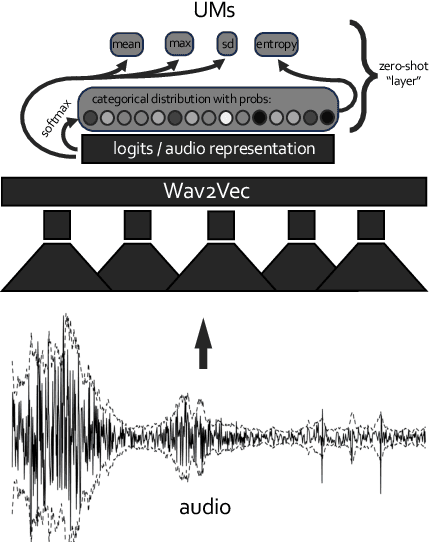
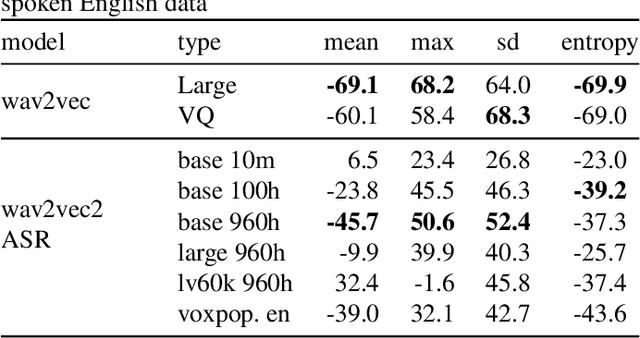
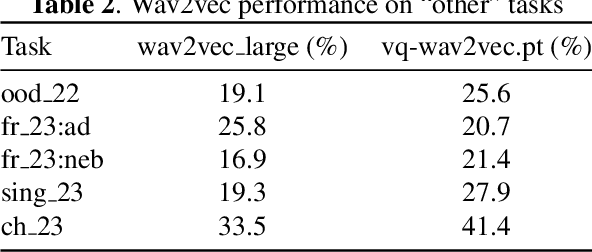
Predicting audio quality in voice synthesis and conversion systems is a critical yet challenging task, especially when traditional methods like Mean Opinion Scores (MOS) are cumbersome to collect at scale. This paper addresses the gap in efficient audio quality prediction, especially in low-resource settings where extensive MOS data from large-scale listening tests may be unavailable. We demonstrate that uncertainty measures derived from out-of-the-box pretrained self-supervised learning (SSL) models, such as wav2vec, correlate with MOS scores. These findings are based on data from the 2022 and 2023 VoiceMOS challenges. We explore the extent of this correlation across different models and language contexts, revealing insights into how inherent uncertainties in SSL models can serve as effective proxies for audio quality assessment. In particular, we show that the contrastive wav2vec models are the most performant in all settings.
ZMM-TTS: Zero-shot Multilingual and Multispeaker Speech Synthesis Conditioned on Self-supervised Discrete Speech Representations
Dec 22, 2023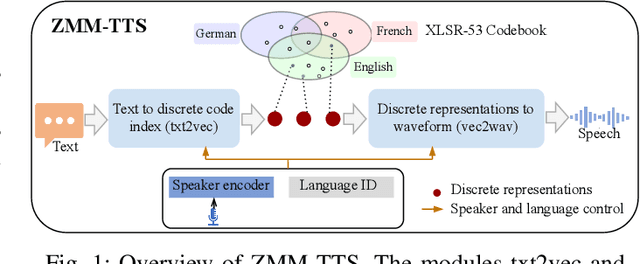
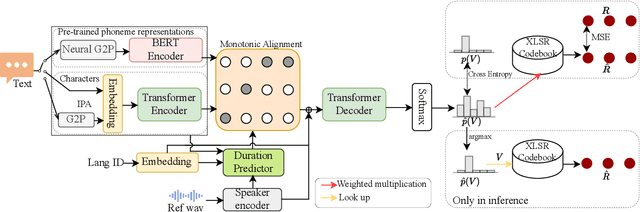
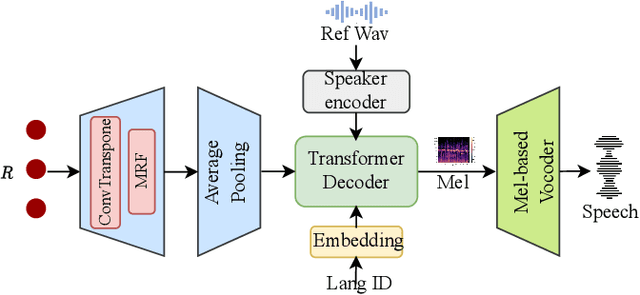
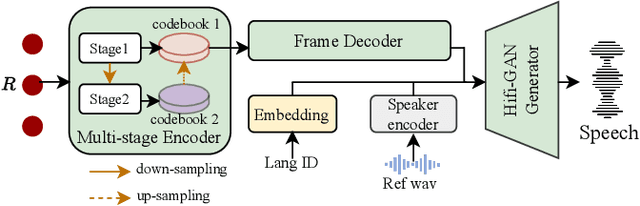
Neural text-to-speech (TTS) has achieved human-like synthetic speech for single-speaker, single-language synthesis. Multilingual TTS systems are limited to resource-rich languages due to the lack of large paired text and studio-quality audio data. In most cases, TTS systems are built using a single speaker's voice. However, there is growing interest in developing systems that can synthesize voices for new speakers using only a few seconds of their speech. This paper presents ZMM-TTS, a multilingual and multispeaker framework utilizing quantized latent speech representations from a large-scale, pre-trained, self-supervised model. Our paper is the first to incorporate the representations from text-based and speech-based self-supervised learning models into multilingual speech synthesis tasks. We conducted comprehensive subjective and objective evaluations through a series of experiments. Our model has been proven effective in terms of speech naturalness and similarity for both seen and unseen speakers in six high-resource languages. We also tested the efficiency of our method on two hypothetical low-resource languages. The results are promising, indicating that our proposed approach can synthesize audio that is intelligible and has a high degree of similarity to the target speaker's voice, even without any training data for the new, unseen language.
Speaker-Text Retrieval via Contrastive Learning
Dec 11, 2023In this study, we introduce a novel cross-modal retrieval task involving speaker descriptions and their corresponding audio samples. Utilizing pre-trained speaker and text encoders, we present a simple learning framework based on contrastive learning. Additionally, we explore the impact of incorporating speaker labels into the training process. Our findings establish the effectiveness of linking speaker and text information for the task for both English and Japanese languages, across diverse data configurations. Additional visual analysis unveils potential nuanced associations between speaker clustering and retrieval performance.
XFEVER: Exploring Fact Verification across Languages
Oct 25, 2023This paper introduces the Cross-lingual Fact Extraction and VERification (XFEVER) dataset designed for benchmarking the fact verification models across different languages. We constructed it by translating the claim and evidence texts of the Fact Extraction and VERification (FEVER) dataset into six languages. The training and development sets were translated using machine translation, whereas the test set includes texts translated by professional translators and machine-translated texts. Using the XFEVER dataset, two cross-lingual fact verification scenarios, zero-shot learning and translate-train learning, are defined, and baseline models for each scenario are also proposed in this paper. Experimental results show that the multilingual language model can be used to build fact verification models in different languages efficiently. However, the performance varies by language and is somewhat inferior to the English case. We also found that we can effectively mitigate model miscalibration by considering the prediction similarity between the English and target languages. The XFEVER dataset, code, and model checkpoints are available at https://github.com/nii-yamagishilab/xfever.
Partial Rank Similarity Minimization Method for Quality MOS Prediction of Unseen Speech Synthesis Systems in Zero-Shot and Semi-supervised setting
Oct 08, 2023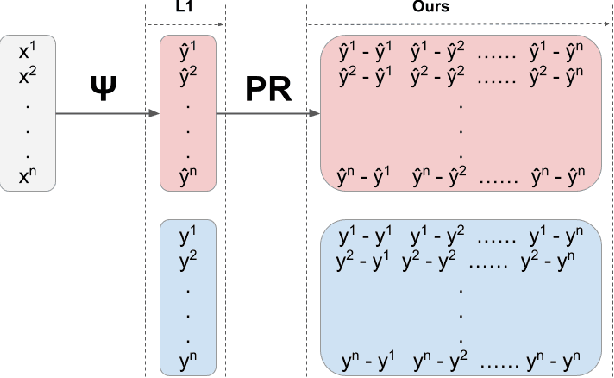

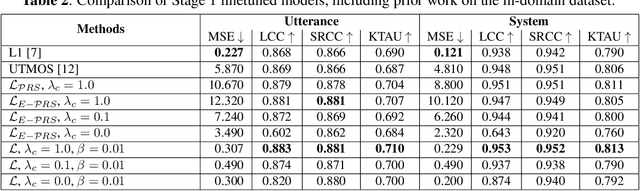
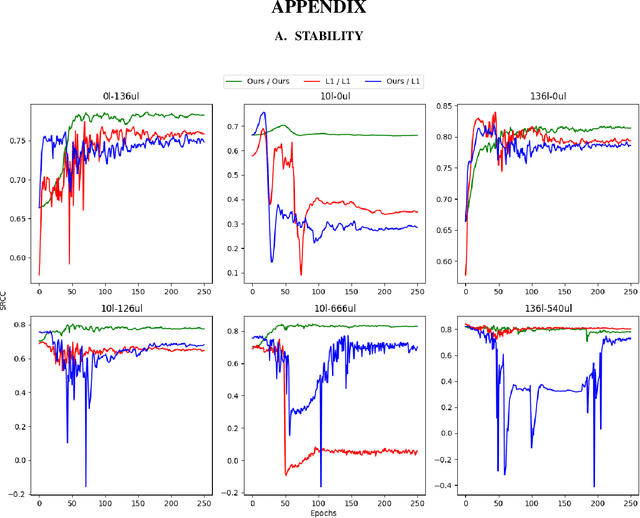
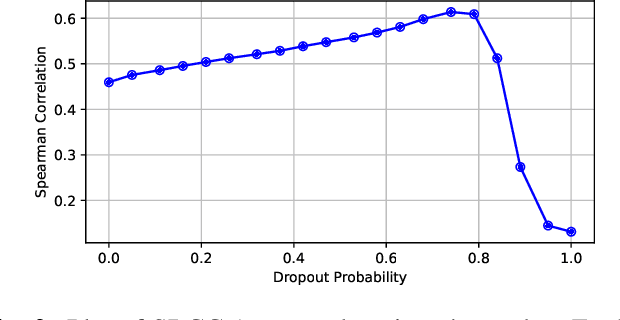
This paper introduces a novel objective function for quality mean opinion score (MOS) prediction of unseen speech synthesis systems. The proposed function measures the similarity of relative positions of predicted MOS values, in a mini-batch, rather than the actual MOS values. That is the partial rank similarity is measured (PRS) rather than the individual MOS values as with the L1 loss. Our experiments on out-of-domain speech synthesis systems demonstrate that the PRS outperforms L1 loss in zero-shot and semi-supervised settings, exhibiting stronger correlation with ground truth. These findings highlight the importance of considering rank order, as done by PRS, when training MOS prediction models. We also argue that mean squared error and linear correlation coefficient metrics may be unreliable for evaluating MOS prediction models. In conclusion, PRS-trained models provide a robust framework for evaluating speech quality and offer insights for developing high-quality speech synthesis systems. Code and models are available at github.com/nii-yamagishilab/partial_rank_similarity/