 Add to Chrome
 Add to Firefox
 Add to Edge
DynaMath: A Dynamic Visual Benchmark for Evaluating Mathematical Reasoning Robustness of Vision Language Models
Oct 29, 2024
The rapid advancements in Vision-Language Models (VLMs) have shown great potential in tackling mathematical reasoning tasks that involve visual context. Unlike humans who can reliably apply solution steps to similar problems with minor modifications, we found that SOTA VLMs like GPT-4o can consistently fail in these scenarios, revealing limitations in their mathematical reasoning capabilities. In this paper, we investigate the mathematical reasoning robustness in VLMs and evaluate how well these models perform under different variants of the same question, such as changes in visual numerical values or function graphs. While several vision-based math benchmarks have been developed to assess VLMs' problem-solving capabilities, these benchmarks contain only static sets of problems and cannot easily evaluate mathematical reasoning robustness. To fill this gap, we introduce DynaMath, a dynamic visual math benchmark designed for in-depth assessment of VLMs. DynaMath includes 501 high-quality, multi-topic seed questions, each represented as a Python program. Those programs are carefully designed and annotated to enable the automatic generation of a much larger set of concrete questions, including many different types of visual and textual variations. DynaMath allows us to evaluate the generalization ability of VLMs, by assessing their performance under varying input conditions of a seed question. We evaluated 14 SOTA VLMs with 5,010 generated concrete questions. Our results show that the worst-case model accuracy, defined as the percentage of correctly answered seed questions in all 10 variants, is significantly lower than the average-case accuracy. Our analysis emphasizes the need to study the robustness of VLMs' reasoning abilities, and DynaMath provides valuable insights to guide the development of more reliable models for mathematical reasoning.

How does the teacher rate? Observations from the NeuroPiano dataset
Oct 04, 2024This paper provides a detailed analysis of the NeuroPiano dataset, which comprise 104 audio recordings of student piano performances accompanied with 2255 textual feedback and ratings given by professional pianists. We offer a statistical overview of the dataset, focusing on the standardization of annotations and inter-annotator agreement across 12 evaluative questions concerning performance quality. We also explore the predictive relationship between audio features and teacher ratings via machine learning, as well as annotations provided for text analysis of the responses.
LLaQo: Towards a Query-Based Coach in Expressive Music Performance Assessment
Sep 16, 2024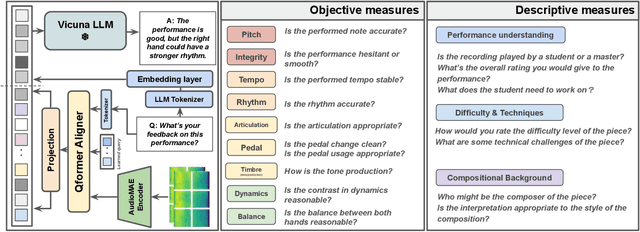


Research in music understanding has extensively explored composition-level attributes such as key, genre, and instrumentation through advanced representations, leading to cross-modal applications using large language models. However, aspects of musical performance such as stylistic expression and technique remain underexplored, along with the potential of using large language models to enhance educational outcomes with customized feedback. To bridge this gap, we introduce LLaQo, a Large Language Query-based music coach that leverages audio language modeling to provide detailed and formative assessments of music performances. We also introduce instruction-tuned query-response datasets that cover a variety of performance dimensions from pitch accuracy to articulation, as well as contextual performance understanding (such as difficulty and performance techniques). Utilizing AudioMAE encoder and Vicuna-7b LLM backend, our model achieved state-of-the-art (SOTA) results in predicting teachers' performance ratings, as well as in identifying piece difficulty and playing techniques. Textual responses from LLaQo was moreover rated significantly higher compared to other baseline models in a user study using audio-text matching. Our proposed model can thus provide informative answers to open-ended questions related to musical performance from audio data.
Hierarchical Symbolic Pop Music Generation with Graph Neural Networks
Sep 12, 2024
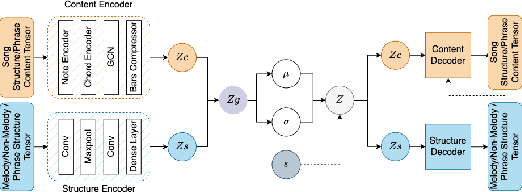
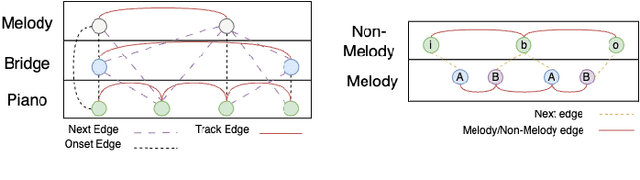
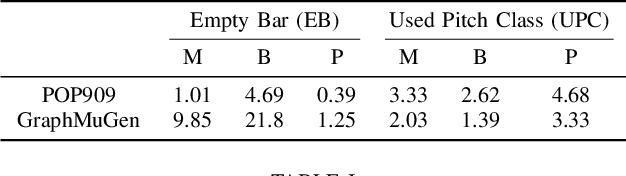
Music is inherently made up of complex structures, and representing them as graphs helps to capture multiple levels of relationships. While music generation has been explored using various deep generation techniques, research on graph-related music generation is sparse. Earlier graph-based music generation worked only on generating melodies, and recent works to generate polyphonic music do not account for longer-term structure. In this paper, we explore a multi-graph approach to represent both the rhythmic patterns and phrase structure of Chinese pop music. Consequently, we propose a two-step approach that aims to generate polyphonic music with coherent rhythm and long-term structure. We train two Variational Auto-Encoder networks - one on a MIDI dataset to generate 4-bar phrases, and another on song structure labels to generate full song structure. Our work shows that the models are able to learn most of the structural nuances in the training dataset, including chord and pitch frequency distributions, and phrase attributes.
Bridging Paintings and Music -- Exploring Emotion based Music Generation through Paintings
Sep 12, 2024Rapid advancements in artificial intelligence have significantly enhanced generative tasks involving music and images, employing both unimodal and multimodal approaches. This research develops a model capable of generating music that resonates with the emotions depicted in visual arts, integrating emotion labeling, image captioning, and language models to transform visual inputs into musical compositions. Addressing the scarcity of aligned art and music data, we curated the Emotion Painting Music Dataset, pairing paintings with corresponding music for effective training and evaluation. Our dual-stage framework converts images to text descriptions of emotional content and then transforms these descriptions into music, facilitating efficient learning with minimal data. Performance is evaluated using metrics such as Fr\'echet Audio Distance (FAD), Total Harmonic Distortion (THD), Inception Score (IS), and KL divergence, with audio-emotion text similarity confirmed by the pre-trained CLAP model to demonstrate high alignment between generated music and text. This synthesis tool bridges visual art and music, enhancing accessibility for the visually impaired and opening avenues in educational and therapeutic applications by providing enriched multi-sensory experiences.
A Pair Programming Framework for Code Generation via Multi-Plan Exploration and Feedback-Driven Refinement
Sep 08, 2024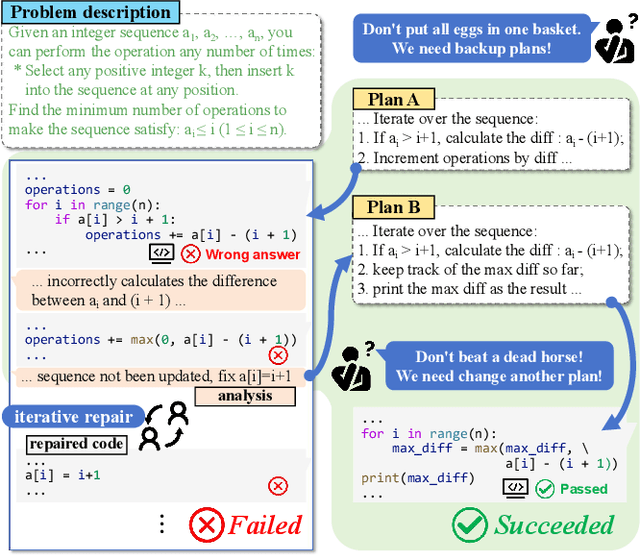
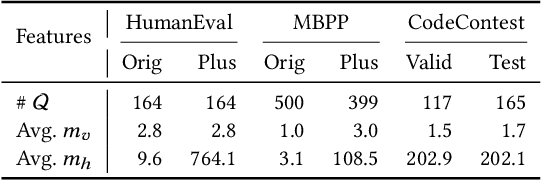
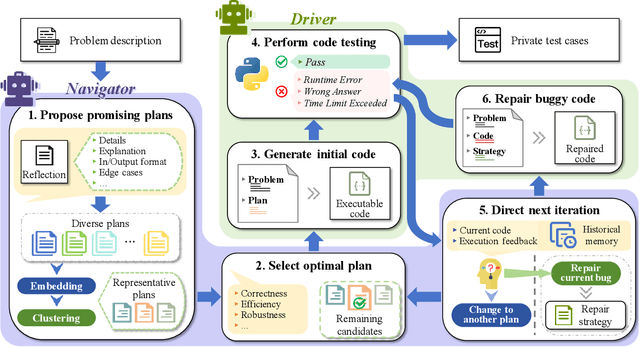
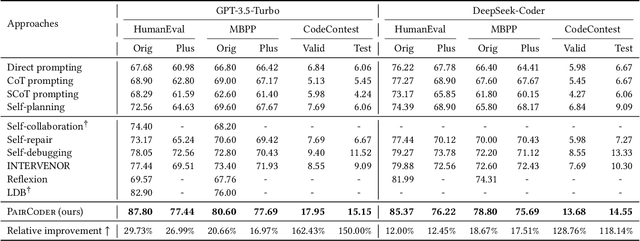
Large language models (LLMs) have achieved impressive performance on code generation. Although prior studies enhanced LLMs with prompting techniques and code refinement, they still struggle with complex programming problems due to rigid solution plans. In this paper, we draw on pair programming practices to propose PairCoder, a novel LLM-based framework for code generation. PairCoder incorporates two collaborative LLM agents, namely a Navigator agent for high-level planning and a Driver agent for specific implementation. The Navigator is responsible for proposing promising solution plans, selecting the current optimal plan, and directing the next iteration round based on execution feedback. The Driver follows the guidance of Navigator to undertake initial code generation, code testing, and refinement. This interleaved and iterative workflow involves multi-plan exploration and feedback-based refinement, which mimics the collaboration of pair programmers. We evaluate PairCoder with both open-source and closed-source LLMs on various code generation benchmarks. Extensive experimental results demonstrate the superior accuracy of PairCoder, achieving relative pass@1 improvements of 12.00%-162.43% compared to prompting LLMs directly.
HoneyComb: A Flexible LLM-Based Agent System for Materials Science
Aug 29, 2024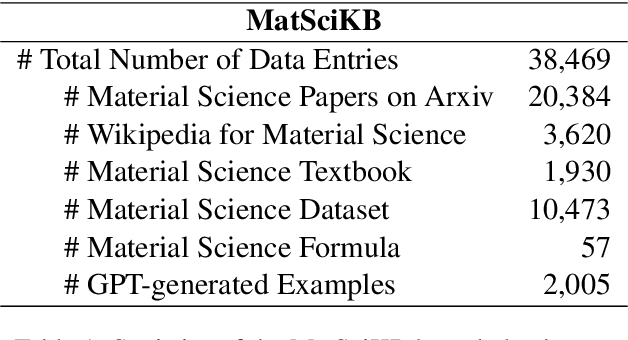
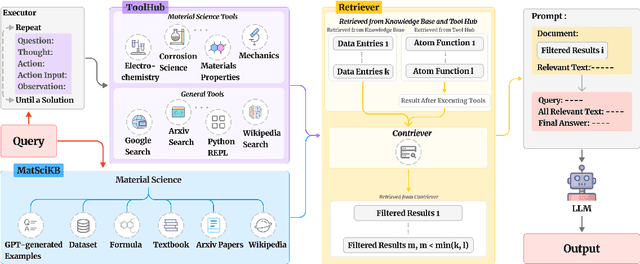
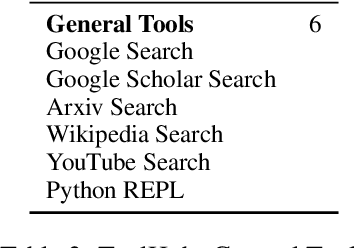
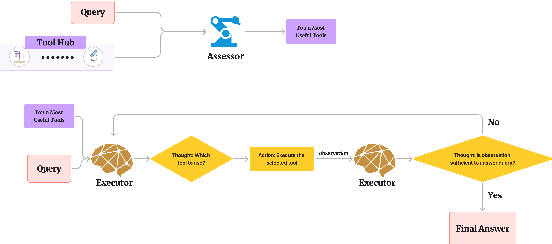
The emergence of specialized large language models (LLMs) has shown promise in addressing complex tasks for materials science. Many LLMs, however, often struggle with distinct complexities of material science tasks, such as materials science computational tasks, and often rely heavily on outdated implicit knowledge, leading to inaccuracies and hallucinations. To address these challenges, we introduce HoneyComb, the first LLM-based agent system specifically designed for materials science. HoneyComb leverages a novel, high-quality materials science knowledge base (MatSciKB) and a sophisticated tool hub (ToolHub) to enhance its reasoning and computational capabilities tailored to materials science. MatSciKB is a curated, structured knowledge collection based on reliable literature, while ToolHub employs an Inductive Tool Construction method to generate, decompose, and refine API tools for materials science. Additionally, HoneyComb leverages a retriever module that adaptively selects the appropriate knowledge source or tools for specific tasks, thereby ensuring accuracy and relevance. Our results demonstrate that HoneyComb significantly outperforms baseline models across various tasks in materials science, effectively bridging the gap between current LLM capabilities and the specialized needs of this domain. Furthermore, our adaptable framework can be easily extended to other scientific domains, highlighting its potential for broad applicability in advancing scientific research and applications.
Perceive-IR: Learning to Perceive Degradation Better for All-in-One Image Restoration
Aug 28, 2024


The limitations of task-specific and general image restoration methods for specific degradation have prompted the development of all-in-one image restoration techniques. However, the diversity of patterns among multiple degradation, along with the significant uncertainties in mapping between degraded images of different severities and their corresponding undistorted versions, pose significant challenges to the all-in-one restoration tasks. To address these challenges, we propose Perceive-IR, an all-in-one image restorer designed to achieve fine-grained quality control that enables restored images to more closely resemble their undistorted counterparts, regardless of the type or severity of degradation. Specifically, Perceive-IR contains two stages: (1) prompt learning stage and (2) restoration stage. In the prompt learning stage, we leverage prompt learning to acquire a fine-grained quality perceiver capable of distinguishing three-tier quality levels by constraining the prompt-image similarity in the CLIP perception space. Subsequently, this quality perceiver and difficulty-adaptive perceptual loss are integrated as a quality-aware learning strategy to realize fine-grained quality control in restoration stage. For the restoration stage, a semantic guidance module (SGM) and compact feature extraction (CFE) are proposed to further promote the restoration process by utilizing the robust semantic information from the pre-trained large scale vision models and distinguishing degradation-specific features. Extensive experiments demonstrate that our Perceive-IR outperforms state-of-the-art methods in all-in-one image restoration tasks and exhibit superior generalization ability when dealing with unseen tasks.
Foundation Models for Music: A Survey
Aug 27, 2024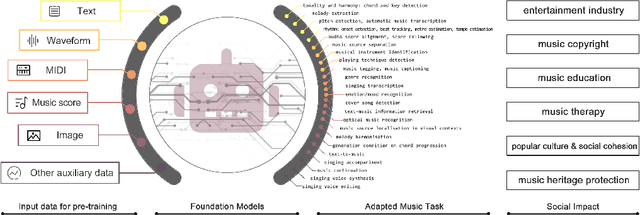
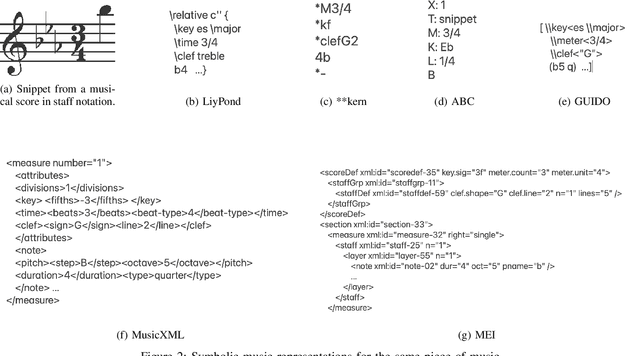
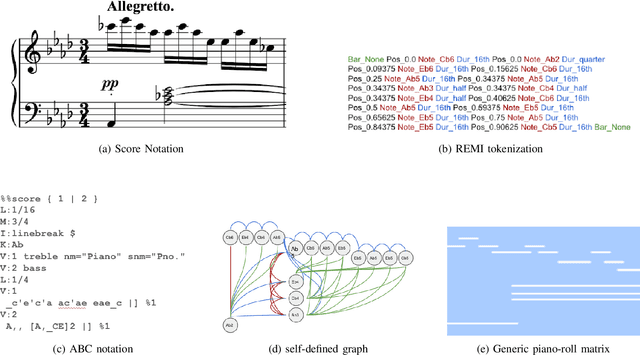
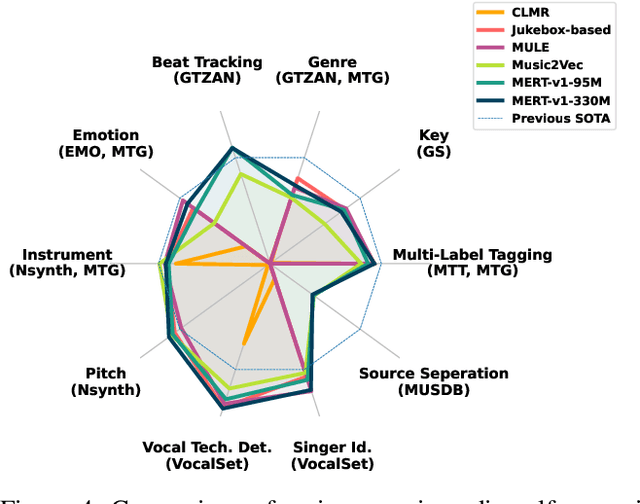
In recent years, foundation models (FMs) such as large language models (LLMs) and latent diffusion models (LDMs) have profoundly impacted diverse sectors, including music. This comprehensive review examines state-of-the-art (SOTA) pre-trained models and foundation models in music, spanning from representation learning, generative learning and multimodal learning. We first contextualise the significance of music in various industries and trace the evolution of AI in music. By delineating the modalities targeted by foundation models, we discover many of the music representations are underexplored in FM development. Then, emphasis is placed on the lack of versatility of previous methods on diverse music applications, along with the potential of FMs in music understanding, generation and medical application. By comprehensively exploring the details of the model pre-training paradigm, architectural choices, tokenisation, finetuning methodologies and controllability, we emphasise the important topics that should have been well explored, like instruction tuning and in-context learning, scaling law and emergent ability, as well as long-sequence modelling etc. A dedicated section presents insights into music agents, accompanied by a thorough analysis of datasets and evaluations essential for pre-training and downstream tasks. Finally, by underscoring the vital importance of ethical considerations, we advocate that following research on FM for music should focus more on such issues as interpretability, transparency, human responsibility, and copyright issues. The paper offers insights into future challenges and trends on FMs for music, aiming to shape the trajectory of human-AI collaboration in the music realm.
PREMAP: A Unifying PREiMage APproximation Framework for Neural Networks
Aug 17, 2024Most methods for neural network verification focus on bounding the image, i.e., set of outputs for a given input set. This can be used to, for example, check the robustness of neural network predictions to bounded perturbations of an input. However, verifying properties concerning the preimage, i.e., the set of inputs satisfying an output property, requires abstractions in the input space. We present a general framework for preimage abstraction that produces under- and over-approximations of any polyhedral output set. Our framework employs cheap parameterised linear relaxations of the neural network, together with an anytime refinement procedure that iteratively partitions the input region by splitting on input features and neurons. The effectiveness of our approach relies on carefully designed heuristics and optimization objectives to achieve rapid improvements in the approximation volume. We evaluate our method on a range of tasks, demonstrating significant improvement in efficiency and scalability to high-input-dimensional image classification tasks compared to state-of-the-art techniques. Further, we showcase the application to quantitative verification and robustness analysis, presenting a sound and complete algorithm for the former and providing sound quantitative results for the latter.