 Add to Chrome
 Add to Firefox
 Add to Edge
Does RAG Know When Retrieval Is Wrong? Diagnosing Context Compliance under Knowledge Conflict
May 14, 2026
The Context-Compliance Regime in Retrieval-Augmented Generation (RAG) occurs when retrieved context dominates the final answer even when it conflicts with the model's parametric knowledge. Accuracy alone does not reveal how retrieved context causally shapes answers under such conflict. We introduce Context-Driven Decomposition (CDD), a belief-decomposition probe that operates at inference time and serves as an intervention mechanism for controlled retrieval conflict. Across Epi-Scale stress tests, TruthfulQA misconception injection, and cross- model reruns, CDD exposes three patterns. P1: context compliance is measurable in an upper-bound adversarial setting, where Standard RAG reaches 15.0% accuracy on TruthfulQA misconception injection (N=500). P2: adversarial accuracy gains transfer across model families: CDD improves accuracy on Gemini-2.5-Flash and on Claude Haiku/Sonnet/Opus, but rationale-answer causal coupling does not transfer. CDD reaches 64.1% mistake- injection causal sensitivity on Gemini-2.5-Flash, while sensitivities for all three Claude variants fall in the [-3%, +7%] range, suggesting that the Claude-side accuracy gains operate through a mechanism distinct from the explicit conflict-resolution trace. P3: explicit conflict decomposition improves robustness under temporal drift and noisy distractors, with CDD reaching 71.3% on temporal shifts and 69.9% on distractor evidence on the full Epi-Scale adversarial benchmark. These three patterns identify context-compliance as a structural axis along which standard RAG can be probed and intervened on, distinct from retrieval-quality or single-method robustness questions, and motivate releasing Epi-Scale for systematic study across model families and retrieval pipelines.

Robust Out-of-Distribution Stochastic Optimization
Apr 22, 2026Data-driven decision-making under uncertainty typically presumes the collection of historical data from an unknown target probability distribution. However, one may have no access to any data from the target distribution prior to decision-making. To address this challenge, we propose robust out-of-distribution stochastic optimization, a novel data-driven framework that effectively utilizes relevant data distributions for robust decision-making under unseen distributions. A key feature of our framework is that all data distributions are assumed to be randomly generated from a meta-distribution over distributions. To describe uncertainty in distribution generation, we propose to learn a data-driven uncertainty set in a reproducing kernel Hilbert space (RKHS) from relevant data distributions, with adjustable conservatism. We then incorporate this set into a min-max stochastic program to derive robust decisions. Notably, under randomness of distribution generation, we establish rigorous out-of-distribution generalization guarantees for the uncertainty set as well as the solution. To ease problem-solving in RKHS, an approximate parametrization with a provably bounded suboptimality and a row generation strategy are presented. Extensive numerical experiments on multi-item newsvendor and portfolio optimization demonstrate the superior out-of-distribution performance of our decision-making framework under unseen data distribution, even when only a small or moderate number of relevant sources are available.
Uni-World VLA: Interleaved World Modeling and Planning for Autonomous Driving
Mar 28, 2026Autonomous driving requires reasoning about how the environment evolves and planning actions accordingly. Existing world-model-based approaches typically predict future scenes first and plan afterwards, resulting in open-loop imagination that may drift from the actual decision process. In this paper, we present Uni-World VLA, a unified vision-language-action (VLA) model that tightly interleaves future frame prediction and trajectory planning. Instead of generating a full world rollout before planning, our model alternates between predicting future frames and ego actions step by step, allowing planning decisions to be continuously conditioned on the imagined future observations. This interleaved generation forms a closed-loop interaction between world modeling and control, enabling more adaptive decision-making in dynamic traffic scenarios. In addition, we incorporate monocular depth information into frames to provide stronger geometric cues for world modeling, improving long-horizon scene prediction. Experiments on the NAVSIM benchmark show that our approach achieves competitive closed-loop planning performance while producing high-fidelity future frame predictions. These results demonstrate that tightly coupling world prediction and planning is a promising direction for scalable VLA driving systems.
Vec-QMDP: Vectorized POMDP Planning on CPUs for Real-Time Autonomous Driving
Feb 09, 2026Planning under uncertainty for real-world robotics tasks, such as autonomous driving, requires reasoning in enormous high-dimensional belief spaces, rendering the problem computationally intensive. While parallelization offers scalability, existing hybrid CPU-GPU solvers face critical bottlenecks due to host-device synchronization latency and branch divergence on SIMT architectures, limiting their utility for real-time planning and hindering real-robot deployment. We present Vec-QMDP, a CPU-native parallel planner that aligns POMDP search with modern CPUs' SIMD architecture, achieving $227\times$--$1073\times$ speedup over state-of-the-art serial planners. Vec-QMDP adopts a Data-Oriented Design (DOD), refactoring scattered, pointer-based data structures into contiguous, cache-efficient memory layouts. We further introduce a hierarchical parallelism scheme: distributing sub-trees across independent CPU cores and SIMD lanes, enabling fully vectorized tree expansion and collision checking. Efficiency is maximized with the help of UCB load balancing across trees and a vectorized STR-tree for coarse-level collision checking. Evaluated on large-scale autonomous driving benchmarks, Vec-QMDP achieves state-of-the-art planning performance with millisecond-level latency, establishing CPUs as a high-performance computing platform for large-scale planning under uncertainty.
STAGE: A Symbolic Tensor grAph GEnerator for distributed AI system co-design
Nov 14, 2025Optimizing the performance of large language models (LLMs) on large-scale AI training and inference systems requires a scalable and expressive mechanism to model distributed workload execution. Such modeling is essential for pre-deployment system-level optimizations (e.g., parallelization strategies) and design-space explorations. While recent efforts have proposed collecting execution traces from real systems, access to large-scale infrastructure remains limited to major cloud providers. Moreover, traces obtained from existing platforms cannot be easily adapted to study future larger-scale system configurations. We introduce Symbolic Tensor grAph GEnerator(STAGE), a framework that synthesizes high-fidelity execution traces to accurately model LLM workloads. STAGE supports a comprehensive set of parallelization strategies, allowing users to systematically explore a wide spectrum of LLM architectures and system configurations. STAGE demonstrates its scalability by synthesizing high-fidelity LLM traces spanning over 32K GPUs, while preserving tensor-level accuracy in compute, memory, and communication. STAGE is publicly available to facilitate further research in distributed machine learning systems: https://github.com/astra-sim/symbolic tensor graph
OuroMamba: A Data-Free Quantization Framework for Vision Mamba Models
Mar 13, 2025We present OuroMamba, the first data-free post-training quantization (DFQ) method for vision Mamba-based models (VMMs). We identify two key challenges in enabling DFQ for VMMs, (1) VMM's recurrent state transitions restricts capturing of long-range interactions and leads to semantically weak synthetic data, (2) VMM activations exhibit dynamic outlier variations across time-steps, rendering existing static PTQ techniques ineffective. To address these challenges, OuroMamba presents a two-stage framework: (1) OuroMamba-Gen to generate semantically rich and meaningful synthetic data. It applies contrastive learning on patch level VMM features generated through neighborhood interactions in the latent state space, (2) OuroMamba-Quant to employ mixed-precision quantization with lightweight dynamic outlier detection during inference. In specific, we present a thresholding based outlier channel selection strategy for activations that gets updated every time-step. Extensive experiments across vision and generative tasks show that our data-free OuroMamba surpasses existing data-driven PTQ techniques, achieving state-of-the-art performance across diverse quantization settings. Additionally, we implement efficient GPU kernels to achieve practical latency speedup of up to 2.36x. Code will be released soon.
Deep Learning in Single-Cell and Spatial Transcriptomics Data Analysis: Advances and Challenges from a Data Science Perspective
Dec 04, 2024


The development of single-cell and spatial transcriptomics has revolutionized our capacity to investigate cellular properties, functions, and interactions in both cellular and spatial contexts. However, the analysis of single-cell and spatial omics data remains challenging. First, single-cell sequencing data are high-dimensional and sparse, often contaminated by noise and uncertainty, obscuring the underlying biological signals. Second, these data often encompass multiple modalities, including gene expression, epigenetic modifications, and spatial locations. Integrating these diverse data modalities is crucial for enhancing prediction accuracy and biological interpretability. Third, while the scale of single-cell sequencing has expanded to millions of cells, high-quality annotated datasets are still limited. Fourth, the complex correlations of biological tissues make it difficult to accurately reconstruct cellular states and spatial contexts. Traditional feature engineering-based analysis methods struggle to deal with the various challenges presented by intricate biological networks. Deep learning has emerged as a powerful tool capable of handling high-dimensional complex data and automatically identifying meaningful patterns, offering significant promise in addressing these challenges. This review systematically analyzes these challenges and discusses related deep learning approaches. Moreover, we have curated 21 datasets from 9 benchmarks, encompassing 58 computational methods, and evaluated their performance on the respective modeling tasks. Finally, we highlight three areas for future development from a technical, dataset, and application perspective. This work will serve as a valuable resource for understanding how deep learning can be effectively utilized in single-cell and spatial transcriptomics analyses, while inspiring novel approaches to address emerging challenges.
Topological Symmetry Enhanced Graph Convolution for Skeleton-Based Action Recognition
Nov 20, 2024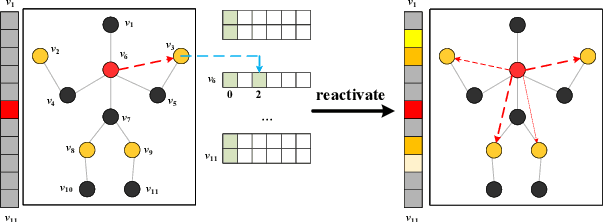
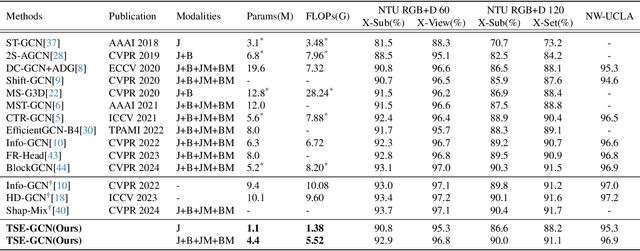
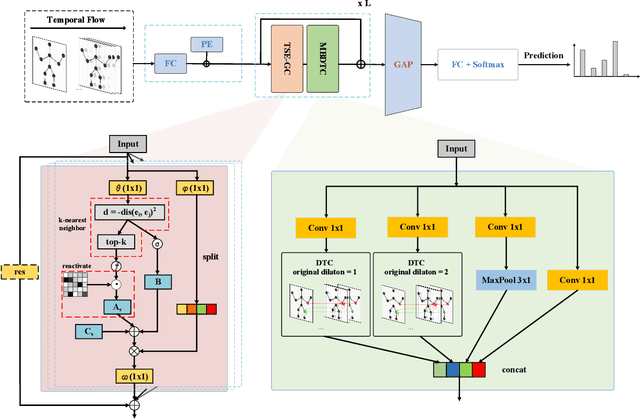
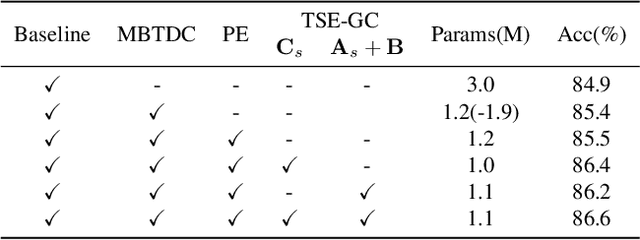
Skeleton-based action recognition has achieved remarkable performance with the development of graph convolutional networks (GCNs). However, most of these methods tend to construct complex topology learning mechanisms while neglecting the inherent symmetry of the human body. Additionally, the use of temporal convolutions with certain fixed receptive fields limits their capacity to effectively capture dependencies in time sequences. To address the issues, we (1) propose a novel Topological Symmetry Enhanced Graph Convolution (TSE-GC) to enable distinct topology learning across different channel partitions while incorporating topological symmetry awareness and (2) construct a Multi-Branch Deformable Temporal Convolution (MBDTC) for skeleton-based action recognition. The proposed TSE-GC emphasizes the inherent symmetry of the human body while enabling efficient learning of dynamic topologies. Meanwhile, the design of MBDTC introduces the concept of deformable modeling, leading to more flexible receptive fields and stronger modeling capacity of temporal dependencies. Combining TSE-GC with MBDTC, our final model, TSE-GCN, achieves competitive performance with fewer parameters compared with state-of-the-art methods on three large datasets, NTU RGB+D, NTU RGB+D 120, and NW-UCLA. On the cross-subject and cross-set evaluations of NTU RGB+D 120, the accuracies of our model reach 90.0\% and 91.1\%, with 1.1M parameters and 1.38 GFLOPS for one stream.
Smart Audit System Empowered by LLM
Oct 10, 2024


Manufacturing quality audits are pivotal for ensuring high product standards in mass production environments. Traditional auditing processes, however, are labor-intensive and reliant on human expertise, posing challenges in maintaining transparency, accountability, and continuous improvement across complex global supply chains. To address these challenges, we propose a smart audit system empowered by large language models (LLMs). Our approach introduces three innovations: a dynamic risk assessment model that streamlines audit procedures and optimizes resource allocation; a manufacturing compliance copilot that enhances data processing, retrieval, and evaluation for a self-evolving manufacturing knowledge base; and a Re-act framework commonality analysis agent that provides real-time, customized analysis to empower engineers with insights for supplier improvement. These enhancements elevate audit efficiency and effectiveness, with testing scenarios demonstrating an improvement of over 24%.
Bundle Adjustment in the Eager Mode
Sep 18, 2024
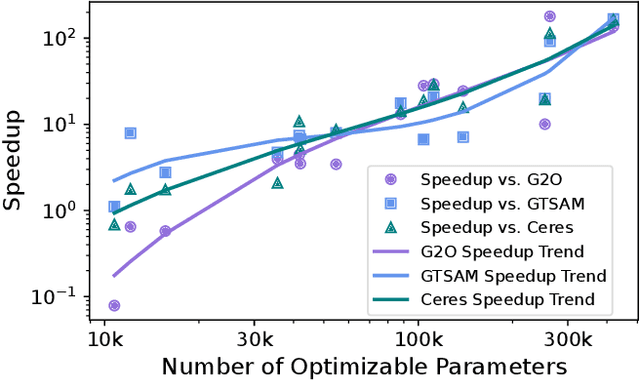

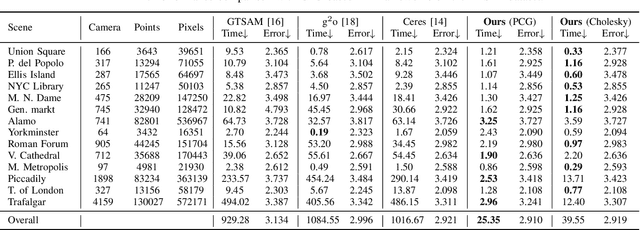
Bundle adjustment (BA) is a critical technique in various robotic applications, such as simultaneous localization and mapping (SLAM), augmented reality (AR), and photogrammetry. BA optimizes parameters such as camera poses and 3D landmarks to align them with observations. With the growing importance of deep learning in perception systems, there is an increasing need to integrate BA with deep learning frameworks for enhanced reliability and performance. However, widely-used C++-based BA frameworks, such as GTSAM, g$^2$o, and Ceres, lack native integration with modern deep learning libraries like PyTorch. This limitation affects their flexibility, adaptability, ease of debugging, and overall implementation efficiency. To address this gap, we introduce an eager-mode BA framework seamlessly integrated with PyPose, providing PyTorch-compatible interfaces with high efficiency. Our approach includes GPU-accelerated, differentiable, and sparse operations designed for 2nd-order optimization, Lie group and Lie algebra operations, and linear solvers. Our eager-mode BA on GPU demonstrates substantial runtime efficiency, achieving an average speedup of 18.5$\times$, 22$\times$, and 23$\times$ compared to GTSAM, g$^2$o, and Ceres, respectively.