 Add to Chrome
 Add to Firefox
 Add to Edge
Effective Receptive Field Ordering Matters for Infrared Small Target Detection
Jul 27, 2026
In this work, we investigate a previously unexplored architectural dimension for infrared small target detection: the organization of effective receptive fields (ERFs) during feature refinement. Unlike existing approaches that primarily improve individual feature operators, we argue that ERF organization constitutes an architectural dimension independent of receptive field design itself, and formulate deep feature transformation as a progressive residual correction process, from which a theoretical framework for ERF scheduling is established. Specifically, we reveal that ERF refinement is governed by two fundamental properties: scale-frequency correspondence, which aligns different ERF scales with distinct residual frequency characteristics, and nonlinear non-commutativity, which makes different ERF orderings produce fundamentally different refinement trajectories. Together, these properties show that ERF organization, rather than ERF scale alone, governs refinement dynamics. Guided by these principles, we propose Receptive Field Ordering Network (RFONet), which realizes hierarchical ERF scheduling through a multigrid-inspired V-cycle strategy using only standard $3\times3$ convolutions. RFONet achieves state-of-the-art performance on multiple benchmarks with only 1.16M parameters and over 157 FPS inference speed. Beyond empirical performance, our theoretical analysis provides theoretical guarantees for stable residual refinement under perturbations, frequency shifts, and partial occlusions, which are consistently reflected in superior noise robustness and cross-dataset generalization. Finally, our framework reformulates ERF organization as a task-dependent optimization objective, providing a principled foundation for future adaptive receptive field scheduling.

Decoupled Motion Representation Learning for Moving Infrared Small Target Detection
Jun 13, 2026Infrared small target detection in dynamic scenes remains challenging due to the highly coupled motions among targets, imaging platforms, and dynamic backgrounds. Existing multi-frame methods usually perform implicit temporal modeling, where coherent background dynamics dominate motion correspondence learning, leading to an inherent trade-off between detection and false alarms. In this work, we observe that background motions exhibit strong global coherence, whereas small targets mainly correspond to sparse local motion anomalies. Moreover, many false-alarm responses maintain high consistency with globally coherent motion patterns, indicating that they mainly originate from coherent background dynamics rather than genuine target motions. Based on these observations, we propose a decoupled motion representation learning framework for moving infrared small target detection. Specifically, an explicit motion branch is introduced to model globally coherent motion dynamics using pretrained optical flow priors, together with a structure-preserving self-supervised adaptation strategy for infrared motion correspondence learning. Meanwhile, an implicit motion branch based on deformable feature alignment is designed to capture target-sensitive local motion anomalies under coherent motion guidance. Furthermore, a coherent-motion-guided local anomaly reasoning module is proposed to identify and suppress coherent-motion-induced false responses during localized motion modeling. Extensive experiments on two challenging infrared small target detection benchmarks demonstrate that the proposed method consistently outperforms existing state-of-the-art approaches, particularly in dynamic scenes with complex motions, while maintaining favorable inference efficiency.
Bionic Human-Motion Style Transfer for Physically Executable Whole-Body Control of Humanoid Robots
Jun 02, 2026Expressive whole-body motion is important for humanoid robots operating in human environments, where robots are expected to move stably while presenting readable and adjustable body behaviors. However, most expressive motions are still obtained from fixed demonstrations or manually designed scripts, making it difficult to reuse a demonstrated style across different motion contents. Inspired by the way human motion styles convey affective and intentional cues through gait rhythm, posture, arm swing and body sway, this paper proposes a bionic generation-to-control framework for exemplar-driven style transfer on humanoid robots. Given a short human style exemplar and a target content motion, the proposed framework generates a stylized whole-body reference that preserves the intended motion content while transferring the demonstrated style. A physics-aware multi-condition latent diffusion model is developed to fuse style, content and trajectory conditions, and classifier-free guidance is used to adjust the style intensity without retraining. To improve hardware executability, contact-consistency and temporal-smoothness regularization are imposed on decoded motions during training. The generated references are then converted into G1-compatible robot references and executed by a preview-based whole-body tracking policy trained with a cluster-and-distill strategy. Simulation and Unitree G1 experiments show that the proposed method can transfer short human style exemplars to diverse robot motion contents, reduce contact and jitter artifacts compared with animation-oriented style-transfer baselines, and achieve a 96.0% success rate over 125 reported real-robot trials. The results demonstrate the feasibility of using short human motion exemplars as reusable bionic sources for physically executable expressive humanoid motion.
Human2Humanoid: Physics-Aware Cross-Morphology Motion Retargeting for Humanoid Robots
Jun 02, 2026Retargeting human motion to humanoid robots is critical for teleoperation, imitation learning and human-robot interaction. However, it remains challenging because of substantial morphological discrepancies between humans and robots, including differences in skeletal topology, limb proportions and degrees of freedom, as well as the scarcity of paired motion data. This paper presents Human2Humanoid, an unsupervised motion retargeting framework that transfers human motions to humanoid robot behaviors with high fidelity. To bridge the domain gap under unpaired data, we adopt a CycleGAN-based architecture equipped with a skeleton-aware graph convolutional network to capture topology-dependent motion features. To address cross-domain scale mismatches, we introduce a morphology-invariant end-effector consistency loss that aligns normalized end-effector trajectories to preserve motion semantics across embodiments. To improve physical plausibility and reduce contact artifacts, we impose explicit physics-aware feasibility constraints to encourage reproduction of the contact patterns in the source motion. Experimental results show that the proposed method successfully retargets human motion to the Unitree G1 humanoid robot without paired data, and outperforms existing methods in both downstream controllability and physical feasibility.
PanoAir: A Panoramic Visual-Inertial SLAM with Cross-Time Real-World UAV Dataset
Apr 01, 2026Accurate pose estimation is fundamental for unmanned aerial vehicle (UAV) applications, where Visual-Inertial SLAM (VI-SLAM) provides a cost-effective solution for localization and mapping. However, existing VI-SLAM methods mainly rely on sensors with limited fields of view (FoV), which can lead to drift and even failure in complex UAV scenarios. Although panoramic cameras provide omnidirectional perception to improve robustness, panoramic VI-SLAM and corresponding real-world datasets for UAVs remain underexplored. To address this limitation, we first construct a real-world panoramic visual-inertial dataset covering diverse flight conditions, including varying illumination, altitudes, trajectory lengths, and motion dynamics. To achieve accurate and robust pose estimation under such challenging UAV scenarios, we propose a panoramic VI-SLAM framework that exploits the omnidirectional FoV via the proposed panoramic feature extraction and panoramic loop closure, enhancing feature constraints and ensuring global consistency. Extensive experiments on both the proposed dataset and public benchmarks demonstrate that our method achieves superior accuracy, robustness, and consistency compared to existing approaches. Moreover, deployment on embedded platform validates its practical applicability, achieving comparable computational efficiency to PC implementations. The source code and dataset are publicly available at https://drive.google.com/file/d/1lG1Upn6yi-N6tYpEHAt6dfR1uhzNtWbT/view
SKATER: Synthesized Kinematics for Advanced Traversing Efficiency on a Humanoid Robot via Roller Skate Swizzles
Jan 08, 2026Although recent years have seen significant progress of humanoid robots in walking and running, the frequent foot strikes with ground during these locomotion gaits inevitably generate high instantaneous impact forces, which leads to exacerbated joint wear and poor energy utilization. Roller skating, as a sport with substantial biomechanical value, can achieve fast and continuous sliding through rational utilization of body inertia, featuring minimal kinetic energy loss. Therefore, this study proposes a novel humanoid robot with each foot equipped with a row of four passive wheels for roller skating. A deep reinforcement learning control framework is also developed for the swizzle gait with the reward function design based on the intrinsic characteristics of roller skating. The learned policy is first analyzed in simulation and then deployed on the physical robot to demonstrate the smoothness and efficiency of the swizzle gait over traditional bipedal walking gait in terms of Impact Intensity and Cost of Transport during locomotion. A reduction of $75.86\%$ and $63.34\%$ of these two metrics indicate roller skating as a superior locomotion mode for enhanced energy efficiency and joint longevity.
You Only Look Omni Gradient Backpropagation for Moving Infrared Small Target Detection
Nov 17, 2025Moving infrared small target detection is a key component of infrared search and tracking systems, yet it remains extremely challenging due to low signal-to-clutter ratios, severe target-background imbalance, and weak discriminative features. Existing deep learning methods primarily focus on spatio-temporal feature aggregation, but their gains are limited, revealing that the fundamental bottleneck lies in ambiguous per-frame feature representations rather than spatio-temporal modeling itself. Motivated by this insight, we propose BP-FPN, a backpropagation-driven feature pyramid architecture that fundamentally rethinks feature learning for small target. BP-FPN introduces Gradient-Isolated Low-Level Shortcut (GILS) to efficiently incorporate fine-grained target details without inducing shortcut learning, and Directional Gradient Regularization (DGR) to enforce hierarchical feature consistency during backpropagation. The design is theoretically grounded, introduces negligible computational overhead, and can be seamlessly integrated into existing frameworks. Extensive experiments on multiple public datasets show that BP-FPN consistently establishes new state-of-the-art performance. To the best of our knowledge, it is the first FPN designed for this task entirely from the backpropagation perspective.
Beyond Motion Cues and Structural Sparsity: Revisiting Small Moving Target Detection
Sep 09, 2025Small moving target detection is crucial for many defense applications but remains highly challenging due to low signal-to-noise ratios, ambiguous visual cues, and cluttered backgrounds. In this work, we propose a novel deep learning framework that differs fundamentally from existing approaches, which often rely on target-specific features or motion cues and tend to lack robustness in complex environments. Our key insight is that small target detection and background discrimination are inherently coupled, even cluttered video backgrounds often exhibit strong low-rank structures that can serve as stable priors for detection. We reformulate the task as a tensor-based low-rank and sparse decomposition problem and conduct a theoretical analysis of the background, target, and noise components to guide model design. Building on these insights, we introduce TenRPCANet, a deep neural network that requires minimal assumptions about target characteristics. Specifically, we propose a tokenization strategy that implicitly enforces multi-order tensor low-rank priors through a self-attention mechanism. This mechanism captures both local and non-local self-similarity to model the low-rank background without relying on explicit iterative optimization. In addition, inspired by the sparse component update in tensor RPCA, we design a feature refinement module to enhance target saliency. The proposed method achieves state-of-the-art performance on two highly distinct and challenging tasks: multi-frame infrared small target detection and space object detection. These results demonstrate both the effectiveness and the generalizability of our approach.
It's Not the Target, It's the Background: Rethinking Infrared Small Target Detection via Deep Patch-Free Low-Rank Representations
Jun 12, 2025Infrared small target detection (IRSTD) remains a long-standing challenge in complex backgrounds due to low signal-to-clutter ratios (SCR), diverse target morphologies, and the absence of distinctive visual cues. While recent deep learning approaches aim to learn discriminative representations, the intrinsic variability and weak priors of small targets often lead to unstable performance. In this paper, we propose a novel end-to-end IRSTD framework, termed LRRNet, which leverages the low-rank property of infrared image backgrounds. Inspired by the physical compressibility of cluttered scenes, our approach adopts a compression--reconstruction--subtraction (CRS) paradigm to directly model structure-aware low-rank background representations in the image domain, without relying on patch-based processing or explicit matrix decomposition. To the best of our knowledge, this is the first work to directly learn low-rank background structures using deep neural networks in an end-to-end manner. Extensive experiments on multiple public datasets demonstrate that LRRNet outperforms 38 state-of-the-art methods in terms of detection accuracy, robustness, and computational efficiency. Remarkably, it achieves real-time performance with an average speed of 82.34 FPS. Evaluations on the challenging NoisySIRST dataset further confirm the model's resilience to sensor noise. The source code will be made publicly available upon acceptance.
CXR-AD: Component X-ray Image Dataset for Industrial Anomaly Detection
May 06, 2025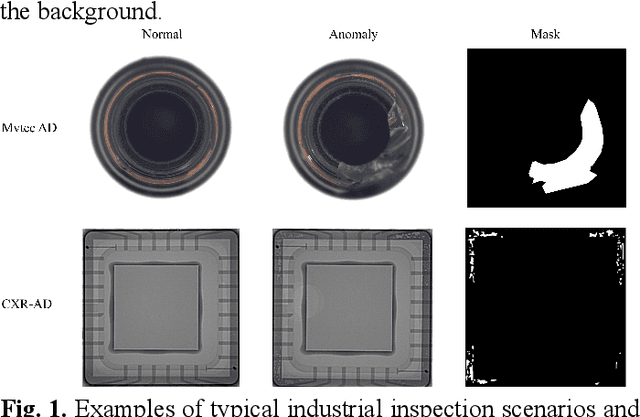
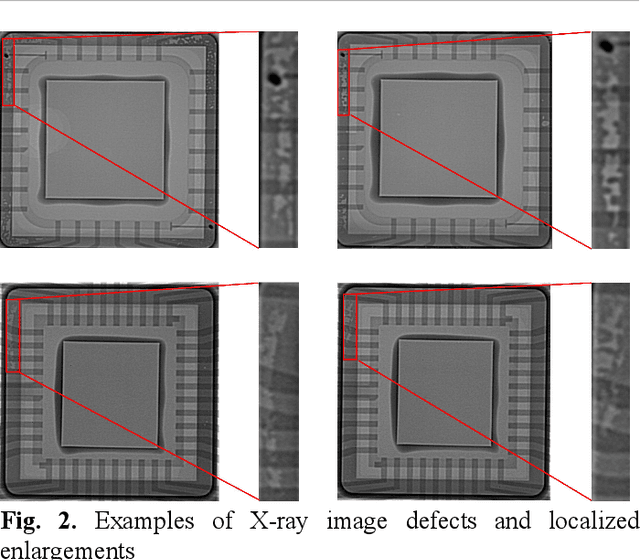
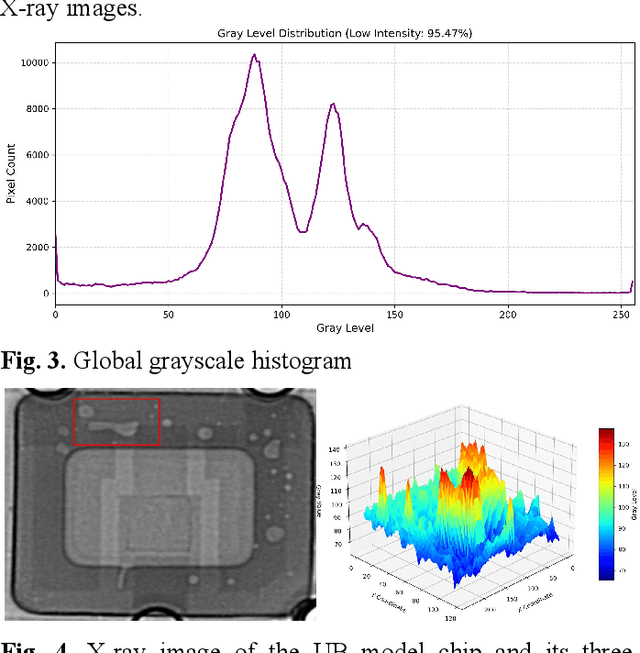
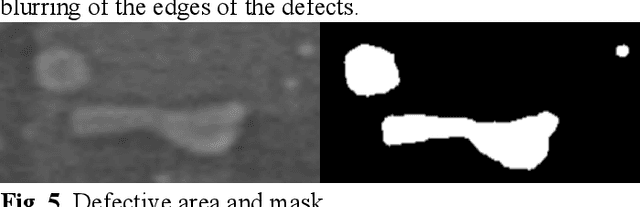
Internal defect detection constitutes a critical process in ensuring component quality, for which anomaly detection serves as an effective solution. However, existing anomaly detection datasets predominantly focus on surface defects in visible-light images, lacking publicly available X-ray datasets targeting internal defects in components. To address this gap, we construct the first publicly accessible component X-ray anomaly detection (CXR-AD) dataset, comprising real-world X-ray images. The dataset covers five industrial component categories, including 653 normal samples and 561 defect samples with precise pixel-level mask annotations. We systematically analyze the dataset characteristics and identify three major technical challenges: (1) strong coupling between complex internal structures and defect regions, (2) inherent low contrast and high noise interference in X-ray imaging, and (3) significant variations in defect scales and morphologies. To evaluate dataset complexity, we benchmark three state-of-the-art anomaly detection frameworks (feature-based, reconstruction-based, and zero-shot learning methods). Experimental results demonstrate a 29.78% average performance degradation on CXR-AD compared to MVTec AD, highlighting the limitations of current algorithms in handling internal defect detection tasks. To the best of our knowledge, CXR-AD represents the first publicly available X-ray dataset for component anomaly detection, providing a real-world industrial benchmark to advance algorithm development and enhance precision in internal defect inspection technologies.