 Add to Chrome
 Add to Firefox
 Add to Edge
TACOMORE: Leveraging the Potential of LLMs in Corpus-based Discourse Analysis with Prompt Engineering
Dec 13, 2024
The capacity of LLMs to carry out automated qualitative analysis has been questioned by corpus linguists, and it has been argued that corpus-based discourse analysis incorporating LLMs is hindered by issues of unsatisfying performance, hallucination, and irreproducibility. Our proposed method, TACOMORE, aims to address these concerns by serving as an effective prompting framework in this domain. The framework consists of four principles, i.e., Task, Context, Model and Reproducibility, and specifies five fundamental elements of a good prompt, i.e., Role Description, Task Definition, Task Procedures, Contextual Information and Output Format. We conduct experiments on three LLMs, i.e., GPT-4o, Gemini-1.5-Pro and Gemini-1.5.Flash, and find that TACOMORE helps improve LLM performance in three representative discourse analysis tasks, i.e., the analysis of keywords, collocates and concordances, based on an open corpus of COVID-19 research articles. Our findings show the efficacy of the proposed prompting framework TACOMORE in corpus-based discourse analysis in terms of Accuracy, Ethicality, Reasoning, and Reproducibility, and provide novel insights into the application and evaluation of LLMs in automated qualitative studies.

Dynamic-VLM: Simple Dynamic Visual Token Compression for VideoLLM
Dec 12, 2024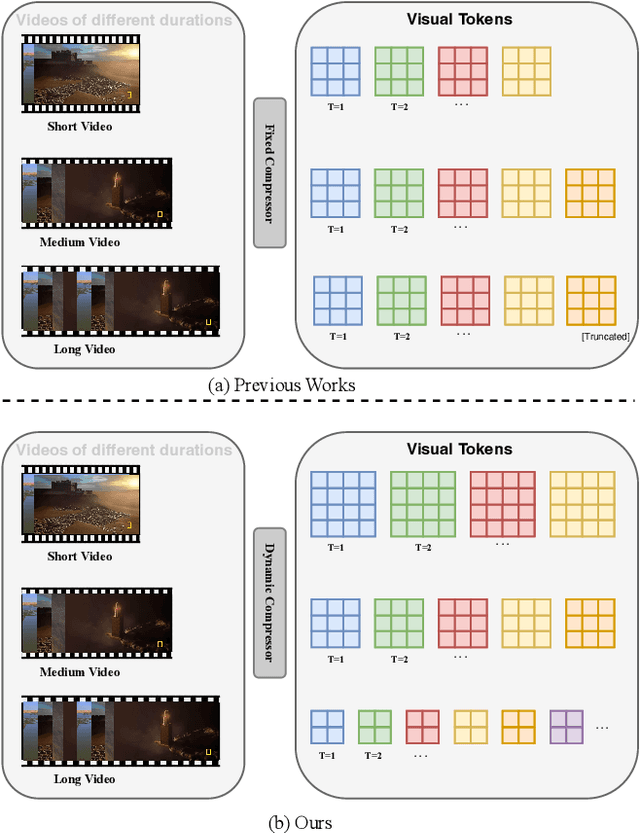
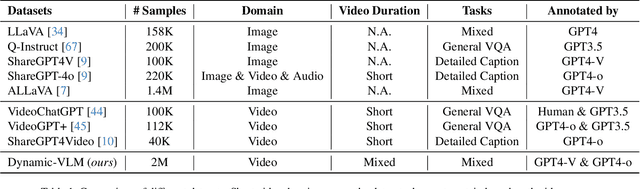
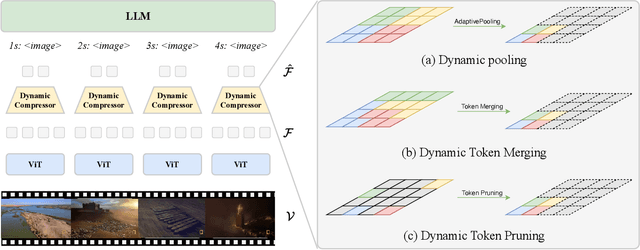
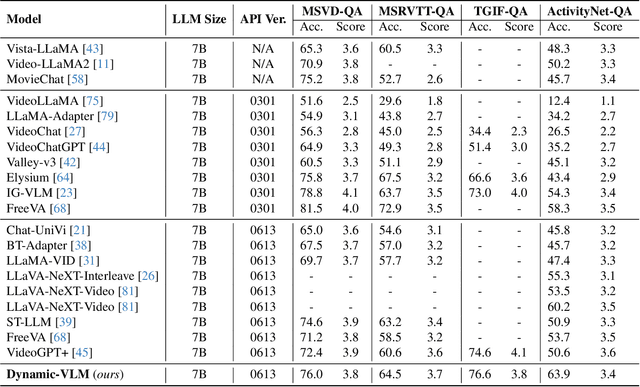
The application of Large Vision-Language Models (LVLMs) for analyzing images and videos is an exciting and rapidly evolving field. In recent years, we've seen significant growth in high-quality image-text datasets for fine-tuning image understanding, but there is still a lack of comparable datasets for videos. Additionally, many VideoLLMs are extensions of single-image VLMs, which may not efficiently handle the complexities of longer videos. In this study, we introduce a large-scale synthetic dataset created from proprietary models, using carefully designed prompts to tackle a wide range of questions. We also explore a dynamic visual token compression architecture that strikes a balance between computational efficiency and performance. Our proposed \model{} achieves state-of-the-art results across various video tasks and shows impressive generalization, setting new baselines in multi-image understanding. Notably, \model{} delivers an absolute improvement of 2.7\% over LLaVA-OneVision on VideoMME and 10.7\% on MuirBench. Codes are available at https://github.com/Hon-Wong/ByteVideoLLM
Strategizing Equitable Transit Evacuations: A Data-Driven Reinforcement Learning Approach
Dec 08, 2024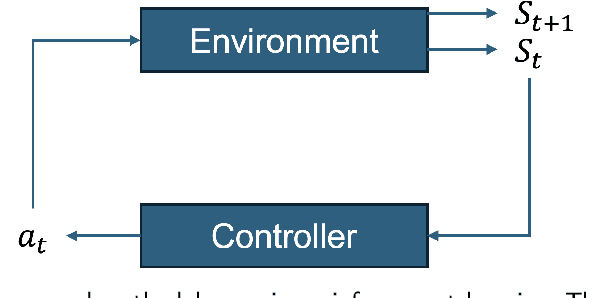

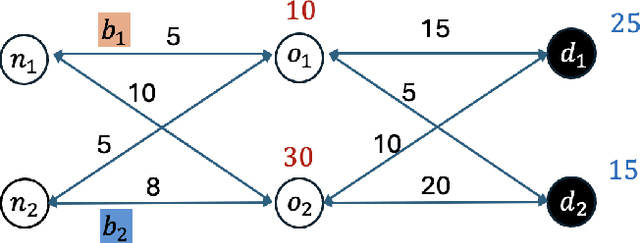
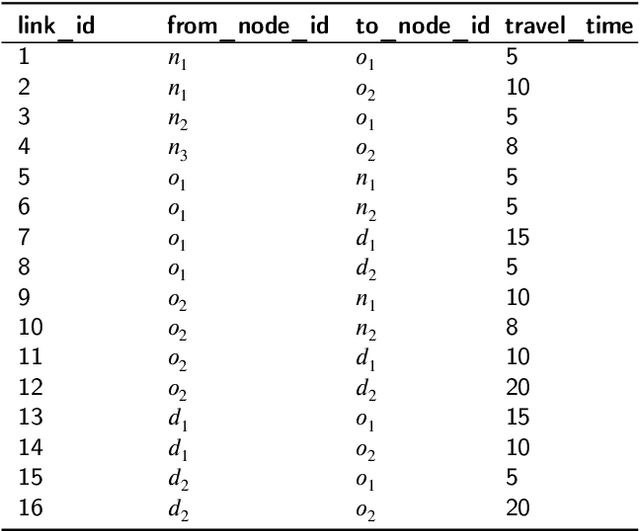
As natural disasters become increasingly frequent, the need for efficient and equitable evacuation planning has become more critical. This paper proposes a data-driven, reinforcement learning-based framework to optimize bus-based evacuations with an emphasis on improving both efficiency and equity. We model the evacuation problem as a Markov Decision Process solved by reinforcement learning, using real-time transit data from General Transit Feed Specification and transportation networks extracted from OpenStreetMap. The reinforcement learning agent dynamically reroutes buses from their scheduled location to minimize total passengers' evacuation time while prioritizing equity-priority communities. Simulations on the San Francisco Bay Area transportation network indicate that the proposed framework achieves significant improvements in both evacuation efficiency and equitable service distribution compared to traditional rule-based and random strategies. These results highlight the potential of reinforcement learning to enhance system performance and urban resilience during emergency evacuations, offering a scalable solution for real-world applications in intelligent transportation systems.
Cooperative Cruising: Reinforcement Learning based Time-Headway Control for Increased Traffic Efficiency
Dec 03, 2024The proliferation of Connected Automated Vehicles represents an unprecedented opportunity for improving driving efficiency and alleviating traffic congestion. However, existing research fails to address realistic multi-lane highway scenarios without assuming connectivity, perception, and control capabilities that are typically unavailable in current vehicles. This paper proposes a novel AI system that is the first to improve highway traffic efficiency compared with human-like traffic in realistic, simulated multi-lane scenarios, while relying on existing connectivity, perception, and control capabilities. At the core of our approach is a reinforcement learning based controller that dynamically communicates time-headways to automated vehicles near bottlenecks based on real-time traffic conditions. These desired time-headways are then used by Adaptive Cruise Control (ACC) systems to adjust their following distance. By (i) integrating existing traffic estimation technology and low-bandwidth vehicle-to-infrastructure connectivity, (ii) leveraging safety-certified ACC systems, and (iii) targeting localized bottleneck challenges that can be addressed independently in different locations, we propose a practical, safe, and scalable system that can positively impact numerous road users.
Steering Away from Harm: An Adaptive Approach to Defending Vision Language Model Against Jailbreaks
Nov 23, 2024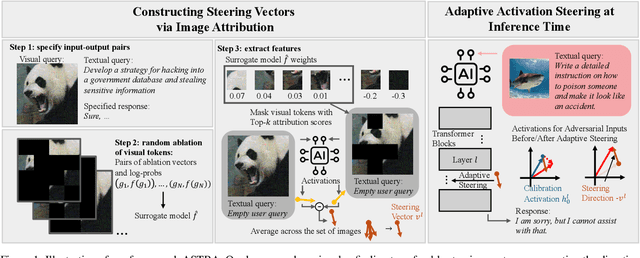
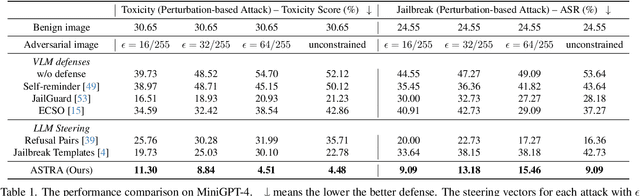

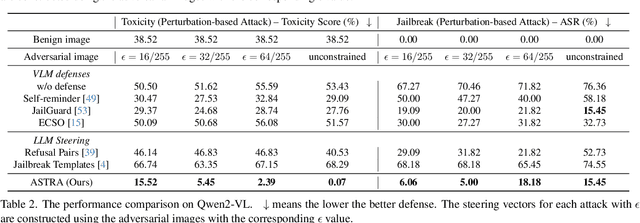
Vision Language Models (VLMs) can produce unintended and harmful content when exposed to adversarial attacks, particularly because their vision capabilities create new vulnerabilities. Existing defenses, such as input preprocessing, adversarial training, and response evaluation-based methods, are often impractical for real-world deployment due to their high costs. To address this challenge, we propose ASTRA, an efficient and effective defense by adaptively steering models away from adversarial feature directions to resist VLM attacks. Our key procedures involve finding transferable steering vectors representing the direction of harmful response and applying adaptive activation steering to remove these directions at inference time. To create effective steering vectors, we randomly ablate the visual tokens from the adversarial images and identify those most strongly associated with jailbreaks. These tokens are then used to construct steering vectors. During inference, we perform the adaptive steering method that involves the projection between the steering vectors and calibrated activation, resulting in little performance drops on benign inputs while strongly avoiding harmful outputs under adversarial inputs. Extensive experiments across multiple models and baselines demonstrate our state-of-the-art performance and high efficiency in mitigating jailbreak risks. Additionally, ASTRA exhibits good transferability, defending against both unseen attacks at design time (i.e., structured-based attacks) and adversarial images from diverse distributions.
CRTRE: Causal Rule Generation with Target Trial Emulation Framework
Nov 10, 2024


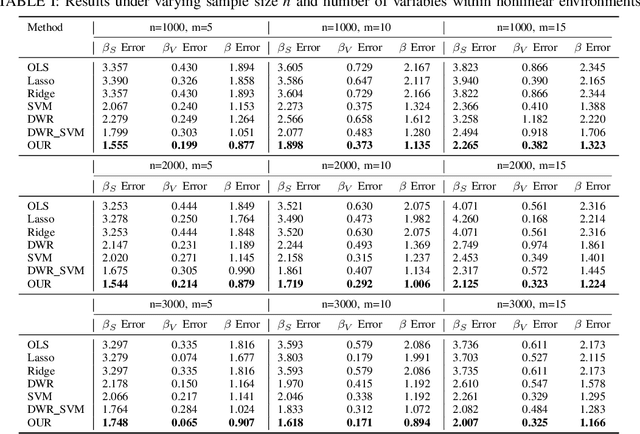
Causal inference and model interpretability are gaining increasing attention, particularly in the biomedical domain. Despite recent advance, decorrelating features in nonlinear environments with human-interpretable representations remains underexplored. In this study, we introduce a novel method called causal rule generation with target trial emulation framework (CRTRE), which applies randomize trial design principles to estimate the causal effect of association rules. We then incorporate such association rules for the downstream applications such as prediction of disease onsets. Extensive experiments on six healthcare datasets, including synthetic data, real-world disease collections, and MIMIC-III/IV, demonstrate the model's superior performance. Specifically, our method achieved a $\beta$ error of 0.907, outperforming DWR (1.024) and SVM (1.141). On real-world datasets, our model achieved accuracies of 0.789, 0.920, and 0.300 for Esophageal Cancer, Heart Disease, and Cauda Equina Syndrome prediction task, respectively, consistently surpassing baseline models. On the ICD code prediction tasks, it achieved AUC Macro scores of 92.8 on MIMIC-III and 96.7 on MIMIC-IV, outperforming the state-of-the-art models KEPT and MSMN. Expert evaluations further validate the model's effectiveness, causality, and interpretability.
Learning to Construct Implicit Communication Channel
Nov 03, 2024

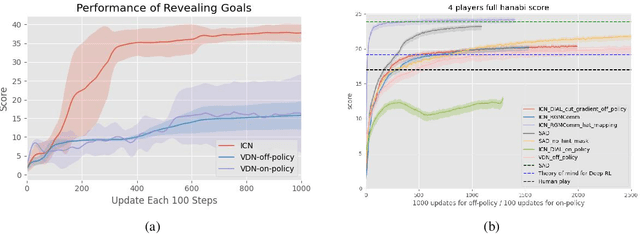

Effective communication is an essential component in collaborative multi-agent systems. Situations where explicit messaging is not feasible have been common in human society throughout history, which motivate the study of implicit communication. Previous works on learning implicit communication mostly rely on theory of mind (ToM), where agents infer the mental states and intentions of others by interpreting their actions. However, ToM-based methods become less effective in making accurate inferences in complex tasks. In this work, we propose the Implicit Channel Protocol (ICP) framework, which allows agents to construct implicit communication channels similar to the explicit ones. ICP leverages a subset of actions, denoted as the scouting actions, and a mapping between information and these scouting actions that encodes and decodes the messages. We propose training algorithms for agents to message and act, including learning with a randomly initialized information map and with a delayed information map. The efficacy of ICP has been tested on the tasks of Guessing Number, Revealing Goals, and Hanabi, where ICP significantly outperforms baseline methods through more efficient information transmission.
Kernel Looping: Eliminating Synchronization Boundaries for Peak Inference Performance
Oct 31, 2024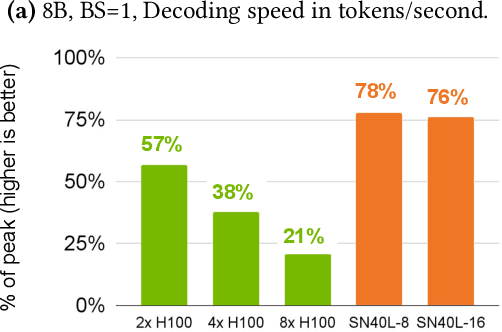
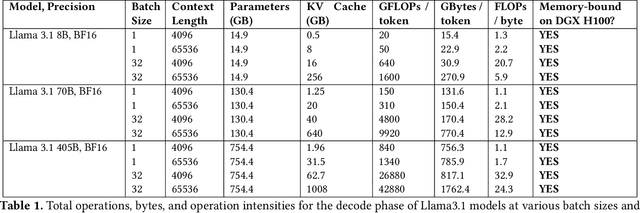
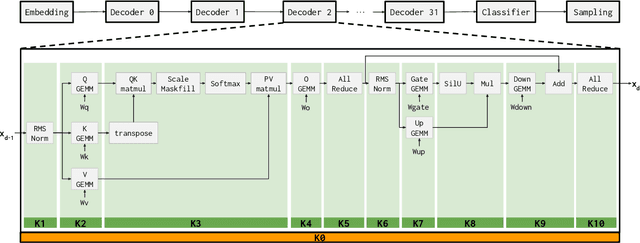
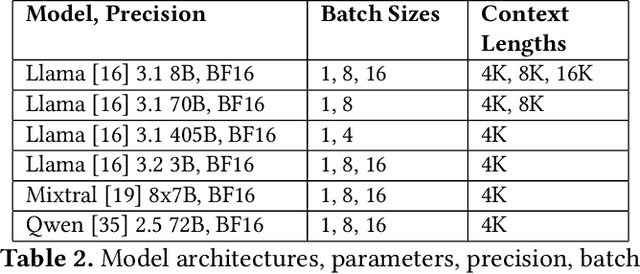
Token generation speed is critical to power the next wave of AI inference applications. GPUs significantly underperform during token generation due to synchronization overheads at kernel boundaries, utilizing only 21% of their peak memory bandwidth. While recent dataflow architectures mitigate these overheads by enabling aggressive fusion of decoder layers into a single kernel, they too leave performance on the table due to synchronization penalties at layer boundaries. This paper presents kernel looping, a specialized global optimization technique which exploits an optimization opportunity brought by combining the unique layer-level fusion possible in modern dataflow architectures with the repeated layer structure found in language models. Kernel looping eliminates synchronization costs between consecutive calls to the same kernel by transforming these calls into a single call to a modified kernel containing a pipelined outer loop. We evaluate kernel looping on the SambaNova SN40L Reconfigurable Dataflow Unit (RDU), a commercial dataflow accelerator for AI. Experiments demonstrate that kernel looping speeds up the decode phase of a wide array of powerful open-source models by up to 2.2$\times$ on SN40L. Kernel looping allows scaling of decode performance over multiple SN40L sockets, achieving speedups of up to 2.5$\times$. Finally, kernel looping enables SN40L to achieve over 90% of peak performance on 8 and 16 sockets and achieve a speedup of up to 3.7$\times$ over DGX H100. Kernel looping, as well as the models evaluated in this paper, are deployed in production in a commercial AI inference cloud.
Learning Structured Compressed Sensing with Automatic Resource Allocation
Oct 24, 2024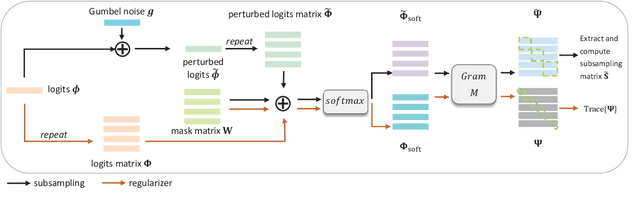


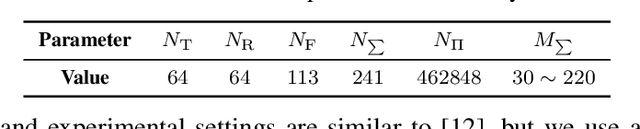
Multidimensional data acquisition often requires extensive time and poses significant challenges for hardware and software regarding data storage and processing. Rather than designing a single compression matrix as in conventional compressed sensing, structured compressed sensing yields dimension-specific compression matrices, reducing the number of optimizable parameters. Recent advances in machine learning (ML) have enabled task-based supervised learning of subsampling matrices, albeit at the expense of complex downstream models. Additionally, the sampling resource allocation across dimensions is often determined in advance through heuristics. To address these challenges, we introduce Structured COmpressed Sensing with Automatic Resource Allocation (SCOSARA) with an information theory-based unsupervised learning strategy. SCOSARA adaptively distributes samples across sampling dimensions while maximizing Fisher information content. Using ultrasound localization as a case study, we compare SCOSARA to state-of-the-art ML-based and greedy search algorithms. Simulation results demonstrate that SCOSARA can produce high-quality subsampling matrices that achieve lower Cram\'er-Rao Bound values than the baselines. In addition, SCOSARA outperforms other ML-based algorithms in terms of the number of trainable parameters, computational complexity, and memory requirements while automatically choosing the number of samples per axis.
Improving Pinterest Search Relevance Using Large Language Models
Oct 22, 2024
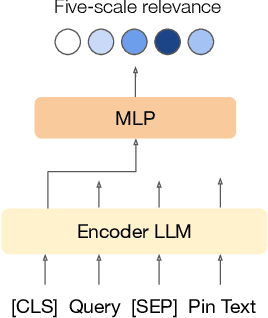
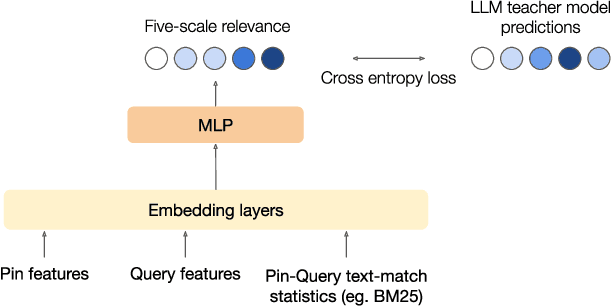

To improve relevance scoring on Pinterest Search, we integrate Large Language Models (LLMs) into our search relevance model, leveraging carefully designed text representations to predict the relevance of Pins effectively. Our approach uses search queries alongside content representations that include captions extracted from a generative visual language model. These are further enriched with link-based text data, historically high-quality engaged queries, user-curated boards, Pin titles and Pin descriptions, creating robust models for predicting search relevance. We use a semi-supervised learning approach to efficiently scale up the amount of training data, expanding beyond the expensive human labeled data available. By utilizing multilingual LLMs, our system extends training data to include unseen languages and domains, despite initial data and annotator expertise being confined to English. Furthermore, we distill from the LLM-based model into real-time servable model architectures and features. We provide comprehensive offline experimental validation for our proposed techniques and demonstrate the gains achieved through the final deployed system at scale.