 Add to Chrome
 Add to Firefox
 Add to Edge
Learning Music Style for Piano Arrangement Through Cross-Modal Bootstrapping
Aug 04, 2026
What is music style? Though often described using text labels such as "swing," "classical," or "emotional," the real style remains implicit and hidden in concrete music examples. In this paper, we introduce a cross-modal framework that learns implicit music styles from raw audio and applies them to symbolic music generation. Inspired by BLIP-2, our model leverages a Querying Transformer (Q-Former) to extract style representations from a large, pre-trained audio language model (LM), and further applies them to condition a symbolic LM for generating piano arrangements. We adopt a two-stage training strategy: contrastive learning to align auditory style with symbolic expression, followed by generative modeling for music arrangement. Our model generates piano performances jointly conditioned on a lead sheet (content) and a reference audio example (style), enabling controllable and stylistically faithful arrangement. Experiments demonstrate the effectiveness of our approach in piano cover generation, style transfer, and audio-to-MIDI retrieval, achieving substantial improvements in style-aware alignment and music quality.

Detecting AI-Generated Video: A Vision-Language Dual-View Survey
Jul 12, 2026The evolving realism of AI-generated Videos (AIGC-V) is rapidly rendering traditional artifact-centric detection insufficient, necessitating a paradigm shift from low-level inspection to high-level semantic verification. This paper presents a comprehensive survey of AIGC-V detection, reframing the task as Factual Fidelity Verification, which asks whether the events, entities, and physical processes depicted in a video are consistent with real-world facts. To systematize this rapidly evolving field, we propose a Vision-Language Dual-View taxonomy that organizes existing methods into a hierarchical, four-layer landscape, spanning intrinsic cue analysis, spatiotemporal consistency modeling, cross-modal consistency reasoning, and language-guided world-level reasoning. This dual-view framing highlights a fundamental transition from artifact matching in traditional deepfake detection to evidence-based semantic verification enabled by vision-language models and agentic reasoning pipelines. Based on a systematic review of 221 works, we synthesize AIGC-V generation paradigms, survey the landscape of detection methods, and review evaluation metrics and benchmarks in line with proposed views. Finally, we discuss current challenges and identify promising directions toward robust, explainable, and trustworthy detection.
* 51 pages, accepted by ACL 2026
Turning music identification into a neural forward pass
Jun 15, 2026Search, a foundational operation in computer science, maps a query to a matching item in a collection. It is typically implemented as a System-2 like, rule-based pipeline in which a key is computed, an index is probed, and candidates are verified. By contrast, human recognition resembles a System-1 like, associative model of identity recovery, in which even partial cues can trigger a recall without explicitly enumerating, ranking, or even accessing discrete candidates. Here, we show that music sound identification, a difficult search problem, can be performed in a single neural feed-forward pass by a generative transformer. Trained on an audio dataset, the model predicts the corresponding track identifier from a short audio excerpt. This approach surpasses state-of-the-art acoustic fingerprinting, with the largest gains for short audio segments (1 second), demonstrating the method is not only viable but advantageous. Moreover, it reduces external storage to 0.33% of the baseline footprint and improves inference latency by 2.3x (p95). Furthermore, the model can reject queries for unseen tracks, supporting open-set operation while reducing misattribution risk. Using music track identification as an example, this work reframes search, bringing it closer in spirit to human associative recognition and away from algorithmic database lookup.
Who Gets Heard? Rethinking Fairness in AI for Music Systems
Nov 08, 2025In recent years, the music research community has examined risks of AI models for music, with generative AI models in particular, raised concerns about copyright, deepfakes, and transparency. In our work, we raise concerns about cultural and genre biases in AI for music systems (music-AI systems) which affect stakeholders including creators, distributors, and listeners shaping representation in AI for music. These biases can misrepresent marginalized traditions, especially from the Global South, producing inauthentic outputs (e.g., distorted ragas) that reduces creators' trust on these systems. Such harms risk reinforcing biases, limiting creativity, and contributing to cultural erasure. To address this, we offer recommendations at dataset, model and interface level in music-AI systems.
YuE: Scaling Open Foundation Models for Long-Form Music Generation
Mar 11, 2025We tackle the task of long-form music generation--particularly the challenging \textbf{lyrics-to-song} problem--by introducing YuE, a family of open foundation models based on the LLaMA2 architecture. Specifically, YuE scales to trillions of tokens and generates up to five minutes of music while maintaining lyrical alignment, coherent musical structure, and engaging vocal melodies with appropriate accompaniment. It achieves this through (1) track-decoupled next-token prediction to overcome dense mixture signals, (2) structural progressive conditioning for long-context lyrical alignment, and (3) a multitask, multiphase pre-training recipe to converge and generalize. In addition, we redesign the in-context learning technique for music generation, enabling versatile style transfer (e.g., converting Japanese city pop into an English rap while preserving the original accompaniment) and bidirectional generation. Through extensive evaluation, we demonstrate that YuE matches or even surpasses some of the proprietary systems in musicality and vocal agility. In addition, fine-tuning YuE enables additional controls and enhanced support for tail languages. Furthermore, beyond generation, we show that YuE's learned representations can perform well on music understanding tasks, where the results of YuE match or exceed state-of-the-art methods on the MARBLE benchmark. Keywords: lyrics2song, song generation, long-form, foundation model, music generation
Music for All: Exploring Multicultural Representations in Music Generation Models
Feb 12, 2025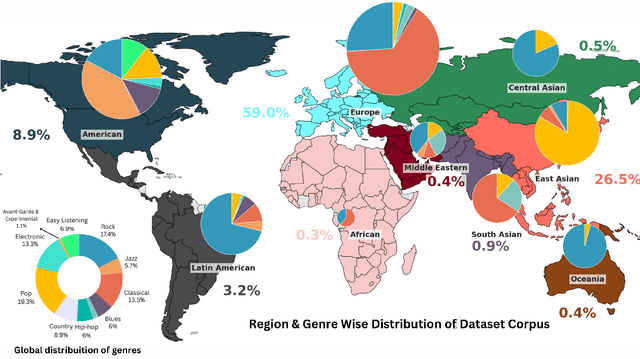
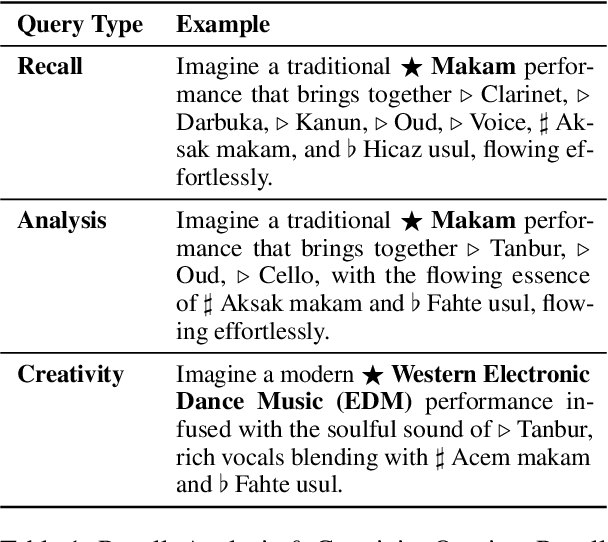
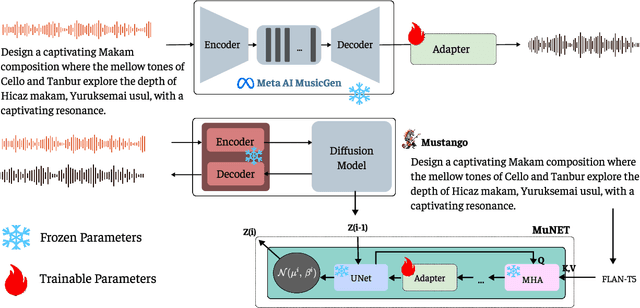
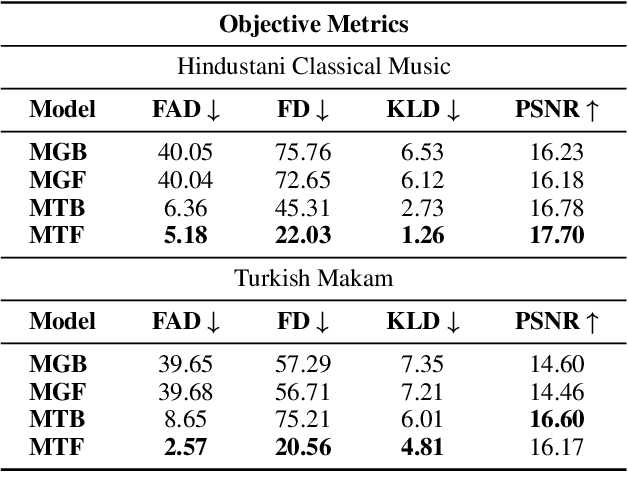
The advent of Music-Language Models has greatly enhanced the automatic music generation capability of AI systems, but they are also limited in their coverage of the musical genres and cultures of the world. We present a study of the datasets and research papers for music generation and quantify the bias and under-representation of genres. We find that only 5.7% of the total hours of existing music datasets come from non-Western genres, which naturally leads to disparate performance of the models across genres. We then investigate the efficacy of Parameter-Efficient Fine-Tuning (PEFT) techniques in mitigating this bias. Our experiments with two popular models -- MusicGen and Mustango, for two underrepresented non-Western music traditions -- Hindustani Classical and Turkish Makam music, highlight the promises as well as the non-triviality of cross-genre adaptation of music through small datasets, implying the need for more equitable baseline music-language models that are designed for cross-cultural transfer learning.
M2M-Gen: A Multimodal Framework for Automated Background Music Generation in Japanese Manga Using Large Language Models
Oct 13, 2024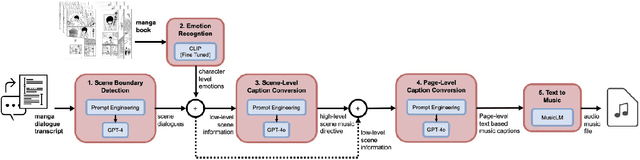

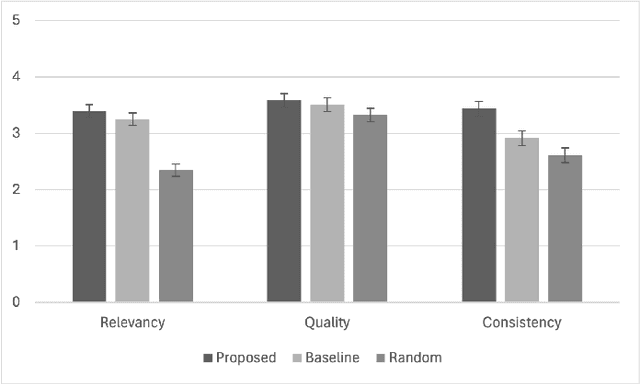
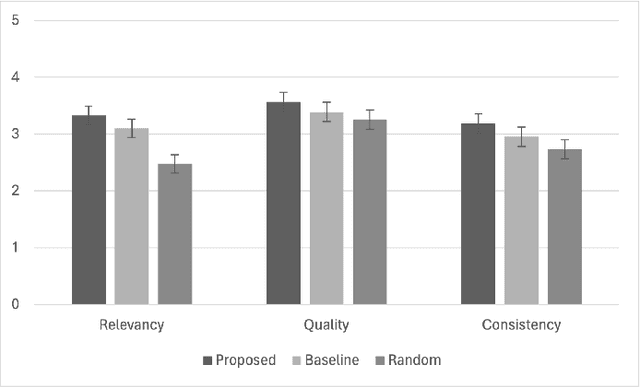
This paper introduces M2M Gen, a multi modal framework for generating background music tailored to Japanese manga. The key challenges in this task are the lack of an available dataset or a baseline. To address these challenges, we propose an automated music generation pipeline that produces background music for an input manga book. Initially, we use the dialogues in a manga to detect scene boundaries and perform emotion classification using the characters faces within a scene. Then, we use GPT4o to translate this low level scene information into a high level music directive. Conditioned on the scene information and the music directive, another instance of GPT 4o generates page level music captions to guide a text to music model. This produces music that is aligned with the mangas evolving narrative. The effectiveness of M2M Gen is confirmed through extensive subjective evaluations, showcasing its capability to generate higher quality, more relevant and consistent music that complements specific scenes when compared to our baselines.
CalliffusionV2: Personalized Natural Calligraphy Generation with Flexible Multi-modal Control
Oct 03, 2024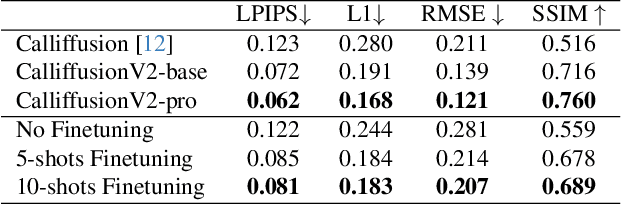


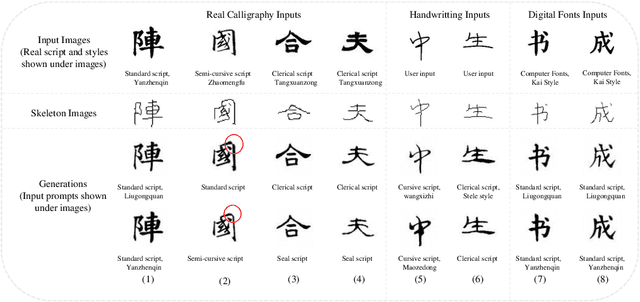
In this paper, we introduce CalliffusionV2, a novel system designed to produce natural Chinese calligraphy with flexible multi-modal control. Unlike previous approaches that rely solely on image or text inputs and lack fine-grained control, our system leverages both images to guide generations at fine-grained levels and natural language texts to describe the features of generations. CalliffusionV2 excels at creating a broad range of characters and can quickly learn new styles through a few-shot learning approach. It is also capable of generating non-Chinese characters without prior training. Comprehensive tests confirm that our system produces calligraphy that is both stylistically accurate and recognizable by neural network classifiers and human evaluators.
Foundation Models for Music: A Survey
Aug 27, 2024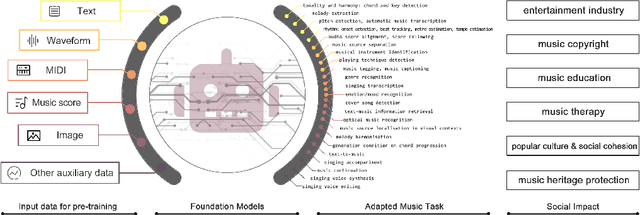
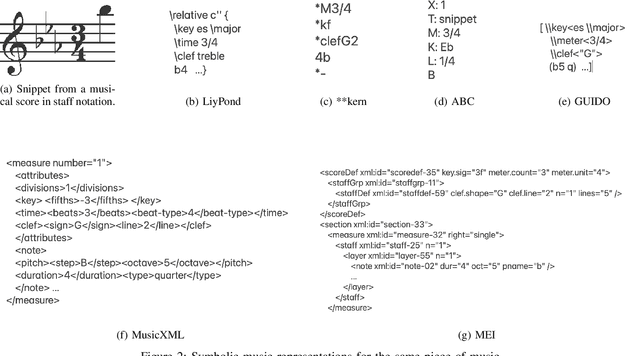
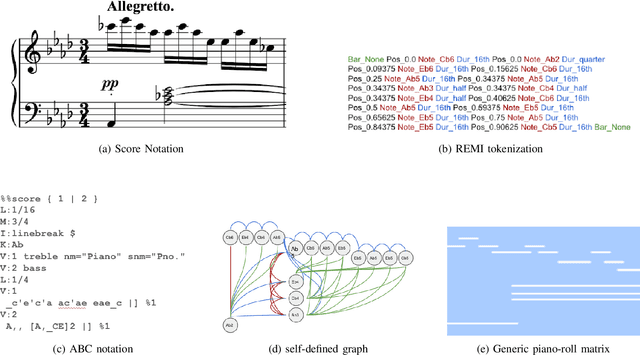
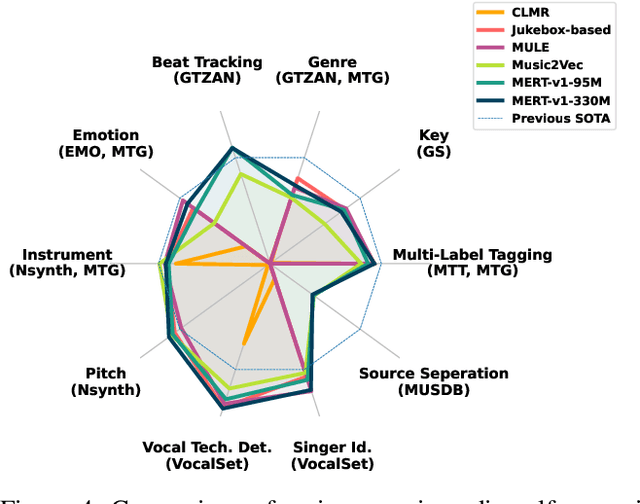
In recent years, foundation models (FMs) such as large language models (LLMs) and latent diffusion models (LDMs) have profoundly impacted diverse sectors, including music. This comprehensive review examines state-of-the-art (SOTA) pre-trained models and foundation models in music, spanning from representation learning, generative learning and multimodal learning. We first contextualise the significance of music in various industries and trace the evolution of AI in music. By delineating the modalities targeted by foundation models, we discover many of the music representations are underexplored in FM development. Then, emphasis is placed on the lack of versatility of previous methods on diverse music applications, along with the potential of FMs in music understanding, generation and medical application. By comprehensively exploring the details of the model pre-training paradigm, architectural choices, tokenisation, finetuning methodologies and controllability, we emphasise the important topics that should have been well explored, like instruction tuning and in-context learning, scaling law and emergent ability, as well as long-sequence modelling etc. A dedicated section presents insights into music agents, accompanied by a thorough analysis of datasets and evaluations essential for pre-training and downstream tasks. Finally, by underscoring the vital importance of ethical considerations, we advocate that following research on FM for music should focus more on such issues as interpretability, transparency, human responsibility, and copyright issues. The paper offers insights into future challenges and trends on FMs for music, aiming to shape the trajectory of human-AI collaboration in the music realm.
Unlocking Potential in Pre-Trained Music Language Models for Versatile Multi-Track Music Arrangement
Aug 27, 2024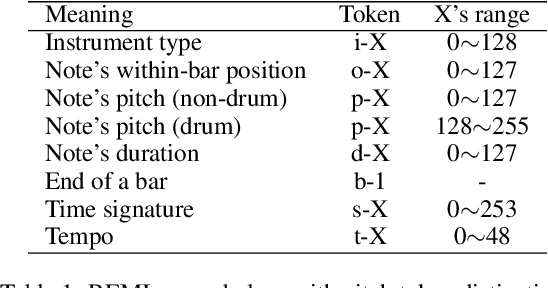
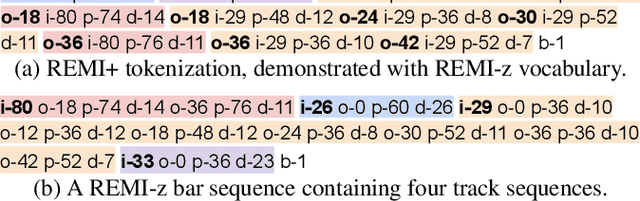
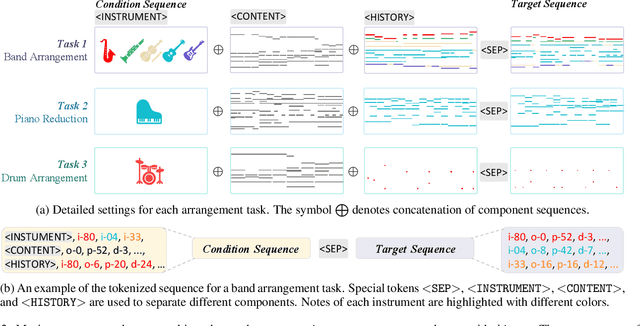

Large language models have shown significant capabilities across various domains, including symbolic music generation. However, leveraging these pre-trained models for controllable music arrangement tasks, each requiring different forms of musical information as control, remains a novel challenge. In this paper, we propose a unified sequence-to-sequence framework that enables the fine-tuning of a symbolic music language model for multiple multi-track arrangement tasks, including band arrangement, piano reduction, drum arrangement, and voice separation. Our experiments demonstrate that the proposed approach consistently achieves higher musical quality compared to task-specific baselines across all four tasks. Furthermore, through additional experiments on probing analysis, we show the pre-training phase equips the model with essential knowledge to understand musical conditions, which is hard to acquired solely through task-specific fine-tuning.