 Add to Chrome
 Add to Firefox
 Add to Edge
Holter-to-Sleep: AI-Enabled Repurposing of Single-Lead ECG for Sleep Phenotyping
Mar 19, 2026
Sleep disturbances are tightly linked to cardiovascular risk, yet polysomnography (PSG)-the clinical reference standard-remains resource-intensive and poorly suited for multi-night, home-based, and large-scale screening. Single-lead electrocardiography (ECG), already ubiquitous in Holter and patch-based devices, enables comfortable long-term acquisition and encodes sleep-relevant physiology through autonomic modulation and cardiorespiratory coupling. Here, we present a proof-of-concept Holter-to-Sleep framework that, using single-lead ECG as the sole input, jointly supports overnight sleep phenotyping and Holter-grade cardiac phenotyping within the same recording, and further provides an explicit analytic pathway for scalable cardio-sleep association studies. The framework is developed and validated on a pooled multi-center PSG sample of 10,439 studies spanning four public cohorts, with independent external evaluation to assess cross-cohort generalizability, and additional real-world feasibility assessment using overnight patch-ECG recordings via objective-subjective consistency analysis. This integrated design enables robust extraction of clinically meaningful overnight sleep phenotypes under heterogeneous populations and acquisition conditions, and facilitates systematic linkage between ECG-derived sleep metrics and arrhythmia-related Holter phenotypes. Collectively, the Holter-to-Sleep paradigm offers a practical foundation for low-burden, home-deployable, and scalable cardio-sleep monitoring and research beyond traditional PSG-centric workflows.

Dynamic Underwater Acoustic Channel Tracking for Correlated Rapidly Time-varying Channels
Mar 01, 2021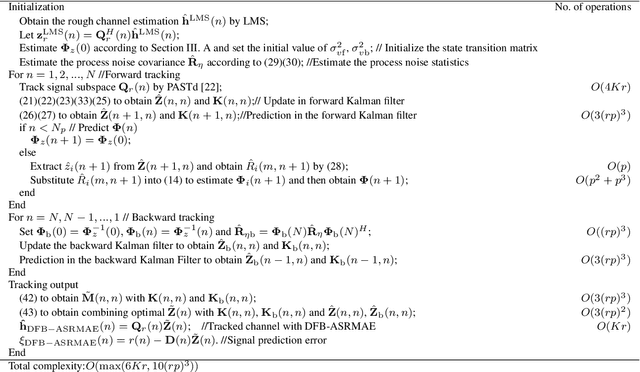
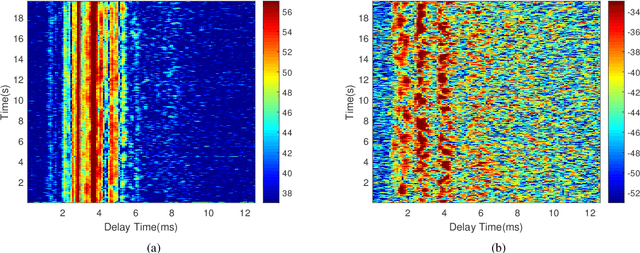
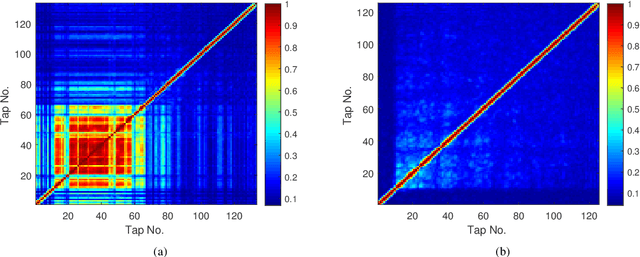
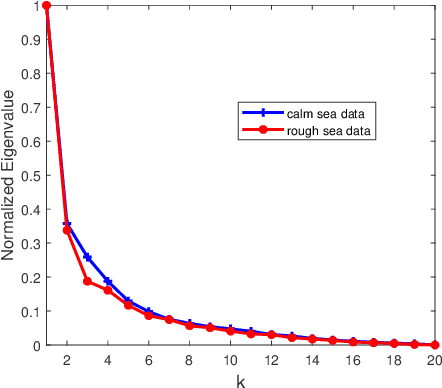
In this work, we focus on the model-mismatch problem for model-based subspace channel tracking in the correlated underwater acoustic channel. A model based on the underwater acoustic channel's correlation can be used as the state-space model in the Kalman filter to improve the underwater acoustic channel tracking compared that without a model. Even though the data support the assumption that the model is slow-varying and uncorrelated to some degree, to improve the tracking performance further, we can not ignore the model-mismatch problem because most channel models encounter this problem in the underwater acoustic channel. Therefore, in this work, we provide a dynamic time-variant state-space model for underwater acoustic channel tracking. This model is tolerant to the slight correlation after decorrelation. Moreover, a forward-backward Kalman filter is combined to further improve the tracking performance. The performance of our proposed algorithm is demonstrated with the same at-sea data as that used for conventional channel tracking. Compared with the conventional algorithms, the proposed algorithm shows significant improvement, especially in rough sea conditions in which the channels are fast-varying.