 Add to Chrome
 Add to Firefox
 Add to Edge
Bring Remote Sensing Object Detect Into Nature Language Model: Using SFT Method
Mar 11, 2025
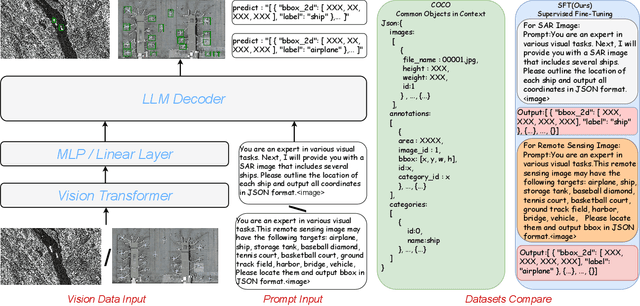
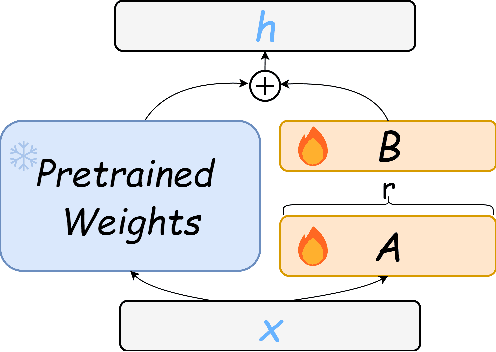
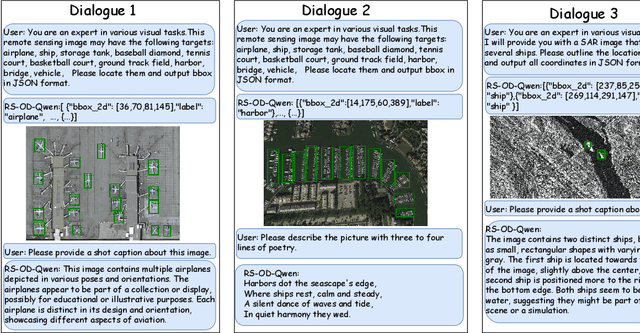
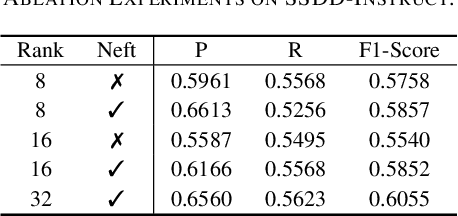
Recently, large language models (LLMs) and visionlanguage models (VLMs) have achieved significant success, demonstrating remarkable capabilities in understanding various images and videos, particularly in classification and detection tasks. However, due to the substantial differences between remote sensing images and conventional optical images, these models face considerable challenges in comprehension, especially in detection tasks. Directly prompting VLMs with detection instructions often fails to yield satisfactory results. To address this issue, this letter explores the application of VLMs for object detection in remote sensing images. Specifically, we utilize publicly available remote sensing object detection datasets, including SSDD, HRSID, and NWPU-VHR-10, to convert traditional annotation information into natural language, thereby constructing an instruction-tuning (SFT) dataset for VLM training. We then evaluate the detection performance of different fine-tuning strategies for VLMs and obtain optimized model weights for object detection in remote sensing images. Finally, we assess the model's prior knowledge capabilities through natural language queries.Experimental results demonstrate that, without modifying the model architecture, remote sensing object detection can be effectively achieved using natural language alone. Additionally, the model exhibits the ability to perform certain vision question answering (VQA) tasks. Our dataset and relevant code will be released soon.

Large-Scale AI in Telecom: Charting the Roadmap for Innovation, Scalability, and Enhanced Digital Experiences
Mar 06, 2025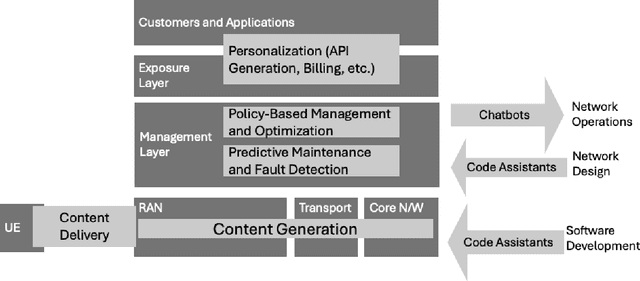
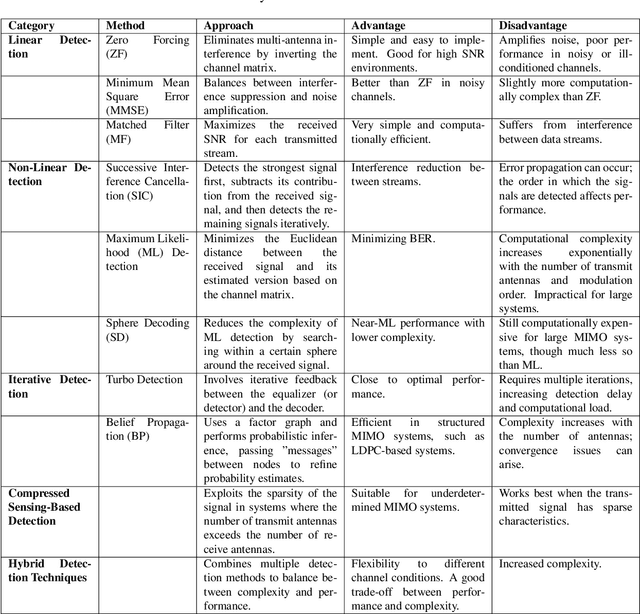
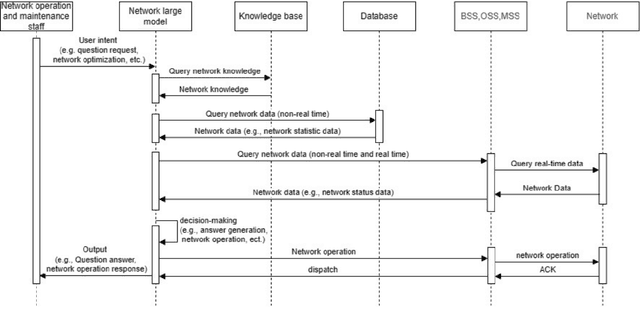
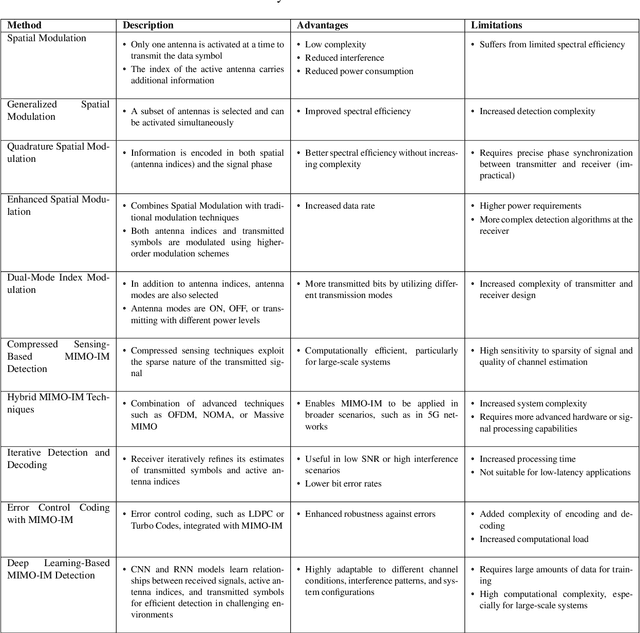
This white paper discusses the role of large-scale AI in the telecommunications industry, with a specific focus on the potential of generative AI to revolutionize network functions and user experiences, especially in the context of 6G systems. It highlights the development and deployment of Large Telecom Models (LTMs), which are tailored AI models designed to address the complex challenges faced by modern telecom networks. The paper covers a wide range of topics, from the architecture and deployment strategies of LTMs to their applications in network management, resource allocation, and optimization. It also explores the regulatory, ethical, and standardization considerations for LTMs, offering insights into their future integration into telecom infrastructure. The goal is to provide a comprehensive roadmap for the adoption of LTMs to enhance scalability, performance, and user-centric innovation in telecom networks.
CNsum:Automatic Summarization for Chinese News Text
Feb 27, 2025Obtaining valuable information from massive data efficiently has become our research goal in the era of Big Data. Text summarization technology has been continuously developed to meet this demand. Recent work has also shown that transformer-based pre-trained language models have achieved great success on various tasks in Natural Language Processing (NLP). Aiming at the problem of Chinese news text summary generation and the application of Transformer structure on Chinese, this paper proposes a Chinese news text summarization model (CNsum) based on Transformer structure, and tests it on Chinese datasets such as THUCNews. The results of the conducted experiments show that CNsum achieves better ROUGE score than the baseline models, which verifies the outperformance of the model.
Exploring Personalized Health Support through Data-Driven, Theory-Guided LLMs: A Case Study in Sleep Health
Feb 19, 2025Despite the prevalence of sleep-tracking devices, many individuals struggle to translate data into actionable improvements in sleep health. Current methods often provide data-driven suggestions but may not be feasible and adaptive to real-life constraints and individual contexts. We present HealthGuru, a novel large language model-powered chatbot to enhance sleep health through data-driven, theory-guided, and adaptive recommendations with conversational behavior change support. HealthGuru's multi-agent framework integrates wearable device data, contextual information, and a contextual multi-armed bandit model to suggest tailored sleep-enhancing activities. The system facilitates natural conversations while incorporating data-driven insights and theoretical behavior change techniques. Our eight-week in-the-wild deployment study with 16 participants compared HealthGuru to a baseline chatbot. Results show improved metrics like sleep duration and activity scores, higher quality responses, and increased user motivation for behavior change with HealthGuru. We also identify challenges and design considerations for personalization and user engagement in health chatbots.
Exploiting Ensemble Learning for Cross-View Isolated Sign Language Recognition
Feb 04, 2025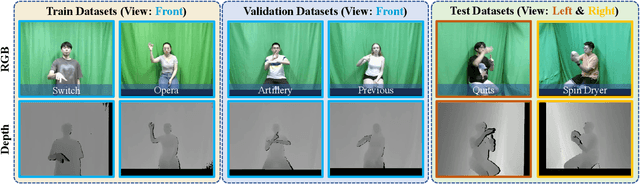
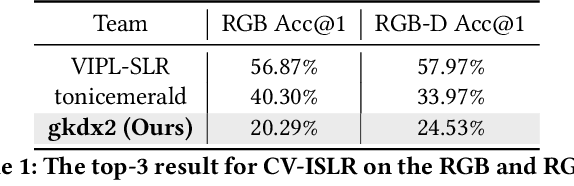
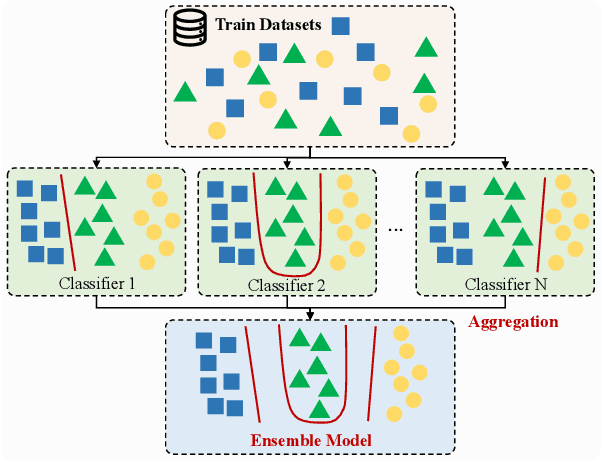
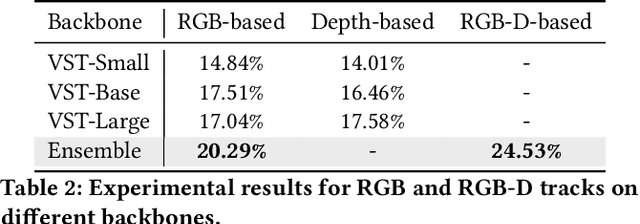
In this paper, we present our solution to the Cross-View Isolated Sign Language Recognition (CV-ISLR) challenge held at WWW 2025. CV-ISLR addresses a critical issue in traditional Isolated Sign Language Recognition (ISLR), where existing datasets predominantly capture sign language videos from a frontal perspective, while real-world camera angles often vary. To accurately recognize sign language from different viewpoints, models must be capable of understanding gestures from multiple angles, making cross-view recognition challenging. To address this, we explore the advantages of ensemble learning, which enhances model robustness and generalization across diverse views. Our approach, built on a multi-dimensional Video Swin Transformer model, leverages this ensemble strategy to achieve competitive performance. Finally, our solution ranked 3rd in both the RGB-based ISLR and RGB-D-based ISLR tracks, demonstrating the effectiveness in handling the challenges of cross-view recognition. The code is available at: https://github.com/Jiafei127/CV_ISLR_WWW2025.
XRF V2: A Dataset for Action Summarization with Wi-Fi Signals, and IMUs in Phones, Watches, Earbuds, and Glasses
Jan 31, 2025


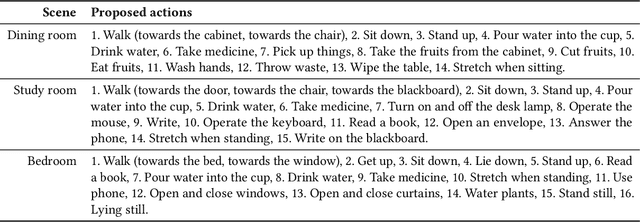
Human Action Recognition (HAR) plays a crucial role in applications such as health monitoring, smart home automation, and human-computer interaction. While HAR has been extensively studied, action summarization, which involves identifying and summarizing continuous actions, remains an emerging task. This paper introduces the novel XRF V2 dataset, designed for indoor daily activity Temporal Action Localization (TAL) and action summarization. XRF V2 integrates multimodal data from Wi-Fi signals, IMU sensors (smartphones, smartwatches, headphones, and smart glasses), and synchronized video recordings, offering a diverse collection of indoor activities from 16 volunteers across three distinct environments. To tackle TAL and action summarization, we propose the XRFMamba neural network, which excels at capturing long-term dependencies in untrimmed sensory sequences and outperforms state-of-the-art methods, such as ActionFormer and WiFiTAD. We envision XRF V2 as a valuable resource for advancing research in human action localization, action forecasting, pose estimation, multimodal foundation models pre-training, synthetic data generation, and more.
Salvaging Forbidden Treasure in Medical Data: Utilizing Surrogate Outcomes and Single Records for Rare Event Modeling
Jan 25, 2025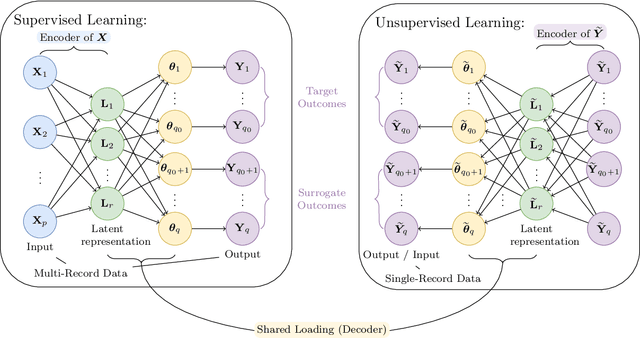
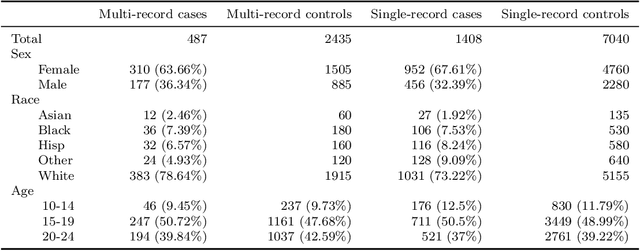
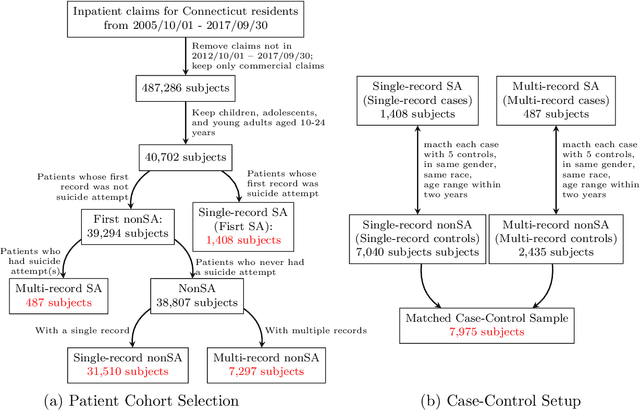

The vast repositories of Electronic Health Records (EHR) and medical claims hold untapped potential for studying rare but critical events, such as suicide attempt. Conventional setups often model suicide attempt as a univariate outcome and also exclude any ``single-record'' patients with a single documented encounter due to a lack of historical information. However, patients who were diagnosed with suicide attempts at the only encounter could, to some surprise, represent a substantial proportion of all attempt cases in the data, as high as 70--80%. We innovate a hybrid and integrative learning framework to leverage concurrent outcomes as surrogates and harness the forbidden yet precious information from single-record data. Our approach employs a supervised learning component to learn the latent variables that connect primary (e.g., suicide) and surrogate outcomes (e.g., mental disorders) to historical information. It simultaneously employs an unsupervised learning component to utilize the single-record data, through the shared latent variables. As such, our approach offers a general strategy for information integration that is crucial to modeling rare conditions and events. With hospital inpatient data from Connecticut, we demonstrate that single-record data and concurrent diagnoses indeed carry valuable information, and utilizing them can substantially improve suicide risk modeling.
EgoHand: Ego-centric Hand Pose Estimation and Gesture Recognition with Head-mounted Millimeter-wave Radar and IMUs
Jan 23, 2025
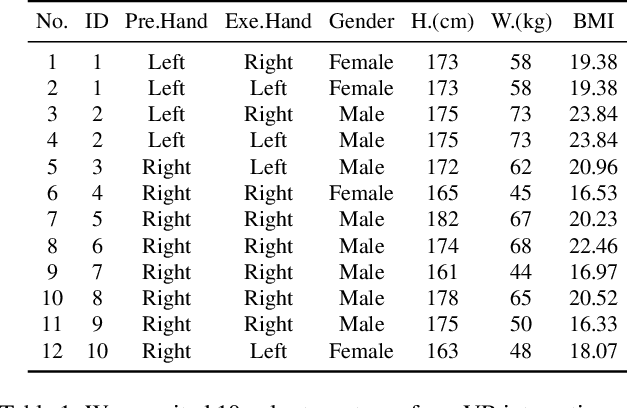


Recent advanced Virtual Reality (VR) headsets, such as the Apple Vision Pro, employ bottom-facing cameras to detect hand gestures and inputs, which offers users significant convenience in VR interactions. However, these bottom-facing cameras can sometimes be inconvenient and pose a risk of unintentionally exposing sensitive information, such as private body parts or personal surroundings. To mitigate these issues, we introduce EgoHand. This system provides an alternative solution by integrating millimeter-wave radar and IMUs for hand gesture recognition, thereby offering users an additional option for gesture interaction that enhances privacy protection. To accurately recognize hand gestures, we devise a two-stage skeleton-based gesture recognition scheme. In the first stage, a novel end-to-end Transformer architecture is employed to estimate the coordinates of hand joints. Subsequently, these estimated joint coordinates are utilized for gesture recognition. Extensive experiments involving 10 subjects show that EgoHand can detect hand gestures with 90.8% accuracy. Furthermore, EgoHand demonstrates robust performance across a variety of cross-domain tests, including different users, dominant hands, body postures, and scenes.
Unraveling Indirect In-Context Learning Using Influence Functions
Jan 01, 2025


This work introduces a novel paradigm for generalized In-Context Learning (ICL), termed Indirect In-Context Learning. In Indirect ICL, we explore demonstration selection strategies tailored for two distinct real-world scenarios: Mixture of Tasks and Noisy Demonstrations. We systematically evaluate the effectiveness of Influence Functions (IFs) as a selection tool for these settings, highlighting the potential for IFs to better capture the informativeness of examples within the demonstration pool. For the Mixture of Tasks setting, demonstrations are drawn from 28 diverse tasks, including MMLU, BigBench, StrategyQA, and CommonsenseQA. We demonstrate that combining BertScore-Recall (BSR) with an IF surrogate model can significantly improve performance, leading to average absolute accuracy gains of 0.37\% and 1.45\% for 3-shot and 5-shot setups when compared to traditional ICL metrics. In the Noisy Demonstrations setting, we examine scenarios where demonstrations might be mislabeled. Our experiments show that reweighting traditional ICL selectors (BSR and Cosine Similarity) with IF-based selectors boosts accuracy by an average of 2.90\% for Cosine Similarity and 2.94\% for BSR on noisy GLUE benchmarks. In sum, we propose a robust framework for demonstration selection that generalizes beyond traditional ICL, offering valuable insights into the role of IFs for Indirect ICL.
Temporal-Frequency State Space Duality: An Efficient Paradigm for Speech Emotion Recognition
Dec 22, 2024Speech Emotion Recognition (SER) plays a critical role in enhancing user experience within human-computer interaction. However, existing methods are overwhelmed by temporal domain analysis, overlooking the valuable envelope structures of the frequency domain that are equally important for robust emotion recognition. To overcome this limitation, we propose TF-Mamba, a novel multi-domain framework that captures emotional expressions in both temporal and frequency dimensions.Concretely, we propose a temporal-frequency mamba block to extract temporal- and frequency-aware emotional features, achieving an optimal balance between computational efficiency and model expressiveness. Besides, we design a Complex Metric-Distance Triplet (CMDT) loss to enable the model to capture representative emotional clues for SER. Extensive experiments on the IEMOCAP and MELD datasets show that TF-Mamba surpasses existing methods in terms of model size and latency, providing a more practical solution for future SER applications.