 Add to Chrome
 Add to Firefox
 Add to Edge
Biological Reasoning-Informed Regression for Interpretable Regulatory DNA Activity Prediction
Jun 06, 2026
DNA cis-regulatory elements (CREs) such as enhancers control gene expression levels. Accurately predicting regulatory activity from DNA sequences is valuable but challenging, as it requires understanding complex biological regulatory processes. Existing methods typically regress activity scores from sequences in a black-box manner, limiting both interpretability and regression performance. Meanwhile, large language models (LLMs) benefit from explicit reasoning processes, yet directly applying LLMs to raw DNA sequences performs poorly. In this paper, we bridge this gap by introducing R3LM, a framework that teaches LLMs reasoning-informed regression on regulatory DNA through structured biological knowledge. Specifically, we design a biologically grounded data format that structures DNA's regulatory information for improved LLM understanding, and construct CRE-ReasonBench, the first dataset that associates DNA sequences and activity scores with mechanistic reasoning traces. Through two-stage training that first teaches LLMs reasoning over structured biological information then performs regression, R3LM achieves state-of-the-art performance on enhancer prediction across three cell types, outperforming both LLMs with raw sequence input and specialized DNA models while providing interpretable mechanistic explanations. We expect R3LM as an interpretable reward model that can effectively assist biologists in CRE design. Code is available at https://github.com/DuanYi516/R3LM.

CT-VoxelMap: Efficient Continuous-Time LiDAR-Inertial Odometry with Probabilistic Adaptive Voxel Mapping
Apr 04, 2026Maintaining stable and accurate localization during fast motion or on rough terrain remains highly challenging for mobile robots with onboard resources. Currently, multi-sensor fusion methods based on continuous-time representation offer a potential and effective solution to this challenge. Among these, spline-based methods provide an efficient and intuitive approach for continuous-time representation. Previous continuous-time odometry works based on B-splines either treat control points as variables to be estimated or perform estimation in quaternion space, which introduces complexity in deriving analytical Jacobians and often overlooks the fitting error between the spline and the true trajectory over time. To address these issues, we first propose representing the increments of control points on matrix Lie groups as variables to be estimated. Leveraging the feature of the cumulative form of B-splines, we derive a more compact formulation that yields simpler analytical Jacobians without requiring additional boundary condition considerations. Second, we utilize forward propagation information from IMU measurements to estimate fitting errors online and further introduce a hybrid feature-based voxel map management strategy, enhancing system accuracy and robustness. Finally, we propose a re-estimation policy that significantly improves system computational efficiency and robustness. The proposed method is evaluated on multiple challenging public datasets, demonstrating superior performance on most sequences. Detailed ablation studies are conducted to analyze the impact of each module on the overall pose estimation system.
D3LM: A Discrete DNA Diffusion Language Model for Bidirectional DNA Understanding and Generation
Mar 02, 2026Early DNA foundation models adopted BERT-style training, achieving good performance on DNA understanding tasks but lacking generative capabilities. Recent autoregressive models enable DNA generation, but employ left-to-right causal modeling that is suboptimal for DNA where regulatory relationships are inherently bidirectional. We present D3LM (\textbf{D}iscrete \textbf{D}NA \textbf{D}iffusion \textbf{L}anguage \textbf{M}odel), which unifies bidirectional representation learning and DNA generation through masked diffusion. D3LM directly adopts the Nucleotide Transformer (NT) v2 architecture but reformulates the training objective as masked diffusion in discrete DNA space, enabling both bidirectional understanding and generation capabilities within a single model. Compared to NT v2 of the same size, D3LM achieves improved performance on understanding tasks. Notably, on regulatory element generation, D3LM achieves an SFID of 10.92, closely approaching real DNA sequences (7.85) and substantially outperforming the previous best result of 29.16 from autoregressive models. Our work suggests diffusion language models as a promising paradigm for unified DNA foundation models. We further present the first systematic study of masked diffusion models in the DNA domain, investigating practical design choices such as tokenization schemes and sampling strategies, thereby providing empirical insights and a solid foundation for future research. D3LM has been released at https://huggingface.co/collections/Hengchang-Liu/d3lm.
Extending Sequence Length is Not All You Need: Effective Integration of Multimodal Signals for Gene Expression Prediction
Feb 25, 2026Gene expression prediction, which predicts mRNA expression levels from DNA sequences, presents significant challenges. Previous works often focus on extending input sequence length to locate distal enhancers, which may influence target genes from hundreds of kilobases away. Our work first reveals that for current models, long sequence modeling can decrease performance. Even carefully designed algorithms only mitigate the performance degradation caused by long sequences. Instead, we find that proximal multimodal epigenomic signals near target genes prove more essential. Hence we focus on how to better integrate these signals, which has been overlooked. We find that different signal types serve distinct biological roles, with some directly marking active regulatory elements while others reflect background chromatin patterns that may introduce confounding effects. Simple concatenation may lead models to develop spurious associations with these background patterns. To address this challenge, we propose Prism, a framework that learns multiple combinations of high-dimensional epigenomic features to represent distinct background chromatin states and uses backdoor adjustment to mitigate confounding effects. Our experimental results demonstrate that proper modeling of multimodal epigenomic signals achieves state-of-the-art performance using only short sequences for gene expression prediction.
RaCalNet: Radar Calibration Network for Sparse-Supervised Metric Depth Estimation
Jun 18, 2025Dense metric depth estimation using millimeter-wave radar typically requires dense LiDAR supervision, generated via multi-frame projection and interpolation, to guide the learning of accurate depth from sparse radar measurements and RGB images. However, this paradigm is both costly and data-intensive. To address this, we propose RaCalNet, a novel framework that eliminates the need for dense supervision by using sparse LiDAR to supervise the learning of refined radar measurements, resulting in a supervision density of merely around 1% compared to dense-supervised methods. Unlike previous approaches that associate radar points with broad image regions and rely heavily on dense labels, RaCalNet first recalibrates and refines sparse radar points to construct accurate depth priors. These priors then serve as reliable anchors to guide monocular depth prediction, enabling metric-scale estimation without resorting to dense supervision. This design improves structural consistency and preserves fine details. Despite relying solely on sparse supervision, RaCalNet surpasses state-of-the-art dense-supervised methods, producing depth maps with clear object contours and fine-grained textures. Extensive experiments on the ZJU-4DRadarCam dataset and real-world deployment scenarios demonstrate its effectiveness, reducing RMSE by 35.30% and 34.89%, respectively.
SALT: A Flexible Semi-Automatic Labeling Tool for General LiDAR Point Clouds with Cross-Scene Adaptability and 4D Consistency
Mar 31, 2025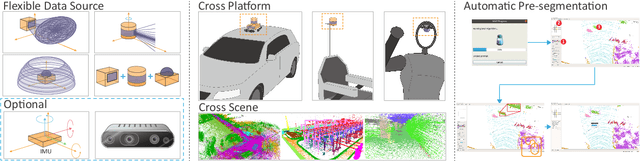
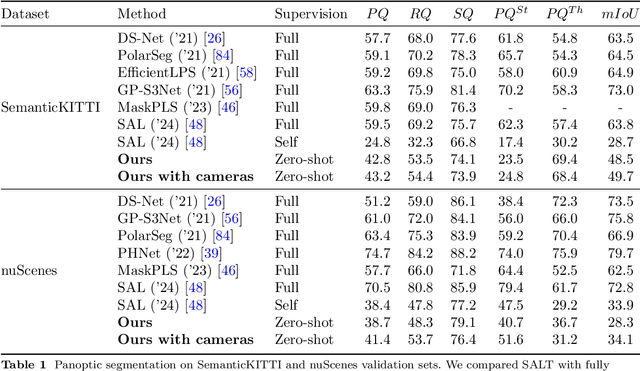
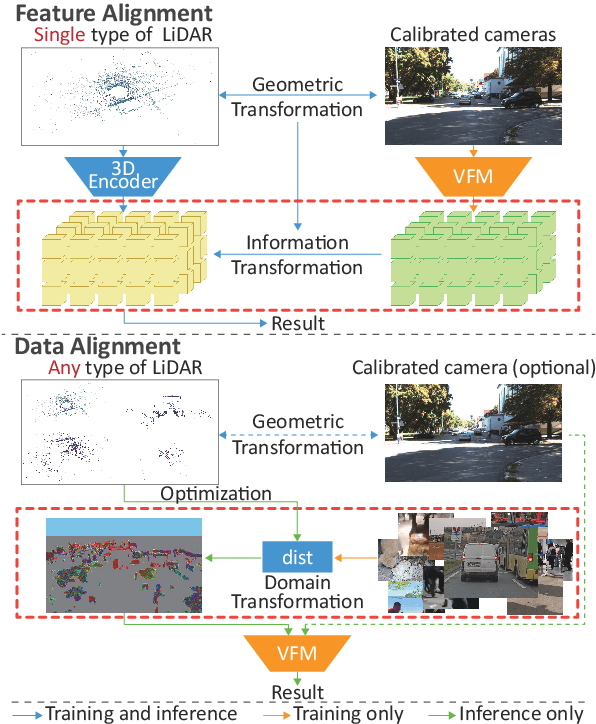
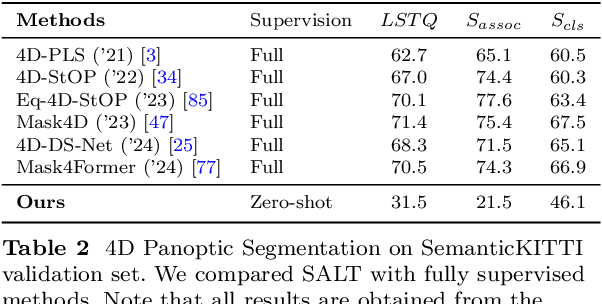
We propose a flexible Semi-Automatic Labeling Tool (SALT) for general LiDAR point clouds with cross-scene adaptability and 4D consistency. Unlike recent approaches that rely on camera distillation, SALT operates directly on raw LiDAR data, automatically generating pre-segmentation results. To achieve this, we propose a novel zero-shot learning paradigm, termed data alignment, which transforms LiDAR data into pseudo-images by aligning with the training distribution of vision foundation models. Additionally, we design a 4D-consistent prompting strategy and 4D non-maximum suppression module to enhance SAM2, ensuring high-quality, temporally consistent presegmentation. SALT surpasses the latest zero-shot methods by 18.4% PQ on SemanticKITTI and achieves nearly 40-50% of human annotator performance on our newly collected low-resolution LiDAR data and on combined data from three LiDAR types, significantly boosting annotation efficiency. We anticipate that SALT's open-sourcing will catalyze substantial expansion of current LiDAR datasets and lay the groundwork for the future development of LiDAR foundation models. Code is available at https://github.com/Cavendish518/SALT.
Regulatory DNA sequence Design with Reinforcement Learning
Mar 11, 2025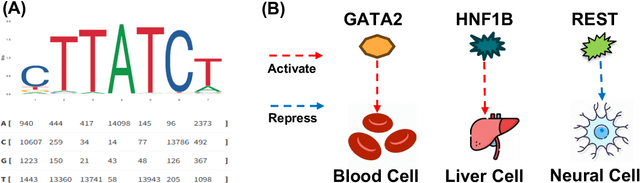
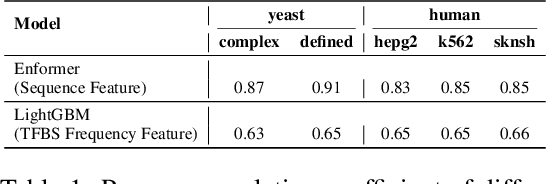
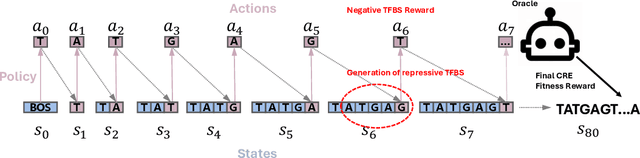
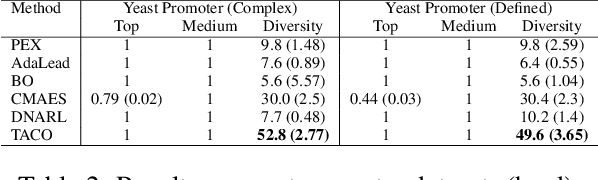
Cis-regulatory elements (CREs), such as promoters and enhancers, are relatively short DNA sequences that directly regulate gene expression. The fitness of CREs, measured by their ability to modulate gene expression, highly depends on the nucleotide sequences, especially specific motifs known as transcription factor binding sites (TFBSs). Designing high-fitness CREs is crucial for therapeutic and bioengineering applications. Current CRE design methods are limited by two major drawbacks: (1) they typically rely on iterative optimization strategies that modify existing sequences and are prone to local optima, and (2) they lack the guidance of biological prior knowledge in sequence optimization. In this paper, we address these limitations by proposing a generative approach that leverages reinforcement learning (RL) to fine-tune a pre-trained autoregressive (AR) model. Our method incorporates data-driven biological priors by deriving computational inference-based rewards that simulate the addition of activator TFBSs and removal of repressor TFBSs, which are then integrated into the RL process. We evaluate our method on promoter design tasks in two yeast media conditions and enhancer design tasks for three human cell types, demonstrating its ability to generate high-fitness CREs while maintaining sequence diversity. The code is available at https://github.com/yangzhao1230/TACO.
NatureLM: Deciphering the Language of Nature for Scientific Discovery
Feb 11, 2025


Foundation models have revolutionized natural language processing and artificial intelligence, significantly enhancing how machines comprehend and generate human languages. Inspired by the success of these foundation models, researchers have developed foundation models for individual scientific domains, including small molecules, materials, proteins, DNA, and RNA. However, these models are typically trained in isolation, lacking the ability to integrate across different scientific domains. Recognizing that entities within these domains can all be represented as sequences, which together form the "language of nature", we introduce Nature Language Model (briefly, NatureLM), a sequence-based science foundation model designed for scientific discovery. Pre-trained with data from multiple scientific domains, NatureLM offers a unified, versatile model that enables various applications including: (i) generating and optimizing small molecules, proteins, RNA, and materials using text instructions; (ii) cross-domain generation/design, such as protein-to-molecule and protein-to-RNA generation; and (iii) achieving state-of-the-art performance in tasks like SMILES-to-IUPAC translation and retrosynthesis on USPTO-50k. NatureLM offers a promising generalist approach for various scientific tasks, including drug discovery (hit generation/optimization, ADMET optimization, synthesis), novel material design, and the development of therapeutic proteins or nucleotides. We have developed NatureLM models in different sizes (1 billion, 8 billion, and 46.7 billion parameters) and observed a clear improvement in performance as the model size increases.
SFPNet: Sparse Focal Point Network for Semantic Segmentation on General LiDAR Point Clouds
Jul 16, 2024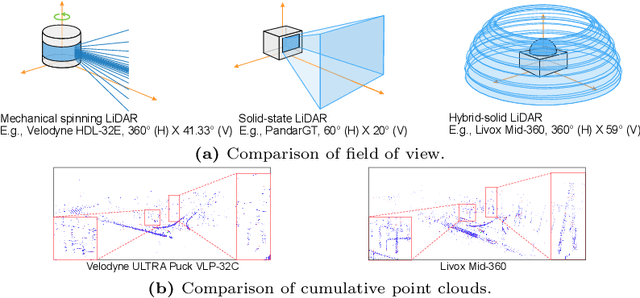
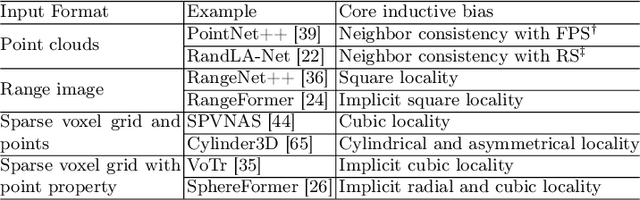
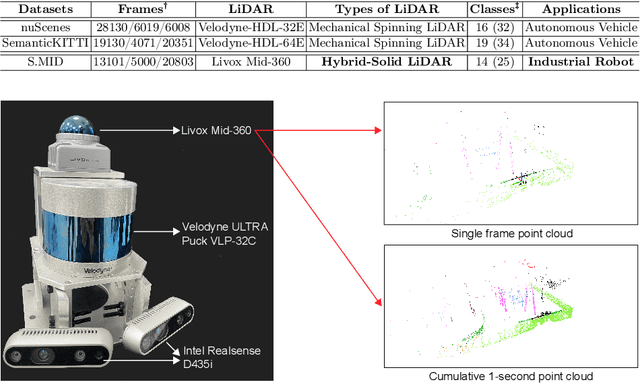
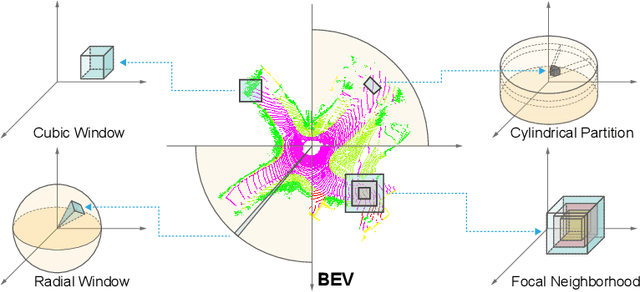
Although LiDAR semantic segmentation advances rapidly, state-of-the-art methods often incorporate specifically designed inductive bias derived from benchmarks originating from mechanical spinning LiDAR. This can limit model generalizability to other kinds of LiDAR technologies and make hyperparameter tuning more complex. To tackle these issues, we propose a generalized framework to accommodate various types of LiDAR prevalent in the market by replacing window-attention with our sparse focal point modulation. Our SFPNet is capable of extracting multi-level contexts and dynamically aggregating them using a gate mechanism. By implementing a channel-wise information query, features that incorporate both local and global contexts are encoded. We also introduce a novel large-scale hybrid-solid LiDAR semantic segmentation dataset for robotic applications. SFPNet demonstrates competitive performance on conventional benchmarks derived from mechanical spinning LiDAR, while achieving state-of-the-art results on benchmark derived from solid-state LiDAR. Additionally, it outperforms existing methods on our novel dataset sourced from hybrid-solid LiDAR. Code and dataset are available at https://github.com/Cavendish518/SFPNet and https://www.semanticindustry.top.