 Add to Chrome
 Add to Firefox
 Add to Edge
Measuring Task-Agnostic Training Data Influence Across Language Model Pretraining
Aug 13, 2026
Measuring training data influence consistently across language model pretraining is challenging. It is difficult to select downstream tasks or validation sets representative of a model's general capabilities, and reliance on task performance at intermediate checkpoints complicates comparisons across training. We propose a measure of training data influence that does not require selecting a downstream task or validation set as the attribution target. Specifically, we define an example's influence by how much its gradient update reduces the squared distance to the final parameters of a given pretraining run, and estimate this quantity from intermediate checkpoints without retraining. Applying the method to 18 configurations from the Pythia and PolyPythia suites, we find systematic temporal changes in influential data. Early in training, literature-related data are more strongly aligned with the trajectory toward the final parameters, whereas STEM data become more strongly aligned in later stages. This qualitative crossover is broadly consistent across model configurations. Our results provide a tractable trajectory-level view of how influential data change throughout pretraining, complementing influence analyses defined with respect to specific downstream tasks or validation sets.

AIMO Interpretability Challenge
Jul 15, 2026We propose the AIMO Interpretability Challenge, a competition on distinguishing robust from spurious reasoning in frontier mathematical language models based on the models' internal mechanisms. The challenge is motivated by a central limitation of standard reasoning benchmarks: strong final-answer accuracy does not reveal whether a model relies on stable reasoning mechanisms or exploits brittle reasoning shortcuts. Building on AI Mathematical Olympiad (AIMO) problems and submissions, together with resources from the Fields Model Initiative, the competition will provide (1) newly-published olympiad-level math reasoning problems and their symbolic representations, allowing generation of novel functional variants, (2) access to frontier reasoning models, and (3) assessments of models' adversarial robustness on these problems. Participants will use these resources, along with our computing infrastructure support, to develop methods for identifying which models solve problems robustly. Our competition will also create a new, open robustness benchmark and baseline systems, aiming to provide a lasting foundation for standard benchmarking in mathematical reasoning and interpretability. Scientifically, the competition connects interpretability and generalization research around a central question in AI research: can we determine if, and to what extent, the decision-making of frontier AI models is generalizable and thus, reliable?
Memorization, Emergence, and Explaining Reversal Failures: A Controlled Study of Relational Semantics in LLMs
Jan 06, 2026Autoregressive LLMs perform well on relational tasks that require linking entities via relational words (e.g., father/son, friend), but it is unclear whether they learn the logical semantics of such relations (e.g., symmetry and inversion logic) and, if so, whether reversal-type failures arise from missing relational semantics or left-to-right order bias. We propose a controlled Knowledge Graph-based synthetic framework that generates text from symmetric/inverse triples, train GPT-style autoregressive models from scratch, and evaluate memorization, logical inference, and in-context generalization to unseen entities to address these questions. We find a sharp phase transition in which relational semantics emerge with sufficient logic-bearing supervision, even in shallow (2-3 layer) models, and that successful generalization aligns with stable intermediate-layer signals. Finally, order-matched forward/reverse tests and a diffusion baseline indicate that reversal failures are primarily driven by autoregressive order bias rather than deficient inversion semantics.
Personality-guided Public-Private Domain Disentangled Hypergraph-Former Network for Multimodal Depression Detection
Nov 16, 2025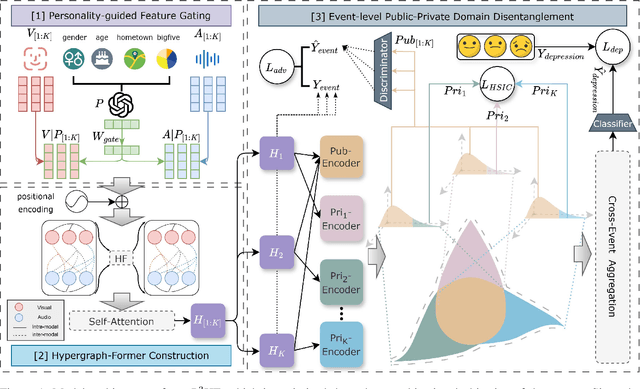
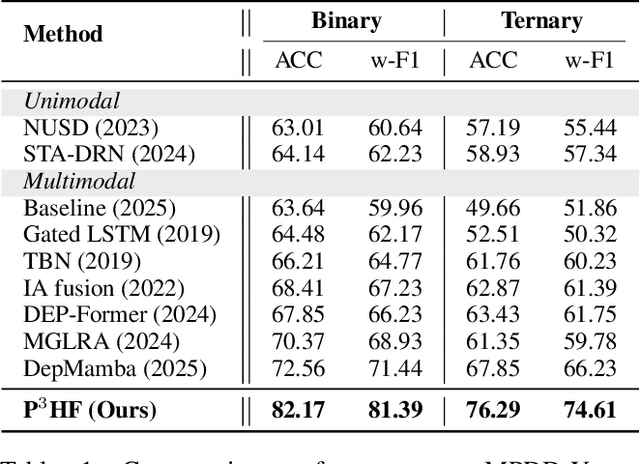
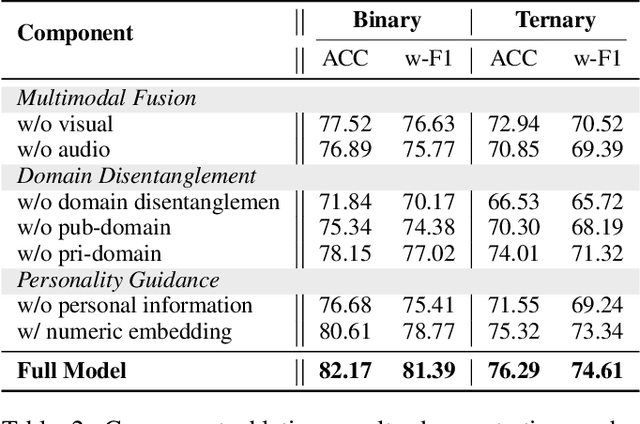
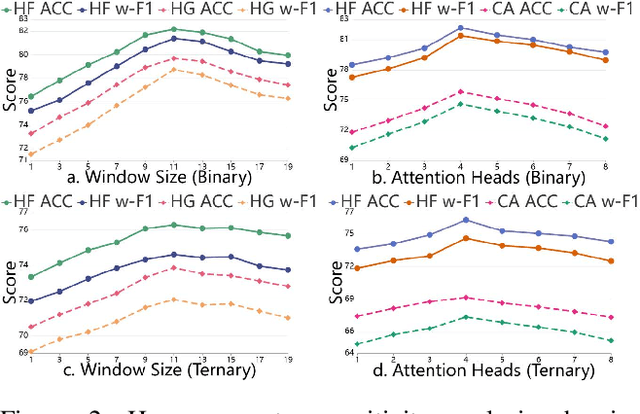
Depression represents a global mental health challenge requiring efficient and reliable automated detection methods. Current Transformer- or Graph Neural Networks (GNNs)-based multimodal depression detection methods face significant challenges in modeling individual differences and cross-modal temporal dependencies across diverse behavioral contexts. Therefore, we propose P$^3$HF (Personality-guided Public-Private Domain Disentangled Hypergraph-Former Network) with three key innovations: (1) personality-guided representation learning using LLMs to transform discrete individual features into contextual descriptions for personalized encoding; (2) Hypergraph-Former architecture modeling high-order cross-modal temporal relationships; (3) event-level domain disentanglement with contrastive learning for improved generalization across behavioral contexts. Experiments on MPDD-Young dataset show P$^3$HF achieves around 10\% improvement on accuracy and weighted F1 for binary and ternary depression classification task over existing methods. Extensive ablation studies validate the independent contribution of each architectural component, confirming that personality-guided representation learning and high-order hypergraph reasoning are both essential for generating robust, individual-aware depression-related representations. The code is released at https://github.com/hacilab/P3HF.
BIS Reasoning 1.0: The First Large-Scale Japanese Benchmark for Belief-Inconsistent Syllogistic Reasoning
Jun 08, 2025We present BIS Reasoning 1.0, the first large-scale Japanese dataset of syllogistic reasoning problems explicitly designed to evaluate belief-inconsistent reasoning in large language models (LLMs). Unlike prior datasets such as NeuBAROCO and JFLD, which focus on general or belief-aligned reasoning, BIS Reasoning 1.0 introduces logically valid yet belief-inconsistent syllogisms to uncover reasoning biases in LLMs trained on human-aligned corpora. We benchmark state-of-the-art models - including GPT models, Claude models, and leading Japanese LLMs - revealing significant variance in performance, with GPT-4o achieving 79.54% accuracy. Our analysis identifies critical weaknesses in current LLMs when handling logically valid but belief-conflicting inputs. These findings have important implications for deploying LLMs in high-stakes domains such as law, healthcare, and scientific literature, where truth must override intuitive belief to ensure integrity and safety.
The First MPDD Challenge: Multimodal Personality-aware Depression Detection
May 15, 2025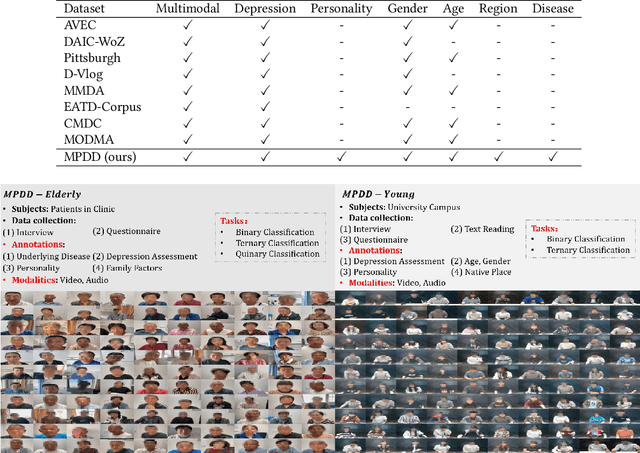
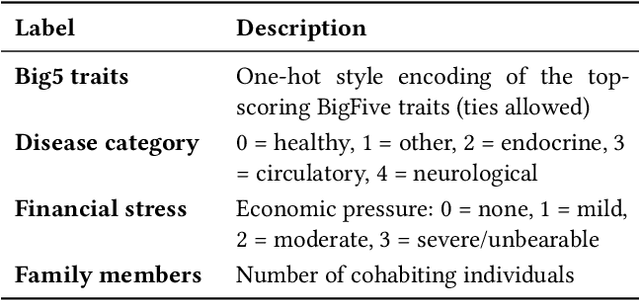
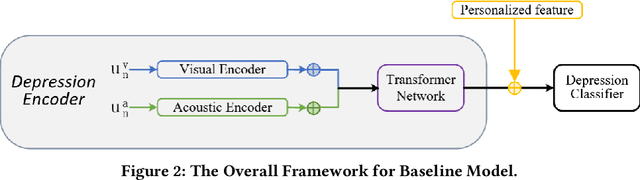
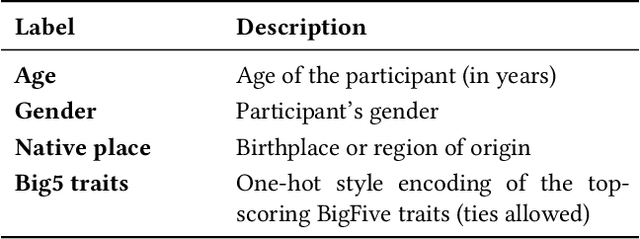
Depression is a widespread mental health issue affecting diverse age groups, with notable prevalence among college students and the elderly. However, existing datasets and detection methods primarily focus on young adults, neglecting the broader age spectrum and individual differences that influence depression manifestation. Current approaches often establish a direct mapping between multimodal data and depression indicators, failing to capture the complexity and diversity of depression across individuals. This challenge includes two tracks based on age-specific subsets: Track 1 uses the MPDD-Elderly dataset for detecting depression in older adults, and Track 2 uses the MPDD-Young dataset for detecting depression in younger participants. The Multimodal Personality-aware Depression Detection (MPDD) Challenge aims to address this gap by incorporating multimodal data alongside individual difference factors. We provide a baseline model that fuses audio and video modalities with individual difference information to detect depression manifestations in diverse populations. This challenge aims to promote the development of more personalized and accurate de pression detection methods, advancing mental health research and fostering inclusive detection systems. More details are available on the official challenge website: https://hacilab.github.io/MPDDChallenge.github.io.
Quadrupedal Spine Control Strategies: Exploring Correlations Between System Dynamic Responses and Human Perspectives
May 05, 2025Unlike their biological cousins, the majority of existing quadrupedal robots are constructed with rigid chassis. This results in motion that is either beetle-like or distinctly robotic, lacking the natural fluidity characteristic of mammalian movements. Existing literature on quadrupedal robots with spinal configurations primarily focuses on energy efficiency and does not consider the effects in human-robot interaction scenarios. Our contributions include an initial investigation into various trajectory generation strategies for a quadrupedal robot with a four degree of freedom spine, and an analysis on the effect that such methods have on human perception of gait naturalness compared to a fixed spine baseline. The strategies were evaluated using videos of walking, trotting and turning simulations. Among the four different strategies developed, the optimised time varying and the foot-tracking strategies were perceived to be more natural than the baseline in a randomised trial with 50 participants. Although none of the strategies demonstrated any energy efficiency improvements over the no-spine baseline, some showed greater footfall consistency at higher speeds. Given the greater likeability drawn from the more natural locomotion patterns, this type of robot displays potential for applications in social robot scenarios such as elderly care, where energy efficiency is not a primary concern.
* 27 pages, 13 figures
Using joint training speaker encoder with consistency loss to achieve cross-lingual voice conversion and expressive voice conversion
Jul 01, 2023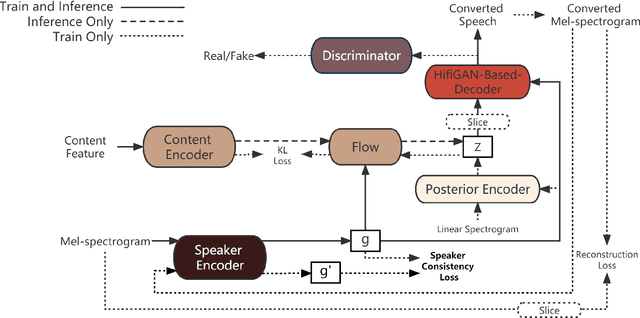


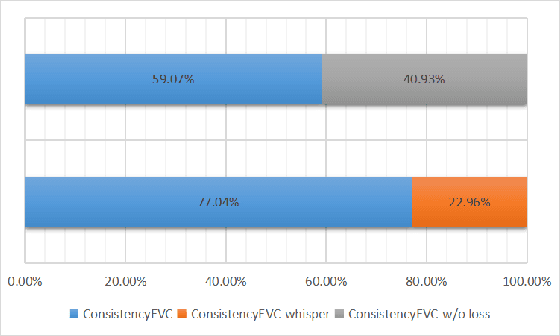
Voice conversion systems have made significant advancements in terms of naturalness and similarity in common voice conversion tasks. However, their performance in more complex tasks such as cross-lingual voice conversion and expressive voice conversion remains imperfect. In this study, we propose a novel approach that combines a jointly trained speaker encoder and content features extracted from the cross-lingual speech recognition model Whisper to achieve high-quality cross-lingual voice conversion. Additionally, we introduce a speaker consistency loss to the joint encoder, which improves the similarity between the converted speech and the reference speech. To further explore the capabilities of the joint speaker encoder, we use the phonetic posteriorgram as the content feature, which enables the model to effectively reproduce both the speaker characteristics and the emotional aspects of the reference speech.
QuickVC: Any-to-many Voice Conversion Using Inverse Short-time Fourier Transform for Faster Conversion
Feb 23, 2023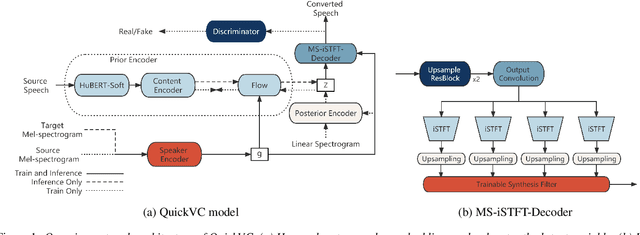
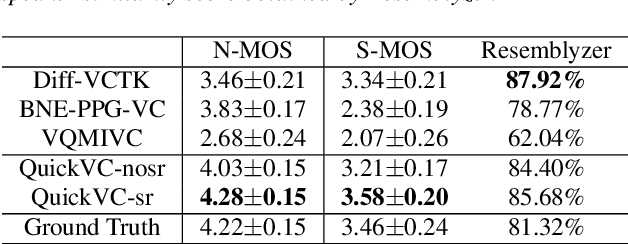
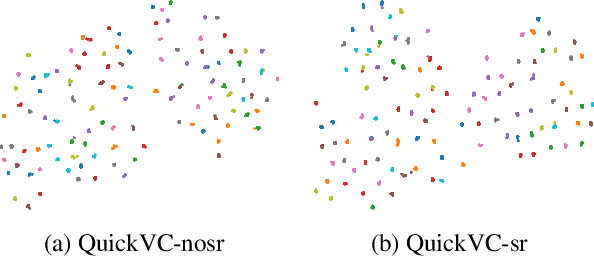
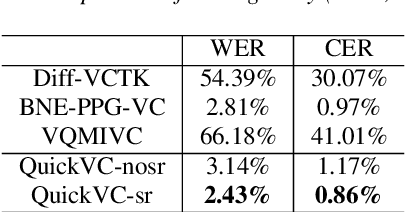
With the development of automatic speech recognition (ASR) and text-to-speech (TTS) technology, high-quality voice conversion (VC) can be achieved by extracting source content information and target speaker information to reconstruct waveforms. However, current methods still require improvement in terms of inference speed. In this study, we propose a lightweight VITS-based VC model that uses the HuBERT-Soft model to extract content information features without speaker information. Through subjective and objective experiments on synthesized speech, the proposed model demonstrates competitive results in terms of naturalness and similarity. Importantly, unlike the original VITS model, we use the inverse short-time Fourier transform (iSTFT) to replace the most computationally expensive part. Experimental results show that our model can generate samples at over 5000 kHz on the 3090 GPU and over 250 kHz on the i9-10900K CPU, achieving competitive speed for the same hardware configuration.
CycleTransGAN-EVC: A CycleGAN-based Emotional Voice Conversion Model with Transformer
Nov 30, 2021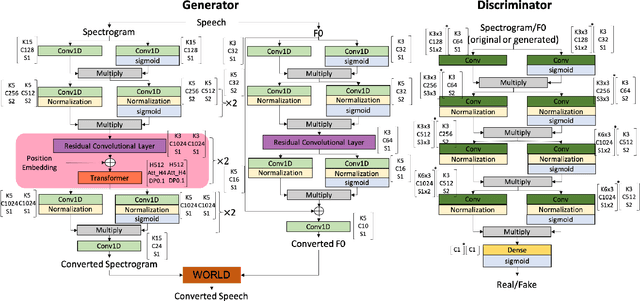
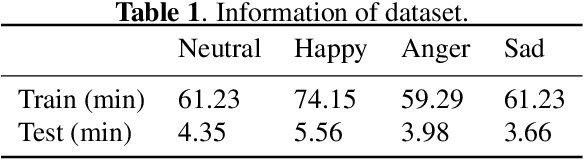
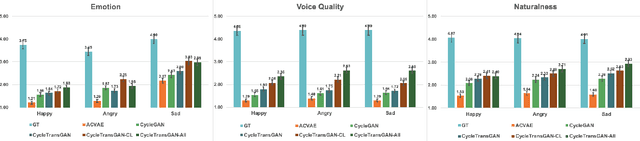
In this study, we explore the transformer's ability to capture intra-relations among frames by augmenting the receptive field of models. Concretely, we propose a CycleGAN-based model with the transformer and investigate its ability in the emotional voice conversion task. In the training procedure, we adopt curriculum learning to gradually increase the frame length so that the model can see from the short segment till the entire speech. The proposed method was evaluated on the Japanese emotional speech dataset and compared to several baselines (ACVAE, CycleGAN) with objective and subjective evaluations. The results show that our proposed model is able to convert emotion with higher strength and quality.