 Add to Chrome
 Add to Firefox
 Add to Edge
SlimDiffSR: Toward Lightweight and Efficient Remote Sensing Image Super-Resolution via Diffusion Model Distillation
May 04, 2026
Diffusion models have recently achieved remarkable performance in image super-resolution (SR), but their high computational cost limits practical deployment in remote sensing applications. To address this issue, we propose SlimDiffSR, a lightweight and efficient diffusion-based framework for real-world remote sensing image super-resolution. Unlike existing single-step diffusion methods that rely on fixed timesteps, we first introduce an uncertainty-guided timestep assignment strategy to construct a stronger single-step teacher model, where reconstruction difficulty is explicitly linked to diffusion timesteps, enabling adaptive generative strength. Building upon this teacher, we further present a structured pruning strategy tailored to remote sensing imagery, which systematically removes redundant semantic modules and replaces standard operations with lightweight designs, including frequency-separable convolution, direction-separable convolution, and a query-driven global aggregation module. These components explicitly exploit the unique characteristics of remote sensing data, such as sparse high-frequency details, strong directional patterns, and long-range spatial dependencies. To enhance knowledge transfer, we incorporate Maximum Mean Discrepancy (MMD) into the distillation process to align feature distributions between the teacher and student models. Extensive experiments on multiple remote sensing benchmarks demonstrate that SlimDiffSR achieves a favorable balance between efficiency and reconstruction quality. In particular, it attains up to $200\times$ inference acceleration and a $20\times$ reduction in model parameters compared with multi-step diffusion models, while achieving competitive perceptual quality and clearly outperforming existing lightweight diffusion baselines in efficiency. The code is available at: https://github.com/wwangcece/SlimDiffSR.

The First Challenge on Remote Sensing Infrared Image Super-Resolution at NTIRE 2026: Benchmark Results and Method Overview
Apr 23, 2026This paper presents the NTIRE 2026 Remote Sensing Infrared Image Super-Resolution (x4) Challenge, one of the associated challenges of NTIRE 2026. The challenge aims to recover high-resolution (HR) infrared images from low-resolution (LR) inputs generated through bicubic downsampling with a x4 scaling factor. The objective is to develop effective models or solutions that achieve state-of-the-art performance for infrared image SR in remote sensing scenarios. To reflect the characteristics of infrared data and practical application needs, the challenge adopts a single-track setting. A total of 115 participants registered for the competition, with 13 teams submitting valid entries. This report summarizes the challenge design, dataset, evaluation protocol, main results, and the representative methods of each team. The challenge serves as a benchmark to advance research in infrared image super-resolution and promote the development of effective solutions for real-world remote sensing applications.
Contrastive Learning for Semi-Supervised Deep Regression with Generalized Ordinal Rankings from Spectral Seriation
Dec 10, 2025Contrastive learning methods enforce label distance relationships in feature space to improve representation capability for regression models. However, these methods highly depend on label information to correctly recover ordinal relationships of features, limiting their applications to semi-supervised regression. In this work, we extend contrastive regression methods to allow unlabeled data to be used in the semi-supervised setting, thereby reducing the dependence on costly annotations. Particularly we construct the feature similarity matrix with both labeled and unlabeled samples in a mini-batch to reflect inter-sample relationships, and an accurate ordinal ranking of involved unlabeled samples can be recovered through spectral seriation algorithms if the level of error is within certain bounds. The introduction of labeled samples above provides regularization of the ordinal ranking with guidance from the ground-truth label information, making the ranking more reliable. To reduce feature perturbations, we further utilize the dynamic programming algorithm to select robust features for the matrix construction. The recovered ordinal relationship is then used for contrastive learning on unlabeled samples, and we thus allow more data to be used for feature representation learning, thereby achieving more robust results. The ordinal rankings can also be used to supervise predictions on unlabeled samples, serving as an additional training signal. We provide theoretical guarantees and empirical verification through experiments on various datasets, demonstrating that our method can surpass existing state-of-the-art semi-supervised deep regression methods. Our code have been released on https://github.com/xmed-lab/CLSS.
DyGLNet: Hybrid Global-Local Feature Fusion with Dynamic Upsampling for Medical Image Segmentation
Sep 16, 2025Medical image segmentation grapples with challenges including multi-scale lesion variability, ill-defined tissue boundaries, and computationally intensive processing demands. This paper proposes the DyGLNet, which achieves efficient and accurate segmentation by fusing global and local features with a dynamic upsampling mechanism. The model innovatively designs a hybrid feature extraction module (SHDCBlock), combining single-head self-attention and multi-scale dilated convolutions to model local details and global context collaboratively. We further introduce a dynamic adaptive upsampling module (DyFusionUp) to realize high-fidelity reconstruction of feature maps based on learnable offsets. Then, a lightweight design is adopted to reduce computational overhead. Experiments on seven public datasets demonstrate that DyGLNet outperforms existing methods, particularly excelling in boundary accuracy and small-object segmentation. Meanwhile, it exhibits lower computation complexity, enabling an efficient and reliable solution for clinical medical image analysis. The code will be made available soon.
Analytic Continuation by Feature Learning
Nov 22, 2024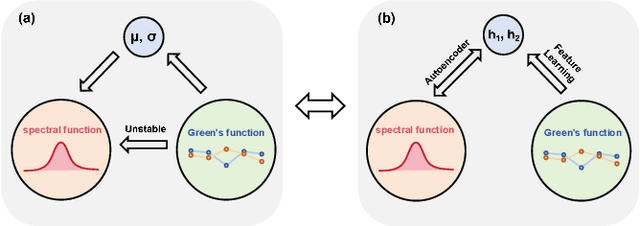
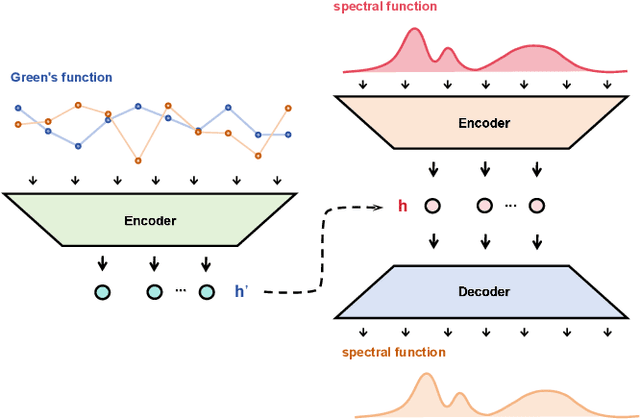
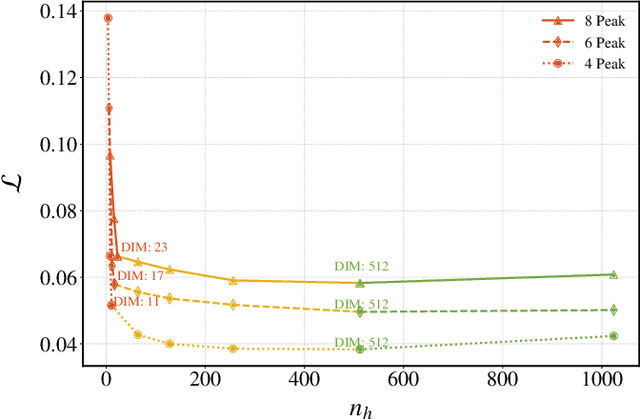
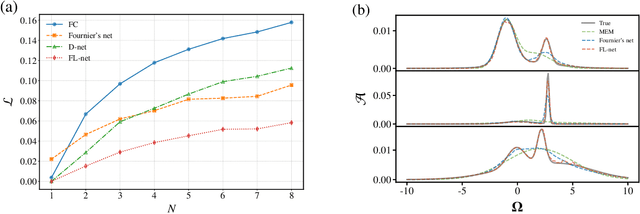
Analytic continuation aims to reconstruct real-time spectral functions from imaginary-time Green's functions; however, this process is notoriously ill-posed and challenging to solve. We propose a novel neural network architecture, named the Feature Learning Network (FL-net), to enhance the prediction accuracy of spectral functions, achieving an improvement of at least $20\%$ over traditional methods, such as the Maximum Entropy Method (MEM), and previous neural network approaches. Furthermore, we develop an analytical method to evaluate the robustness of the proposed network. Using this method, we demonstrate that increasing the hidden dimensionality of FL-net, while leading to lower loss, results in decreased robustness. Overall, our model provides valuable insights into effectively addressing the complex challenges associated with analytic continuation.
Map-Assisted Remote-Sensing Image Compression at Extremely Low Bitrates
Sep 03, 2024Remote-sensing (RS) image compression at extremely low bitrates has always been a challenging task in practical scenarios like edge device storage and narrow bandwidth transmission. Generative models including VAEs and GANs have been explored to compress RS images into extremely low-bitrate streams. However, these generative models struggle to reconstruct visually plausible images due to the highly ill-posed nature of extremely low-bitrate image compression. To this end, we propose an image compression framework that utilizes a pre-trained diffusion model with powerful natural image priors to achieve high-realism reconstructions. However, diffusion models tend to hallucinate small structures and textures due to the significant information loss at limited bitrates. Thus, we introduce vector maps as semantic and structural guidance and propose a novel image compression approach named Map-Assisted Generative Compression (MAGC). MAGC employs a two-stage pipeline to compress and decompress RS images at extremely low bitrates. The first stage maps an image into a latent representation, which is then further compressed in a VAE architecture to save bitrates and serves as implicit guidance in the subsequent diffusion process. The second stage conducts a conditional diffusion model to generate a visually pleasing and semantically accurate result using implicit guidance and explicit semantic guidance. Quantitative and qualitative comparisons show that our method outperforms standard codecs and other learning-based methods in terms of perceptual quality and semantic accuracy. The dataset and code will be publicly available at https://github.com/WHUyyx/MAGC.
Realistic Extreme Image Rescaling via Generative Latent Space Learning
Aug 17, 2024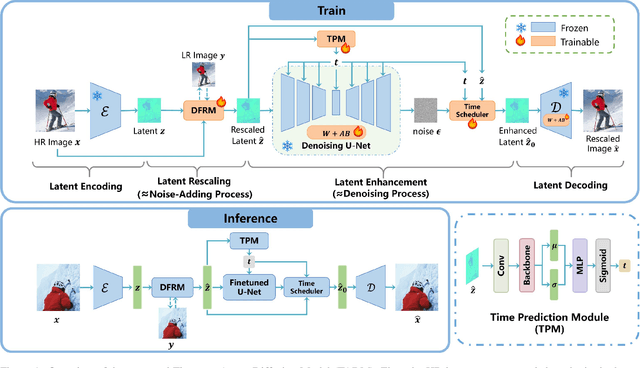
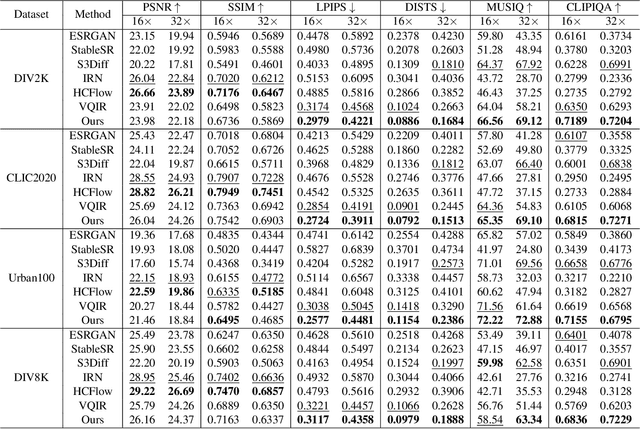
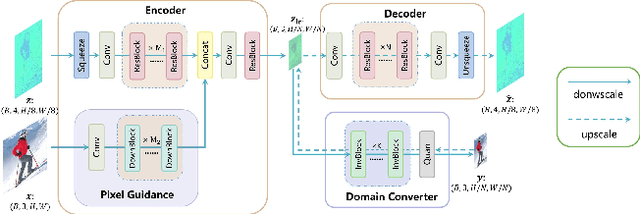
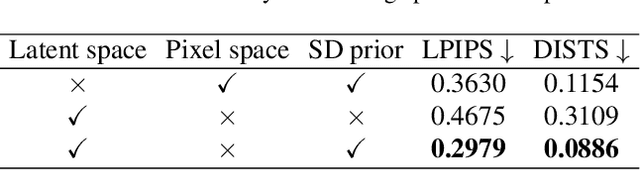
Image rescaling aims to learn the optimal downscaled low-resolution (LR) image that can be accurately reconstructed to its original high-resolution (HR) counterpart. This process is crucial for efficient image processing and storage, especially in the era of ultra-high definition media. However, extreme downscaling factors pose significant challenges due to the highly ill-posed nature of the inverse upscaling process, causing existing methods to struggle in generating semantically plausible structures and perceptually rich textures. In this work, we propose a novel framework called Latent Space Based Image Rescaling (LSBIR) for extreme image rescaling tasks. LSBIR effectively leverages powerful natural image priors learned by a pre-trained text-to-image diffusion model to generate realistic HR images. The rescaling is performed in the latent space of a pre-trained image encoder and decoder, which offers better perceptual reconstruction quality due to its stronger sparsity and richer semantics. LSBIR adopts a two-stage training strategy. In the first stage, a pseudo-invertible encoder-decoder models the bidirectional mapping between the latent features of the HR image and the target-sized LR image. In the second stage, the reconstructed features from the first stage are refined by a pre-trained diffusion model to generate more faithful and visually pleasing details. Extensive experiments demonstrate the superiority of LSBIR over previous methods in both quantitative and qualitative evaluations. The code will be available at: https://github.com/wwangcece/LSBIR.
Parallax-tolerant Image Stitching via Segmentation-guided Multi-homography Warping
Jun 28, 2024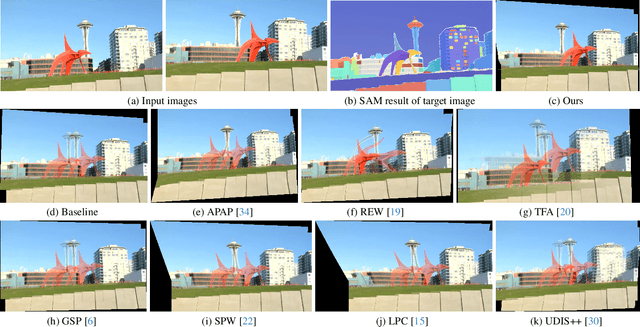
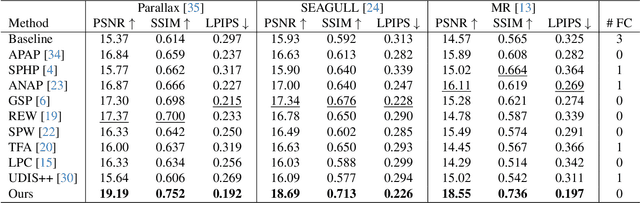
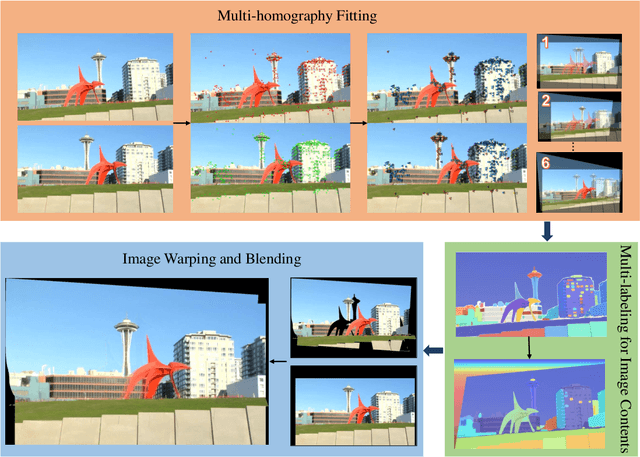

Large parallax between images is an intractable issue in image stitching. Various warping-based methods are proposed to address it, yet the results are unsatisfactory. In this paper, we propose a novel image stitching method using multi-homography warping guided by image segmentation. Specifically, we leverage the Segment Anything Model to segment the target image into numerous contents and partition the feature points into multiple subsets via the energy-based multi-homography fitting algorithm. The multiple subsets of feature points are used to calculate the corresponding multiple homographies. For each segmented content in the overlapping region, we select its best-fitting homography with the lowest photometric error. For each segmented content in the non-overlapping region, we calculate a weighted combination of the linearized homographies. Finally, the target image is warped via the best-fitting homographies to align with the reference image, and the final panorama is generated via linear blending. Comprehensive experimental results on the public datasets demonstrate that our method provides the best alignment accuracy by a large margin, compared with the state-of-the-art methods. The source code is available at https://github.com/tlliao/multi-homo-warp.
Semantic Guided Large Scale Factor Remote Sensing Image Super-resolution with Generative Diffusion Prior
May 11, 2024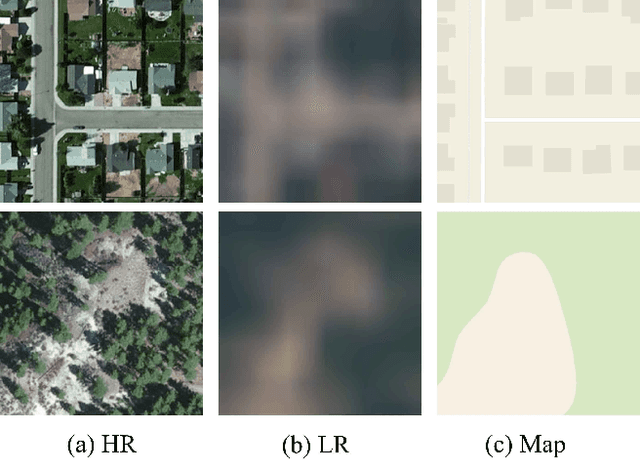

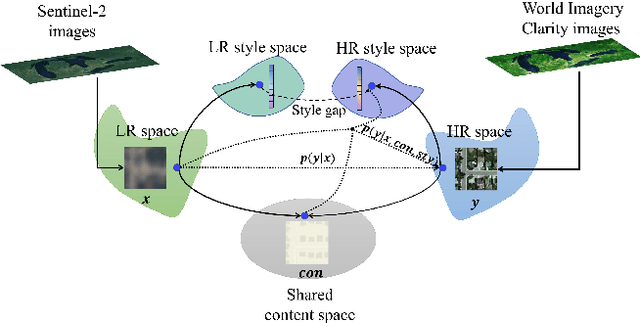
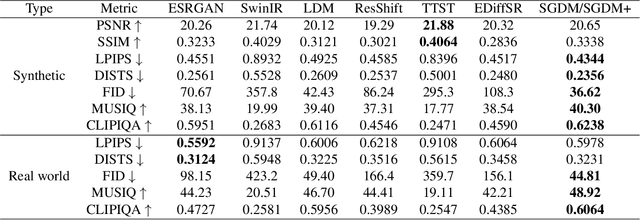
Remote sensing images captured by different platforms exhibit significant disparities in spatial resolution. Large scale factor super-resolution (SR) algorithms are vital for maximizing the utilization of low-resolution (LR) satellite data captured from orbit. However, existing methods confront challenges in recovering SR images with clear textures and correct ground objects. We introduce a novel framework, the Semantic Guided Diffusion Model (SGDM), designed for large scale factor remote sensing image super-resolution. The framework exploits a pre-trained generative model as a prior to generate perceptually plausible SR images. We further enhance the reconstruction by incorporating vector maps, which carry structural and semantic cues. Moreover, pixel-level inconsistencies in paired remote sensing images, stemming from sensor-specific imaging characteristics, may hinder the convergence of the model and diversity in generated results. To address this problem, we propose to extract the sensor-specific imaging characteristics and model the distribution of them, allowing diverse SR images generation based on imaging characteristics provided by reference images or sampled from the imaging characteristic probability distributions. To validate and evaluate our approach, we create the Cross-Modal Super-Resolution Dataset (CMSRD). Qualitative and quantitative experiments on CMSRD showcase the superiority and broad applicability of our method. Experimental results on downstream vision tasks also demonstrate the utilitarian of the generated SR images. The dataset and code will be publicly available at https://github.com/wwangcece/SGDM
Unsupervised Polychromatic Neural Representation for CT Metal Artifact Reduction
Jun 27, 2023Emerging neural reconstruction techniques based on tomography (e.g., NeRF, NeAT, and NeRP) have started showing unique capabilities in medical imaging. In this work, we present a novel Polychromatic neural representation (Polyner) to tackle the challenging problem of CT imaging when metallic implants exist within the human body. The artifacts arise from the drastic variation of metal's attenuation coefficients at various energy levels of the X-ray spectrum, leading to a nonlinear metal effect in CT measurements. Reconstructing CT images from metal-affected measurements hence poses a complicated nonlinear inverse problem where empirical models adopted in previous metal artifact reduction (MAR) approaches lead to signal loss and strongly aliased reconstructions. Polyner instead models the MAR problem from a nonlinear inverse problem perspective. Specifically, we first derive a polychromatic forward model to accurately simulate the nonlinear CT acquisition process. Then, we incorporate our forward model into the implicit neural representation to accomplish reconstruction. Lastly, we adopt a regularizer to preserve the physical properties of the CT images across different energy levels while effectively constraining the solution space. Our Polyner is an unsupervised method and does not require any external training data. Experimenting with multiple datasets shows that our Polyner achieves comparable or better performance than supervised methods on in-domain datasets while demonstrating significant performance improvements on out-of-domain datasets. To the best of our knowledge, our Polyner is the first unsupervised MAR method that outperforms its supervised counterparts.