 Add to Chrome
 Add to Firefox
 Add to Edge
Temporal Query Networks for Fine-grained Video Understanding
Apr 19, 2021
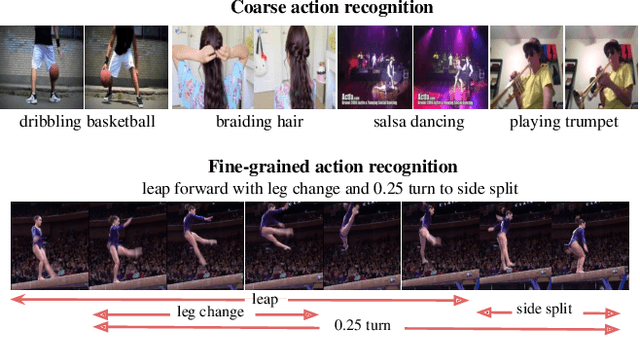
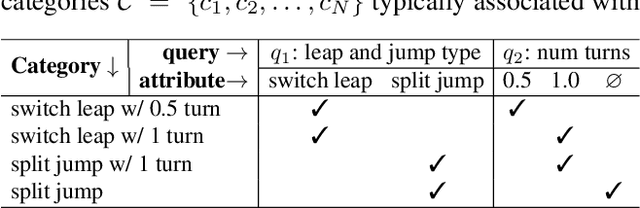
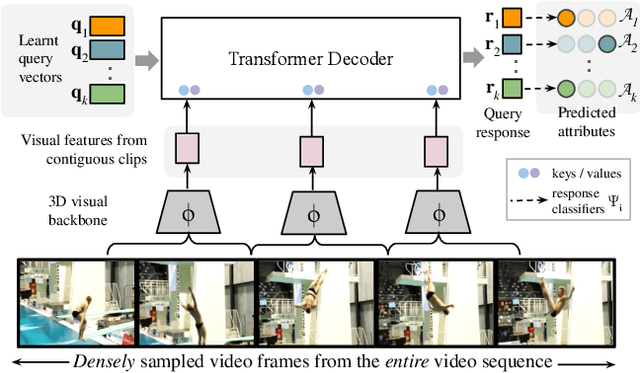
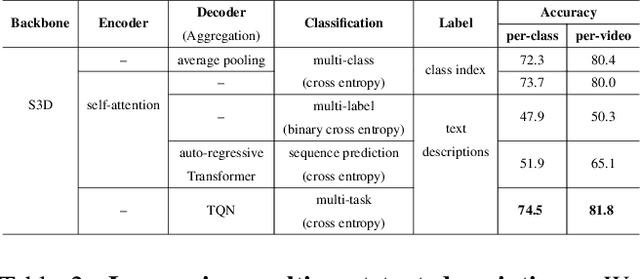
Our objective in this work is fine-grained classification of actions in untrimmed videos, where the actions may be temporally extended or may span only a few frames of the video. We cast this into a query-response mechanism, where each query addresses a particular question, and has its own response label set. We make the following four contributions: (I) We propose a new model - a Temporal Query Network - which enables the query-response functionality, and a structural understanding of fine-grained actions. It attends to relevant segments for each query with a temporal attention mechanism, and can be trained using only the labels for each query. (ii) We propose a new way - stochastic feature bank update - to train a network on videos of various lengths with the dense sampling required to respond to fine-grained queries. (iii) We compare the TQN to other architectures and text supervision methods, and analyze their pros and cons. Finally, (iv) we evaluate the method extensively on the FineGym and Diving48 benchmarks for fine-grained action classification and surpass the state-of-the-art using only RGB features.

TEACHTEXT: CrossModal Generalized Distillation for Text-Video Retrieval
Apr 16, 2021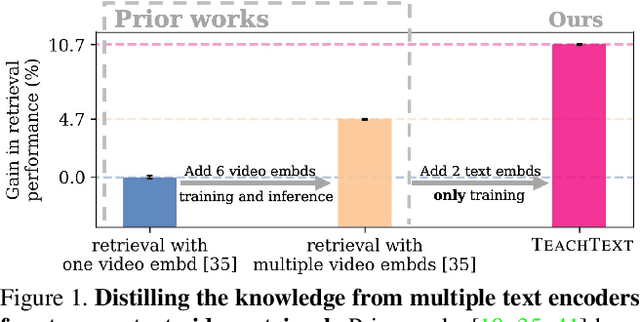

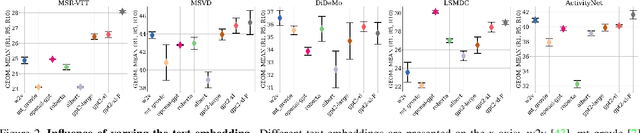
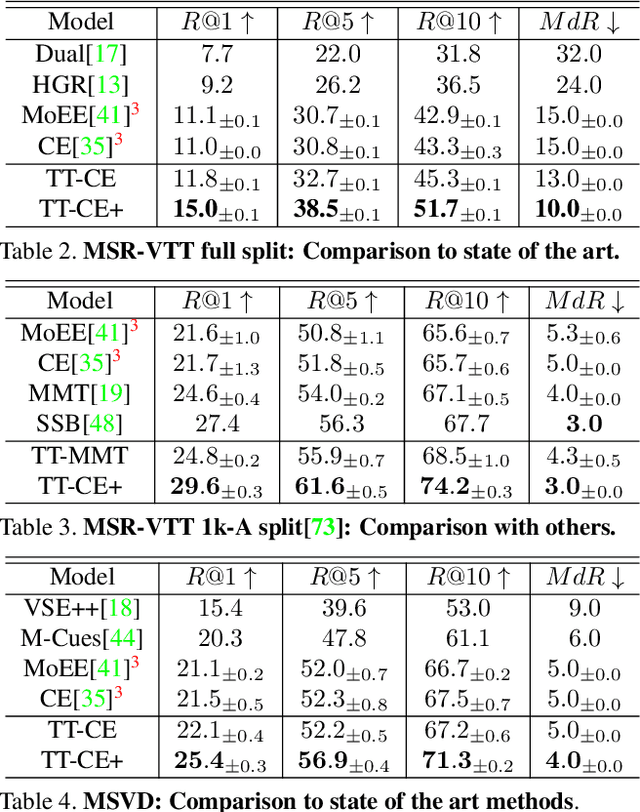
In recent years, considerable progress on the task of text-video retrieval has been achieved by leveraging large-scale pretraining on visual and audio datasets to construct powerful video encoders. By contrast, despite the natural symmetry, the design of effective algorithms for exploiting large-scale language pretraining remains under-explored. In this work, we are the first to investigate the design of such algorithms and propose a novel generalized distillation method, TeachText, which leverages complementary cues from multiple text encoders to provide an enhanced supervisory signal to the retrieval model. Moreover, we extend our method to video side modalities and show that we can effectively reduce the number of used modalities at test time without compromising performance. Our approach advances the state of the art on several video retrieval benchmarks by a significant margin and adds no computational overhead at test time. Last but not least, we show an effective application of our method for eliminating noise from retrieval datasets. Code and data can be found at https://www.robots.ox.ac.uk/~vgg/research/teachtext/.
Self-supervised Video Object Segmentation by Motion Grouping
Apr 15, 2021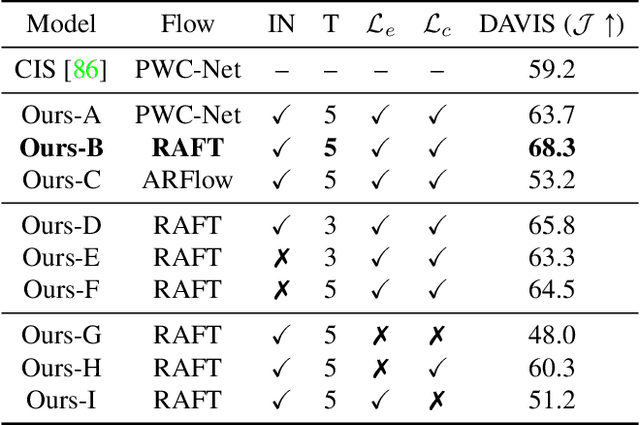
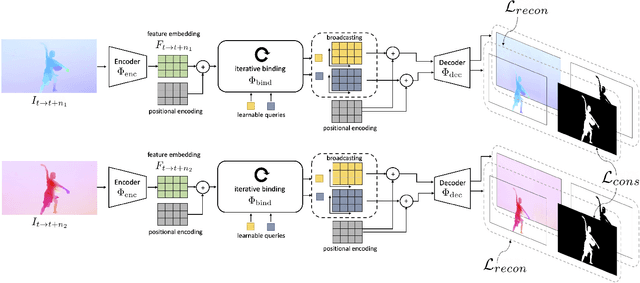
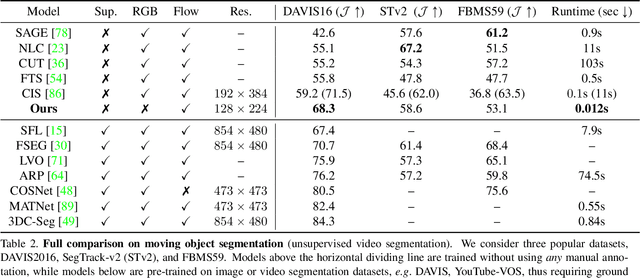
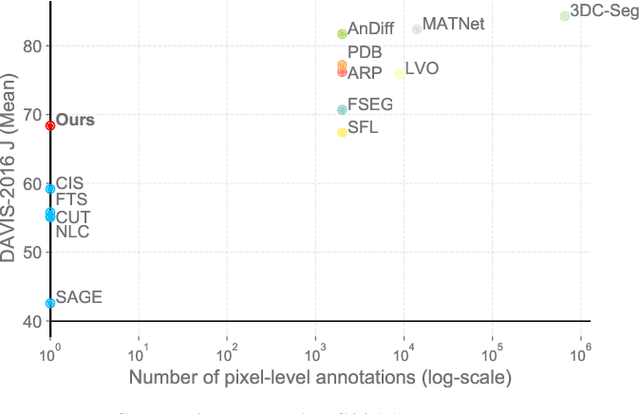
Animals have evolved highly functional visual systems to understand motion, assisting perception even under complex environments. In this paper, we work towards developing a computer vision system able to segment objects by exploiting motion cues, i.e. motion segmentation. We make the following contributions: First, we introduce a simple variant of the Transformer to segment optical flow frames into primary objects and the background. Second, we train the architecture in a self-supervised manner, i.e. without using any manual annotations. Third, we analyze several critical components of our method and conduct thorough ablation studies to validate their necessity. Fourth, we evaluate the proposed architecture on public benchmarks (DAVIS2016, SegTrackv2, and FBMS59). Despite using only optical flow as input, our approach achieves superior or comparable results to previous state-of-the-art self-supervised methods, while being an order of magnitude faster. We additionally evaluate on a challenging camouflage dataset (MoCA), significantly outperforming the other self-supervised approaches, and comparing favourably to the top supervised approach, highlighting the importance of motion cues, and the potential bias towards visual appearance in existing video segmentation models.
Localizing Visual Sounds the Hard Way
Apr 06, 2021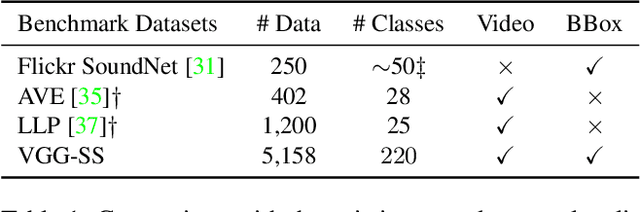
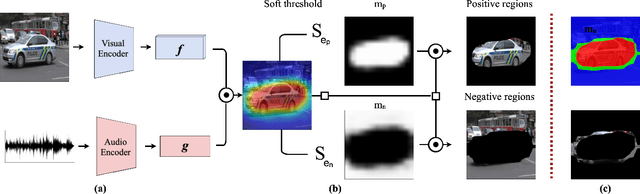
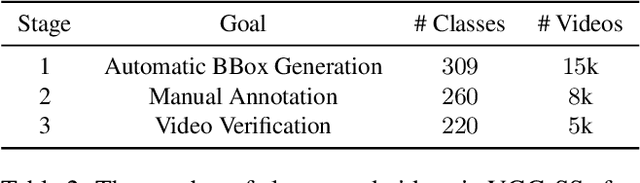
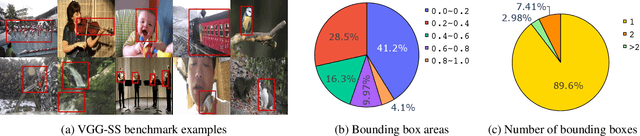
The objective of this work is to localize sound sources that are visible in a video without using manual annotations. Our key technical contribution is to show that, by training the network to explicitly discriminate challenging image fragments, even for images that do contain the object emitting the sound, we can significantly boost the localization performance. We do so elegantly by introducing a mechanism to mine hard samples and add them to a contrastive learning formulation automatically. We show that our algorithm achieves state-of-the-art performance on the popular Flickr SoundNet dataset. Furthermore, we introduce the VGG-Sound Source (VGG-SS) benchmark, a new set of annotations for the recently-introduced VGG-Sound dataset, where the sound sources visible in each video clip are explicitly marked with bounding box annotations. This dataset is 20 times larger than analogous existing ones, contains 5K videos spanning over 200 categories, and, differently from Flickr SoundNet, is video-based. On VGG-SS, we also show that our algorithm achieves state-of-the-art performance against several baselines.
Frozen in Time: A Joint Video and Image Encoder for End-to-End Retrieval
Apr 01, 2021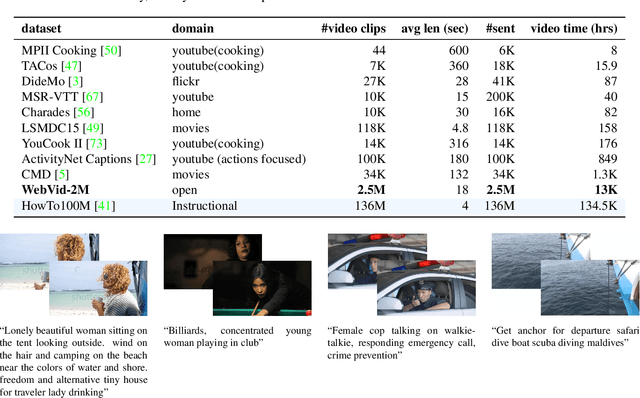
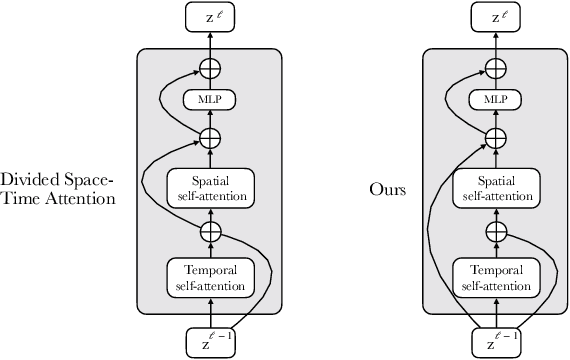
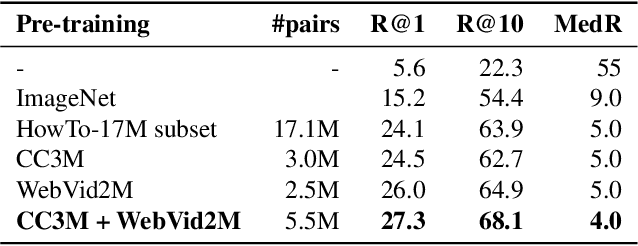
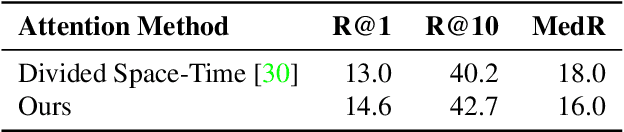
Our objective in this work is video-text retrieval - in particular a joint embedding that enables efficient text-to-video retrieval. The challenges in this area include the design of the visual architecture and the nature of the training data, in that the available large scale video-text training datasets, such as HowTo100M, are noisy and hence competitive performance is achieved only at scale through large amounts of compute. We address both these challenges in this paper. We propose an end-to-end trainable model that is designed to take advantage of both large-scale image and video captioning datasets. Our model is an adaptation and extension of the recent ViT and Timesformer architectures, and consists of attention in both space and time. The model is flexible and can be trained on both image and video text datasets, either independently or in conjunction. It is trained with a curriculum learning schedule that begins by treating images as 'frozen' snapshots of video, and then gradually learns to attend to increasing temporal context when trained on video datasets. We also provide a new video-text pretraining dataset WebVid-2M, comprised of over two million videos with weak captions scraped from the internet. Despite training on datasets that are an order of magnitude smaller, we show that this approach yields state-of-the-art results on standard downstream video-retrieval benchmarks including MSR-VTT, MSVD, DiDeMo and LSMDC.
Broaden Your Views for Self-Supervised Video Learning
Mar 30, 2021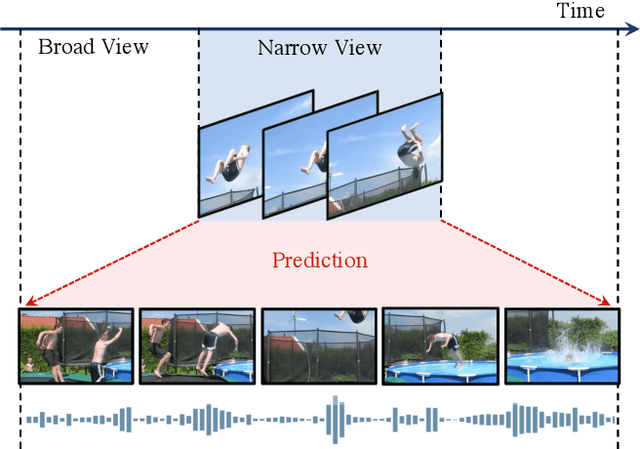
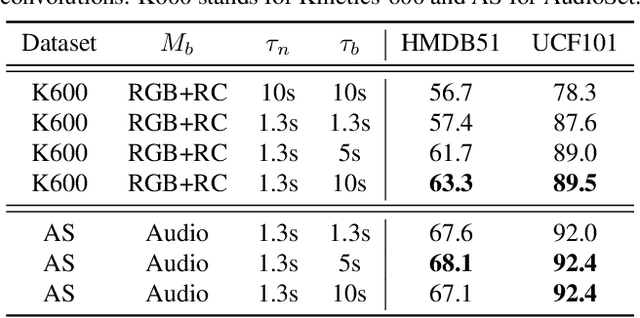
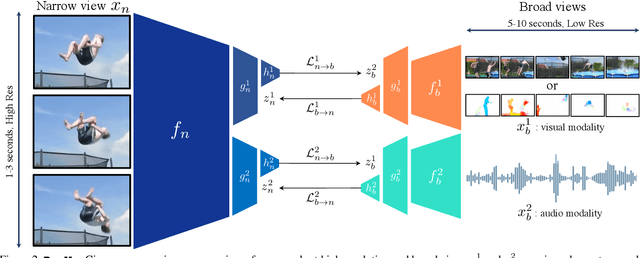
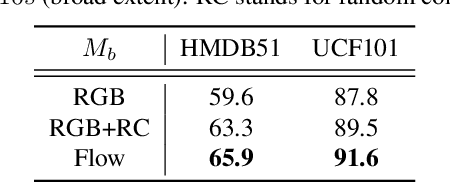
Most successful self-supervised learning methods are trained to align the representations of two independent views from the data. State-of-the-art methods in video are inspired by image techniques, where these two views are similarly extracted by cropping and augmenting the resulting crop. However, these methods miss a crucial element in the video domain: time. We introduce BraVe, a self-supervised learning framework for video. In BraVe, one of the views has access to a narrow temporal window of the video while the other view has a broad access to the video content. Our models learn to generalise from the narrow view to the general content of the video. Furthermore, BraVe processes the views with different backbones, enabling the use of alternative augmentations or modalities into the broad view such as optical flow, randomly convolved RGB frames, audio or their combinations. We demonstrate that BraVe achieves state-of-the-art results in self-supervised representation learning on standard video and audio classification benchmarks including UCF101, HMDB51, Kinetics, ESC-50 and AudioSet.
Thinking Fast and Slow: Efficient Text-to-Visual Retrieval with Transformers
Mar 30, 2021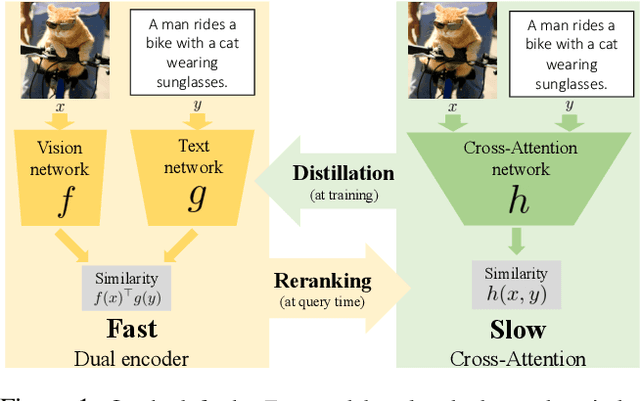
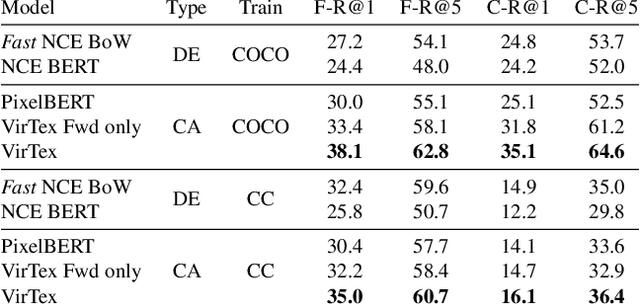
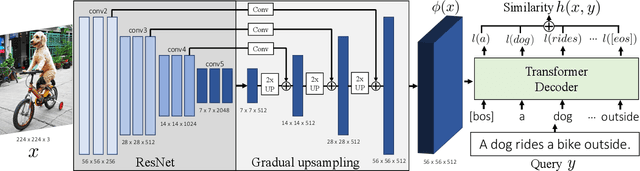
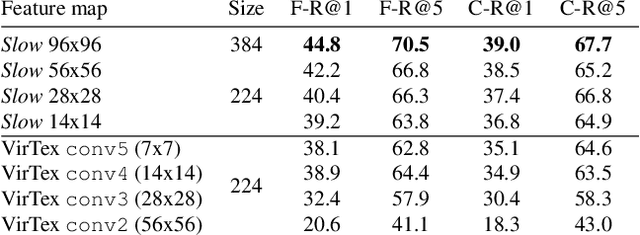
Our objective is language-based search of large-scale image and video datasets. For this task, the approach that consists of independently mapping text and vision to a joint embedding space, a.k.a. dual encoders, is attractive as retrieval scales and is efficient for billions of images using approximate nearest neighbour search. An alternative approach of using vision-text transformers with cross-attention gives considerable improvements in accuracy over the joint embeddings, but is often inapplicable in practice for large-scale retrieval given the cost of the cross-attention mechanisms required for each sample at test time. This work combines the best of both worlds. We make the following three contributions. First, we equip transformer-based models with a new fine-grained cross-attention architecture, providing significant improvements in retrieval accuracy whilst preserving scalability. Second, we introduce a generic approach for combining a Fast dual encoder model with our Slow but accurate transformer-based model via distillation and re-ranking. Finally, we validate our approach on the Flickr30K image dataset where we show an increase in inference speed by several orders of magnitude while having results competitive to the state of the art. We also extend our method to the video domain, improving the state of the art on the VATEX dataset.
Read and Attend: Temporal Localisation in Sign Language Videos
Mar 30, 2021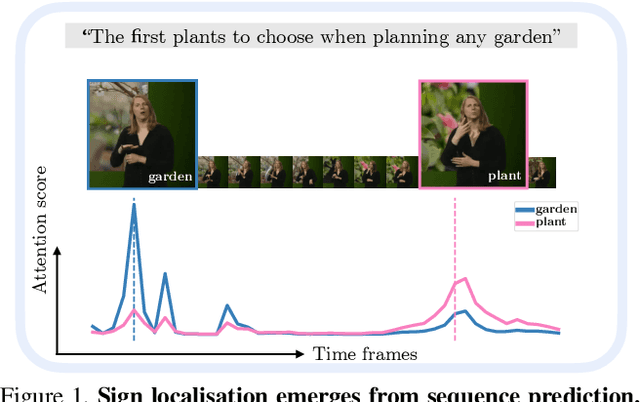
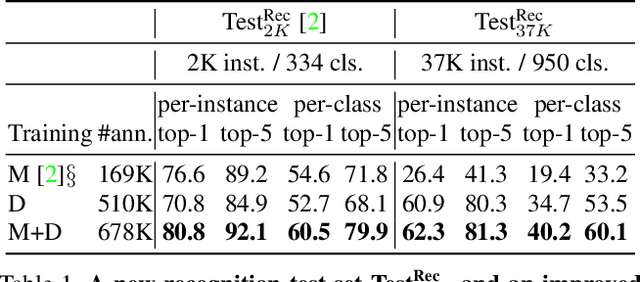
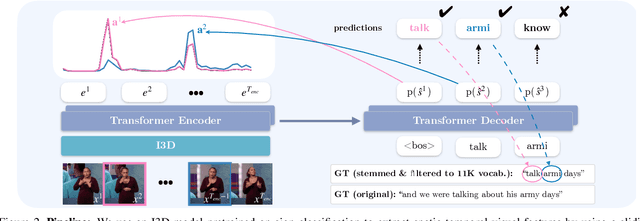
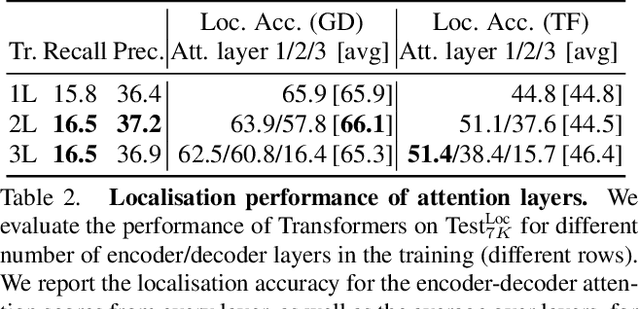
The objective of this work is to annotate sign instances across a broad vocabulary in continuous sign language. We train a Transformer model to ingest a continuous signing stream and output a sequence of written tokens on a large-scale collection of signing footage with weakly-aligned subtitles. We show that through this training it acquires the ability to attend to a large vocabulary of sign instances in the input sequence, enabling their localisation. Our contributions are as follows: (1) we demonstrate the ability to leverage large quantities of continuous signing videos with weakly-aligned subtitles to localise signs in continuous sign language; (2) we employ the learned attention to automatically generate hundreds of thousands of annotations for a large sign vocabulary; (3) we collect a set of 37K manually verified sign instances across a vocabulary of 950 sign classes to support our study of sign language recognition; (4) by training on the newly annotated data from our method, we outperform the prior state of the art on the BSL-1K sign language recognition benchmark.
Slow-Fast Auditory Streams For Audio Recognition
Mar 05, 2021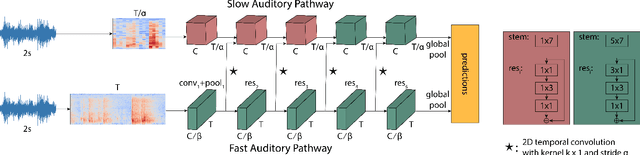
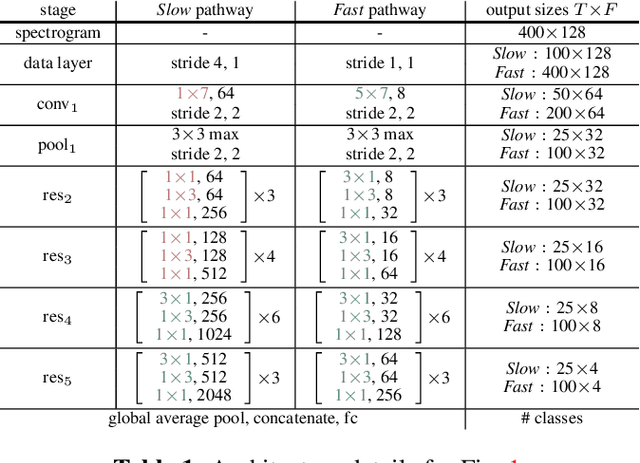
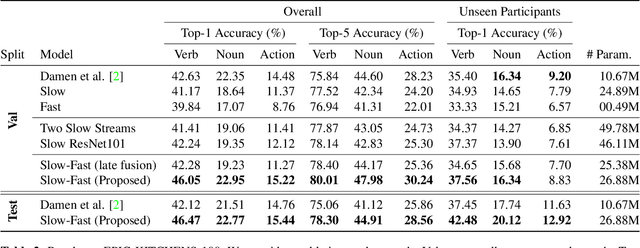
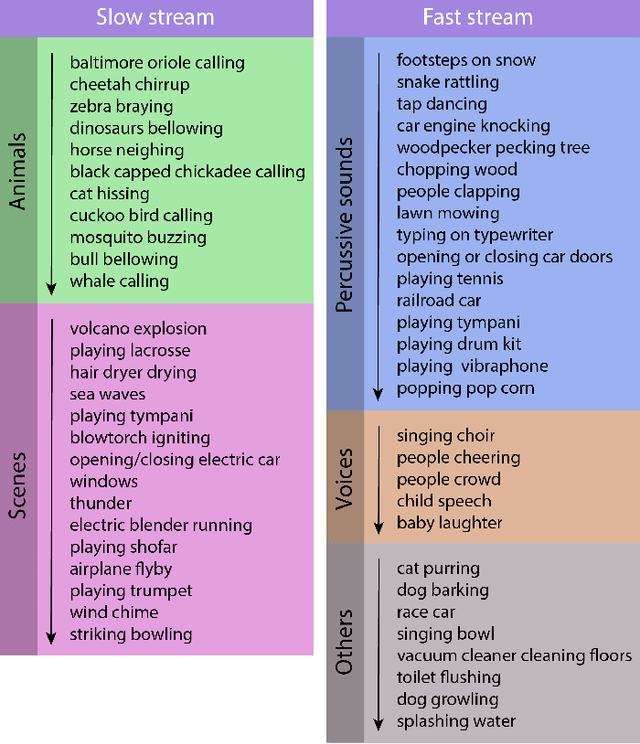
We propose a two-stream convolutional network for audio recognition, that operates on time-frequency spectrogram inputs. Following similar success in visual recognition, we learn Slow-Fast auditory streams with separable convolutions and multi-level lateral connections. The Slow pathway has high channel capacity while the Fast pathway operates at a fine-grained temporal resolution. We showcase the importance of our two-stream proposal on two diverse datasets: VGG-Sound and EPIC-KITCHENS-100, and achieve state-of-the-art results on both.
Perceiver: General Perception with Iterative Attention
Mar 04, 2021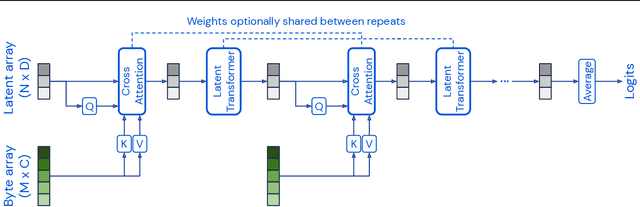
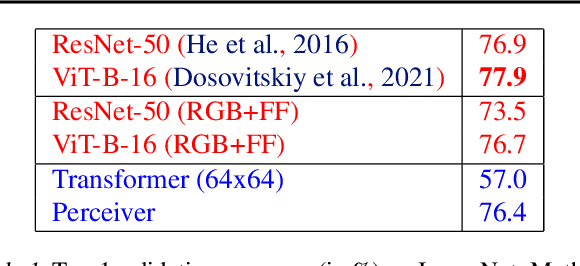
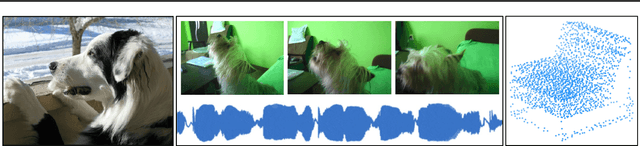
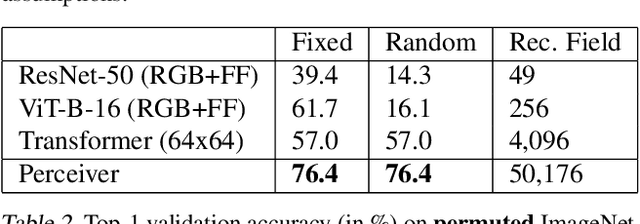
Biological systems understand the world by simultaneously processing high-dimensional inputs from modalities as diverse as vision, audition, touch, proprioception, etc. The perception models used in deep learning on the other hand are designed for individual modalities, often relying on domain-specific assumptions such as the local grid structures exploited by virtually all existing vision models. These priors introduce helpful inductive biases, but also lock models to individual modalities. In this paper we introduce the Perceiver - a model that builds upon Transformers and hence makes few architectural assumptions about the relationship between its inputs, but that also scales to hundreds of thousands of inputs, like ConvNets. The model leverages an asymmetric attention mechanism to iteratively distill inputs into a tight latent bottleneck, allowing it to scale to handle very large inputs. We show that this architecture performs competitively or beyond strong, specialized models on classification tasks across various modalities: images, point clouds, audio, video and video+audio. The Perceiver obtains performance comparable to ResNet-50 on ImageNet without convolutions and by directly attending to 50,000 pixels. It also surpasses state-of-the-art results for all modalities in AudioSet.