 Add to Chrome
 Add to Firefox
 Add to Edge
An update to PYRO-NN: A Python Library for Differentiable CT Operators
Nov 11, 2025
Deep learning has brought significant advancements to X-ray Computed Tomography (CT) reconstruction, offering solutions to challenges arising from modern imaging technologies. These developments benefit from methods that combine classical reconstruction techniques with data-driven approaches. Differentiable operators play a key role in this integration by enabling end-to-end optimization and the incorporation of physical modeling within neural networks. In this work, we present an updated version of PYRO-NN, a Python-based library for differentiable CT reconstruction. The updated framework extends compatibility to PyTorch and introduces native CUDA kernel support for efficient projection and back-projection operations across parallel, fan, and cone-beam geometries. Additionally, it includes tools for simulating imaging artifacts, modeling arbitrary acquisition trajectories, and creating flexible, end-to-end trainable pipelines through a high-level Python API. Code is available at: https://github.com/csyben/PYRO-NN

Adapted Foundation Models for Breast MRI Triaging in Contrast-Enhanced and Non-Contrast Enhanced Protocols
Nov 08, 2025Background: Magnetic resonance imaging (MRI) has high sensitivity for breast cancer detection, but interpretation is time-consuming. Artificial intelligence may aid in pre-screening. Purpose: To evaluate the DINOv2-based Medical Slice Transformer (MST) for ruling out significant findings (Breast Imaging Reporting and Data System [BI-RADS] >=4) in contrast-enhanced and non-contrast-enhanced abbreviated breast MRI. Materials and Methods: This institutional review board approved retrospective study included 1,847 single-breast MRI examinations (377 BI-RADS >=4) from an in-house dataset and 924 from an external validation dataset (Duke). Four abbreviated protocols were tested: T1-weighted early subtraction (T1sub), diffusion-weighted imaging with b=1500 s/mm2 (DWI1500), DWI1500+T2-weighted (T2w), and T1sub+T2w. Performance was assessed at 90%, 95%, and 97.5% sensitivity using five-fold cross-validation and area under the receiver operating characteristic curve (AUC) analysis. AUC differences were compared with the DeLong test. False negatives were characterized, and attention maps of true positives were rated in the external dataset. Results: A total of 1,448 female patients (mean age, 49 +/- 12 years) were included. T1sub+T2w achieved an AUC of 0.77 +/- 0.04; DWI1500+T2w, 0.74 +/- 0.04 (p=0.15). At 97.5% sensitivity, T1sub+T2w had the highest specificity (19% +/- 7%), followed by DWI1500+T2w (17% +/- 11%). Missed lesions had a mean diameter <10 mm at 95% and 97.5% thresholds for both T1sub and DWI1500, predominantly non-mass enhancements. External validation yielded an AUC of 0.77, with 88% of attention maps rated good or moderate. Conclusion: At 97.5% sensitivity, the MST framework correctly triaged cases without BI-RADS >=4, achieving 19% specificity for contrast-enhanced and 17% for non-contrast-enhanced MRI. Further research is warranted before clinical implementation.
Physics-informed GNN for medium-high voltage AC power flow with edge-aware attention and line search correction operator
Sep 26, 2025Physics-informed graph neural networks (PIGNNs) have emerged as fast AC power-flow solvers that can replace classic Newton--Raphson (NR) solvers, especially when thousands of scenarios must be evaluated. However, current PIGNNs still need accuracy improvements at parity speed; in particular, the physics loss is inoperative at inference, which can deter operational adoption. We address this with PIGNN-Attn-LS, combining an edge-aware attention mechanism that explicitly encodes line physics via per-edge biases, capturing the grid's anisotropy, with a backtracking line-search-based globalized correction operator that restores an operative decrease criterion at inference. Training and testing use a realistic High-/Medium-Voltage scenario generator, with NR used only to construct reference states. On held-out HV cases consisting of 4--32-bus grids, PIGNN-Attn-LS achieves a test RMSE of 0.00033 p.u. in voltage and 0.08$^\circ$ in angle, outperforming the PIGNN-MLP baseline by 99.5\% and 87.1\%, respectively. With streaming micro-batches, it delivers 2--5$\times$ faster batched inference than NR on 4--1024-bus grids.
Data Augmentation via Latent Diffusion Models for Detecting Smell-Related Objects in Historical Artworks
Sep 18, 2025Finding smell references in historic artworks is a challenging problem. Beyond artwork-specific challenges such as stylistic variations, their recognition demands exceptionally detailed annotation classes, resulting in annotation sparsity and extreme class imbalance. In this work, we explore the potential of synthetic data generation to alleviate these issues and enable accurate detection of smell-related objects. We evaluate several diffusion-based augmentation strategies and demonstrate that incorporating synthetic data into model training can improve detection performance. Our findings suggest that leveraging the large-scale pretraining of diffusion models offers a promising approach for improving detection accuracy, particularly in niche applications where annotations are scarce and costly to obtain. Furthermore, the proposed approach proves to be effective even with relatively small amounts of data, and scaling it up provides high potential for further enhancements.
A Scoping Review of Machine Learning Applications in Power System Protection and Disturbance Management
Sep 10, 2025The integration of renewable and distributed energy resources reshapes modern power systems, challenging conventional protection schemes. This scoping review synthesizes recent literature on machine learning (ML) applications in power system protection and disturbance management, following the PRISMA for Scoping Reviews framework. Based on over 100 publications, three key objectives are addressed: (i) assessing the scope of ML research in protection tasks; (ii) evaluating ML performance across diverse operational scenarios; and (iii) identifying methods suitable for evolving grid conditions. ML models often demonstrate high accuracy on simulated datasets; however, their performance under real-world conditions remains insufficiently validated. The existing literature is fragmented, with inconsistencies in methodological rigor, dataset quality, and evaluation metrics. This lack of standardization hampers the comparability of results and limits the generalizability of findings. To address these challenges, this review introduces a ML-oriented taxonomy for protection tasks, resolves key terminological inconsistencies, and advocates for standardized reporting practices. It further provides guidelines for comprehensive dataset documentation, methodological transparency, and consistent evaluation protocols, aiming to improve reproducibility and enhance the practical relevance of research outcomes. Critical gaps remain, including the scarcity of real-world validation, insufficient robustness testing, and limited consideration of deployment feasibility. Future research should prioritize public benchmark datasets, realistic validation methods, and advanced ML architectures. These steps are essential to move ML-based protection from theoretical promise to practical deployment in increasingly dynamic and decentralized power systems.
Water Demand Forecasting of District Metered Areas through Learned Consumer Representations
Sep 09, 2025Advancements in smart metering technologies have significantly improved the ability to monitor and manage water utilities. In the context of increasing uncertainty due to climate change, securing water resources and supply has emerged as an urgent global issue with extensive socioeconomic ramifications. Hourly consumption data from end-users have yielded substantial insights for projecting demand across regions characterized by diverse consumption patterns. Nevertheless, the prediction of water demand remains challenging due to influencing non-deterministic factors, such as meteorological conditions. This work introduces a novel method for short-term water demand forecasting for District Metered Areas (DMAs) which encompass commercial, agricultural, and residential consumers. Unsupervised contrastive learning is applied to categorize end-users according to distinct consumption behaviors present within a DMA. Subsequently, the distinct consumption behaviors are utilized as features in the ensuing demand forecasting task using wavelet-transformed convolutional networks that incorporate a cross-attention mechanism combining both historical data and the derived representations. The proposed approach is evaluated on real-world DMAs over a six-month period, demonstrating improved forecasting performance in terms of MAPE across different DMAs, with a maximum improvement of 4.9%. Additionally, it identifies consumers whose behavior is shaped by socioeconomic factors, enhancing prior knowledge about the deterministic patterns that influence demand.
Agentic large language models improve retrieval-based radiology question answering
Aug 01, 2025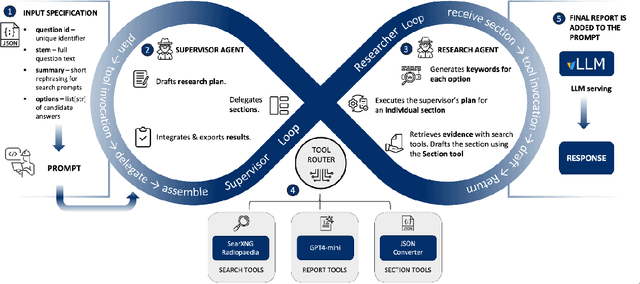
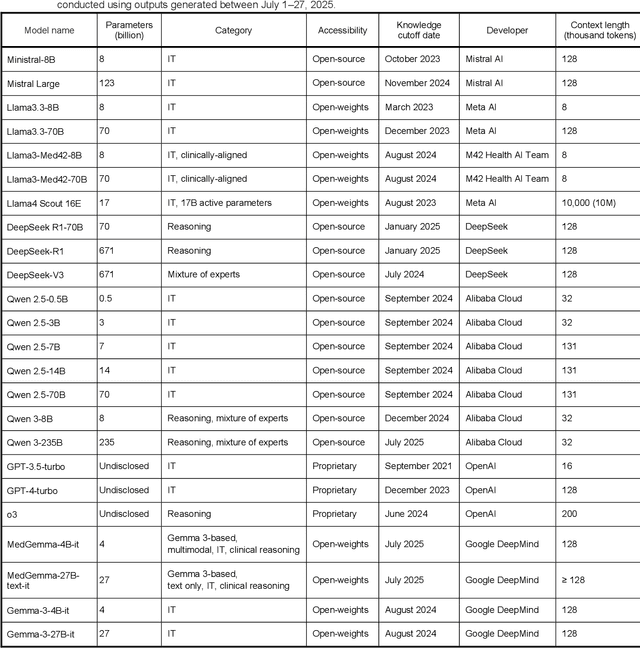
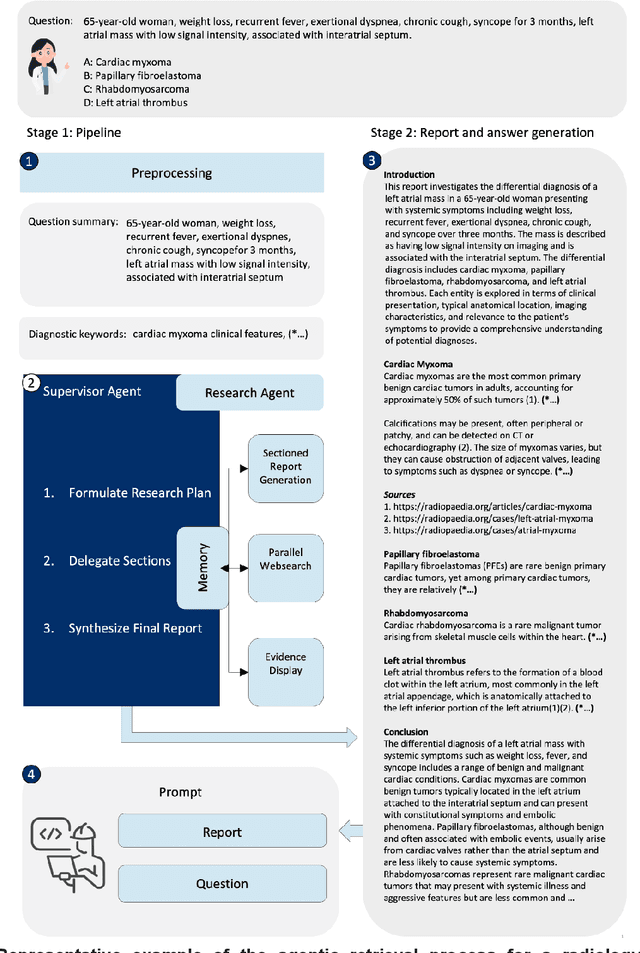
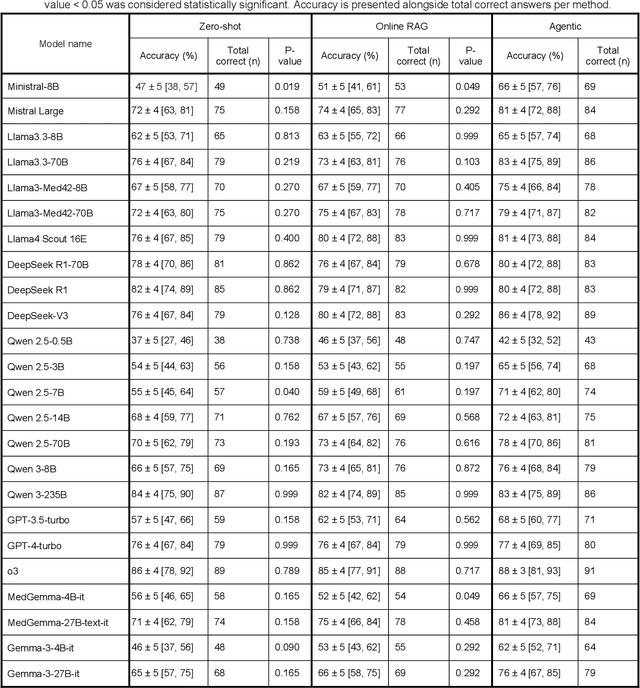
Clinical decision-making in radiology increasingly benefits from artificial intelligence (AI), particularly through large language models (LLMs). However, traditional retrieval-augmented generation (RAG) systems for radiology question answering (QA) typically rely on single-step retrieval, limiting their ability to handle complex clinical reasoning tasks. Here we propose an agentic RAG framework enabling LLMs to autonomously decompose radiology questions, iteratively retrieve targeted clinical evidence from Radiopaedia, and dynamically synthesize evidence-based responses. We evaluated 24 LLMs spanning diverse architectures, parameter scales (0.5B to >670B), and training paradigms (general-purpose, reasoning-optimized, clinically fine-tuned), using 104 expert-curated radiology questions from previously established RSNA-RadioQA and ExtendedQA datasets. Agentic retrieval significantly improved mean diagnostic accuracy over zero-shot prompting (73% vs. 64%; P<0.001) and conventional online RAG (73% vs. 68%; P<0.001). The greatest gains occurred in mid-sized models (e.g., Mistral Large improved from 72% to 81%) and small-scale models (e.g., Qwen 2.5-7B improved from 55% to 71%), while very large models (>200B parameters) demonstrated minimal changes (<2% improvement). Additionally, agentic retrieval reduced hallucinations (mean 9.4%) and retrieved clinically relevant context in 46% of cases, substantially aiding factual grounding. Even clinically fine-tuned models exhibited meaningful improvements (e.g., MedGemma-27B improved from 71% to 81%), indicating complementary roles of retrieval and fine-tuning. These results highlight the potential of agentic frameworks to enhance factuality and diagnostic accuracy in radiology QA, particularly among mid-sized LLMs, warranting future studies to validate their clinical utility.
Audio-Vision Contrastive Learning for Phonological Class Recognition
Jul 23, 2025Accurate classification of articulatory-phonological features plays a vital role in understanding human speech production and developing robust speech technologies, particularly in clinical contexts where targeted phonemic analysis and therapy can improve disease diagnosis accuracy and personalized rehabilitation. In this work, we propose a multimodal deep learning framework that combines real-time magnetic resonance imaging (rtMRI) and speech signals to classify three key articulatory dimensions: manner of articulation, place of articulation, and voicing. We perform classification on 15 phonological classes derived from the aforementioned articulatory dimensions and evaluate the system with four audio/vision configurations: unimodal rtMRI, unimodal audio signals, multimodal middle fusion, and contrastive learning-based audio-vision fusion. Experimental results on the USC-TIMIT dataset show that our contrastive learning-based approach achieves state-of-the-art performance, with an average F1-score of 0.81, representing an absolute increase of 0.23 over the unimodal baseline. The results confirm the effectiveness of contrastive representation learning for multimodal articulatory analysis. Our code and processed dataset will be made publicly available at https://github.com/DaE-plz/AC_Contrastive_Phonology to support future research.
SSL4SAR: Self-Supervised Learning for Glacier Calving Front Extraction from SAR Imagery
Jul 02, 2025Glaciers are losing ice mass at unprecedented rates, increasing the need for accurate, year-round monitoring to understand frontal ablation, particularly the factors driving the calving process. Deep learning models can extract calving front positions from Synthetic Aperture Radar imagery to track seasonal ice losses at the calving fronts of marine- and lake-terminating glaciers. The current state-of-the-art model relies on ImageNet-pretrained weights. However, they are suboptimal due to the domain shift between the natural images in ImageNet and the specialized characteristics of remote sensing imagery, in particular for Synthetic Aperture Radar imagery. To address this challenge, we propose two novel self-supervised multimodal pretraining techniques that leverage SSL4SAR, a new unlabeled dataset comprising 9,563 Sentinel-1 and 14 Sentinel-2 images of Arctic glaciers, with one optical image per glacier in the dataset. Additionally, we introduce a novel hybrid model architecture that combines a Swin Transformer encoder with a residual Convolutional Neural Network (CNN) decoder. When pretrained on SSL4SAR, this model achieves a mean distance error of 293 m on the "CAlving Fronts and where to Find thEm" (CaFFe) benchmark dataset, outperforming the prior best model by 67 m. Evaluating an ensemble of the proposed model on a multi-annotator study of the benchmark dataset reveals a mean distance error of 75 m, approaching the human performance of 38 m. This advancement enables precise monitoring of seasonal changes in glacier calving fronts.
Learning Encodings by Maximizing State Distinguishability: Variational Quantum Error Correction
Jun 13, 2025Quantum error correction is crucial for protecting quantum information against decoherence. Traditional codes like the surface code require substantial overhead, making them impractical for near-term, early fault-tolerant devices. We propose a novel objective function for tailoring error correction codes to specific noise structures by maximizing the distinguishability between quantum states after a noise channel, ensuring efficient recovery operations. We formalize this concept with the distinguishability loss function, serving as a machine learning objective to discover resource-efficient encoding circuits optimized for given noise characteristics. We implement this methodology using variational techniques, termed variational quantum error correction (VarQEC). Our approach yields codes with desirable theoretical and practical properties and outperforms standard codes in various scenarios. We also provide proof-of-concept demonstrations on IBM and IQM hardware devices, highlighting the practical relevance of our procedure.