 Add to Chrome
 Add to Firefox
 Add to Edge
Orb Slam2
Papers and Code
A Monocular SLAM-based Multi-User Positioning System with Image Occlusion in Augmented Reality
Nov 17, 2024
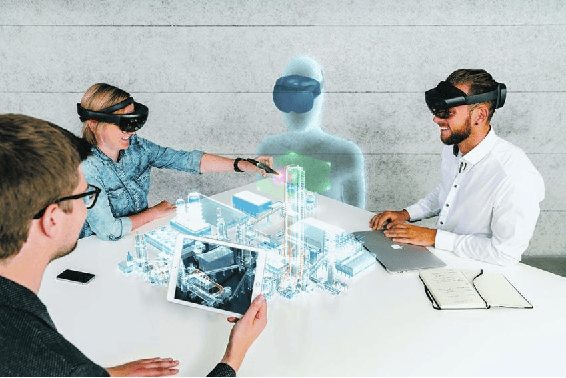
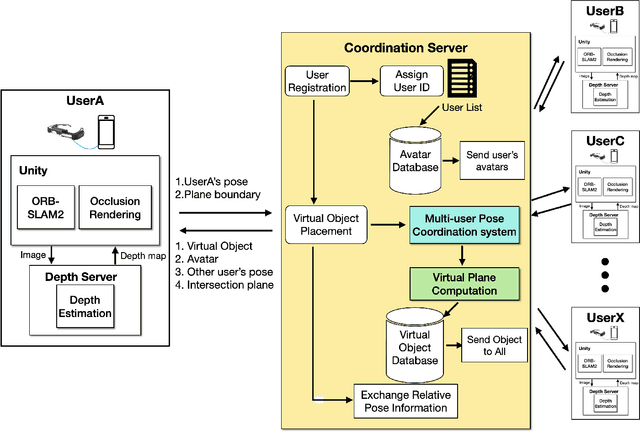
In recent years, with the rapid development of augmented reality (AR) technology, there is an increasing demand for multi-user collaborative experiences. Unlike for single-user experiences, ensuring the spatial localization of every user and maintaining synchronization and consistency of positioning and orientation across multiple users is a significant challenge. In this paper, we propose a multi-user localization system based on ORB-SLAM2 using monocular RGB images as a development platform based on the Unity 3D game engine. This system not only performs user localization but also places a common virtual object on a planar surface (such as table) in the environment so that every user holds a proper perspective view of the object. These generated virtual objects serve as reference points for multi-user position synchronization. The positioning information is passed among every user's AR devices via a central server, based on which the relative position and movement of other users in the space of a specific user are presented via virtual avatars all with respect to these virtual objects. In addition, we use deep learning techniques to estimate the depth map of an image from a single RGB image to solve occlusion problems in AR applications, making virtual objects appear more natural in AR scenes.

QueensCAMP: an RGB-D dataset for robust Visual SLAM
Oct 16, 2024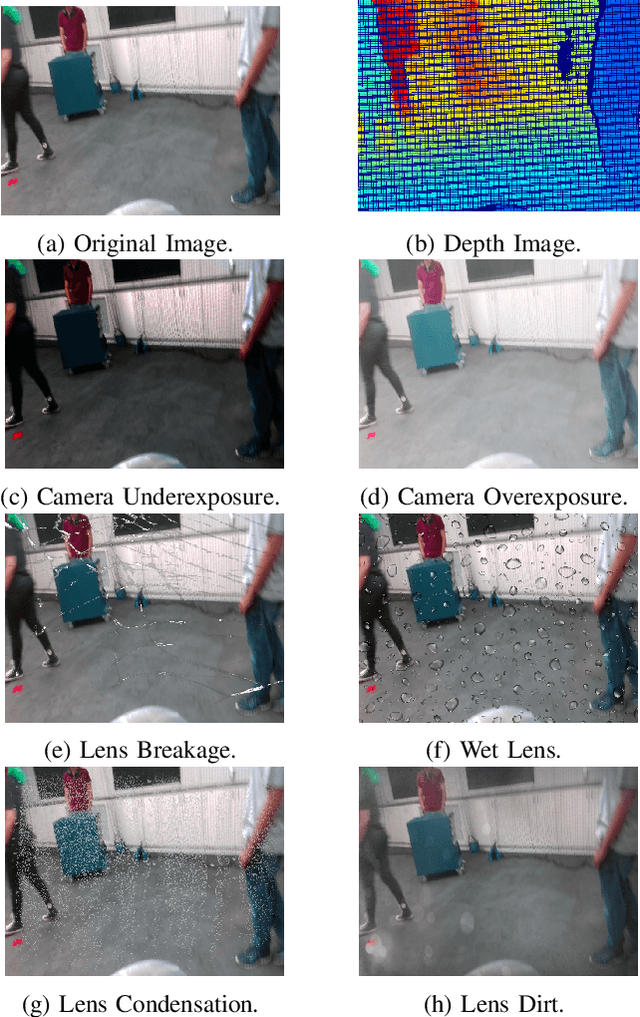
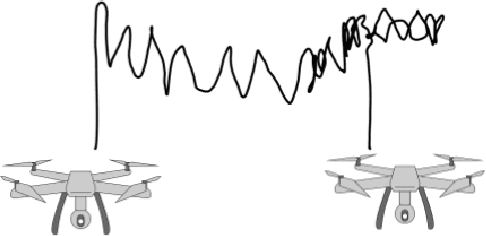
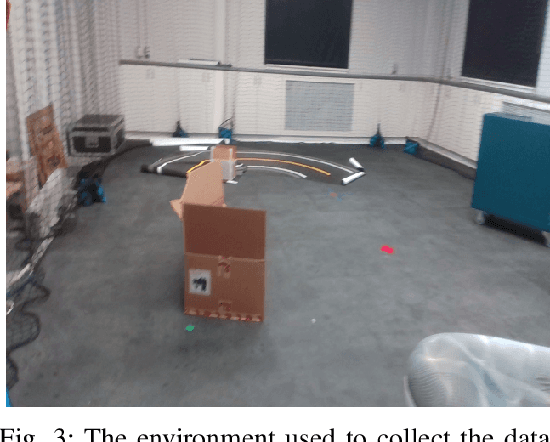
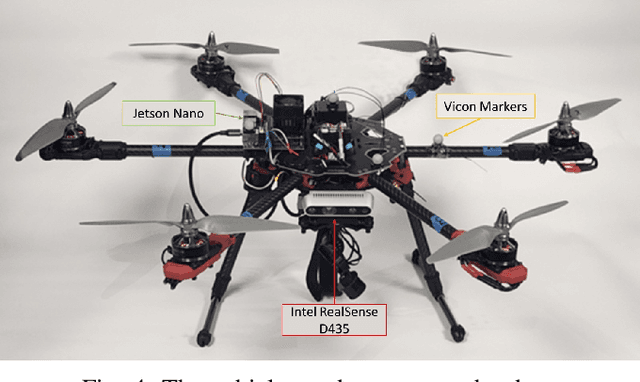
Visual Simultaneous Localization and Mapping (VSLAM) is a fundamental technology for robotics applications. While VSLAM research has achieved significant advancements, its robustness under challenging situations, such as poor lighting, dynamic environments, motion blur, and sensor failures, remains a challenging issue. To address these challenges, we introduce a novel RGB-D dataset designed for evaluating the robustness of VSLAM systems. The dataset comprises real-world indoor scenes with dynamic objects, motion blur, and varying illumination, as well as emulated camera failures, including lens dirt, condensation, underexposure, and overexposure. Additionally, we offer open-source scripts for injecting camera failures into any images, enabling further customization by the research community. Our experiments demonstrate that ORB-SLAM2, a traditional VSLAM algorithm, and TartanVO, a Deep Learning-based VO algorithm, can experience performance degradation under these challenging conditions. Therefore, this dataset and the camera failure open-source tools provide a valuable resource for developing more robust VSLAM systems capable of handling real-world challenges.
SLAM assisted 3D tracking system for laparoscopic surgery
Sep 18, 2024


A major limitation of minimally invasive surgery is the difficulty in accurately locating the internal anatomical structures of the target organ due to the lack of tactile feedback and transparency. Augmented reality (AR) offers a promising solution to overcome this challenge. Numerous studies have shown that combining learning-based and geometric methods can achieve accurate preoperative and intraoperative data registration. This work proposes a real-time monocular 3D tracking algorithm for post-registration tasks. The ORB-SLAM2 framework is adopted and modified for prior-based 3D tracking. The primitive 3D shape is used for fast initialization of the monocular SLAM. A pseudo-segmentation strategy is employed to separate the target organ from the background for tracking purposes, and the geometric prior of the 3D shape is incorporated as an additional constraint in the pose graph. Experiments from in-vivo and ex-vivo tests demonstrate that the proposed 3D tracking system provides robust 3D tracking and effectively handles typical challenges such as fast motion, out-of-field-of-view scenarios, partial visibility, and "organ-background" relative motion.
Evaluating Modern Approaches in 3D Scene Reconstruction: NeRF vs Gaussian-Based Methods
Aug 08, 2024Exploring the capabilities of Neural Radiance Fields (NeRF) and Gaussian-based methods in the context of 3D scene reconstruction, this study contrasts these modern approaches with traditional Simultaneous Localization and Mapping (SLAM) systems. Utilizing datasets such as Replica and ScanNet, we assess performance based on tracking accuracy, mapping fidelity, and view synthesis. Findings reveal that NeRF excels in view synthesis, offering unique capabilities in generating new perspectives from existing data, albeit at slower processing speeds. Conversely, Gaussian-based methods provide rapid processing and significant expressiveness but lack comprehensive scene completion. Enhanced by global optimization and loop closure techniques, newer methods like NICE-SLAM and SplaTAM not only surpass older frameworks such as ORB-SLAM2 in terms of robustness but also demonstrate superior performance in dynamic and complex environments. This comparative analysis bridges theoretical research with practical implications, shedding light on future developments in robust 3D scene reconstruction across various real-world applications.
Object-Oriented Material Classification and 3D Clustering for Improved Semantic Perception and Mapping in Mobile Robots
Jul 08, 2024Classification of different object surface material types can play a significant role in the decision-making algorithms for mobile robots and autonomous vehicles. RGB-based scene-level semantic segmentation has been well-addressed in the literature. However, improving material recognition using the depth modality and its integration with SLAM algorithms for 3D semantic mapping could unlock new potential benefits in the robotics perception pipeline. To this end, we propose a complementarity-aware deep learning approach for RGB-D-based material classification built on top of an object-oriented pipeline. The approach further integrates the ORB-SLAM2 method for 3D scene mapping with multiscale clustering of the detected material semantics in the point cloud map generated by the visual SLAM algorithm. Extensive experimental results with existing public datasets and newly contributed real-world robot datasets demonstrate a significant improvement in material classification and 3D clustering accuracy compared to state-of-the-art approaches for 3D semantic scene mapping.
JointLoc: A Real-time Visual Localization Framework for Planetary UAVs Based on Joint Relative and Absolute Pose Estimation
May 13, 2024Unmanned aerial vehicles (UAVs) visual localization in planetary aims to estimate the absolute pose of the UAV in the world coordinate system through satellite maps and images captured by on-board cameras. However, since planetary scenes often lack significant landmarks and there are modal differences between satellite maps and UAV images, the accuracy and real-time performance of UAV positioning will be reduced. In order to accurately determine the position of the UAV in a planetary scene in the absence of the global navigation satellite system (GNSS), this paper proposes JointLoc, which estimates the real-time UAV position in the world coordinate system by adaptively fusing the absolute 2-degree-of-freedom (2-DoF) pose and the relative 6-degree-of-freedom (6-DoF) pose. Extensive comparative experiments were conducted on a proposed planetary UAV image cross-modal localization dataset, which contains three types of typical Martian topography generated via a simulation engine as well as real Martian UAV images from the Ingenuity helicopter. JointLoc achieved a root-mean-square error of 0.237m in the trajectories of up to 1,000m, compared to 0.594m and 0.557m for ORB-SLAM2 and ORB-SLAM3 respectively. The source code will be available at https://github.com/LuoXubo/JointLoc.
BundledSLAM: An Accurate Visual SLAM System Using Multiple Cameras
Apr 01, 2024Multi-camera SLAM systems offer a plethora of advantages, primarily stemming from their capacity to amalgamate information from a broader field of view, thereby resulting in heightened robustness and improved localization accuracy. In this research, we present a significant extension and refinement of the state-of-the-art stereo SLAM system, known as ORB-SLAM2, with the objective of attaining even higher precision. To accomplish this objective, we commence by mapping measurements from all cameras onto a virtual camera termed BundledFrame. This virtual camera is meticulously engineered to seamlessly adapt to multi-camera configurations, facilitating the effective fusion of data captured from multiple cameras. Additionally, we harness extrinsic parameters in the bundle adjustment (BA) process to achieve precise trajectory estimation.Furthermore, we conduct an extensive analysis of the role of bundle adjustment (BA) in the context of multi-camera scenarios, delving into its impact on tracking, local mapping, and global optimization. Our experimental evaluation entails comprehensive comparisons between ground truth data and the state-of-the-art SLAM system. To rigorously assess the system's performance, we utilize the EuRoC datasets. The consistent results of our evaluations demonstrate the superior accuracy of our system in comparison to existing approaches.
VOOM: Robust Visual Object Odometry and Mapping using Hierarchical Landmarks
Feb 26, 2024In recent years, object-oriented simultaneous localization and mapping (SLAM) has attracted increasing attention due to its ability to provide high-level semantic information while maintaining computational efficiency. Some researchers have attempted to enhance localization accuracy by integrating the modeled object residuals into bundle adjustment. However, few have demonstrated better results than feature-based visual SLAM systems, as the generic coarse object models, such as cuboids or ellipsoids, are less accurate than feature points. In this paper, we propose a Visual Object Odometry and Mapping framework VOOM using high-level objects and low-level points as the hierarchical landmarks in a coarse-to-fine manner instead of directly using object residuals in bundle adjustment. Firstly, we introduce an improved observation model and a novel data association method for dual quadrics, employed to represent physical objects. It facilitates the creation of a 3D map that closely reflects reality. Next, we use object information to enhance the data association of feature points and consequently update the map. In the visual object odometry backend, the updated map is employed to further optimize the camera pose and the objects. Meanwhile, local bundle adjustment is performed utilizing the objects and points-based covisibility graphs in our visual object mapping process. Experiments show that VOOM outperforms both object-oriented SLAM and feature points SLAM systems such as ORB-SLAM2 in terms of localization. The implementation of our method is available at https://github.com/yutongwangBIT/VOOM.git.
BDIS-SLAM: A lightweight CPU-based dense stereo SLAM for surgery
Dec 25, 2023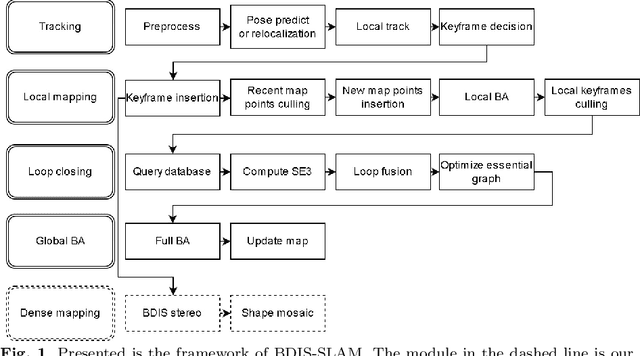
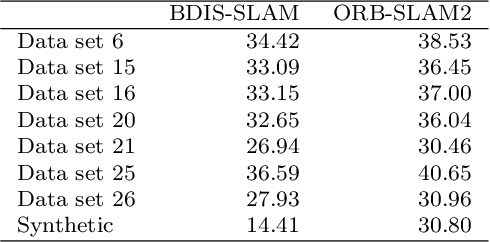
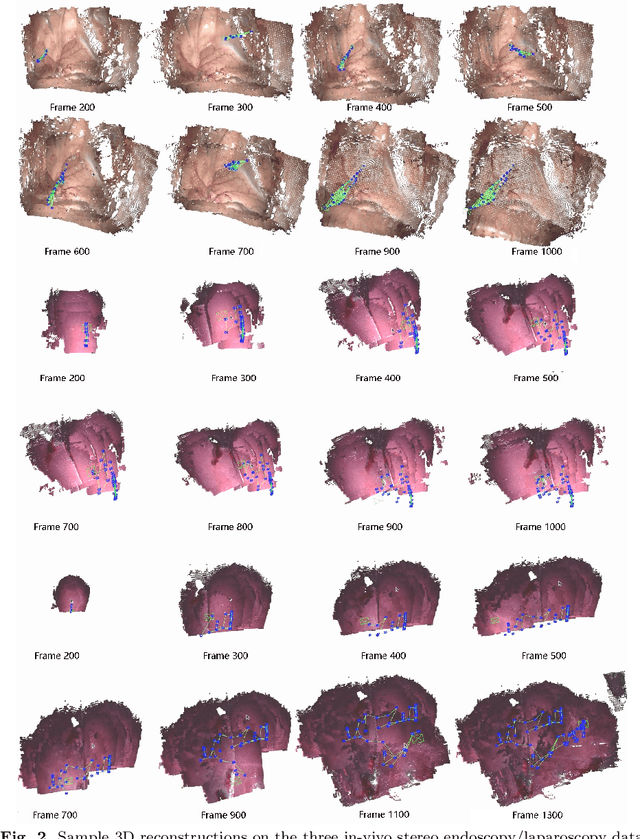

Purpose: Common dense stereo Simultaneous Localization and Mapping (SLAM) approaches in Minimally Invasive Surgery (MIS) require high-end parallel computational resources for real-time implementation. Yet, it is not always feasible since the computational resources should be allocated to other tasks like segmentation, detection, and tracking. To solve the problem of limited parallel computational power, this research aims at a lightweight dense stereo SLAM system that works on a single-core CPU and achieves real-time performance (more than 30 Hz in typical scenarios). Methods: A new dense stereo mapping module is integrated with the ORB-SLAM2 system and named BDIS-SLAM. Our new dense stereo mapping module includes stereo matching and 3D dense depth mosaic methods. Stereo matching is achieved with the recently proposed CPU-level real-time matching algorithm Bayesian Dense Inverse Searching (BDIS). A BDIS-based shape recovery and a depth mosaic strategy are integrated as a new thread and coupled with the backbone ORB-SLAM2 system for real-time stereo shape recovery. Results: Experiments on in-vivo data sets show that BDIS-SLAM runs at over 30 Hz speed on modern single-core CPU in typical endoscopy/colonoscopy scenarios. BDIS-SLAM only consumes around an additional 12% time compared with the backbone ORB-SLAM2. Although our lightweight BDIS-SLAM simplifies the process by ignoring deformation and fusion procedures, it can provide a usable dense mapping for modern MIS on computationally constrained devices. Conclusion: The proposed BDIS-SLAM is a lightweight stereo dense SLAM system for MIS. It achieves 30 Hz on a modern single-core CPU in typical endoscopy/colonoscopy scenarios (image size around 640*480). BDIS-SLAM provides a low-cost solution for dense mapping in MIS and has the potential to be applied in surgical robots and AR systems.
Toward Semantic Scene Understanding for Fine-Grained 3D Modeling of Plants
Dec 28, 2023Agricultural robotics is an active research area due to global population growth and expectations of food and labor shortages. Robots can potentially help with tasks such as pruning, harvesting, phenotyping, and plant modeling. However, agricultural automation is hampered by the difficulty in creating high resolution 3D semantic maps in the field that would allow for safe manipulation and navigation. In this paper, we build toward solutions for this issue and showcase how the use of semantics and environmental priors can help in constructing accurate 3D maps for the target application of sorghum. Specifically, we 1) use sorghum seeds as semantic landmarks to build a visual Simultaneous Localization and Mapping (SLAM) system that enables us to map 78\\% of a sorghum range on average, compared to 38% with ORB-SLAM2; and 2) use seeds as semantic features to improve 3D reconstruction of a full sorghum panicle from images taken by a robotic in-hand camera.