 Add to Chrome
 Add to Firefox
 Add to Edge
Interference Cancellation
Papers and Code
Maneuverable-Jamming-Aided Secure Communication and Sensing in A2G-ISAC Systems
Feb 04, 2026
In this paper, we propose a maneuverablejamming-aided secure communication and sensing (SCS) scheme for an air-to-ground integrated sensing and communication (A2G-ISAC) system, where a dual-functional source UAV and a maneuverable jamming UAV operate collaboratively in a hybrid monostatic-bistatic radar configuration. The maneuverable jamming UAV emits artificial noise to assist the source UAV in detecting multiple ground targets while interfering with an eavesdropper. The effects of residual interference caused by imperfect successive interference cancellation on the received signal-to-interference-plus-noise ratio are considered, which degrades the system performance. To maximize the average secrecy rate (ASR) under transmit power budget, UAV maneuvering constraints, and sensing requirements, the dual-UAV trajectory and beamforming are jointly optimized. Given that secure communication and sensing fundamentally conflict in terms of resource allocation, making it difficult to achieve optimal performance for both simultaneously, we adopt a two-phase design to address this challenge. By dividing the mission into the secure communication (SC) phase and the SCS phase, the A2G-ISAC system can focus on optimizing distinct objectives separately. In the SC phase, a block coordinate descent algorithm employing the trust-region successive convex approximation and semidefinite relaxation iteratively optimizes dual-UAV trajectory and beamforming. For the SCS phase, a weighted distance minimization problem determines the suitable dual-UAV sensing positions by a greedy algorithm, followed by the joint optimization of source beamforming and jamming beamforming. Simulation results demonstrate that the proposed scheme achieves the highest ASR among benchmarks while maintaining robust sensing performance, and confirm the impact of the SIC residual interference on both secure communication and sensing.

Statistical Properties of Target Localization Using Passive Radar Systems
Jan 28, 2026Passive Radar Systems have received tremendous attention during the past few decades, due to their low cost and ability to remain covert during operation. Such systems do not transmit any energy themselves, but rely on a so-called Illuminator-of-Opportunity (IO), for example a commercial TV station. A network of Receiving Nodes (RN) receive the direct signal as well as reflections from possible targets. The RNs transmit information to a Central Node (CN), that performs the final target detection, localization and tracking. A large number of methods and algorithms for target detection and localization have been proposed in the literature. In the present contribution, the focus is on the seminal Extended Cancelation Algorithm (ECA), in which each RN estimates target parameters after canceling interference from the direct-path as well as clutter from unwanted stationary objects. This is done by exploiting a separate Reference Channel (RC), which captures the IO signal without interference apart from receiver noise. We derive the statistical properties of the ECA parameter estimates under the assumption of a high Signal-to-Noise Ratio (SNR), and we give a sufficient condition for the SNR in the RC to enable statistically efficient estimates. The theoretical results are corroborated through computer simulations, which show that the theory agrees well with empirical results above a certain SNR threshold. The results can be used to predict the performance of passive radar systems in given scenarios, which is useful for feasibility studies as well as system design.
Robust Design of Reconfigurable Intelligent Surfaces for Parameter Estimation in MTC
Jan 27, 2026This paper introduces a reconfigurable intelligent surface (RIS) to support parameter estimation in machine-type communications (MTC). We focus on a network where single-antenna sensors transmit spatially correlated measurements to a multiple-antenna collector node (CN) via non-orthogonal multiple access. We propose an estimation scheme based on the minimum mean square error (MMSE) criterion. We also integrate successive interference cancelation (SIC) at the receiver to mitigate communication failures in noisy and interference-prone channels under the finite blocklength (FBL) regime. Moreover, recognizing the importance of channel state information (CSI), we explore various methodologies for its acquisition at the CN. We statistically design the RIS configuration and SIC decoding order to minimize estimation error while accounting for channel temporal variations and short packet lengths. To mirror practical systems, we incorporate the detrimental effects of FBL communication and imperfect CSI errors in our analysis. Simulations demonstrate that larger reflecting surfaces lead to smaller MSEs and underscore the importance of selecting an appropriate decoding order for accuracy and ultimate performance.
* This work has been accepted for publication in EURASIP Journal on Wireless Communications and Networking. The final published version is available via Springer Nature Link
Learning Successive Interference Cancellation for Low-Complexity Soft-Output MIMO Detection
Jan 23, 2026Low-complexity multiple-input multiple-output (MIMO) detection remains a key challenge in modern wireless systems, particularly for 5G reduced capability (RedCap) and internet-of-things (IoT) devices. In this context, the growing interest in deploying machine learning on edge devices must be balanced against stringent constraints on computational complexity and memory while supporting high-order modulation. Beyond accurate hard detection, reliable soft information is equally critical, as modern receivers rely on soft-input channel decoding, imposing additional requirements on the detector design. In this work, we propose recurSIC, a lightweight learning-based MIMO detection framework that is structurally inspired by successive interference cancellation (SIC) and incorporates learned processing stages. It generates reliable soft information via multi-path hypothesis tracking with a tunable complexity parameter while requiring only a single forward pass and a minimal parameter count. Numerical results in realistic wireless scenarios show that recurSIC achieves strong hard- and soft-detection performance at very low complexity, making it well suited for edge-constrained MIMO receivers.
Spectral-Efficient LoRa with Low Complexity Detection
Jan 06, 2026In this paper, we propose a spectral-efficient LoRa (SE-LoRa) modulation scheme with a low complexity successive interference cancellation (SIC)-based detector. The proposed communication scheme significantly improves the spectral efficiency of LoRa modulation, while achieving an acceptable error performance compared to conventional LoRa modulation, especially in higher spreading factor (SF) settings. We derive the joint maximum likelihood (ML) detection rule for the SE-LoRa transmission scheme that turns out to be of high computational complexity. To overcome this issue, and by exploiting the frequency-domain characteristics of the dechirped SE-LoRa signal, we propose a low complexity SIC-based detector with a computation complexity at the order of conventional LoRa detection. By computer simulations, we show that the proposed SE-LoRa with low complexity SIC-based detector can improve the spectral efficiency of LoRa modulation up to $445.45\%$, $1011.11\%$, and $1071.88\%$ for SF values of $7$, $9$, and $11$, respectively, while maintaining the error performance within less than $3$ dB of conventional LoRa at symbol error rate (SER) of $10^{-3}$ in Rician channel conditions.
Nearest Kronecker Product Decomposition Based Subband Adaptive Filter: Algorithms and Applications
Jan 15, 2026Recently, the nearest Kronecker product (NKP) decomposition-based normalized least mean square (NLMS-NKP) algorithm has demonstrated superior convergence performance compared to the conventional NLMS algorithm. However, its convergence rate exhibits significant degradation when processing highly correlated input signals. To address this problem, we propose a type-I NKP-based normalized subband adaptive filter (NSAF) algorithm, namely NSAF-NKP-I. Nevertheless, this algorithm incurs substantially higher computational overhead than the NLMS-NKP algorithm. Remarkably, our enhanced type-II NKP-based NSAF (NSAF-NKP-II) algorithm achieves equivalent convergence performance while substantially reducing computational complexity. Furthermore, to enhance robustness against impulsive noise interference, we develop two robust variants: the maximum correntropy criterion-based robust NSAF-NKP (RNSAF-NKP-MCC) and logarithmic criterion-based robust NSAF-NKP (RNSAF-NKP-LC) algorithms. Additionally, detailed analyses of computational complexity, step-size range, and theoretical steady-state performance are provided for theproposed algorithms. To enhance the practicability of the NSAF-NKP-II algorithm in complex nonlinear environments, we further devise two nonlinear implementations: the trigonometric functional link network-based NKP-NSAF (TFLN-NSAF-NKP) and Volterra series expansion-based NKP-NSAF (Volterra-NKP-NSAF) algorithms. In active noise control (ANC) systems, we further propose the filtered-x NSAF-NKP-II (NKP-FxNSAF) algorithm. Simulation experiments in echo cancellation, sparse system identification, nonlinear processing, and ANC scenarios are conducted to validate the superiority of the proposed algorithms over existing state-of-the-art counterparts.
* 16 Pages, 19 figures,published to IEEE TASLP
Low-complexity spectral shaping method for OFDM signals with dynamically adaptive emission mask
Dec 30, 2025Orthogonal frequency division multiplexing (OFDM) signals with rectangular pulses exhibit low spectral confinement. Shaping their power spectral density (PSD) is imperative in the increasingly overcrowded spectrum to benefit from the cognitive radio (CR) paradigm. However, since the available spectrum is non-contiguous and its occupancy changes with time, the spectral shaping solution has to be dynamically adapted. This work proposes a framework that allows using a reduced set of preoptimized pulses to shape the spectrum of OFDM signals, irrespective of its spectral width and location, by means of simple transformations. The employed pulses combine active interference cancellation (AIC) and adaptive symbol transition (AST) terms in a transparent way to the receiver. They can be easily adapted online by the communication device to changes in the location or width of the transmission band, which contrasts with existing methods of the same type that require solving NP-hard optimization problems.
* 12 pages
Fully Asynchronous Unsourced Random Access over Fading Channels
Dec 22, 2025We examine unsourced random access in a fully asynchronous setup, where active users transmit their data without restriction on the start time over a fading channel. In the proposed scheme, the transmitted signal consists of a pilot sequence and a polar codeword, with the polar codeword distributed across the data part of the packet in an on-off pattern. The receiver uses a double sliding-window decoder, where the inner window employs iterative decoding with joint timing and pilot detection, channel estimation, single-user decoding, and successive interference cancellation to recover the message bits, while the outer window enhances interference cancellation. The numerical results indicate that the proposed scheme exhibits only a slight performance loss compared to the synchronous benchmark while being more applicable in practice.
Neural Network-Assisted RIS Weight Optimization for Spatial Nulling in Distorted Reflector Antenna Systems
Dec 24, 2025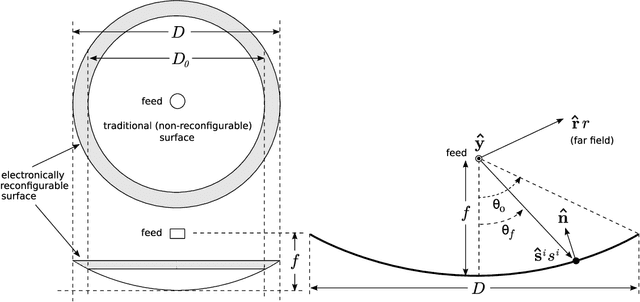
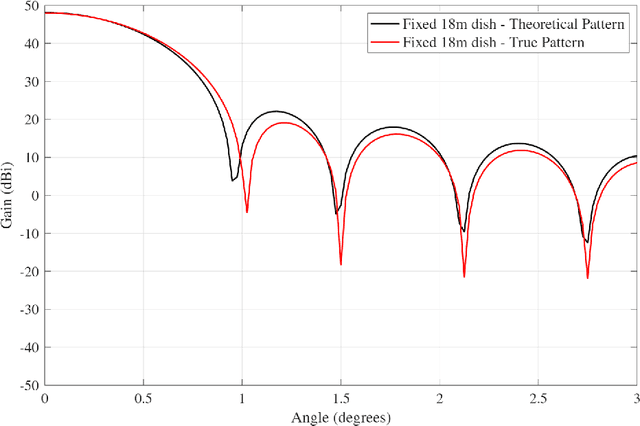
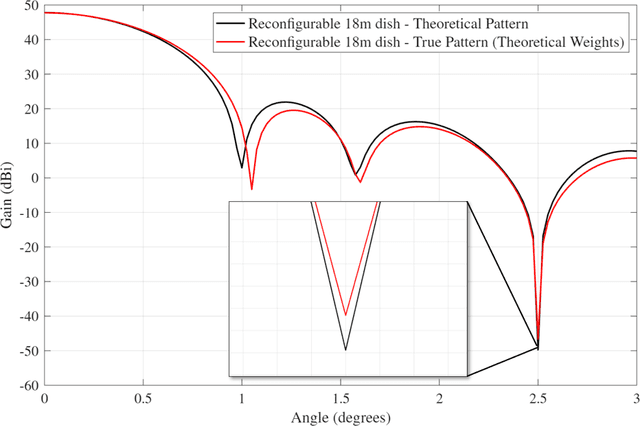
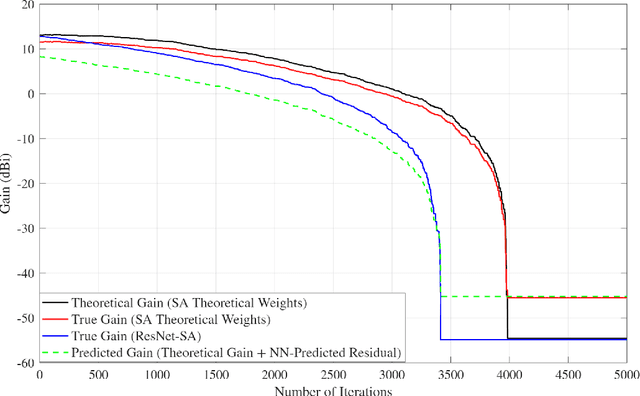
Reconfigurable intelligent surfaces (RIS) have recently been proposed as an effective means for spatial interference suppression in large reflector antenna systems. Existing RIS weight optimization algorithms typically rely on accurate theoretical radiation models. However, in practice, distortions on the reflector antenna may cause mismatches between the theoretical and true antenna patterns, leading to degraded interference cancellation performance when these weights are directly applied. In this report, a residual learning network-assisted simulated annealing (ResNet-SA) framework is proposed to address this mismatch without requiring explicit knowledge of the distorted electric field. By learning the residual difference between the theoretical and true antenna gains, a neural network (NN) is embedded in a heuristic optimization algorithm to find the optimal weight vector. Simulation results demonstrate that the proposed approach achieves improved null depth in the true radiation pattern as compared with conventional methods that optimize weights based solely on the theoretical model, validating the effectiveness of the ResNet-SA algorithm for reflector antenna systems with approximate knowledge of the pattern.
Pinching Antenna-aided NOMA Systems with Internal Eavesdropping
Dec 25, 2025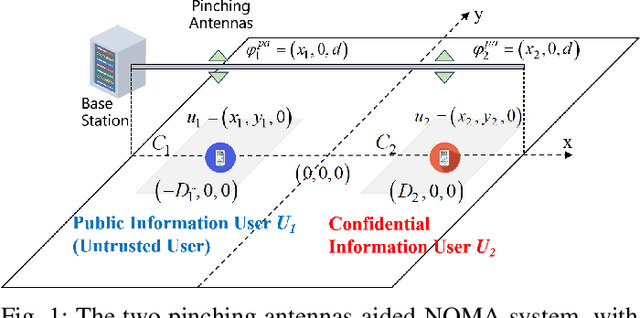
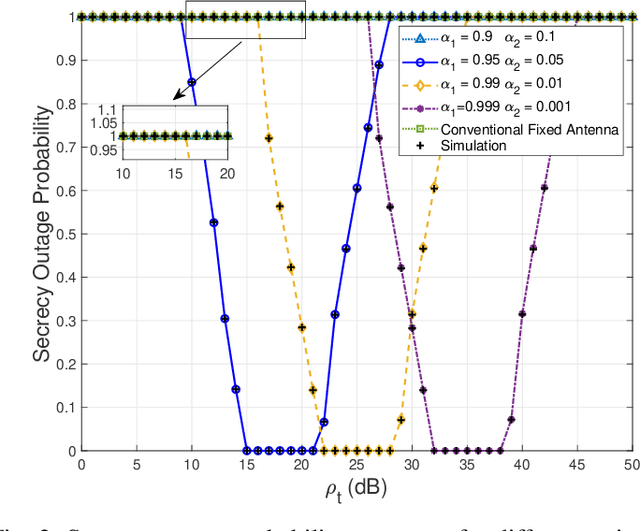
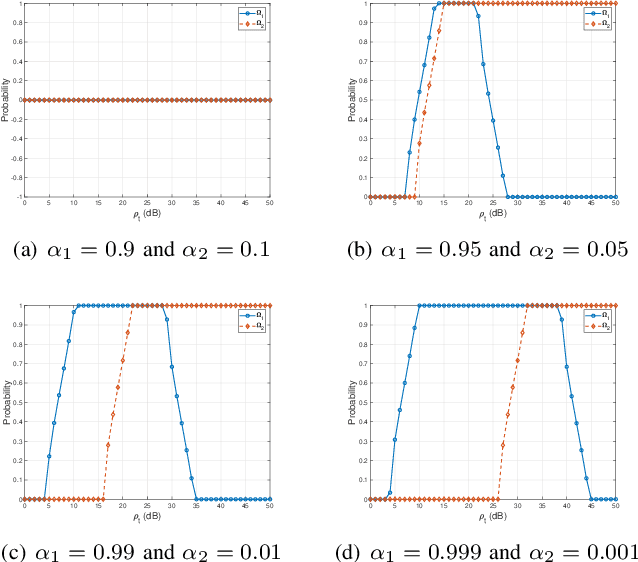
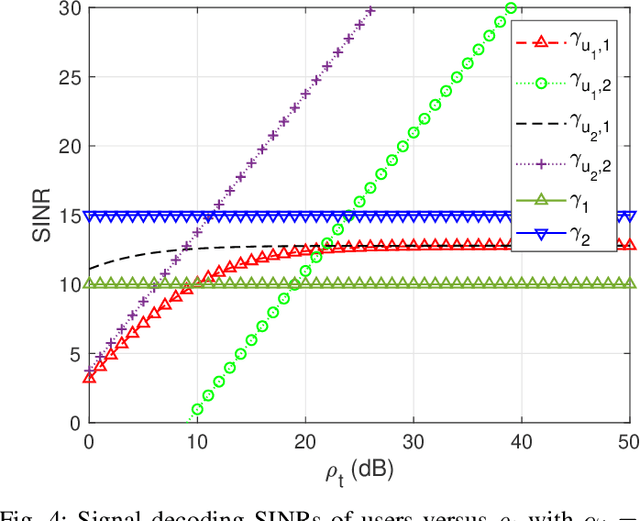
As a novel member of flexible antennas, the pinching antenna (PA) is realized by integrating small dielectric particles on a waveguide, offering unique regulatory capabilities on constructing line-of-sight (LoS) links and enhancing transceiver channels, reducing path loss and signal blockage. Meanwhile, non-orthogonal multiple access (NOMA) has become a potential technology of next-generation communications due to its remarkable advantages in spectrum efficiency and user access capability. The integration of PA and NOMA enables synergistic leveraging of PA's channel regulation capability and NOMA's multi-user multiplexing advantage, forming a complementary technical framework to deliver high-performance communication solutions. However, the use of successive interference cancellation (SIC) introduces significant security risks to power-domain NOMA systems when internal eavesdropping is present. To this end, this paper investigates the physical layer security of a PA-aided NOMA system where a nearby user is considered as an internal eavesdropper. We enhance the security of the NOMA system through optimizing the radiated power of PAs and analyze the secrecy performance by deriving the closed-form expressions for the secrecy outage probability (SOP). Furthermore, we extend the characterization of PA flexibility beyond deployment and scale adjustment to include flexible regulation of PA coupling length. Based on two conventional PA power models, i.e., the equal power model and the proportional power model, we propose a flexible power strategy to achieve secure transmission. The results highlight the potential of the PA-aided NOMA system in mitigating internal eavesdropping risks, and provide an effective strategy for optimizing power allocation and cell range of user activity.