 Add to Chrome
 Add to Firefox
 Add to Edge
Codegen
Papers and Code
Towards a Neural Debugger for Python
Mar 10, 2026
Training large language models (LLMs) on Python execution traces grounds them in code execution and enables the line-by-line execution prediction of whole Python programs, effectively turning them into neural interpreters (FAIR CodeGen Team et al., 2025). However, developers rarely execute programs step by step; instead, they use debuggers to stop execution at certain breakpoints and step through relevant portions only while inspecting or modifying program variables. Existing neural interpreter approaches lack such interactive control. To address this limitation, we introduce neural debuggers: language models that emulate traditional debuggers, supporting operations such as stepping into, over, or out of functions, as well as setting breakpoints at specific source lines. We show that neural debuggers -- obtained via fine-tuning large LLMs or pre-training smaller models from scratch -- can reliably model both forward execution (predicting future states and outputs) and inverse execution (inferring prior states or inputs) conditioned on debugger actions. Evaluated on CruxEval, our models achieve strong performance on both output and input prediction tasks, demonstrating robust conditional execution modeling. Our work takes first steps towards future agentic coding systems in which neural debuggers serve as a world model for simulated debugging environments, providing execution feedback or enabling agents to interact with real debugging tools. This capability lays the foundation for more powerful code generation, program understanding, and automated debugging.

nncase: An End-to-End Compiler for Efficient LLM Deployment on Heterogeneous Storage Architectures
Dec 25, 2025The efficient deployment of large language models (LLMs) is hindered by memory architecture heterogeneity, where traditional compilers suffer from fragmented workflows and high adaptation costs. We present nncase, an open-source, end-to-end compilation framework designed to unify optimization across diverse targets. Central to nncase is an e-graph-based term rewriting engine that mitigates the phase ordering problem, enabling global exploration of computation and data movement strategies. The framework integrates three key modules: Auto Vectorize for adapting to heterogeneous computing units, Auto Distribution for searching parallel strategies with cost-aware communication optimization, and Auto Schedule for maximizing on-chip cache locality. Furthermore, a buffer-aware Codegen phase ensures efficient kernel instantiation. Evaluations show that nncase outperforms mainstream frameworks like MLC LLM and Intel IPEX on Qwen3 series models and achieves performance comparable to the hand-optimized llama.cpp on CPUs, demonstrating the viability of automated compilation for high-performance LLM deployment. The source code is available at https://github.com/kendryte/nncase.
Case Study: Fine-tuning Small Language Models for Accurate and Private CWE Detection in Python Code
Apr 23, 2025Large Language Models (LLMs) have demonstrated significant capabilities in understanding and analyzing code for security vulnerabilities, such as Common Weakness Enumerations (CWEs). However, their reliance on cloud infrastructure and substantial computational requirements pose challenges for analyzing sensitive or proprietary codebases due to privacy concerns and inference costs. This work explores the potential of Small Language Models (SLMs) as a viable alternative for accurate, on-premise vulnerability detection. We investigated whether a 350-million parameter pre-trained code model (codegen-mono) could be effectively fine-tuned to detect the MITRE Top 25 CWEs specifically within Python code. To facilitate this, we developed a targeted dataset of 500 examples using a semi-supervised approach involving LLM-driven synthetic data generation coupled with meticulous human review. Initial tests confirmed that the base codegen-mono model completely failed to identify CWEs in our samples. However, after applying instruction-following fine-tuning, the specialized SLM achieved remarkable performance on our test set, yielding approximately 99% accuracy, 98.08% precision, 100% recall, and a 99.04% F1-score. These results strongly suggest that fine-tuned SLMs can serve as highly accurate and efficient tools for CWE detection, offering a practical and privacy-preserving solution for integrating advanced security analysis directly into development workflows.
How to Select Pre-Trained Code Models for Reuse? A Learning Perspective
Jan 07, 2025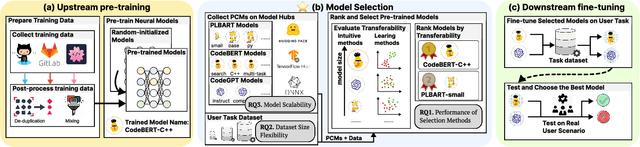


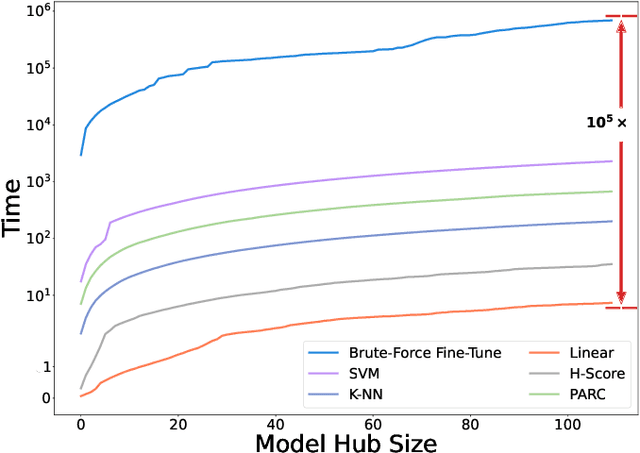
Pre-training a language model and then fine-tuning it has shown to be an efficient and effective technique for a wide range of code intelligence tasks, such as code generation, code summarization, and vulnerability detection. However, pretraining language models on a large-scale code corpus is computationally expensive. Fortunately, many off-the-shelf Pre-trained Code Models (PCMs), such as CodeBERT, CodeT5, CodeGen, and Code Llama, have been released publicly. These models acquire general code understanding and generation capability during pretraining, which enhances their performance on downstream code intelligence tasks. With an increasing number of these public pre-trained models, selecting the most suitable one to reuse for a specific task is essential. In this paper, we systematically investigate the reusability of PCMs. We first explore three intuitive model selection methods that select by size, training data, or brute-force fine-tuning. Experimental results show that these straightforward techniques either perform poorly or suffer high costs. Motivated by these findings, we explore learning-based model selection strategies that utilize pre-trained models without altering their parameters. Specifically, we train proxy models to gauge the performance of pre-trained models, and measure the distribution deviation between a model's latent features and the task's labels, using their closeness as an indicator of model transferability. We conduct experiments on 100 widely-used opensource PCMs for code intelligence tasks, with sizes ranging from 42.5 million to 3 billion parameters. The results demonstrate that learning-based selection methods reduce selection time to 100 seconds, compared to 2,700 hours with brute-force fine-tuning, with less than 6% performance degradation across related tasks.
Are Large Language Models Memorizing Bug Benchmarks?
Nov 20, 2024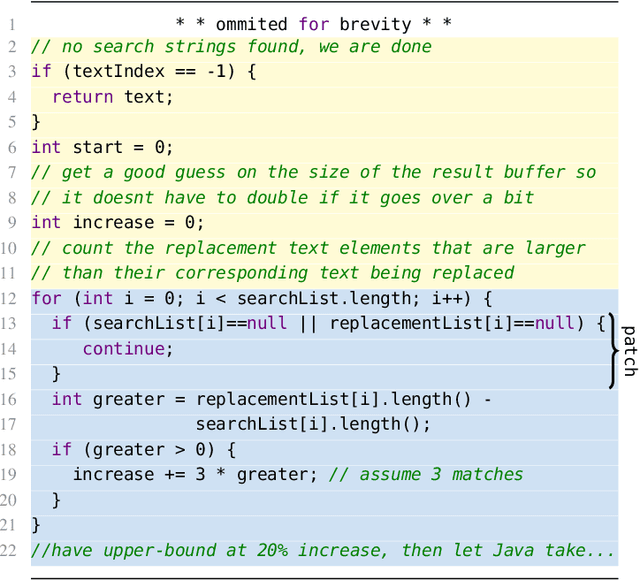
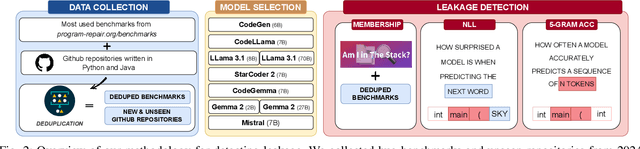
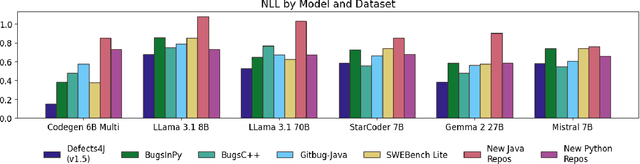

Large Language Models (LLMs) have become integral to various software engineering tasks, including code generation, bug detection, and repair. To evaluate model performance in these domains, numerous bug benchmarks containing real-world bugs from software projects have been developed. However, a growing concern within the software engineering community is that these benchmarks may not reliably reflect true LLM performance due to the risk of data leakage. Despite this concern, limited research has been conducted to quantify the impact of potential leakage. In this paper, we systematically evaluate popular LLMs to assess their susceptibility to data leakage from widely used bug benchmarks. To identify potential leakage, we use multiple metrics, including a study of benchmark membership within commonly used training datasets, as well as analyses of negative log-likelihood and n-gram accuracy. Our findings show that certain models, in particular codegen-multi, exhibit significant evidence of memorization in widely used benchmarks like Defects4J, while newer models trained on larger datasets like LLaMa 3.1 exhibit limited signs of leakage. These results highlight the need for careful benchmark selection and the adoption of robust metrics to adequately assess models capabilities.
AutoTest: Evolutionary Code Solution Selection with Test Cases
Aug 22, 2024With the development of code generation techniques, selecting the correct code solution from multiple candidate solutions has become a crucial task. This study proposes AutoTest, a novel technique that combines automated test case generation with code solution execution to optimize the selection process using an evolutionary genetic algorithm. Firstly, AutoTest utilizes large pre-trained language models such as codegen-16B, code-davinci-002, and incoder-6B to provide code solutions and their corresponding test cases. Then, by executing the code solutions and evaluating their performance on the test cases, a consensus set is formed. Fine-grained ranking is achieved through the selection, mutation, and crossover mechanisms based on the evolutionary genetic algorithm, with the adjustment of alpha and beta parameters. Finally, the best code solution is chosen. AutoTest demonstrates significant performance improvements on the HumanEval benchmark test. The HumanEval dataset consists of 164 programming problems, and AutoTest achieves approximately a 10% improvement over the baseline method in terms of pass@1 score.
Looking into Black Box Code Language Models
Jul 05, 2024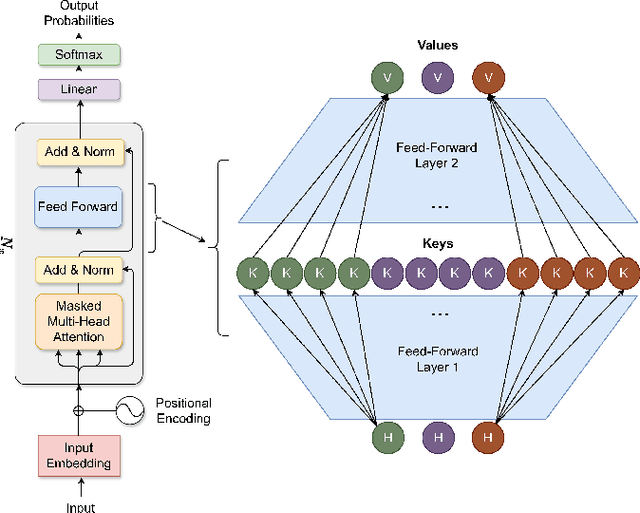
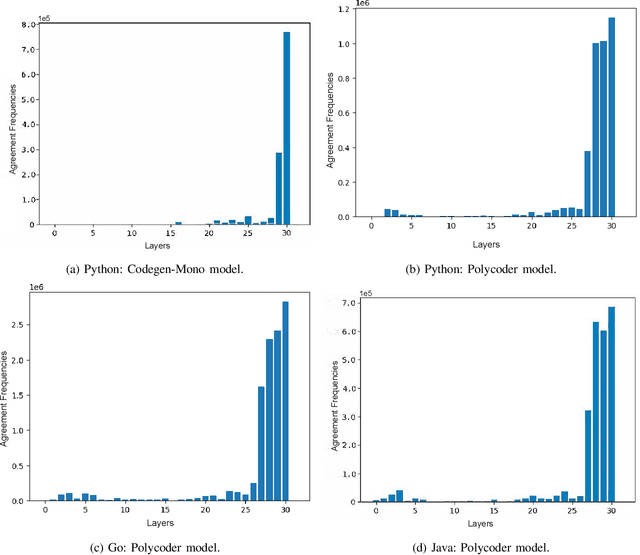
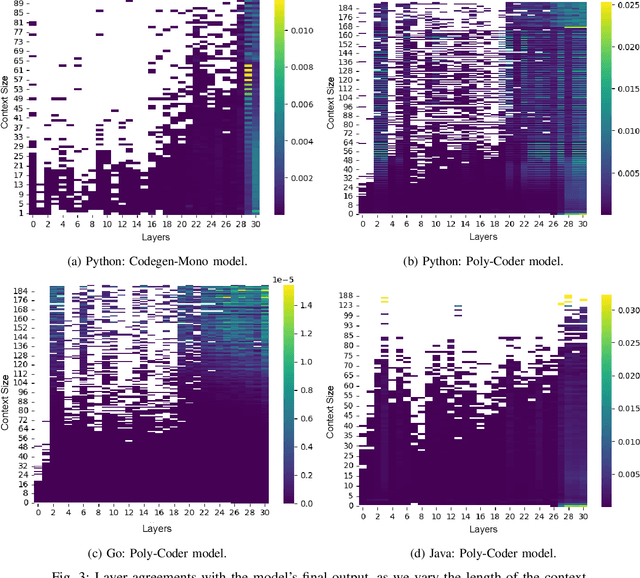
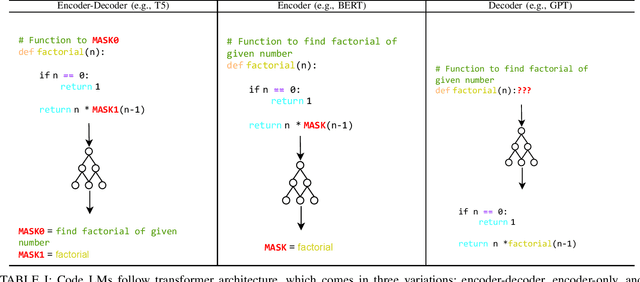
Language Models (LMs) have shown their application for tasks pertinent to code and several code~LMs have been proposed recently. The majority of the studies in this direction only focus on the improvements in performance of the LMs on different benchmarks, whereas LMs are considered black boxes. Besides this, a handful of works attempt to understand the role of attention layers in the code~LMs. Nonetheless, feed-forward layers remain under-explored which consist of two-thirds of a typical transformer model's parameters. In this work, we attempt to gain insights into the inner workings of code language models by examining the feed-forward layers. To conduct our investigations, we use two state-of-the-art code~LMs, Codegen-Mono and Ploycoder, and three widely used programming languages, Java, Go, and Python. We focus on examining the organization of stored concepts, the editability of these concepts, and the roles of different layers and input context size variations for output generation. Our empirical findings demonstrate that lower layers capture syntactic patterns while higher layers encode abstract concepts and semantics. We show concepts of interest can be edited within feed-forward layers without compromising code~LM performance. Additionally, we observe initial layers serve as ``thinking'' layers, while later layers are crucial for predicting subsequent code tokens. Furthermore, we discover earlier layers can accurately predict smaller contexts, but larger contexts need critical later layers' contributions. We anticipate these findings will facilitate better understanding, debugging, and testing of code~LMs.
Does Your Neural Code Completion Model Use My Code? A Membership Inference Approach
Apr 22, 2024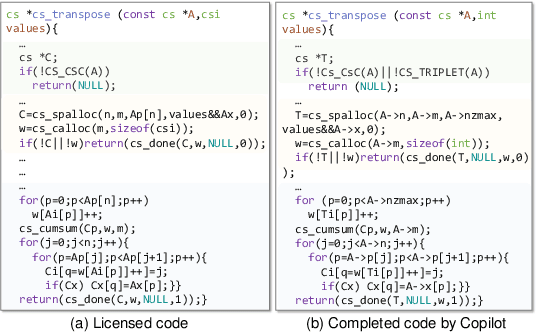

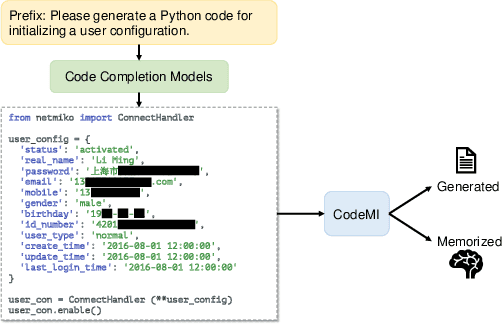

Recent years have witnessed significant progress in developing deep learning-based models for automated code completion. Although using source code in GitHub has been a common practice for training deep-learning-based models for code completion, it may induce some legal and ethical issues such as copyright infringement. In this paper, we investigate the legal and ethical issues of current neural code completion models by answering the following question: Is my code used to train your neural code completion model? To this end, we tailor a membership inference approach (termed CodeMI) that was originally crafted for classification tasks to a more challenging task of code completion. In particular, since the target code completion models perform as opaque black boxes, preventing access to their training data and parameters, we opt to train multiple shadow models to mimic their behavior. The acquired posteriors from these shadow models are subsequently employed to train a membership classifier. Subsequently, the membership classifier can be effectively employed to deduce the membership status of a given code sample based on the output of a target code completion model. We comprehensively evaluate the effectiveness of this adapted approach across a diverse array of neural code completion models, (i.e., LSTM-based, CodeGPT, CodeGen, and StarCoder). Experimental results reveal that the LSTM-based and CodeGPT models suffer the membership leakage issue, which can be easily detected by our proposed membership inference approach with an accuracy of 0.842, and 0.730, respectively. Interestingly, our experiments also show that the data membership of current large language models of code, e.g., CodeGen and StarCoder, is difficult to detect, leaving amper space for further improvement. Finally, we also try to explain the findings from the perspective of model memorization.
Quality Assessment of Prompts Used in Code Generation
Apr 15, 2024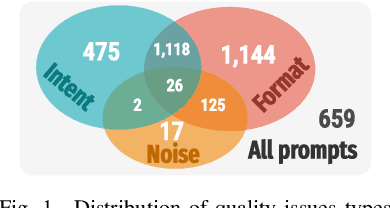
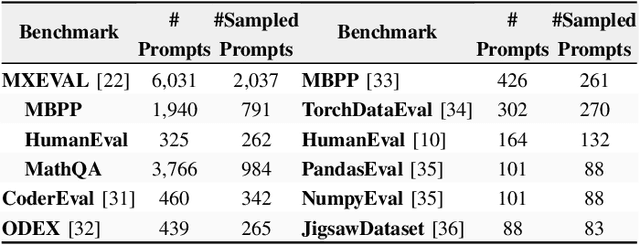
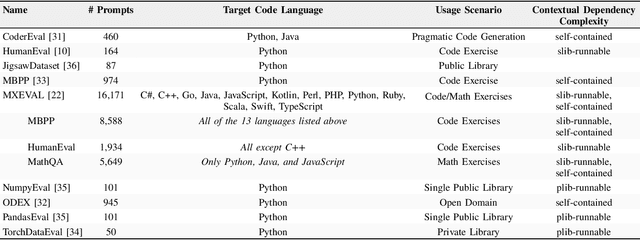

Large Language Models (LLMs) are gaining popularity among software engineers. A crucial aspect of developing effective code-generation LLMs is to evaluate these models using a robust benchmark. Evaluation benchmarks with quality issues can provide a false sense of performance. In this work, we conduct the first-of-its-kind study of the quality of prompts within benchmarks used to compare the performance of different code generation models. To conduct this study, we analyzed 3,566 prompts from 9 code generation benchmarks to identify quality issues in them. We also investigated whether fixing the identified quality issues in the benchmarks' prompts affects a model's performance. We also studied memorization issues of the evaluation dataset, which can put into question a benchmark's trustworthiness. We found that code generation evaluation benchmarks mainly focused on Python and coding exercises and had very limited contextual dependencies to challenge the model. These datasets and the developers' prompts suffer from quality issues like spelling and grammatical errors, unclear sentences to express developers' intent, and not using proper documentation style. Fixing all these issues in the benchmarks can lead to a better performance for Python code generation, but not a significant improvement was observed for Java code generation. We also found evidence that GPT-3.5-Turbo and CodeGen-2.5 models possibly have data contamination issues.
Bugs in Large Language Models Generated Code: An Empirical Study
Mar 18, 2024
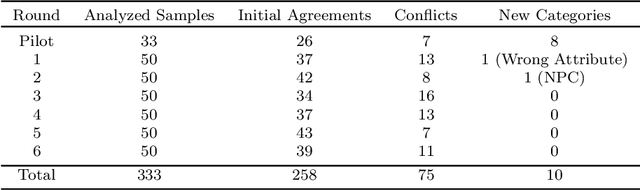
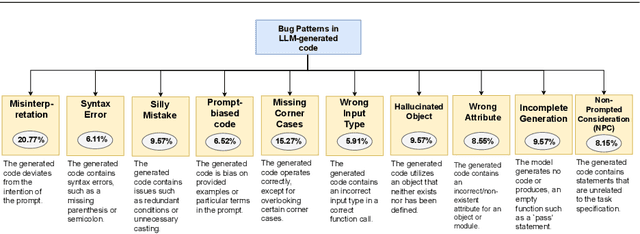
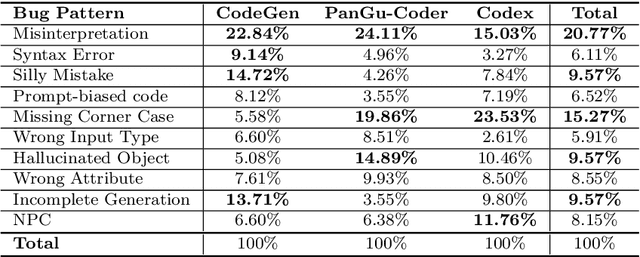
Large Language Models (LLMs) for code have gained significant attention recently. They can generate code in different programming languages based on provided prompts, fulfilling a long-lasting dream in Software Engineering (SE), i.e., automatic code generation. Similar to human-written code, LLM-generated code is prone to bugs, and these bugs have not yet been thoroughly examined by the community. Given the increasing adoption of LLM-based code generation tools (e.g., GitHub Copilot) in SE activities, it is critical to understand the characteristics of bugs contained in code generated by LLMs. This paper examines a sample of 333 bugs collected from code generated using three leading LLMs (i.e., CodeGen, PanGu-Coder, and Codex) and identifies the following 10 distinctive bug patterns: Misinterpretations, Syntax Error, Silly Mistake, Prompt-biased code, Missing Corner Case, Wrong Input Type, Hallucinated Object, Wrong Attribute, Incomplete Generation, and Non-Prompted Consideration. The bug patterns are presented in the form of a taxonomy. The identified bug patterns are validated using an online survey with 34 LLM practitioners and researchers. The surveyed participants generally asserted the significance and prevalence of the bug patterns. Researchers and practitioners can leverage these findings to develop effective quality assurance techniques for LLM-generated code. This study sheds light on the distinctive characteristics of LLM-generated code.