 Add to Chrome
 Add to Firefox
 Add to Edge
Toward an Agentic Infused Software Ecosystem
Feb 24, 2026
Fully leveraging the capabilities of AI agents in software development requires a rethinking of the software ecosystem itself. To this end, this paper outlines the creation of an Agentic Infused Software Ecosystem (AISE), that rests on three pillars. The first, of course, is the AI agents themselves, which in the past 5 years have moved from simple code completion and toward sophisticated independent development tasks, a trend which will only continue. The second pillar is the programming language and APIs (or tools) that these agents use to accomplish tasks, and increasingly, serve as the communication substrate that humans and AI agents interact and collaborate through. The final pillar is the runtime environment and ecosystem that agents operate within, and which provide the capabilities that programmatic agents use to interface with (and effect actions in) the external world. To realize the vision of AISE, all three pillars must be advanced in a holistic manner, and critically, in a manner that is synergistic for AI agents as they exist today, those that will exist in the future, and for the human developers that work alongside them.

Looking into Black Box Code Language Models
Jul 05, 2024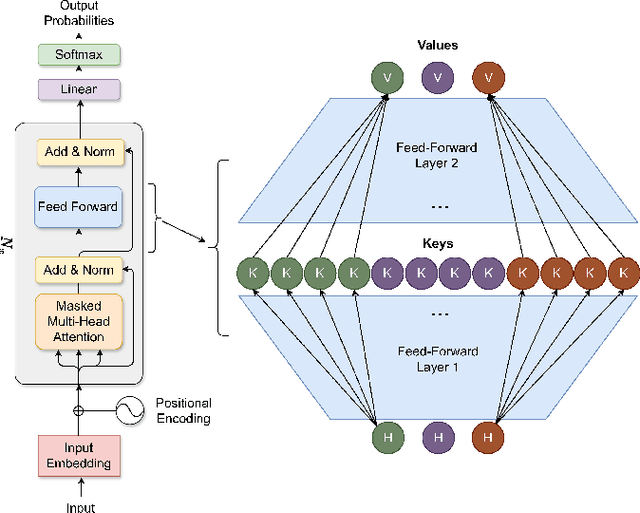
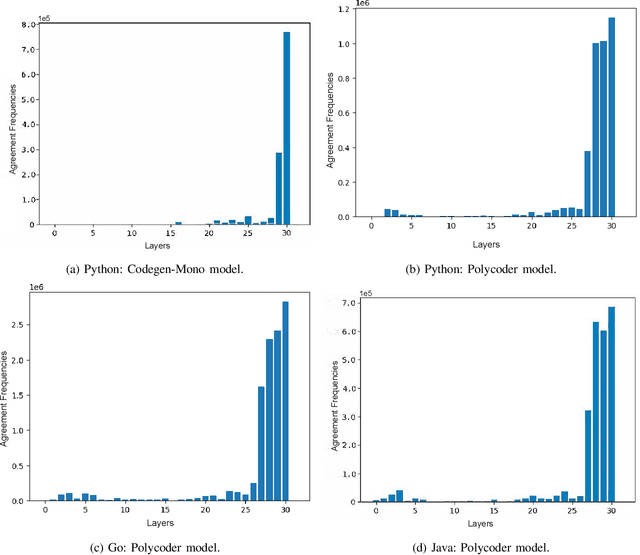
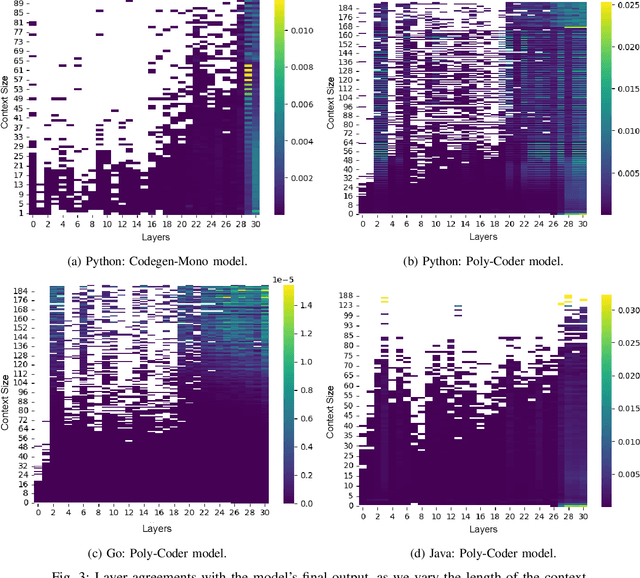
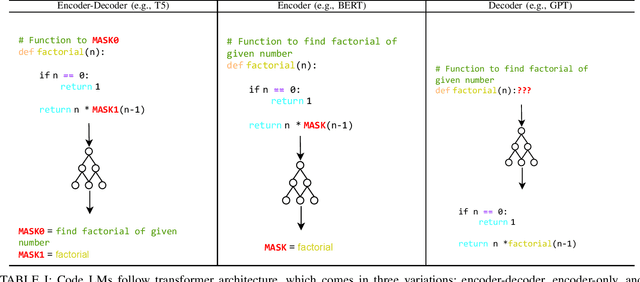
Language Models (LMs) have shown their application for tasks pertinent to code and several code~LMs have been proposed recently. The majority of the studies in this direction only focus on the improvements in performance of the LMs on different benchmarks, whereas LMs are considered black boxes. Besides this, a handful of works attempt to understand the role of attention layers in the code~LMs. Nonetheless, feed-forward layers remain under-explored which consist of two-thirds of a typical transformer model's parameters. In this work, we attempt to gain insights into the inner workings of code language models by examining the feed-forward layers. To conduct our investigations, we use two state-of-the-art code~LMs, Codegen-Mono and Ploycoder, and three widely used programming languages, Java, Go, and Python. We focus on examining the organization of stored concepts, the editability of these concepts, and the roles of different layers and input context size variations for output generation. Our empirical findings demonstrate that lower layers capture syntactic patterns while higher layers encode abstract concepts and semantics. We show concepts of interest can be edited within feed-forward layers without compromising code~LM performance. Additionally, we observe initial layers serve as ``thinking'' layers, while later layers are crucial for predicting subsequent code tokens. Furthermore, we discover earlier layers can accurately predict smaller contexts, but larger contexts need critical later layers' contributions. We anticipate these findings will facilitate better understanding, debugging, and testing of code~LMs.