 Add to Chrome
 Add to Firefox
 Add to Edge
Atrial Fibrillation Detection
Papers and Code
ECG-RAMBA: Zero-Shot ECG Generalization by Morphology-Rhythm Disentanglement and Long-Range Modeling
Dec 29, 2025
Deep learning has achieved strong performance for electrocardiogram (ECG) classification within individual datasets, yet dependable generalization across heterogeneous acquisition settings remains a major obstacle to clinical deployment and longitudinal monitoring. A key limitation of many model architectures is the implicit entanglement of morphological waveform patterns and rhythm dynamics, which can promote shortcut learning and amplify sensitivity to distribution shifts. We propose ECG-RAMBA, a framework that separates morphology and rhythm and then re-integrates them through context-aware fusion. ECG-RAMBA combines: (i) deterministic morphological features extracted by MiniRocket, (ii) global rhythm descriptors computed from heart-rate variability (HRV), and (iii) long-range contextual modeling via a bi-directional Mamba backbone. To improve sensitivity to transient abnormalities under windowed inference, we introduce a numerically stable Power Mean pooling operator ($Q=3$) that emphasizes high-evidence segments while avoiding the brittleness of max pooling and the dilution of averaging. We evaluate under a protocol-faithful setting with subject-level cross-validation, a fixed decision threshold, and no test-time adaptation. On the Chapman--Shaoxing dataset, ECG-RAMBA achieves a macro ROC-AUC $\approx 0.85$. In zero-shot transfer, it attains PR-AUC $=0.708$ for atrial fibrillation detection on the external CPSC-2021 dataset, substantially outperforming a comparable raw-signal Mamba baseline, and shows consistent cross-dataset performance on PTB-XL. Ablation studies indicate that deterministic morphology provides a strong foundation, while explicit rhythm modeling and long-range context are critical drivers of cross-domain robustness.

A Dataset and Benchmarks for Atrial Fibrillation Detection from Electrocardiograms of Intensive Care Unit Patients
Dec 19, 2025Objective: Atrial fibrillation (AF) is the most common cardiac arrhythmia experienced by intensive care unit (ICU) patients and can cause adverse health effects. In this study, we publish a labelled ICU dataset and benchmarks for AF detection. Methods: We compared machine learning models across three data-driven artificial intelligence (AI) approaches: feature-based classifiers, deep learning (DL), and ECG foundation models (FMs). This comparison addresses a critical gap in the literature and aims to pinpoint which AI approach is best for accurate AF detection. Electrocardiograms (ECGs) from a Canadian ICU and the 2021 PhysioNet/Computing in Cardiology Challenge were used to conduct the experiments. Multiple training configurations were tested, ranging from zero-shot inference to transfer learning. Results: On average and across both datasets, ECG FMs performed best, followed by DL, then feature-based classifiers. The model that achieved the top F1 score on our ICU test set was ECG-FM through a transfer learning strategy (F1=0.89). Conclusion: This study demonstrates promising potential for using AI to build an automatic patient monitoring system. Significance: By publishing our labelled ICU dataset (LinkToBeAdded) and performance benchmarks, this work enables the research community to continue advancing the state-of-the-art in AF detection in the ICU.
Interpretable temporal fusion network of multi- and multi-class arrhythmia classification
Nov 19, 2025Clinical decision support systems (CDSSs) have been widely utilized to support the decisions made by cardiologists when detecting and classifying arrhythmia from electrocardiograms. However, forming a CDSS for the arrhythmia classification task is challenging due to the varying lengths of arrhythmias. Although the onset time of arrhythmia varies, previously developed methods have not considered such conditions. Thus, we propose a framework that consists of (i) local and global extraction and (ii) local-global information fusion with attention to enable arrhythmia detection and classification within a constrained input length. The framework's performance was evaluated in terms of 10-class and 4-class arrhythmia detection, focusing on identifying the onset and ending point of arrhythmia episodes and their duration using the MIT-BIH arrhythmia database (MITDB) and the MIT-BIH atrial fibrillation database (AFDB). Duration, episode, and Dice score performances resulted in overall F1-scores of 96.45%, 82.05%, and 96.31% on the MITDB and 97.57%, 98.31%, and 97.45% on the AFDB, respectively. The results demonstrated statistically superior performance compared to those of the benchmark models. To assess the generalization capability of the proposed method, an MITDB-trained model and MIT-BIH malignant ventricular arrhythmia database-trained model were tested AFDB and MITDB, respectively. Superior performance was attained compared with that of a state-of-the-art model. The proposed method effectively captures both local and global information and dynamics without significant information loss. Consequently, arrhythmias can be detected with greater accuracy, and their occurrence times can be precisely determined, enabling the clinical field to develop more accurate treatment plans based on the proposed method.
Spatiotemporal graph neural process for reconstruction, extrapolation, and classification of cardiac trajectories
Sep 16, 2025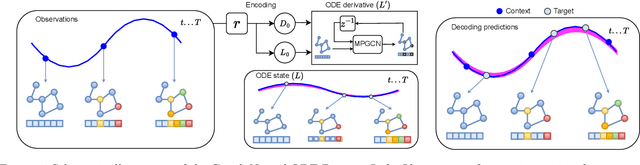
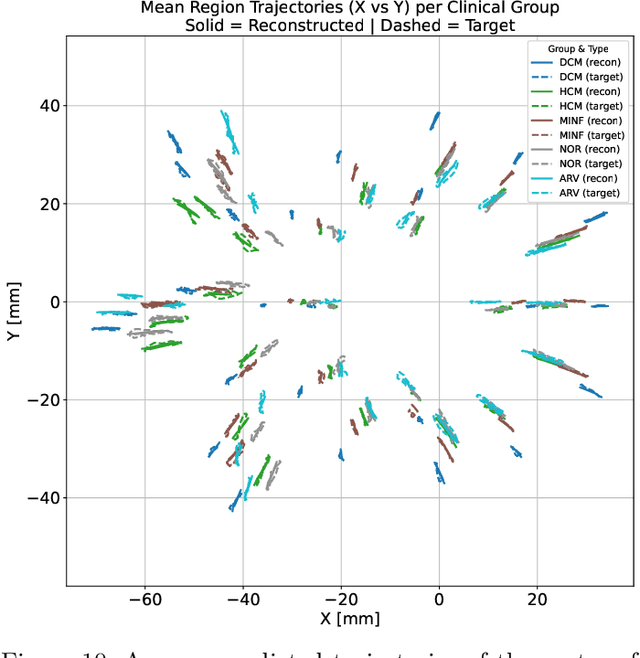
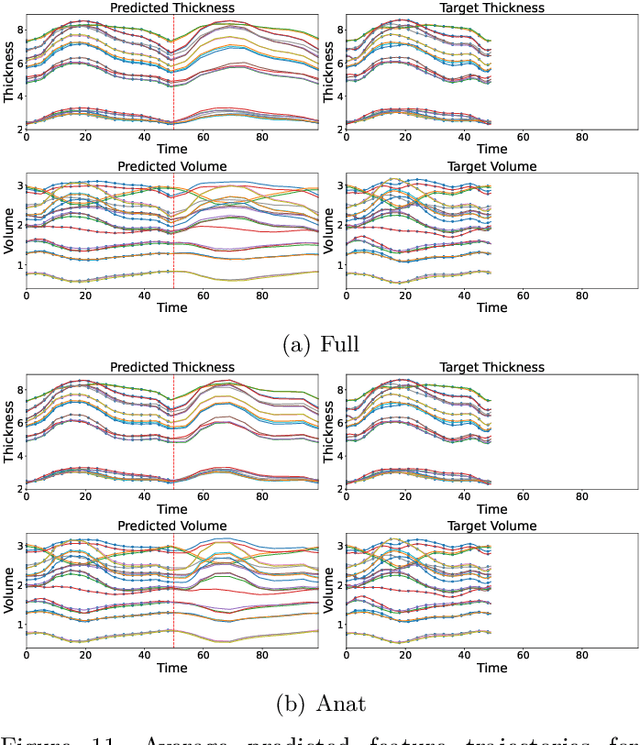
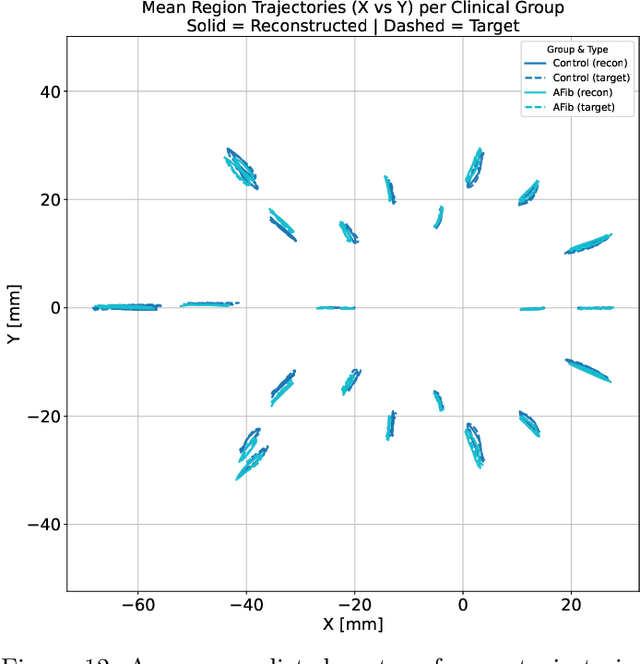
We present a probabilistic framework for modeling structured spatiotemporal dynamics from sparse observations, focusing on cardiac motion. Our approach integrates neural ordinary differential equations (NODEs), graph neural networks (GNNs), and neural processes into a unified model that captures uncertainty, temporal continuity, and anatomical structure. We represent dynamic systems as spatiotemporal multiplex graphs and model their latent trajectories using a GNN-parameterized vector field. Given the sparse context observations at node and edge levels, the model infers a distribution over latent initial states and control variables, enabling both interpolation and extrapolation of trajectories. We validate the method on three synthetic dynamical systems (coupled pendulum, Lorenz attractor, and Kuramoto oscillators) and two real-world cardiac imaging datasets - ACDC (N=150) and UK Biobank (N=526) - demonstrating accurate reconstruction, extrapolation, and disease classification capabilities. The model accurately reconstructs trajectories and extrapolates future cardiac cycles from a single observed cycle. It achieves state-of-the-art results on the ACDC classification task (up to 99% accuracy), and detects atrial fibrillation in UK Biobank subjects with competitive performance (up to 67% accuracy). This work introduces a flexible approach for analyzing cardiac motion and offers a foundation for graph-based learning in structured biomedical spatiotemporal time-series data.
Atrial Fibrillation Prediction Using a Lightweight Temporal Convolutional and Selective State Space Architecture
Aug 26, 2025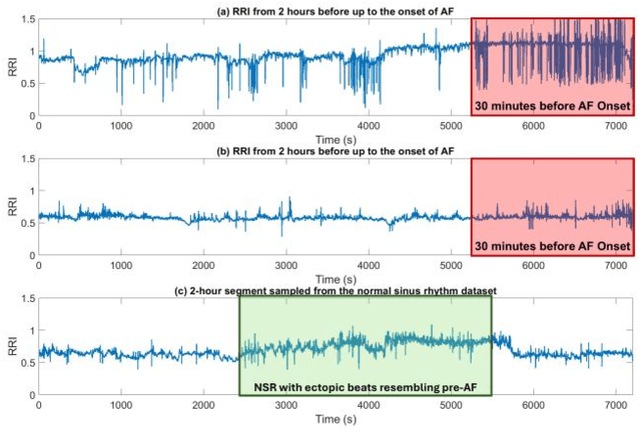
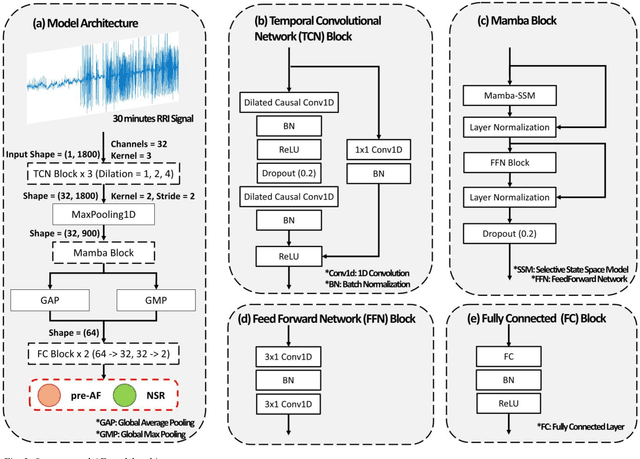
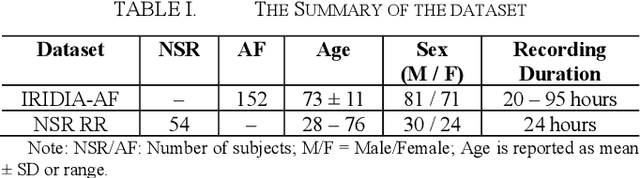
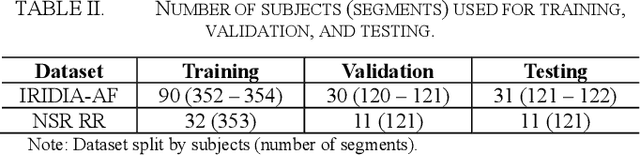
Atrial fibrillation (AF) is the most common arrhythmia, increasing the risk of stroke, heart failure, and other cardiovascular complications. While AF detection algorithms perform well in identifying persistent AF, early-stage progression, such as paroxysmal AF (PAF), often goes undetected due to its sudden onset and short duration. However, undetected PAF can progress into sustained AF, increasing the risk of mortality and severe complications. Early prediction of AF offers an opportunity to reduce disease progression through preventive therapies, such as catecholamine-sparing agents or beta-blockers. In this study, we propose a lightweight deep learning model using only RR Intervals (RRIs), combining a Temporal Convolutional Network (TCN) for positional encoding with Mamba, a selective state space model, to enable early prediction of AF through efficient parallel sequence modeling. In subject-wise testing results, our model achieved a sensitivity of 0.908, specificity of 0.933, F1-score of 0.930, AUROC of 0.972, and AUPRC of 0.932. Additionally, our method demonstrates high computational efficiency, with only 73.5 thousand parameters and 38.3 MFLOPs, outperforming traditional Convolutional Neural Network-Recurrent Neural Network (CNN-RNN) approaches in both accuracy and model compactness. Notably, the model can predict AF up to two hours in advance using just 30 minutes of input data, providing enough lead time for preventive interventions.
DeepBoost-AF: A Novel Unsupervised Feature Learning and Gradient Boosting Fusion for Robust Atrial Fibrillation Detection in Raw ECG Signals
May 30, 2025Atrial fibrillation (AF) is a prevalent cardiac arrhythmia associated with elevated health risks, where timely detection is pivotal for mitigating stroke-related morbidity. This study introduces an innovative hybrid methodology integrating unsupervised deep learning and gradient boosting models to improve AF detection. A 19-layer deep convolutional autoencoder (DCAE) is coupled with three boosting classifiers-AdaBoost, XGBoost, and LightGBM (LGBM)-to harness their complementary advantages while addressing individual limitations. The proposed framework uniquely combines DCAE with gradient boosting, enabling end-to-end AF identification devoid of manual feature extraction. The DCAE-LGBM model attains an F1-score of 95.20%, sensitivity of 99.99%, and inference latency of four seconds, outperforming existing methods and aligning with clinical deployment requirements. The DCAE integration significantly enhances boosting models, positioning this hybrid system as a reliable tool for automated AF detection in clinical settings.
Uncertainty quantification with approximate variational learning for wearable photoplethysmography prediction tasks
May 16, 2025Photoplethysmography (PPG) signals encode information about relative changes in blood volume that can be used to assess various aspects of cardiac health non-invasively, e.g.\ to detect atrial fibrillation (AF) or predict blood pressure (BP). Deep networks are well-equipped to handle the large quantities of data acquired from wearable measurement devices. However, they lack interpretability and are prone to overfitting, leaving considerable risk for poor performance on unseen data and misdiagnosis. Here, we describe the use of two scalable uncertainty quantification techniques: Monte Carlo Dropout and the recently proposed Improved Variational Online Newton. These techniques are used to assess the trustworthiness of models trained to perform AF classification and BP regression from raw PPG time series. We find that the choice of hyperparameters has a considerable effect on the predictive performance of the models and on the quality and composition of predicted uncertainties. E.g. the stochasticity of the model parameter sampling determines the proportion of the total uncertainty that is aleatoric, and has varying effects on predictive performance and calibration quality dependent on the chosen uncertainty quantification technique and the chosen expression of uncertainty. We find significant discrepancy in the quality of uncertainties over the predicted classes, emphasising the need for a thorough evaluation protocol that assesses local and adaptive calibration. This work suggests that the choice of hyperparameters must be carefully tuned to balance predictive performance and calibration quality, and that the optimal parameterisation may vary depending on the chosen expression of uncertainty.
Noise-Driven AI Sensors: Secure Healthcare Monitoring with PUFs
Jun 05, 2025Wearable and implantable healthcare sensors are pivotal for real-time patient monitoring but face critical challenges in power efficiency, data security, and signal noise. This paper introduces a novel platform that leverages hardware noise as a dual-purpose resource to enhance machine learning (ML) robustness and secure data via Physical Unclonable Functions (PUFs). By integrating noise-driven signal processing, PUFbased authentication, and ML-based anomaly detection, our system achieves secure, low-power monitoring for devices like ECG wearables. Simulations demonstrate that noise improves ML accuracy by 8% (92% for detecting premature ventricular contractions (PVCs) and atrial fibrillation (AF)), while PUFs provide 98% uniqueness for tamper-resistant security, all within a 50 uW power budget. This unified approach not only addresses power, security, and noise challenges but also enables scalable, intelligent sensing for telemedicine and IoT applications.
GPT-PPG: A GPT-based Foundation Model for Photoplethysmography Signals
Mar 11, 2025This study introduces a novel application of a Generative Pre-trained Transformer (GPT) model tailored for photoplethysmography (PPG) signals, serving as a foundation model for various downstream tasks. Adapting the standard GPT architecture to suit the continuous characteristics of PPG signals, our approach demonstrates promising results. Our models are pre-trained on our extensive dataset that contains more than 200 million 30s PPG samples. We explored different supervised fine-tuning techniques to adapt our model to downstream tasks, resulting in performance comparable to or surpassing current state-of-the-art (SOTA) methods in tasks like atrial fibrillation detection. A standout feature of our GPT model is its inherent capability to perform generative tasks such as signal denoising effectively, without the need for further fine-tuning. This success is attributed to the generative nature of the GPT framework.
Leveraging Self-Supervised Learning Methods for Remote Screening of Subjects with Paroxysmal Atrial Fibrillation
Mar 04, 2025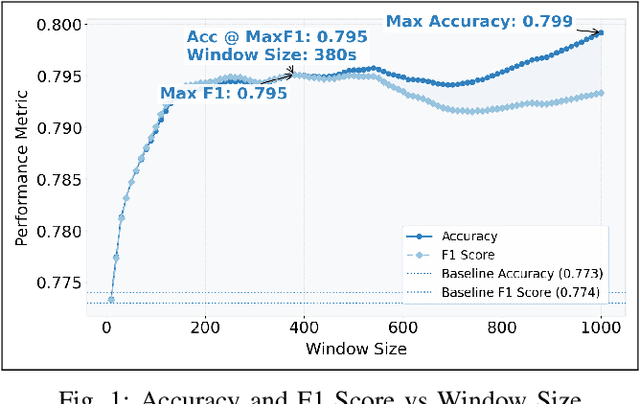

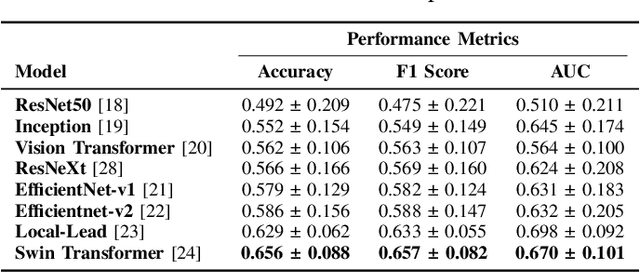
The integration of Artificial Intelligence (AI) into clinical research has great potential to reveal patterns that are difficult for humans to detect, creating impactful connections between inputs and clinical outcomes. However, these methods often require large amounts of labeled data, which can be difficult to obtain in healthcare due to strict privacy laws and the need for experts to annotate data. This requirement creates a bottleneck when investigating unexplored clinical questions. This study explores the application of Self-Supervised Learning (SSL) as a way to obtain preliminary results from clinical studies with limited sized cohorts. To assess our approach, we focus on an underexplored clinical task: screening subjects for Paroxysmal Atrial Fibrillation (P-AF) using remote monitoring, single-lead ECG signals captured during normal sinus rhythm. We evaluate state-of-the-art SSL methods alongside supervised learning approaches, where SSL outperforms supervised learning in this task of interest. More importantly, it prevents misleading conclusions that may arise from poor performance in the latter paradigm when dealing with limited cohort settings.