 Add to Chrome
 Add to Firefox
 Add to Edge
GenMatch: An End-to-End Generative Matching Framework for Micro-View Order-Dispatching in Ride-Hailing
Aug 20, 2026
Micro-View Order-Dispatching assigns available drivers to passenger orders within each dispatch batch and is critical to the service quality and operational efficiency of ride-hailing platforms. Mainstream industrial solutions follow a multi-stage paradigm of model prediction, value calculation, and dispatch matching. Although dispatch quality is determined by the final batch-level assignment, these stages optimize different intermediate objectives. This cross-stage objective inconsistency means that improving a single stage does not necessarily improve the overall dispatch result. We therefore formulate Micro-View Order-Dispatching as a generative matching problem and propose GenMatch, an end-to-end Generative Matching framework and the first such framework deployed in a real-world production environment. Applying generative modeling to this problem introduces three challenges. First, each dispatch batch forms a dynamic sparse bipartite graph, requiring efficient structured batch-level encoding. Second, replacing the hand-crafted value function requires learning unified business utility from heterogeneous feedback. Third, directly generating an assignment requires tracking the evolving matching state because each selected order-driver pair changes the remaining feasible candidates. GenMatch addresses these challenges with a Context-Aware Bipartite Encoder, a Business-Aware Utility Learner, and a State-Aware Pointer Decoder. Extensive offline evaluations and online A/B tests in five cities across DiDi's international ride-hailing markets show consistent improvements over competitive baselines, confirming the effectiveness and practicality of GenMatch for industrial order-dispatching.

EXHOLD: Experience-Aware Real-Time Hold Control for Large-Scale Ride-Hailing Matching at DiDi
Jul 10, 2026In large-scale ride-hailing, hold control is a critical mechanism for improving passenger-driver experience. By selectively delaying certain driver-order pairs, the system waits for better opportunities, reduces cancellations, and mitigates wasted driver effort. However, existing industrial hold strategies often rely on heuristic thresholding over multiple predictive models, which can be brittle under non-stationary traffic and hard to optimize for multi-objective experience signals. We propose EXHOLD, a deployable two-stage framework decoupling experience-aware pair assessment from hold-time execution. In Stage I, we learn a decision model assigning each driver-order pair to discrete, interpretable experience tiers by optimizing a unified objective that aggregates satisfaction signals across the matching funnel. In Stage II, we solve for a monotone hold-time schedule via constrained optimization over empirical quantiles. This explicitly enforces service guardrails bounding the unnecessary holding of promising matches while maximizing overall experience improvement. We evaluate EXHOLD through randomized A/B experiments in DiDi's production system in Brazil. Results show consistent gains in marketplace efficiency and experience: EXHOLD increases trip completion and driver income, significantly reduces passenger cancellations, and improves funnel efficiency. Ablations and behavioral analyses confirm both stages are essential and that the policy makes calibrated decisions under spatiotemporal heterogeneity. EXHOLD is currently deployed, serving production traffic in Brazil.
ProfiLLM: Utility-Aligned Agentic User Profiling for Industrial Ride-Hailing Dispatch
Jun 17, 2026Bringing Large Language Models (LLMs) into industrial ride-hailing dispatch as semantic feature extractors over platform-scale behavioral logs is a compelling but under-explored data systems problem. Production matching pipelines remain dominated by structured numerical features, yet decisive behavioral signals (e.g., a driver's habitual aversion to certain regions) are inherently contextual and naturally expressible as LLM-generated user profiles. However, scaling such profiling to a live, millisecond-latency dispatcher faces three intertwined constraints rarely addressed together: on a platform with millions of daily orders, logs exceed any LLM's context window by orders of magnitude; most users are long-tail, with too few interactions for per-user profiling; and surface-fluent profiles do not necessarily improve downstream prediction utility. We present ProfiLLM, an agentic LLM data pipeline that operationalizes utility-aligned user profiling for production matching systems through two modules. (1) Tool-Augmented Global Knowledge Mining equips an LLM agent with 27 analytical tools to mine platform-scale data, producing reusable global knowledge, adaptive user clustering rules, and region-level supply-demand priors. (2) Utility-Aligned Profile Exploration generates multiple candidate profiles per cluster, evaluates them via a lightweight downstream utility proxy, iteratively refines the best candidates and constructs preference pairs for DPO fine-tuning. Deployed on DiDi's production dispatcher, ProfiLLM achieves up to +6.14% relative AUC improvement in outcome prediction, up to +4.35% GMV gain in dispatching simulation, and consistent improvements in a 14-day online A/B test including +0.47% GMV, +0.33% Completion Rate, and -0.82% Cancel-Before-Accept rate.
Senna-2: Aligning VLM and End-to-End Driving Policy for Consistent Decision Making and Planning
Mar 11, 2026Vision-language models (VLMs) enhance the planning capability of end-to-end (E2E) driving policy by leveraging high-level semantic reasoning. However, existing approaches often overlook the dual-system consistency between VLM's high-level decision and E2E's low-level planning. As a result, the generated trajectories may misalign with the intended driving decisions, leading to weakened top-down guidance and decision-following ability of the system. To address this issue, we propose Senna-2, an advanced VLM-E2E driving policy that explicitly aligns the two systems for consistent decision-making and planning. Our method follows a consistency-oriented three-stage training paradigm. In the first stage, we conduct driving pre-training to achieve preliminary decision-making and planning, with a decision adapter transmitting VLM decisions to E2E policy in the form of implicit embeddings. In the second stage, we align the VLM and the E2E policy in an open-loop setting. In the third stage, we perform closed-loop alignment via bottom-up Hierarchical Reinforcement Learning in 3DGS environments to reinforce the safety and efficiency. Extensive experiments demonstrate that Senna-2 achieves superior dual-system consistency (19.3% F1 score improvement) and significantly enhances driving safety in both open-loop (5.7% FDE reduction) and closed-loop settings (30.6% AF-CR reduction).
Vision-Based Environmental Perception for Autonomous Driving
Dec 22, 2022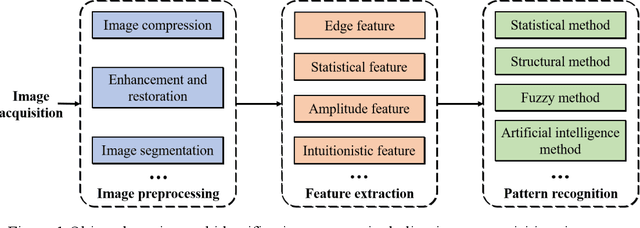
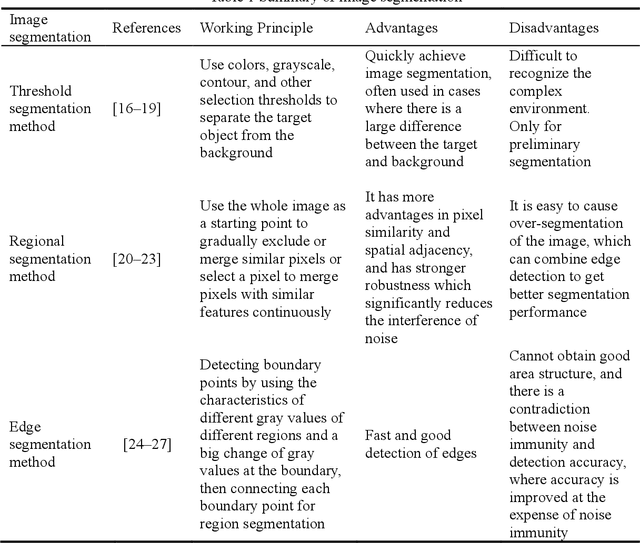
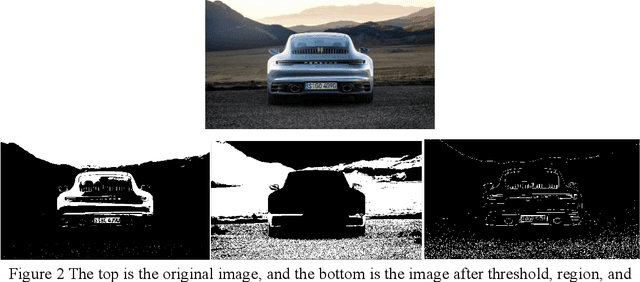
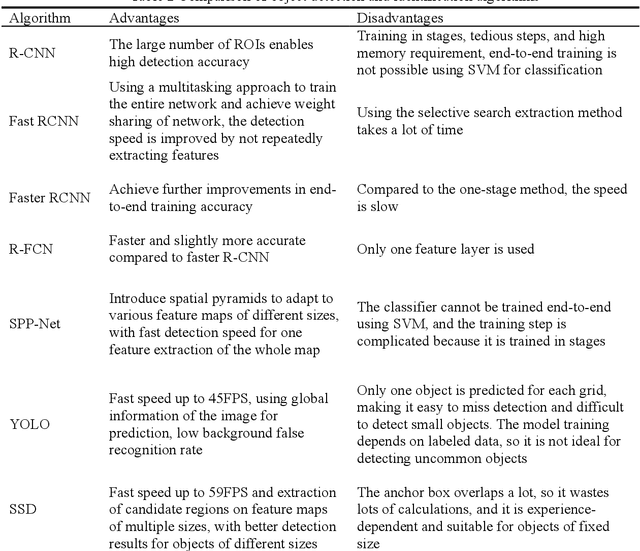
Visual perception plays an important role in autonomous driving. One of the primary tasks is object detection and identification. Since the vision sensor is rich in color and texture information, it can quickly and accurately identify various road information. The commonly used technique is based on extracting and calculating various features of the image. The recent development of deep learning-based method has better reliability and processing speed and has a greater advantage in recognizing complex elements. For depth estimation, vision sensor is also used for ranging due to their small size and low cost. Monocular camera uses image data from a single viewpoint as input to estimate object depth. In contrast, stereo vision is based on parallax and matching feature points of different views, and the application of deep learning also further improves the accuracy. In addition, Simultaneous Location and Mapping (SLAM) can establish a model of the road environment, thus helping the vehicle perceive the surrounding environment and complete the tasks. In this paper, we introduce and compare various methods of object detection and identification, then explain the development of depth estimation and compare various methods based on monocular, stereo, and RDBG sensors, next review and compare various methods of SLAM, and finally summarize the current problems and present the future development trends of vision technologies.
Vision-based localization methods under GPS-denied conditions
Nov 22, 2022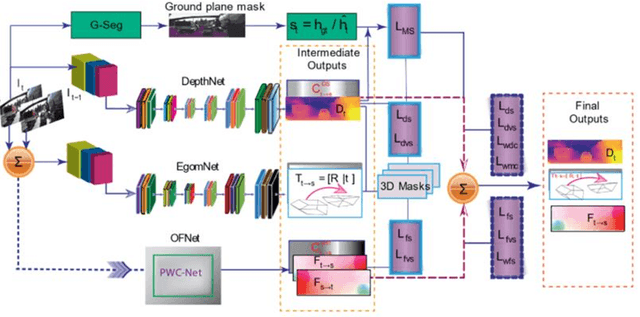
This paper reviews vision-based localization methods in GPS-denied environments and classifies the mainstream methods into Relative Vision Localization (RVL) and Absolute Vision Localization (AVL). For RVL, we discuss the broad application of optical flow in feature extraction-based Visual Odometry (VO) solutions and introduce advanced optical flow estimation methods. For AVL, we review recent advances in Visual Simultaneous Localization and Mapping (VSLAM) techniques, from optimization-based methods to Extended Kalman Filter (EKF) based methods. We also introduce the application of offline map registration and lane vision detection schemes to achieve Absolute Visual Localization. This paper compares the performance and applications of mainstream methods for visual localization and provides suggestions for future studies.