 Add to Chrome
 Add to Firefox
 Add to Edge
X$^2$Localizer: Cross-grained Alignment for Progressive Cross-view Video Geo-localization
Aug 17, 2026
Cross-view Video Geo-localization (CVG) aims to localize ground-view videos by retrieving their corresponding geo-tagged aerial images. However, CVG approaches rely on fixed-length inputs and post-hoc refinement, hindering online-oriented localization under partial or dynamic observations. In this work, we formulate Progressive Cross-view Video Geo-localization (PCVG) as a deployment-oriented extension and evaluation protocol of CVG, enabling localization under varying temporal budgets, prefix-based inference, random-start evaluation, and long-range localization with interruptions. To explore PCVG, we introduce X$^2$Localizer, a cross-grained alignment framework that jointly supervises global prefix-to-aerial retrieval and token-aggregated frame--aerial-tile matching with a budget-dependent asymmetric objective. Furthermore, we introduce a Sliding-Window Re-Localization (SWRL) strategy that dynamically refreshes candidate regions for failure recovery and long-range deployment without full-sequence reprocessing. Extensive experiments show that X$^2$Localizer preserves conventional full-video performance, with marginal gains of +0.1 Recall@1 and +0.3 Recall@10, while substantially improving early localization. In the challenging single-frame setting, X$^2$Localizer improves coarse retrieval by +4.7 Recall@1 and +11.5 Recall@10 over the previous state-of-the-art method. With SWRL, our approach further enables robust progressive localization under random-start and long-distance scenarios, narrowing the gap between benchmark evaluation and real-world deployment.

CITYREP: A Unified Benchmark for Urban Representations Across Cities, Tasks, and Modalities
May 25, 2026Urban representation learning encodes complex urban environments into general-purpose embeddings for diverse downstream tasks and emerging urban foundation models. However, current evaluations are limited, typically focusing on one or two cities and tasks and relying on random splits that introduce spatial leakage, leading to inflated performance and weak support for cross-location generalization and fair comparison. To address this, we propose CityRep, a unified benchmark that evaluates urban representations across data modalities, cities, and tasks using spatially structured splits. CityRep consists of three key components: (1) a spatial unit-agnostic evaluation framework that supports heterogeneous urban representations through a standardized alignment module; (2) a unified evaluation protocol using block-based spatial splits to mitigate spatial leakage and enable rigorous model comparison; and (3) an extensible multi-city, multi-task benchmark suite spanning 8 cities and 8 tasks across regression, classification, and distribution prediction. We evaluate 11 representative urban representation models. Results show that performance is highly sensitive to the split protocol, with random splits inflating scores and altering model rankings. We also observe substantial variability across cities and tasks, underscoring the need for generalization-aware evaluation. CityRep is released as a reproducible benchmark with datasets, evaluation pipelines, and diagnostic tools to facilitate fair comparison and support future research in urban representation learning towards urban foundation models.
Faster or Stronger: Towards Flexible Visual Place Recognition via Weighted Aggregation and Token Pruning
May 19, 2026Visual Place Recognition (VPR) aims to match a query image to reference images of the same place in a large-scale database. Recent state-of-the-art methods employ Vision Transformers (ViTs) as backbone foundation models to extract patch-level features that are robust to viewpoint, illumination, and seasonal variations, which are then aggregated into a compact global descriptor for retrieval. Most existing aggregation methods uniformly pool patch tokens into learned clusters, despite the fact that different clusters often encode distinct spatial or semantic patterns and contribute unequally to VPR performance. To address this limitation, we propose Weighted Aggregated Descriptor (WeiAD), which assigns weights to clusters during aggregation, producing more discriminative global representations. Beyond accuracy, retrieval latency is a critical concern for large-scale deployments and resource-constrained edge devices. Prior work mainly reduces latency by compressing global descriptors, while overlooking the cost of feature extraction, an issue exacerbated by ViT-based backbones. We therefore introduce WeiToP, a VPR-oriented token pruning framework that reduces feature extraction cost via self-distillation, where aggregation-induced token importance supervises a lightweight pruning module attached to an early transformer layer, enabling inference-time token pruning. After a single joint training phase, WeiToP enables plug-and-play token pruning at inference time, allowing flexible and on-demand control over the accuracy-efficiency trade-off without additional training. Moreover, WeiToP outperforms existing token pruning methods adapted from general vision tasks.
RHO: Robust Holistic OSM-Based Metric Cross-View Geo-Localization
Mar 29, 2026Metric Cross-View Geo-Localization (MCVGL) aims to estimate the 3-DoF camera pose (position and heading) by matching ground and satellite images. In this work, instead of pinhole and satellite images, we study robust MCVGL using holistic panoramas and OpenStreetMap (OSM). To this end, we establish a large-scale MCVGL benchmark dataset, CV-RHO, with over 2.7M images under different weather and lighting conditions, as well as sensor noise. Furthermore, we propose a model termed RHO with a two-branch Pin-Pan architecture for accurate visual localization. A Split-Undistort-Merge (SUM) module is introduced to address the panoramic distortion, and a Position-Orientation Fusion (POF) mechanism is designed to enhance the localization accuracy. Extensive experiments prove the value of our CV-RHO dataset and the effectiveness of the RHO model, with a significant performance gain up to 20% compared with the state-of-the-art baselines. Project page: https://github.com/InSAI-Lab/RHO.
More than the Sum: Panorama-Language Models for Adverse Omni-Scenes
Mar 10, 2026Existing vision-language models (VLMs) are tailored for pinhole imagery, stitching multiple narrow field-of-view inputs to piece together a complete omni-scene understanding. Yet, such multi-view perception overlooks the holistic spatial and contextual relationships that a single panorama inherently preserves. In this work, we introduce the Panorama-Language Modeling (PLM)paradigm, a unified $360^\circ$ vision-language reasoning that is more than the sum of its pinhole counterparts. Besides, we present PanoVQA, a large-scale panoramic VQA dataset that involves adverse omni-scenes, enabling comprehensive reasoning under object occlusions and driving accidents. To establish a foundation for PLM, we develop a plug-and-play panoramic sparse attention module that allows existing pinhole-based VLMs to process equirectangular panoramas without retraining. Extensive experiments demonstrate that our PLM achieves superior robustness and holistic reasoning under challenging omni-scenes, yielding understanding greater than the sum of its narrow parts. Project page: https://github.com/InSAI-Lab/PanoVQA.
Data-Centric Benchmark for Label Noise Estimation and Ranking in Remote Sensing Image Segmentation
Feb 28, 2026High-quality pixel-level annotations are essential for the semantic segmentation of remote sensing imagery. However, such labels are expensive to obtain and often affected by noise due to the labor-intensive and time-consuming nature of pixel-wise annotation, which makes it challenging for human annotators to label every pixel accurately. Annotation errors can significantly degrade the performance and robustness of modern segmentation models, motivating the need for reliable mechanisms to identify and quantify noisy training samples. This paper introduces a novel Data-Centric benchmark, together with a novel, publicly available dataset and two techniques for identifying, quantifying, and ranking training samples according to their level of label noise in remote sensing semantic segmentation. Such proposed methods leverage complementary strategies based on model uncertainty, prediction consistency, and representation analysis, and consistently outperform established baselines across a range of experimental settings. The outcomes of this work are publicly available at https://github.com/keillernogueira/label_noise_segmentation.
A Contrastive Learning Framework Empowered by Attention-based Feature Adaptation for Street-View Image Classification
Feb 18, 2026Street-view image attribute classification is a vital downstream task of image classification, enabling applications such as autonomous driving, urban analytics, and high-definition map construction. It remains computationally demanding whether training from scratch, initialising from pre-trained weights, or fine-tuning large models. Although pre-trained vision-language models such as CLIP offer rich image representations, existing adaptation or fine-tuning methods often rely on their global image embeddings, limiting their ability to capture fine-grained, localised attributes essential in complex, cluttered street scenes. To address this, we propose CLIP-MHAdapter, a variant of the current lightweight CLIP adaptation paradigm that appends a bottleneck MLP equipped with multi-head self-attention operating on patch tokens to model inter-patch dependencies. With approximately 1.4 million trainable parameters, CLIP-MHAdapter achieves superior or competitive accuracy across eight attribute classification tasks on the Global StreetScapes dataset, attaining new state-of-the-art results while maintaining low computational cost. The code is available at https://github.com/SpaceTimeLab/CLIP-MHAdapter.
Real-Time LiDAR Super-Resolution via Frequency-Aware Multi-Scale Fusion
Nov 10, 2025LiDAR super-resolution addresses the challenge of achieving high-quality 3D perception from cost-effective, low-resolution sensors. While recent transformer-based approaches like TULIP show promise, they remain limited to spatial-domain processing with restricted receptive fields. We introduce FLASH (Frequency-aware LiDAR Adaptive Super-resolution with Hierarchical fusion), a novel framework that overcomes these limitations through dual-domain processing. FLASH integrates two key innovations: (i) Frequency-Aware Window Attention that combines local spatial attention with global frequency-domain analysis via FFT, capturing both fine-grained geometry and periodic scanning patterns at log-linear complexity. (ii) Adaptive Multi-Scale Fusion that replaces conventional skip connections with learned position-specific feature aggregation, enhanced by CBAM attention for dynamic feature selection. Extensive experiments on KITTI demonstrate that FLASH achieves state-of-the-art performance across all evaluation metrics, surpassing even uncertainty-enhanced baselines that require multiple forward passes. Notably, FLASH outperforms TULIP with Monte Carlo Dropout while maintaining single-pass efficiency, which enables real-time deployment. The consistent superiority across all distance ranges validates that our dual-domain approach effectively handles uncertainty through architectural design rather than computationally expensive stochastic inference, making it practical for autonomous systems.
Multimodal Contrastive Learning of Urban Space Representations from POI Data
Nov 09, 2024Existing methods for learning urban space representations from Point-of-Interest (POI) data face several limitations, including issues with geographical delineation, inadequate spatial information modelling, underutilisation of POI semantic attributes, and computational inefficiencies. To address these issues, we propose CaLLiPer (Contrastive Language-Location Pre-training), a novel representation learning model that directly embeds continuous urban spaces into vector representations that can capture the spatial and semantic distribution of urban environment. This model leverages a multimodal contrastive learning objective, aligning location embeddings with textual POI descriptions, thereby bypassing the need for complex training corpus construction and negative sampling. We validate CaLLiPer's effectiveness by applying it to learning urban space representations in London, UK, where it demonstrates 5-15% improvement in predictive performance for land use classification and socioeconomic mapping tasks compared to state-of-the-art methods. Visualisations of the learned representations further illustrate our model's advantages in capturing spatial variations in urban semantics with high accuracy and fine resolution. Additionally, CaLLiPer achieves reduced training time, showcasing its efficiency and scalability. This work provides a promising pathway for scalable, semantically rich urban space representation learning that can support the development of geospatial foundation models. The implementation code is available at https://github.com/xlwang233/CaLLiPer.
V-RoAst: A New Dataset for Visual Road Assessment
Aug 21, 2024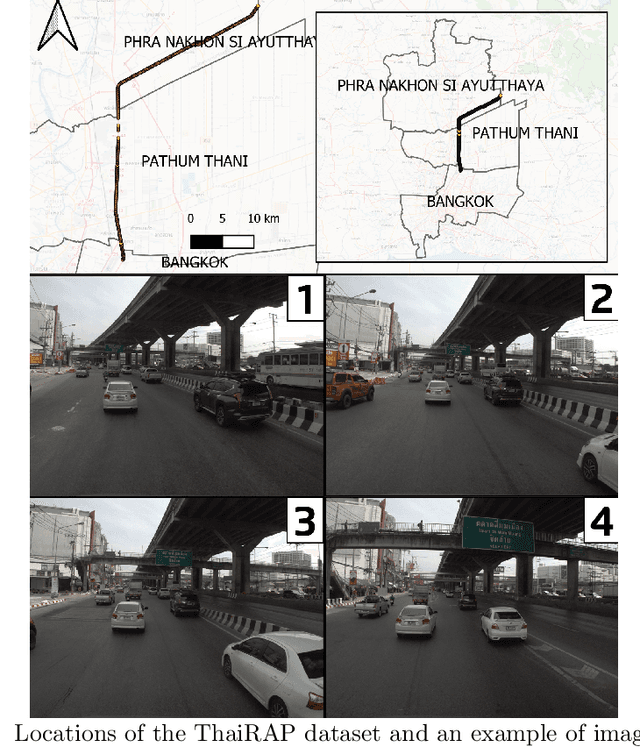
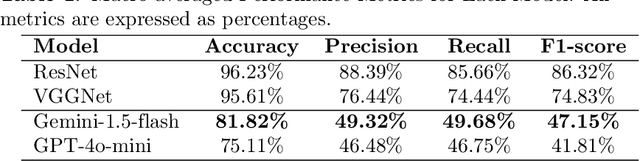
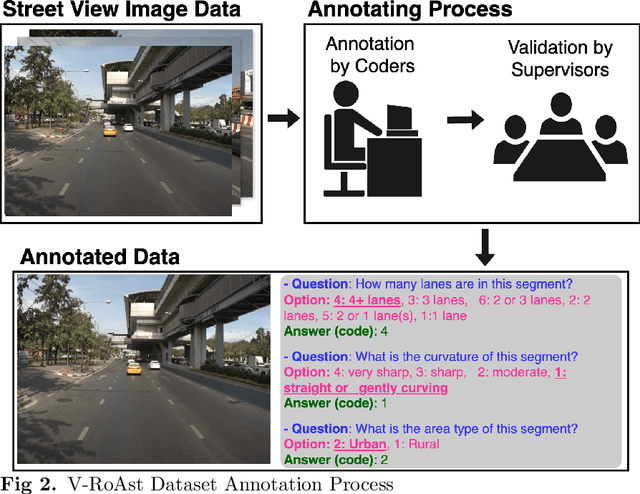
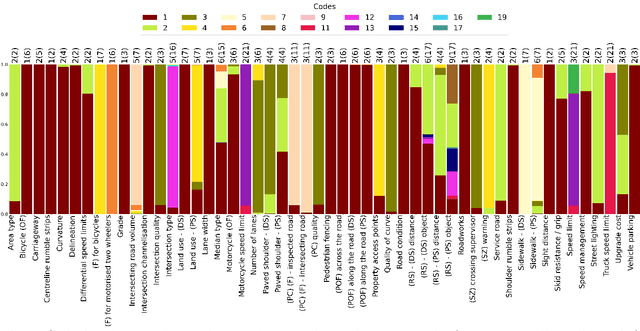
Road traffic crashes cause millions of deaths annually and have a significant economic impact, particularly in low- and middle-income countries (LMICs). This paper presents an approach using Vision Language Models (VLMs) for road safety assessment, overcoming the limitations of traditional Convolutional Neural Networks (CNNs). We introduce a new task ,V-RoAst (Visual question answering for Road Assessment), with a real-world dataset. Our approach optimizes prompt engineering and evaluates advanced VLMs, including Gemini-1.5-flash and GPT-4o-mini. The models effectively examine attributes for road assessment. Using crowdsourced imagery from Mapillary, our scalable solution influentially estimates road safety levels. In addition, this approach is designed for local stakeholders who lack resources, as it does not require training data. It offers a cost-effective and automated methods for global road safety assessments, potentially saving lives and reducing economic burdens.