 Add to Chrome
 Add to Firefox
 Add to Edge
Efficient-3DiM: Learning a Generalizable Single-image Novel-view Synthesizer in One Day
Oct 04, 2023

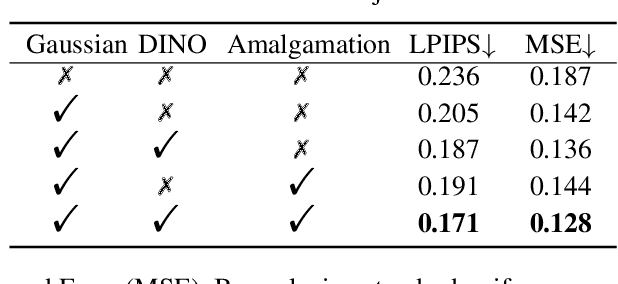
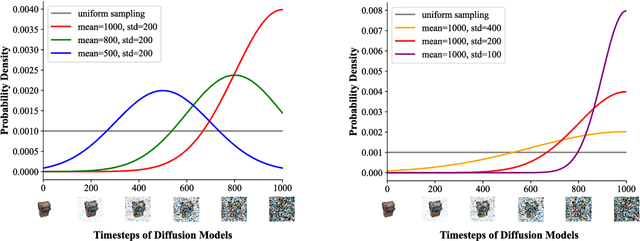
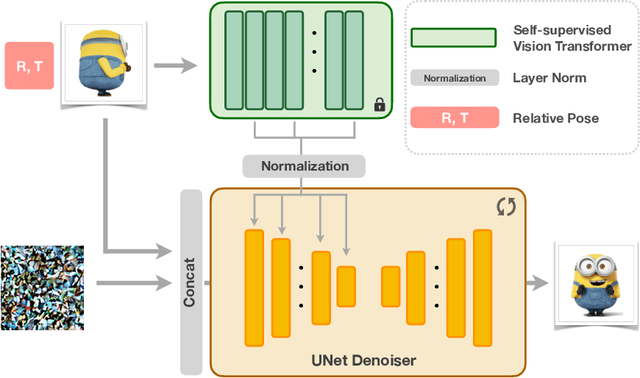
The task of novel view synthesis aims to generate unseen perspectives of an object or scene from a limited set of input images. Nevertheless, synthesizing novel views from a single image still remains a significant challenge in the realm of computer vision. Previous approaches tackle this problem by adopting mesh prediction, multi-plain image construction, or more advanced techniques such as neural radiance fields. Recently, a pre-trained diffusion model that is specifically designed for 2D image synthesis has demonstrated its capability in producing photorealistic novel views, if sufficiently optimized on a 3D finetuning task. Although the fidelity and generalizability are greatly improved, training such a powerful diffusion model requires a vast volume of training data and model parameters, resulting in a notoriously long time and high computational costs. To tackle this issue, we propose Efficient-3DiM, a simple but effective framework to learn a single-image novel-view synthesizer. Motivated by our in-depth analysis of the inference process of diffusion models, we propose several pragmatic strategies to reduce the training overhead to a manageable scale, including a crafted timestep sampling strategy, a superior 3D feature extractor, and an enhanced training scheme. When combined, our framework is able to reduce the total training time from 10 days to less than 1 day, significantly accelerating the training process under the same computational platform (one instance with 8 Nvidia A100 GPUs). Comprehensive experiments are conducted to demonstrate the efficiency and generalizability of our proposed method.

Compressing LLMs: The Truth is Rarely Pure and Never Simple
Oct 02, 2023Despite their remarkable achievements, modern Large Language Models (LLMs) encounter exorbitant computational and memory footprints. Recently, several works have shown significant success in training-free and data-free compression (pruning and quantization) of LLMs achieving 50-60% sparsity and reducing the bit-width down to 3 or 4 bits per weight, with negligible perplexity degradation over the uncompressed baseline. As recent research efforts are focused on developing increasingly sophisticated compression methods, our work takes a step back, and re-evaluates the effectiveness of existing SoTA compression methods, which rely on a fairly simple and widely questioned metric, perplexity (even for dense LLMs). We introduce Knowledge-Intensive Compressed LLM BenchmarK (LLM-KICK), a collection of carefully-curated tasks to re-define the evaluation protocol for compressed LLMs, which have significant alignment with their dense counterparts, and perplexity fail to capture subtle change in their true capabilities. LLM-KICK unveils many favorable merits and unfortunate plights of current SoTA compression methods: all pruning methods suffer significant performance degradation, sometimes at trivial sparsity ratios (e.g., 25-30%), and fail for N:M sparsity on knowledge-intensive tasks; current quantization methods are more successful than pruning; yet, pruned LLMs even at $\geq 50$% sparsity are robust in-context retrieval and summarization systems; among others. LLM-KICK is designed to holistically access compressed LLMs' ability for language understanding, reasoning, generation, in-context retrieval, in-context summarization, etc. We hope our study can foster the development of better LLM compression methods. All our related codes are planed to be open-sourced.
Junk DNA Hypothesis: A Task-Centric Angle of LLM Pre-trained Weights through Sparsity
Sep 29, 2023The traditional notion of "Junk DNA" has long been linked to non-coding segments within the human genome, constituting roughly 98% of its composition. However, recent research has unveiled the critical roles some of these seemingly non-functional DNA sequences play in cellular processes. Intriguingly, the weights within deep neural networks exhibit a remarkable similarity to the redundancy observed in human genes. It was believed that weights in gigantic models contained excessive redundancy, and could be removed without compromising performance. This paper challenges this conventional wisdom by presenting a compelling counter-argument. We employ sparsity as a tool to isolate and quantify the nuanced significance of low-magnitude weights in pre-trained large language models (LLMs). Our study demonstrates a strong correlation between these weight magnitudes and the knowledge they encapsulate, from a downstream task-centric angle. we raise the "Junk DNA Hypothesis" backed by our in-depth investigation: while small-magnitude weights may appear "useless" for simple tasks and suitable for pruning, they actually encode crucial knowledge necessary for solving more difficult downstream tasks. Removing these seemingly insignificant weights can lead to irreversible knowledge forgetting and performance damage in difficult tasks. These findings offer fresh insights into how LLMs encode knowledge in a task-sensitive manner, pave future research direction in model pruning, and open avenues for task-aware conditional computation during inference.
Safe and Robust Watermark Injection with a Single OoD Image
Sep 04, 2023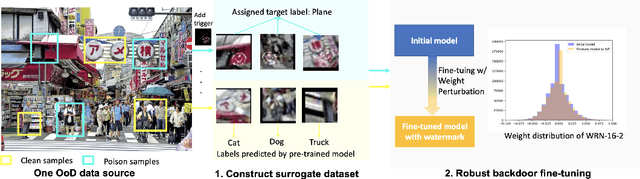
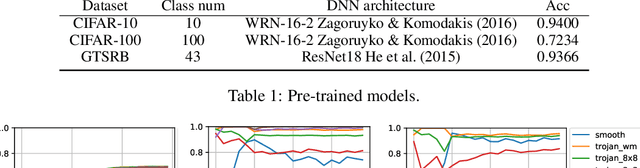
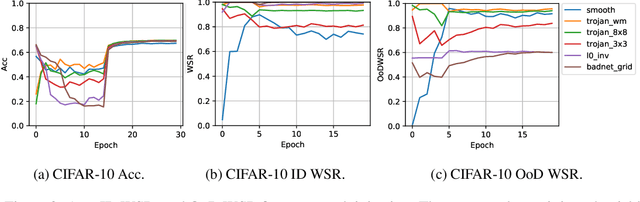
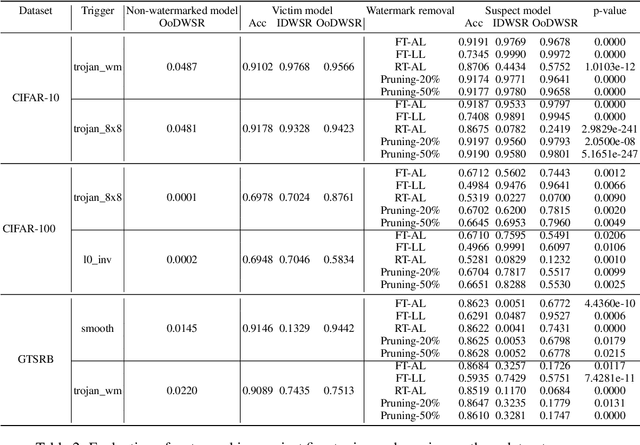
Training a high-performance deep neural network requires large amounts of data and computational resources. Protecting the intellectual property (IP) and commercial ownership of a deep model is challenging yet increasingly crucial. A major stream of watermarking strategies implants verifiable backdoor triggers by poisoning training samples, but these are often unrealistic due to data privacy and safety concerns and are vulnerable to minor model changes such as fine-tuning. To overcome these challenges, we propose a safe and robust backdoor-based watermark injection technique that leverages the diverse knowledge from a single out-of-distribution (OoD) image, which serves as a secret key for IP verification. The independence of training data makes it agnostic to third-party promises of IP security. We induce robustness via random perturbation of model parameters during watermark injection to defend against common watermark removal attacks, including fine-tuning, pruning, and model extraction. Our experimental results demonstrate that the proposed watermarking approach is not only time- and sample-efficient without training data, but also robust against the watermark removal attacks above.
Enhancing NeRF akin to Enhancing LLMs: Generalizable NeRF Transformer with Mixture-of-View-Experts
Aug 22, 2023Cross-scene generalizable NeRF models, which can directly synthesize novel views of unseen scenes, have become a new spotlight of the NeRF field. Several existing attempts rely on increasingly end-to-end "neuralized" architectures, i.e., replacing scene representation and/or rendering modules with performant neural networks such as transformers, and turning novel view synthesis into a feed-forward inference pipeline. While those feedforward "neuralized" architectures still do not fit diverse scenes well out of the box, we propose to bridge them with the powerful Mixture-of-Experts (MoE) idea from large language models (LLMs), which has demonstrated superior generalization ability by balancing between larger overall model capacity and flexible per-instance specialization. Starting from a recent generalizable NeRF architecture called GNT, we first demonstrate that MoE can be neatly plugged in to enhance the model. We further customize a shared permanent expert and a geometry-aware consistency loss to enforce cross-scene consistency and spatial smoothness respectively, which are essential for generalizable view synthesis. Our proposed model, dubbed GNT with Mixture-of-View-Experts (GNT-MOVE), has experimentally shown state-of-the-art results when transferring to unseen scenes, indicating remarkably better cross-scene generalization in both zero-shot and few-shot settings. Our codes are available at https://github.com/VITA-Group/GNT-MOVE.
Robust Mixture-of-Expert Training for Convolutional Neural Networks
Aug 19, 2023Sparsely-gated Mixture of Expert (MoE), an emerging deep model architecture, has demonstrated a great promise to enable high-accuracy and ultra-efficient model inference. Despite the growing popularity of MoE, little work investigated its potential to advance convolutional neural networks (CNNs), especially in the plane of adversarial robustness. Since the lack of robustness has become one of the main hurdles for CNNs, in this paper we ask: How to adversarially robustify a CNN-based MoE model? Can we robustly train it like an ordinary CNN model? Our pilot study shows that the conventional adversarial training (AT) mechanism (developed for vanilla CNNs) no longer remains effective to robustify an MoE-CNN. To better understand this phenomenon, we dissect the robustness of an MoE-CNN into two dimensions: Robustness of routers (i.e., gating functions to select data-specific experts) and robustness of experts (i.e., the router-guided pathways defined by the subnetworks of the backbone CNN). Our analyses show that routers and experts are hard to adapt to each other in the vanilla AT. Thus, we propose a new router-expert alternating Adversarial training framework for MoE, termed AdvMoE. The effectiveness of our proposal is justified across 4 commonly-used CNN model architectures over 4 benchmark datasets. We find that AdvMoE achieves 1% ~ 4% adversarial robustness improvement over the original dense CNN, and enjoys the efficiency merit of sparsity-gated MoE, leading to more than 50% inference cost reduction. Codes are available at https://github.com/OPTML-Group/Robust-MoE-CNN.
How Does Pruning Impact Long-Tailed Multi-Label Medical Image Classifiers?
Aug 17, 2023Pruning has emerged as a powerful technique for compressing deep neural networks, reducing memory usage and inference time without significantly affecting overall performance. However, the nuanced ways in which pruning impacts model behavior are not well understood, particularly for long-tailed, multi-label datasets commonly found in clinical settings. This knowledge gap could have dangerous implications when deploying a pruned model for diagnosis, where unexpected model behavior could impact patient well-being. To fill this gap, we perform the first analysis of pruning's effect on neural networks trained to diagnose thorax diseases from chest X-rays (CXRs). On two large CXR datasets, we examine which diseases are most affected by pruning and characterize class "forgettability" based on disease frequency and co-occurrence behavior. Further, we identify individual CXRs where uncompressed and heavily pruned models disagree, known as pruning-identified exemplars (PIEs), and conduct a human reader study to evaluate their unifying qualities. We find that radiologists perceive PIEs as having more label noise, lower image quality, and higher diagnosis difficulty. This work represents a first step toward understanding the impact of pruning on model behavior in deep long-tailed, multi-label medical image classification. All code, model weights, and data access instructions can be found at https://github.com/VITA-Group/PruneCXR.
INR-Arch: A Dataflow Architecture and Compiler for Arbitrary-Order Gradient Computations in Implicit Neural Representation Processing
Aug 11, 2023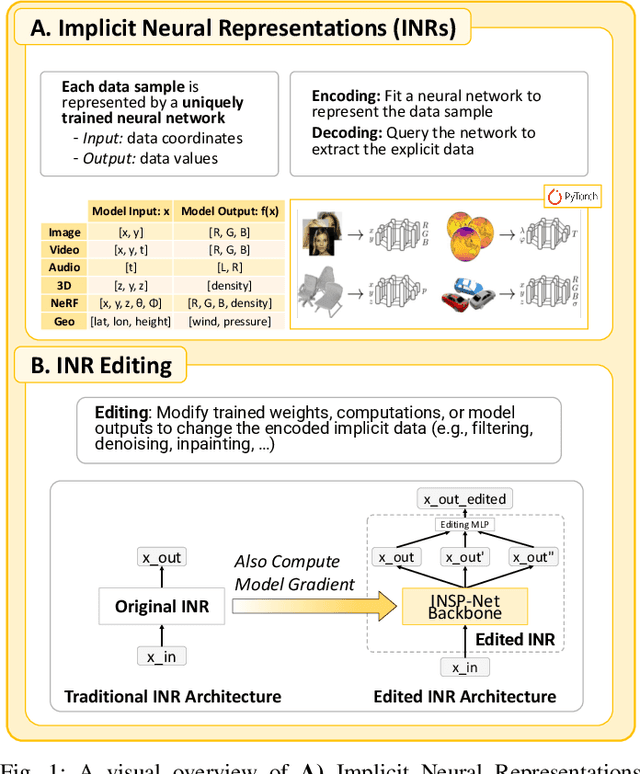
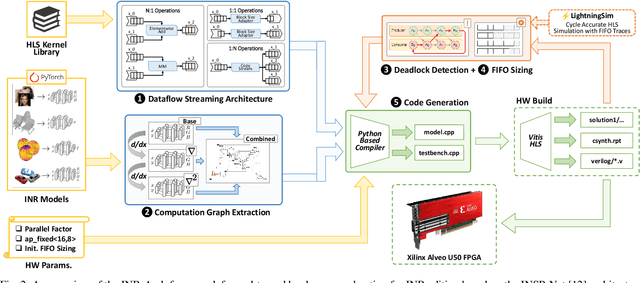
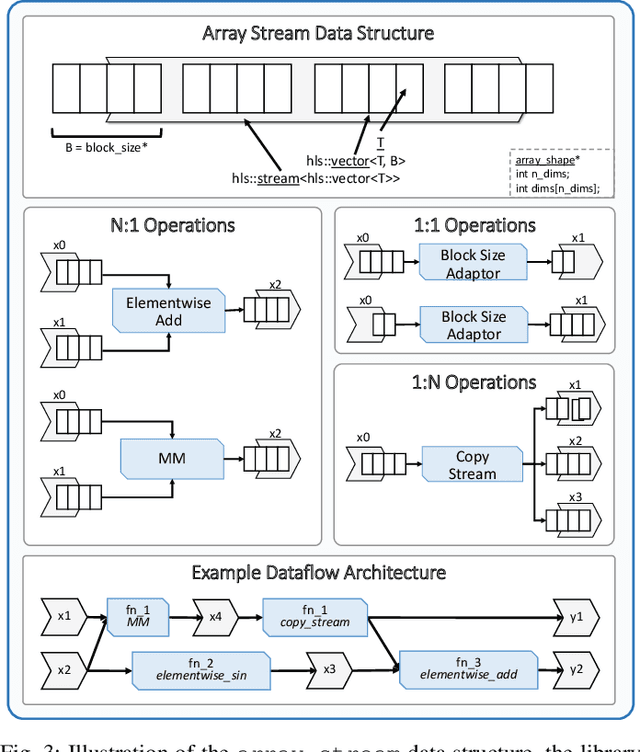
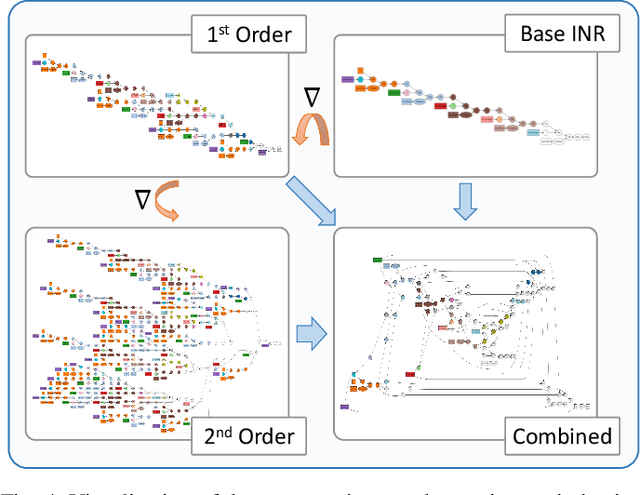
An increasing number of researchers are finding use for nth-order gradient computations for a wide variety of applications, including graphics, meta-learning (MAML), scientific computing, and most recently, implicit neural representations (INRs). Recent work shows that the gradient of an INR can be used to edit the data it represents directly without needing to convert it back to a discrete representation. However, given a function represented as a computation graph, traditional architectures face challenges in efficiently computing its nth-order gradient due to the higher demand for computing power and higher complexity in data movement. This makes it a promising target for FPGA acceleration. In this work, we introduce INR-Arch, a framework that transforms the computation graph of an nth-order gradient into a hardware-optimized dataflow architecture. We address this problem in two phases. First, we design a dataflow architecture that uses FIFO streams and an optimized computation kernel library, ensuring high memory efficiency and parallel computation. Second, we propose a compiler that extracts and optimizes computation graphs, automatically configures hardware parameters such as latency and stream depths to optimize throughput, while ensuring deadlock-free operation, and outputs High-Level Synthesis (HLS) code for FPGA implementation. We utilize INR editing as our benchmark, presenting results that demonstrate 1.8-4.8x and 1.5-3.6x speedup compared to CPU and GPU baselines respectively. Furthermore, we obtain 3.1-8.9x and 1.7-4.3x lower memory usage, and 1.7-11.3x and 5.5-32.8x lower energy-delay product. Our framework will be made open-source and available on GitHub.
Doubly Robust Instance-Reweighted Adversarial Training
Aug 01, 2023


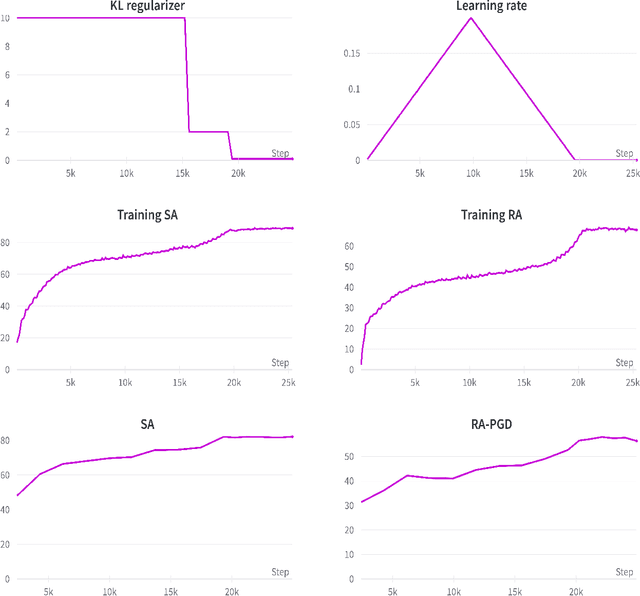
Assigning importance weights to adversarial data has achieved great success in training adversarially robust networks under limited model capacity. However, existing instance-reweighted adversarial training (AT) methods heavily depend on heuristics and/or geometric interpretations to determine those importance weights, making these algorithms lack rigorous theoretical justification/guarantee. Moreover, recent research has shown that adversarial training suffers from a severe non-uniform robust performance across the training distribution, e.g., data points belonging to some classes can be much more vulnerable to adversarial attacks than others. To address both issues, in this paper, we propose a novel doubly-robust instance reweighted AT framework, which allows to obtain the importance weights via exploring distributionally robust optimization (DRO) techniques, and at the same time boosts the robustness on the most vulnerable examples. In particular, our importance weights are obtained by optimizing the KL-divergence regularized loss function, which allows us to devise new algorithms with a theoretical convergence guarantee. Experiments on standard classification datasets demonstrate that our proposed approach outperforms related state-of-the-art baseline methods in terms of average robust performance, and at the same time improves the robustness against attacks on the weakest data points. Codes will be available soon.
Physics-Driven Turbulence Image Restoration with Stochastic Refinement
Jul 20, 2023
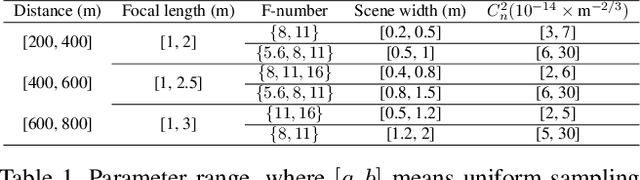
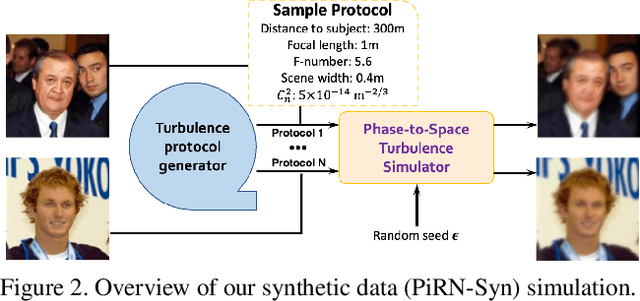
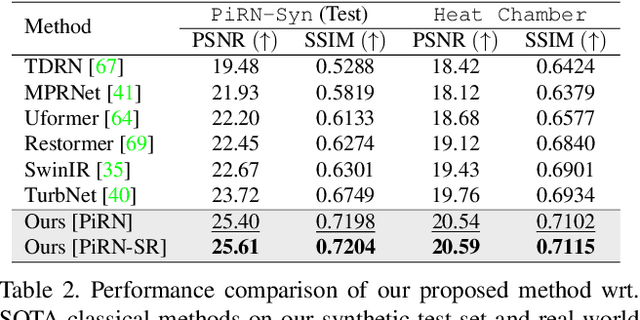
Image distortion by atmospheric turbulence is a stochastic degradation, which is a critical problem in long-range optical imaging systems. A number of research has been conducted during the past decades, including model-based and emerging deep-learning solutions with the help of synthetic data. Although fast and physics-grounded simulation tools have been introduced to help the deep-learning models adapt to real-world turbulence conditions recently, the training of such models only relies on the synthetic data and ground truth pairs. This paper proposes the Physics-integrated Restoration Network (PiRN) to bring the physics-based simulator directly into the training process to help the network to disentangle the stochasticity from the degradation and the underlying image. Furthermore, to overcome the ``average effect" introduced by deterministic models and the domain gap between the synthetic and real-world degradation, we further introduce PiRN with Stochastic Refinement (PiRN-SR) to boost its perceptual quality. Overall, our PiRN and PiRN-SR improve the generalization to real-world unknown turbulence conditions and provide a state-of-the-art restoration in both pixel-wise accuracy and perceptual quality. Our codes are available at \url{https://github.com/VITA-Group/PiRN}.