 Add to Chrome
 Add to Firefox
 Add to Edge
LLaDA2.1: Speeding Up Text Diffusion via Token Editing
Feb 09, 2026
While LLaDA2.0 showcased the scaling potential of 100B-level block-diffusion models and their inherent parallelization, the delicate equilibrium between decoding speed and generation quality has remained an elusive frontier. Today, we unveil LLaDA2.1, a paradigm shift designed to transcend this trade-off. By seamlessly weaving Token-to-Token (T2T) editing into the conventional Mask-to-Token (M2T) scheme, we introduce a joint, configurable threshold-decoding scheme. This structural innovation gives rise to two distinct personas: the Speedy Mode (S Mode), which audaciously lowers the M2T threshold to bypass traditional constraints while relying on T2T to refine the output; and the Quality Mode (Q Mode), which leans into conservative thresholds to secure superior benchmark performances with manageable efficiency degrade. Furthering this evolution, underpinned by an expansive context window, we implement the first large-scale Reinforcement Learning (RL) framework specifically tailored for dLLMs, anchored by specialized techniques for stable gradient estimation. This alignment not only sharpens reasoning precision but also elevates instruction-following fidelity, bridging the chasm between diffusion dynamics and complex human intent. We culminate this work by releasing LLaDA2.1-Mini (16B) and LLaDA2.1-Flash (100B). Across 33 rigorous benchmarks, LLaDA2.1 delivers strong task performance and lightning-fast decoding speed. Despite its 100B volume, on coding tasks it attains an astounding 892 TPS on HumanEval+, 801 TPS on BigCodeBench, and 663 TPS on LiveCodeBench.

LLaDA2.0: Scaling Up Diffusion Language Models to 100B
Dec 24, 2025This paper presents LLaDA2.0 -- a tuple of discrete diffusion large language models (dLLM) scaling up to 100B total parameters through systematic conversion from auto-regressive (AR) models -- establishing a new paradigm for frontier-scale deployment. Instead of costly training from scratch, LLaDA2.0 upholds knowledge inheritance, progressive adaption and efficiency-aware design principle, and seamless converts a pre-trained AR model into dLLM with a novel 3-phase block-level WSD based training scheme: progressive increasing block-size in block diffusion (warm-up), large-scale full-sequence diffusion (stable) and reverting back to compact-size block diffusion (decay). Along with post-training alignment with SFT and DPO, we obtain LLaDA2.0-mini (16B) and LLaDA2.0-flash (100B), two instruction-tuned Mixture-of-Experts (MoE) variants optimized for practical deployment. By preserving the advantages of parallel decoding, these models deliver superior performance and efficiency at the frontier scale. Both models were open-sourced.
Every Step Evolves: Scaling Reinforcement Learning for Trillion-Scale Thinking Model
Oct 21, 2025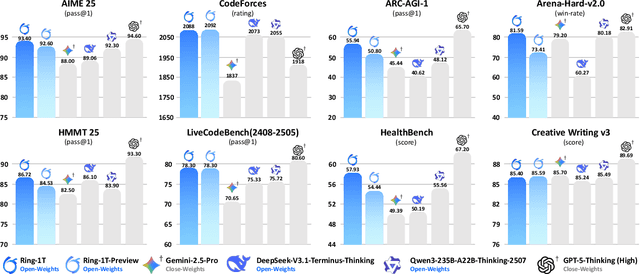
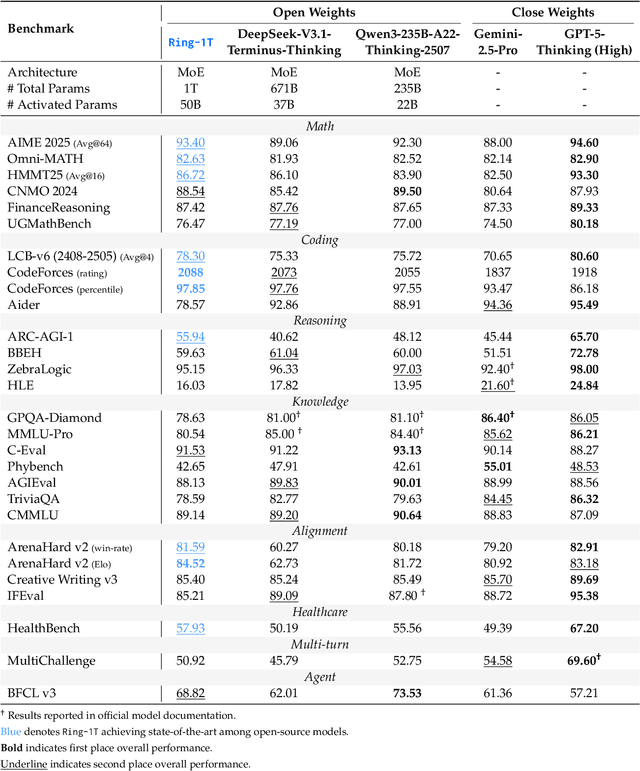
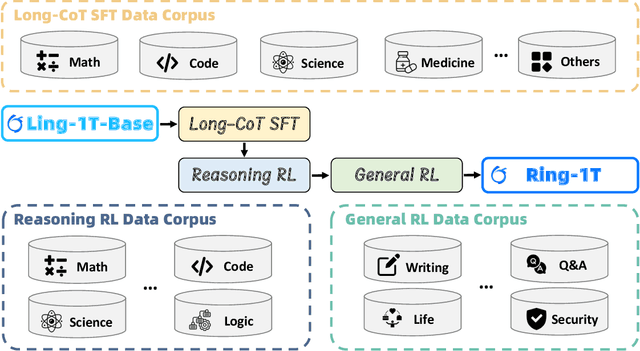
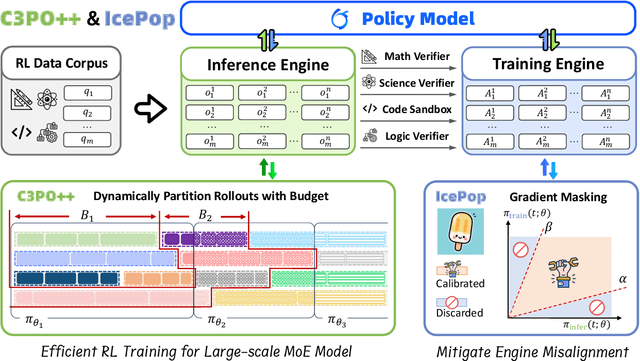
We present Ring-1T, the first open-source, state-of-the-art thinking model with a trillion-scale parameter. It features 1 trillion total parameters and activates approximately 50 billion per token. Training such models at a trillion-parameter scale introduces unprecedented challenges, including train-inference misalignment, inefficiencies in rollout processing, and bottlenecks in the RL system. To address these, we pioneer three interconnected innovations: (1) IcePop stabilizes RL training via token-level discrepancy masking and clipping, resolving instability from training-inference mismatches; (2) C3PO++ improves resource utilization for long rollouts under a token budget by dynamically partitioning them, thereby obtaining high time efficiency; and (3) ASystem, a high-performance RL framework designed to overcome the systemic bottlenecks that impede trillion-parameter model training. Ring-1T delivers breakthrough results across critical benchmarks: 93.4 on AIME-2025, 86.72 on HMMT-2025, 2088 on CodeForces, and 55.94 on ARC-AGI-v1. Notably, it attains a silver medal-level result on the IMO-2025, underscoring its exceptional reasoning capabilities. By releasing the complete 1T parameter MoE model to the community, we provide the research community with direct access to cutting-edge reasoning capabilities. This contribution marks a significant milestone in democratizing large-scale reasoning intelligence and establishes a new baseline for open-source model performance.
Baichuan-Audio: A Unified Framework for End-to-End Speech Interaction
Feb 24, 2025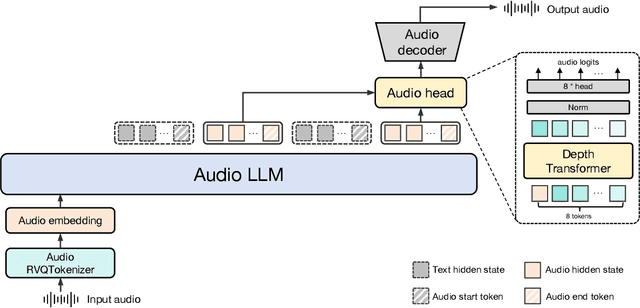
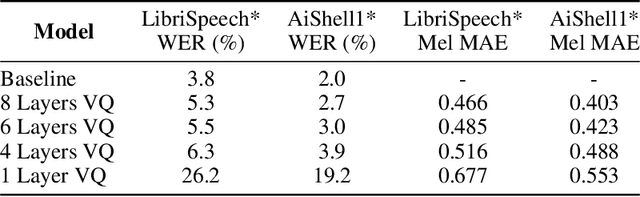
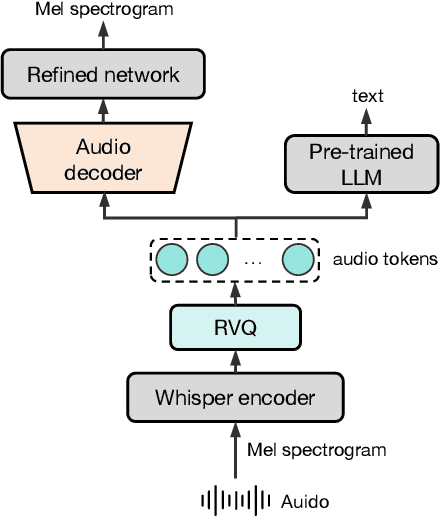
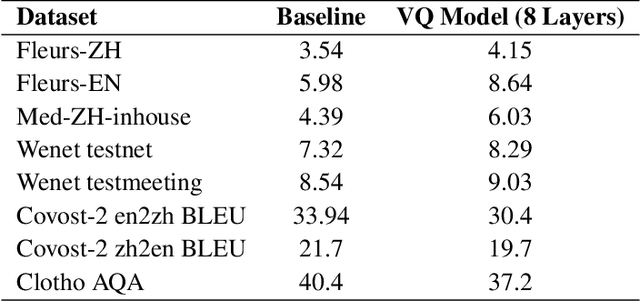
We introduce Baichuan-Audio, an end-to-end audio large language model that seamlessly integrates audio understanding and generation. It features a text-guided aligned speech generation mechanism, enabling real-time speech interaction with both comprehension and generation capabilities. Baichuan-Audio leverages a pre-trained ASR model, followed by multi-codebook discretization of speech at a frame rate of 12.5 Hz. This multi-codebook setup ensures that speech tokens retain both semantic and acoustic information. To further enhance modeling, an independent audio head is employed to process audio tokens, effectively capturing their unique characteristics. To mitigate the loss of intelligence during pre-training and preserve the original capabilities of the LLM, we propose a two-stage pre-training strategy that maintains language understanding while enhancing audio modeling. Following alignment, the model excels in real-time speech-based conversation and exhibits outstanding question-answering capabilities, demonstrating its versatility and efficiency. The proposed model demonstrates superior performance in real-time spoken dialogue and exhibits strong question-answering abilities. Our code, model and training data are available at https://github.com/baichuan-inc/Baichuan-Audio
Baichuan-Omni-1.5 Technical Report
Jan 26, 2025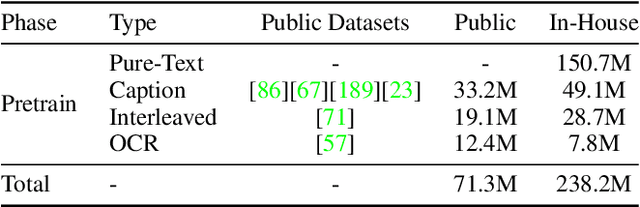
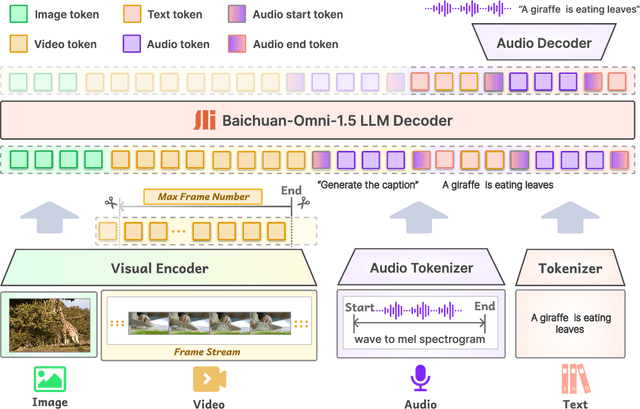
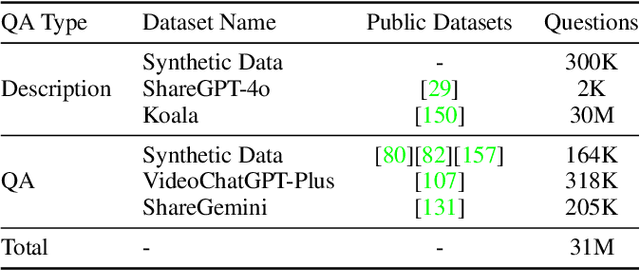
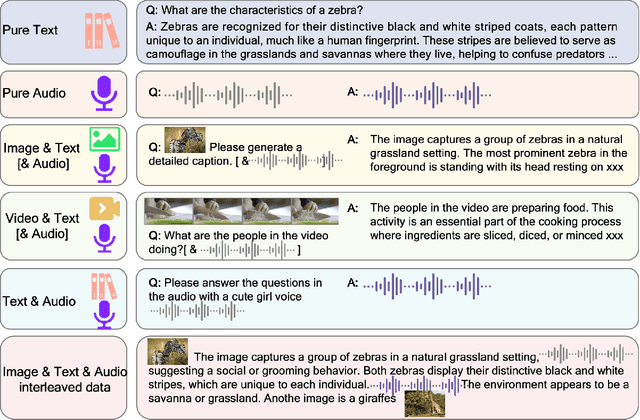
We introduce Baichuan-Omni-1.5, an omni-modal model that not only has omni-modal understanding capabilities but also provides end-to-end audio generation capabilities. To achieve fluent and high-quality interaction across modalities without compromising the capabilities of any modality, we prioritized optimizing three key aspects. First, we establish a comprehensive data cleaning and synthesis pipeline for multimodal data, obtaining about 500B high-quality data (text, audio, and vision). Second, an audio-tokenizer (Baichuan-Audio-Tokenizer) has been designed to capture both semantic and acoustic information from audio, enabling seamless integration and enhanced compatibility with MLLM. Lastly, we designed a multi-stage training strategy that progressively integrates multimodal alignment and multitask fine-tuning, ensuring effective synergy across all modalities. Baichuan-Omni-1.5 leads contemporary models (including GPT4o-mini and MiniCPM-o 2.6) in terms of comprehensive omni-modal capabilities. Notably, it achieves results comparable to leading models such as Qwen2-VL-72B across various multimodal medical benchmarks.