 Add to Chrome
 Add to Firefox
 Add to Edge
CM-MAE: A Physics-Guided Cross-Modal Self-Supervised Learning Framework for Vision-Wireless Applications
Aug 16, 2026
Synchronized camera and wireless measurements observe the same scene through different physical channels. The central difficulty is that a representation learned in one deployment can fail when viewpoint, traffic, illumination, and propagation geometry change. This paper presents CM-MAE, a self-supervised vision--wireless pretraining framework for cross-scenario representation transfer. The evaluated real-data model uses only RGB frames and the measured 64-beam received-power vector available in DeepSense 6G; it does not use ray-traced paths, calibrated depth, or beam-index labels during pretraining. Its central pretraining term is a \emph{soft contrastive alignment loss}. Instead of making the synchronized image--wireless pair the only positive pair, this loss builds a target distribution from similarities between measured beam-power profiles, so nonidentical samples with similar directional responses are not forced apart as false negatives. A masked joint decoder provides the complementary local objective by reconstructing hidden visual patches and wireless angular clusters under modality dropout. After pretraining, a differential-rate fine-tuning rule lets a new fusion head adapt quickly while the encoders move slowly. Under a sequence-disjoint DeepSense 6G protocol, adding the soft alignment loss improves a matched linear-probe transfer average from 24.88\% to 29.49\%. Mild fusion fine-tuning reaches 77.38\% Top-1 accuracy on unseen Scenarios 6--8, and optional transductive normalization adaptation reaches 78.69\%. Since the fusion setting uses the contemporaneous 64-beam power vector at inference, these results should be read as representation-transfer diagnostics, not as proactive beam-prediction or reduced-sweeping claims.

Learning-to-Transition for Large-scale and High-Order MIMO Detection
Aug 14, 2026High-order multiple-input multiple-output (MIMO) detection requires efficient search over a large discrete symbol space while producing reliable soft information for channel decoding. This paper develops a learning-to-transition (L2T) framework that formulates MIMO detection as a stochastic sequence of complete-vector transitions. At each transition, a channel-coupled Transformer updates both the instance embedding and the sampling policy, while a blockwise autoregressive factorization captures inter-stream dependence with moderate sequential complexity. For hard-output detection, a transition network is applied recursively and trained through a residual-to-BER curriculum, which first learns the MIMO search geometry from the exact residual metric and then aligns the policy with transmitted-bit accuracy. For soft-output reception, the well-trained hard policy is cloned at the parameter level into every layer of an untied soft-input soft-output iterative detection and decoding (IDD) receiver. This tied-to-untied transfer preserves the learned zero-prior search dynamics while enabling layer- and round-specific specialization under decoder feedback. Within each IDD round, decoder priors tilt candidate generation according to Bayes' rule, and likelihood-weighted terminal hypotheses produce posterior and extrinsic log-likelihood ratios for LDPC decoding. A multi-stage training strategy further stabilizes the hard-to-soft transfer by progressively exposing the receiver to synthetic and in-loop decoder-generated priors.
How Different AI Chatbots Behave? Benchmarking Large Language Models in Behavioral Economics Games
Dec 16, 2024The deployment of large language models (LLMs) in diverse applications requires a thorough understanding of their decision-making strategies and behavioral patterns. As a supplement to a recent study on the behavioral Turing test, this paper presents a comprehensive analysis of five leading LLM-based chatbot families as they navigate a series of behavioral economics games. By benchmarking these AI chatbots, we aim to uncover and document both common and distinct behavioral patterns across a range of scenarios. The findings provide valuable insights into the strategic preferences of each LLM, highlighting potential implications for their deployment in critical decision-making roles.
Honest AI: Fine-Tuning "Small" Language Models to Say "I Don't Know", and Reducing Hallucination in RAG
Oct 13, 2024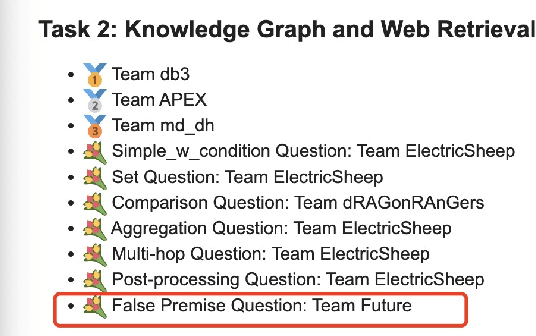
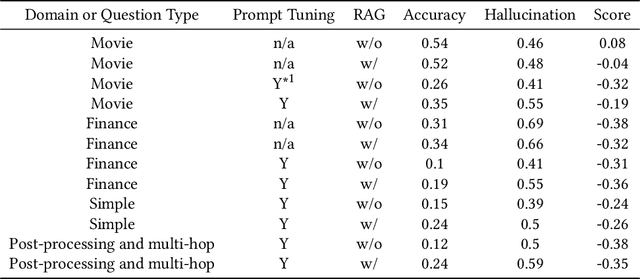
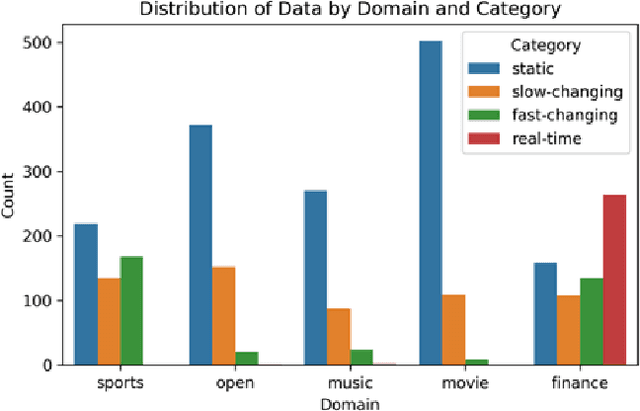

Hallucination is a key roadblock for applications of Large Language Models (LLMs), particularly for enterprise applications that are sensitive to information accuracy. To address this issue, two general approaches have been explored: Retrieval-Augmented Generation (RAG) to supply LLMs with updated information as context, and fine-tuning the LLMs with new information and desired output styles. In this paper, we propose Honest AI: a novel strategy to fine-tune "small" language models to say "I don't know" to reduce hallucination, along with several alternative RAG approaches. The solution ranked 1st in Task 2 for the false premise question. The alternative approaches include using RAG with search engine and knowledge graph results, fine-tuning base LLMs with new information and combinations of both approaches. Although all approaches improve the performance of the LLMs, RAG alone does not significantly improve the performance and fine-tuning is needed for better results. Finally, the hybrid approach achieved the highest score in the CRAG benchmark. In addition, our approach emphasizes the use of relatively small models with fewer than 10 billion parameters, promoting resource efficiency.
NTU4DRadLM: 4D Radar-centric Multi-Modal Dataset for Localization and Mapping
Sep 02, 2023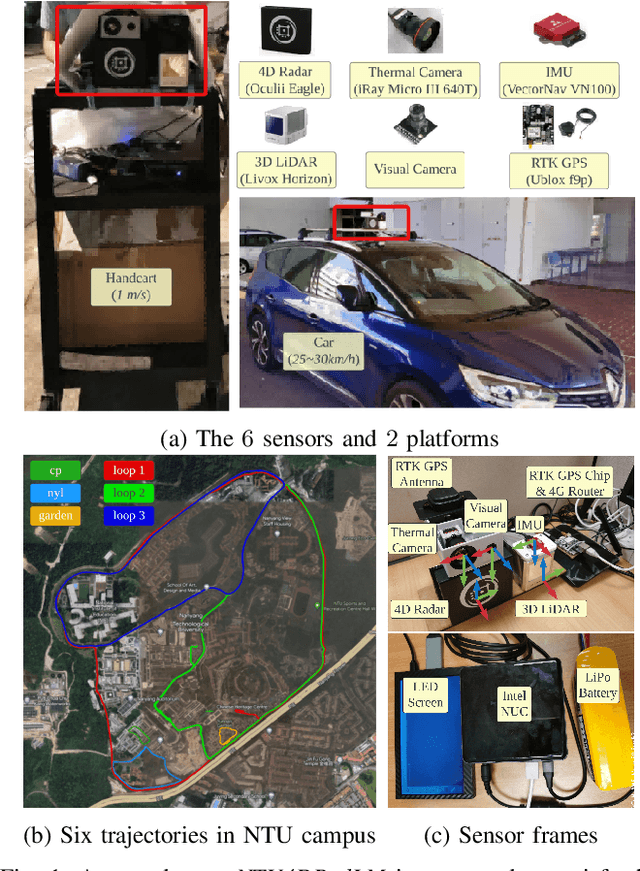
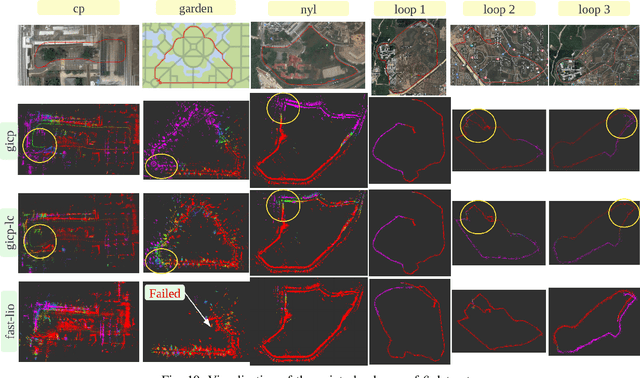
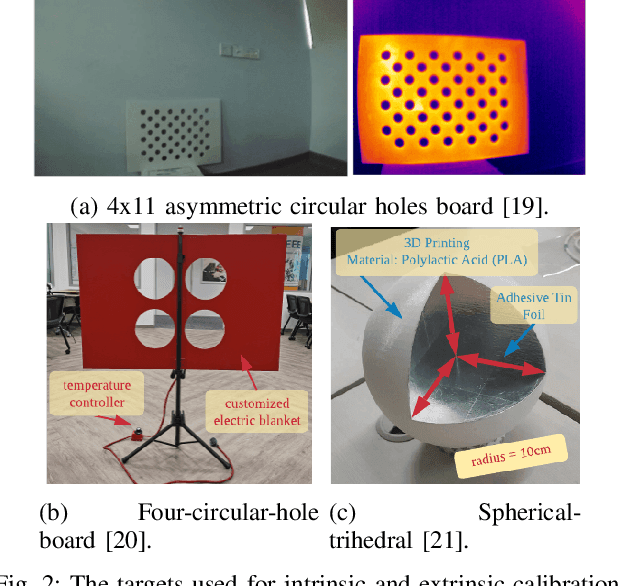
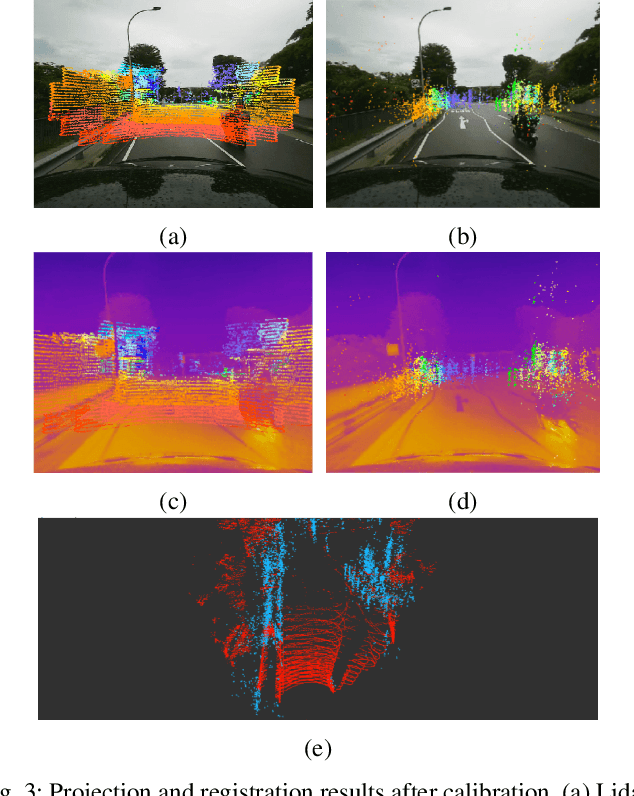
Simultaneous Localization and Mapping (SLAM) is moving towards a robust perception age. However, LiDAR- and visual- SLAM may easily fail in adverse conditions (rain, snow, smoke and fog, etc.). In comparison, SLAM based on 4D Radar, thermal camera and IMU can work robustly. But only a few literature can be found. A major reason is the lack of related datasets, which seriously hinders the research. Even though some datasets are proposed based on 4D radar in past four years, they are mainly designed for object detection, rather than SLAM. Furthermore, they normally do not include thermal camera. Therefore, in this paper, NTU4DRadLM is presented to meet this requirement. The main characteristics are: 1) It is the only dataset that simultaneously includes all 6 sensors: 4D radar, thermal camera, IMU, 3D LiDAR, visual camera and RTK GPS. 2) Specifically designed for SLAM tasks, which provides fine-tuned ground truth odometry and intentionally formulated loop closures. 3) Considered both low-speed robot platform and fast-speed unmanned vehicle platform. 4) Covered structured, unstructured and semi-structured environments. 5) Considered both middle- and large- scale outdoor environments, i.e., the 6 trajectories range from 246m to 6.95km. 6) Comprehensively evaluated three types of SLAM algorithms. Totally, the dataset is around 17.6km, 85mins, 50GB and it will be accessible from this link: https://github.com/junzhang2016/NTU4DRadLM