 Add to Chrome
 Add to Firefox
 Add to Edge
Optimizing Multi-Market Participation of Battery and Electrolyser Systems Based on Field Performance
Aug 17, 2026
The increasing share of renewable energy in power systems creates a need for fast-response and flexible resources to maintain system stability. With the expansion of electricity markets and ancillary service products, opportunities arise to stack revenues across multiple services. Long-term Power-to-X (PTX) electrolysers and short-term battery energy storage systems (BESS) are prevalent flexible resources, yet most studies neglect real hardware behavior, such as ramp limits, efficiency, and setpoint-tracking accuracy. This work presents experimental and modeling results for a 55 kW/79 kWh BESS and an electrolyser comprising three 2.4 kW units. Key characteristics are identified through measurements and embedded into a price-driven optimization framework for participation in the Danish electricity and ancillary service markets, utilizing real market data from 2022 to 2025. The optimized daily profits for multi-market participation are 1,749.27 DKK and 289.46 DKK for the BESS and electrolyser, respectively. With the demonstrated business cases for BESS and PTX systems, this work highlights the importance of incorporating experimental performance when evaluating participation across multiple markets and years.

Quantifying the Gap Between Laboratory Battery Test Patterns and Field Duty Profiles
Aug 17, 2026Laboratory battery tests provide the main empirical basis for battery performance and degradation studies, but their operating patterns do not directly represent field duty profiles. This paper quantifies the gap by comparing six accessible evidence sources covering controlled cycling, drive-cycle testing, dynamic cycling, NMC811 laboratory ageing, a real electric-vehicle charging trace, and fleet-scale electric-vehicle state-of-health (SOH) data. The analysis combines usage frequency, usage intensity, usage C-rate, and a duty-structure index (DSI) based on normalized current dispersion and ramping. The representative single-segment DSI ranges from 0.630 for the field source trace and 0.699 for NASA to 2.936 for Oxford and 2.855 for Imperial, while usage C-rate ranges from 0.14-0.40 for Imperial, NASA, Stanford, and Hyundai to 2.00 for Oxford. Long-term ageing also differs: the 80 percent retention region occurs near 351 NASA cycles, 6292 Oxford checkpoints, and 1019 Stanford cycles. In chemistry-aligned NMC/NCM evidence, Imperial retains 0.813 under standard cycling and 0.865 under drive-cycle ageing, while the field source has median SOH 0.889 with visible dispersion. Field operation further shows a median use intensity of 137.2 km/day and 56.9 percent of charges ending at or above 95 percent SOC. These results show that battery performance metrics are conditional on the duty pattern that generated them; application-oriented studies should report explicit duty-profile descriptors together with chemistry, capacity, and ageing metrics.
NTU4DRadLM: 4D Radar-centric Multi-Modal Dataset for Localization and Mapping
Sep 02, 2023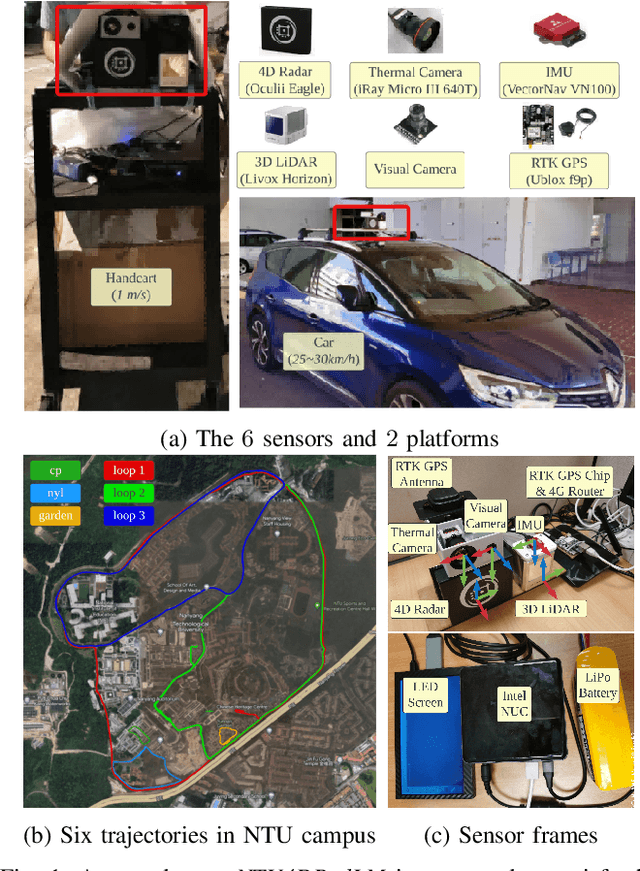
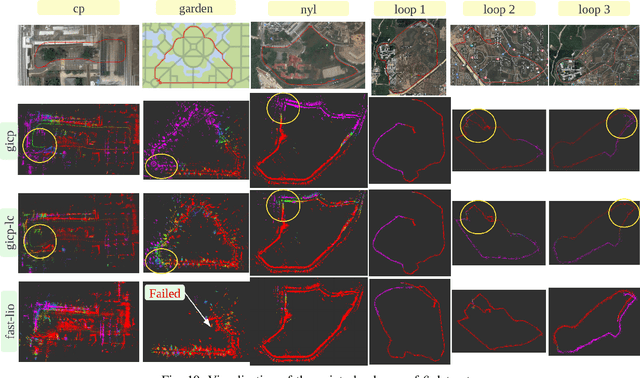
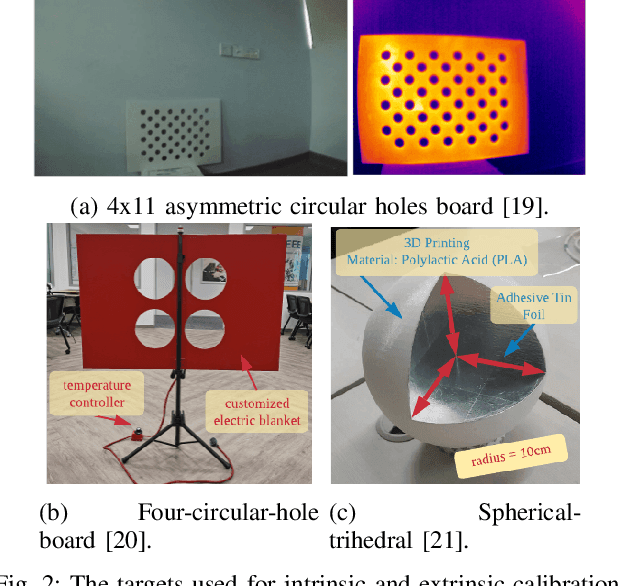
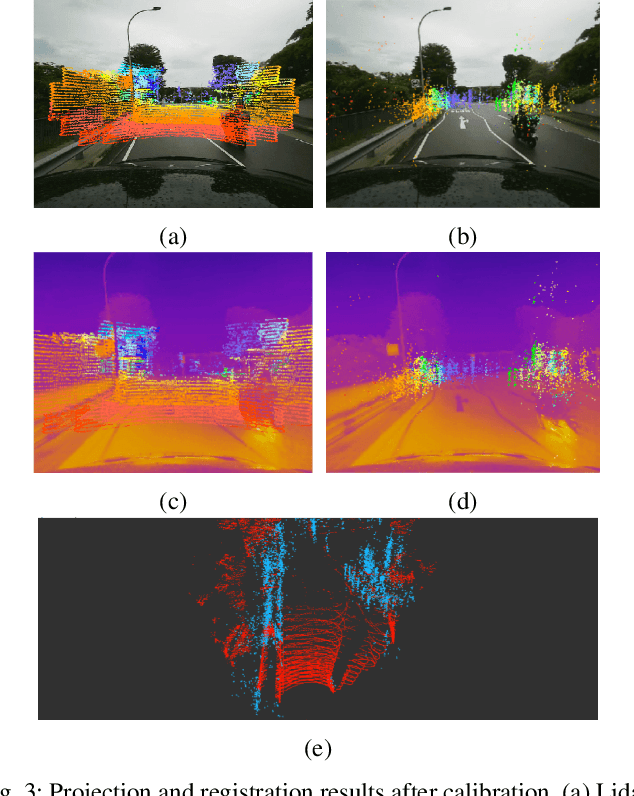
Simultaneous Localization and Mapping (SLAM) is moving towards a robust perception age. However, LiDAR- and visual- SLAM may easily fail in adverse conditions (rain, snow, smoke and fog, etc.). In comparison, SLAM based on 4D Radar, thermal camera and IMU can work robustly. But only a few literature can be found. A major reason is the lack of related datasets, which seriously hinders the research. Even though some datasets are proposed based on 4D radar in past four years, they are mainly designed for object detection, rather than SLAM. Furthermore, they normally do not include thermal camera. Therefore, in this paper, NTU4DRadLM is presented to meet this requirement. The main characteristics are: 1) It is the only dataset that simultaneously includes all 6 sensors: 4D radar, thermal camera, IMU, 3D LiDAR, visual camera and RTK GPS. 2) Specifically designed for SLAM tasks, which provides fine-tuned ground truth odometry and intentionally formulated loop closures. 3) Considered both low-speed robot platform and fast-speed unmanned vehicle platform. 4) Covered structured, unstructured and semi-structured environments. 5) Considered both middle- and large- scale outdoor environments, i.e., the 6 trajectories range from 246m to 6.95km. 6) Comprehensively evaluated three types of SLAM algorithms. Totally, the dataset is around 17.6km, 85mins, 50GB and it will be accessible from this link: https://github.com/junzhang2016/NTU4DRadLM