 Add to Chrome
 Add to Firefox
 Add to Edge
UHD-MFF: Shattering Barriers in Multi-Focus Ultra-High-Definition Image Fusion via Learnable Lookup Tables
Jun 30, 2026
With the advancement of imaging technology, ultra-high-definition images have become increasingly essential in modern visual applications. However, existing multi-focus image fusion remains largely confined to low-resolution images and faces three major barriers in UHD scenarios, namely data availability, model adaptability, and deployment feasibility, which severely hinder its practical application. To shatter these barriers, first, we propose the UHD-MFF dataset, the first large-scale ultra-high-resolution multi-focus fusion dataset. Second, we propose a scale-specialized lookup-table framework tailored for ultra-high-resolution images, termed as UMF-LUT. It consists of Coarse-Region Lookup Table (C-LUT) and Detail-Edge Lookup Table (D-LUT). Specifically, C-LUT performs joint queries of multiple gradient cues and semantic cues at low-resolution scales to enable region-level decision-making. Also, D-LUT operates at high-resolution scales, leveraging efficient Laplacian cues to provide complementary edge-level decision information. Such a design makes the model particularly well-suited for ultra-high-resolution multi-focus image fusion. Finally, it offers strong deployability with minimal computational overhead, enabling real-time 4K multi-focus fusion and showing promising potential for smartphone. Extensive experiments demonstrate that it outperforms SOTA methods in both visual fidelity and quantitative metrics. It effectively advances the development of multi-focus image fusion toward ultra-high-resolution imaging scenarios. The code is available at https://github.com/zyb5/UHD-MFF.

Low Light Image Enhancement Challenge at NTIRE 2026
Apr 19, 2026This paper presents a comprehensive review of the NTIRE 2026 Low Light Image Enhancement Challenge, highlighting the proposed solutions and final results. The objective of this challenge is to identify effective networks capable of producing clearer and visually compelling images in diverse and challenging conditions by learning representative visual cues with the purpose of restoring information loss due to low-contrast and noisy images. A total of 195 participants registered for the first track and 153 for the second track of the competition, and 22 teams ultimately submitted valid entries. This paper thoroughly evaluates the state-of-the-art advances in (joint denoising and) low-light image enhancement, showcasing the significant progress in the field, while leveraging samples of our novel dataset.
Development of Focused X-ray Luminescence Compute Tomography Imaging
Jun 11, 2024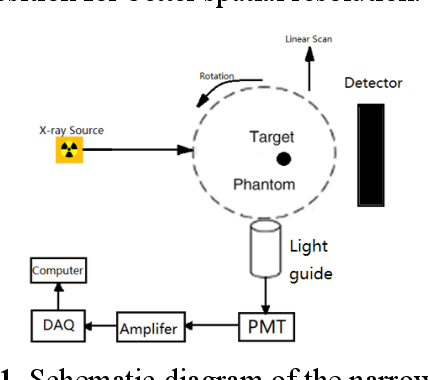
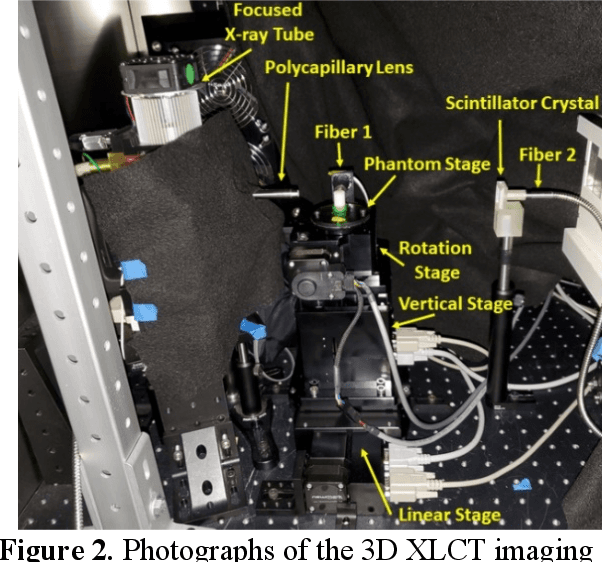
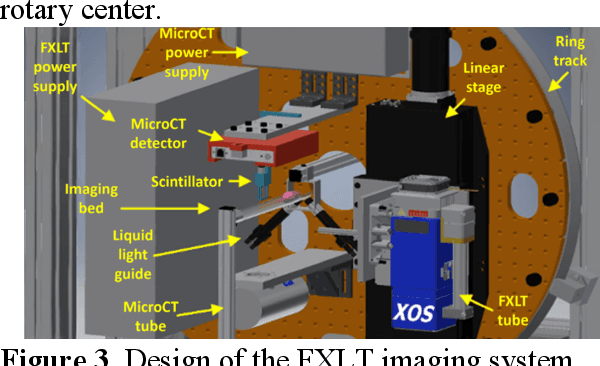
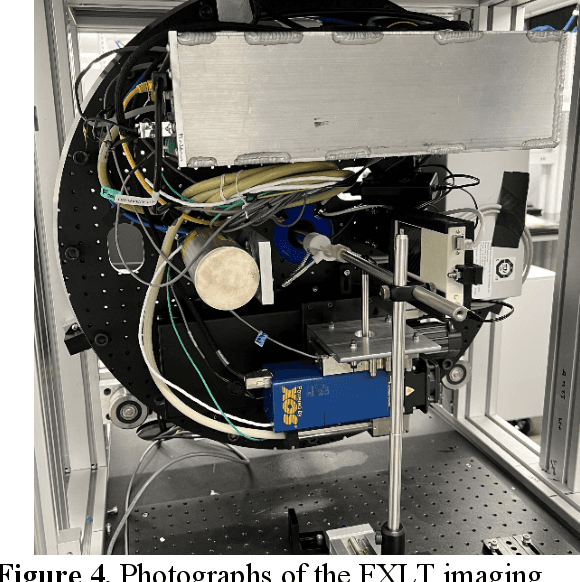
X-ray luminescence is produced when contrast agents absorb energy from X-ray photons and release a portion of that energy by emitting photons in the visible and near-infrared range. X-ray luminescence computed tomography (XLCT) was introduced in the past decade as a hybrid molecular imaging modality combining the merits of both X-ray imaging (high spatial resolution) and optical imaging (high sensitivity to tracer nanophosphors).
The NeurIPS 2022 Neural MMO Challenge: A Massively Multiagent Competition with Specialization and Trade
Nov 07, 2023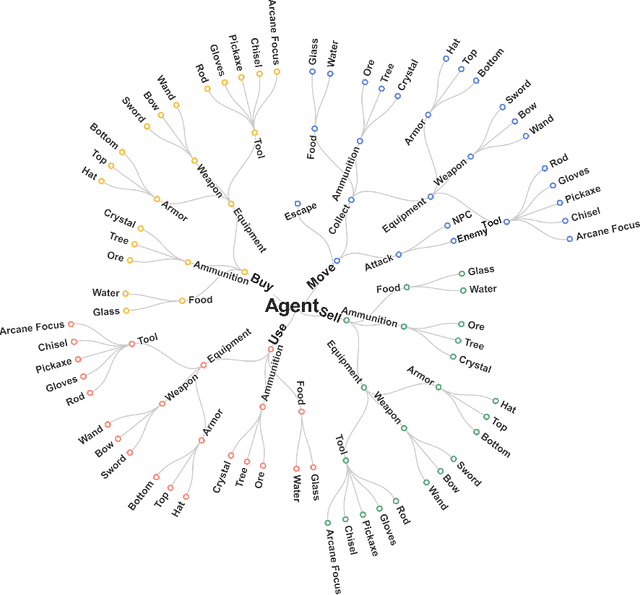
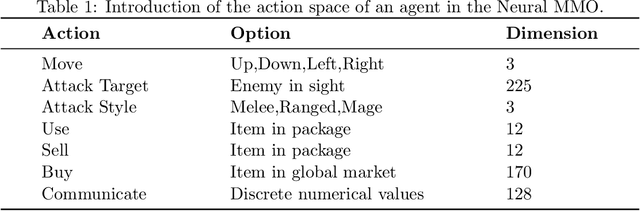
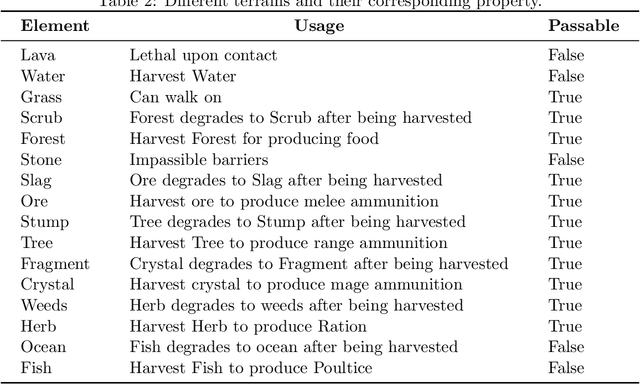
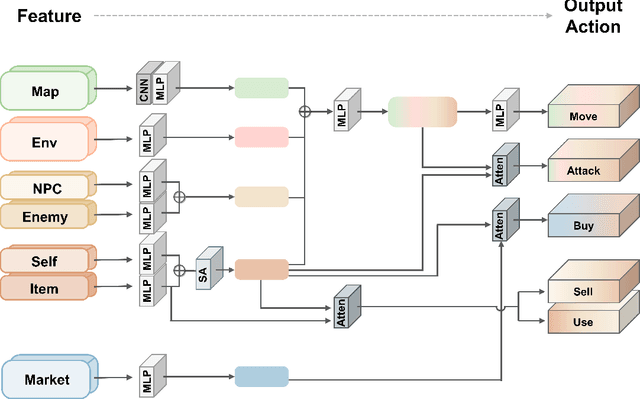
In this paper, we present the results of the NeurIPS-2022 Neural MMO Challenge, which attracted 500 participants and received over 1,600 submissions. Like the previous IJCAI-2022 Neural MMO Challenge, it involved agents from 16 populations surviving in procedurally generated worlds by collecting resources and defeating opponents. This year's competition runs on the latest v1.6 Neural MMO, which introduces new equipment, combat, trading, and a better scoring system. These elements combine to pose additional robustness and generalization challenges not present in previous competitions. This paper summarizes the design and results of the challenge, explores the potential of this environment as a benchmark for learning methods, and presents some practical reinforcement learning training approaches for complex tasks with sparse rewards. Additionally, we have open-sourced our baselines, including environment wrappers, benchmarks, and visualization tools for future research.
Benchmarking Robustness and Generalization in Multi-Agent Systems: A Case Study on Neural MMO
Aug 30, 2023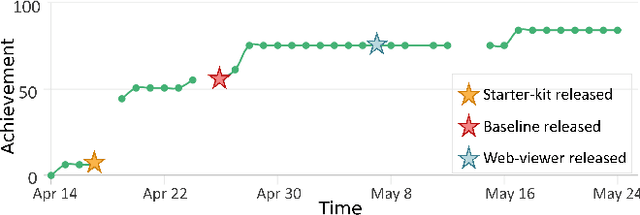
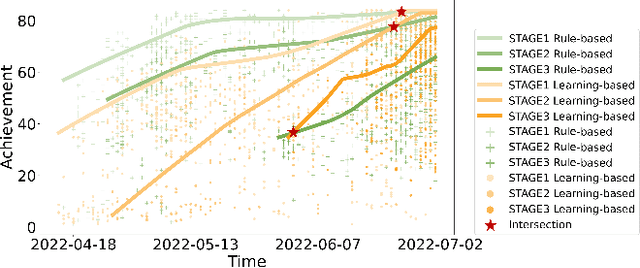
We present the results of the second Neural MMO challenge, hosted at IJCAI 2022, which received 1600+ submissions. This competition targets robustness and generalization in multi-agent systems: participants train teams of agents to complete a multi-task objective against opponents not seen during training. The competition combines relatively complex environment design with large numbers of agents in the environment. The top submissions demonstrate strong success on this task using mostly standard reinforcement learning (RL) methods combined with domain-specific engineering. We summarize the competition design and results and suggest that, as an academic community, competitions may be a powerful approach to solving hard problems and establishing a solid benchmark for algorithms. We will open-source our benchmark including the environment wrapper, baselines, a visualization tool, and selected policies for further research.