 Add to Chrome
 Add to Firefox
 Add to Edge
Learning to Adapt Foundation Model DINOv2 for Capsule Endoscopy Diagnosis
Jun 15, 2024
Foundation models have become prominent in computer vision, achieving notable success in various tasks. However, their effectiveness largely depends on pre-training with extensive datasets. Applying foundation models directly to small datasets of capsule endoscopy images from scratch is challenging. Pre-training on broad, general vision datasets is crucial for successfully fine-tuning our model for specific tasks. In this work, we introduce a simplified approach called Adapt foundation models with a low-rank adaptation (LoRA) technique for easier customization. Our method, inspired by the DINOv2 foundation model, applies low-rank adaptation learning to tailor foundation models for capsule endoscopy diagnosis effectively. Unlike traditional fine-tuning methods, our strategy includes LoRA layers designed to absorb specific surgical domain knowledge. During the training process, we keep the main model (the backbone encoder) fixed and focus on optimizing the LoRA layers and the disease classification component. We tested our method on two publicly available datasets for capsule endoscopy disease classification. The results were impressive, with our model achieving 97.75% accuracy on the Kvasir-Capsule dataset and 98.81% on the Kvasirv2 dataset. Our solution demonstrates that foundation models can be adeptly adapted for capsule endoscopy diagnosis, highlighting that mere reliance on straightforward fine-tuning or pre-trained models from general computer vision tasks is inadequate for such specific applications.

A Practice in Enrollment Prediction with Markov Chain Models
May 22, 2024Enrollment projection is a critical aspect of university management, guiding decisions related to resource allocation and revenue forecasting. However, despite its importance, there remains a lack of transparency regarding the methodologies utilized by many institutions. This paper presents an innovative approach to enrollment projection using Markov Chain modeling, drawing upon a case study conducted at Eastern Michigan University (EMU). Markov Chain modeling emerges as a promising approach for enrollment projection, offering precise predictions based on historical trends. This paper outlines the implementation of Enhanced Markov Chain modeling at EMU, detailing the methodology used to compute transition probabilities and evaluate model performance. Despite challenges posed by external uncertainties such as the COVID-19 pandemic, Markov Chain modeling has demonstrated impressive accuracy, with an average difference of less than 1 percent between predicted and actual enrollments. The paper concludes with a discussion of future directions and opportunities for collaboration among institutions.
LightTR: A Lightweight Framework for Federated Trajectory Recovery
May 06, 2024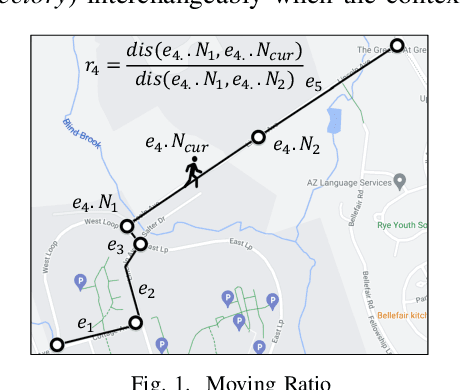
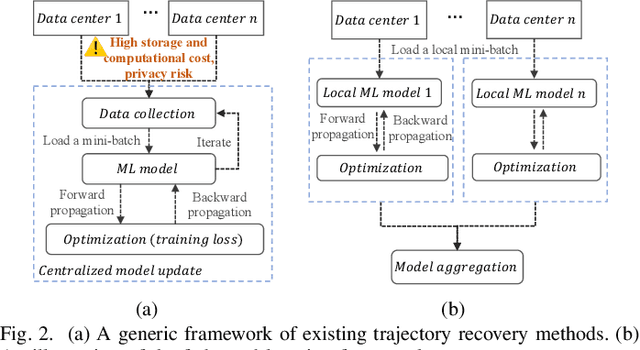
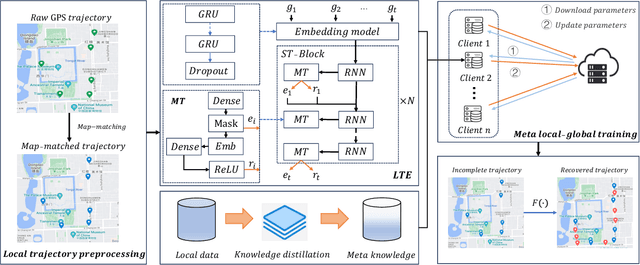
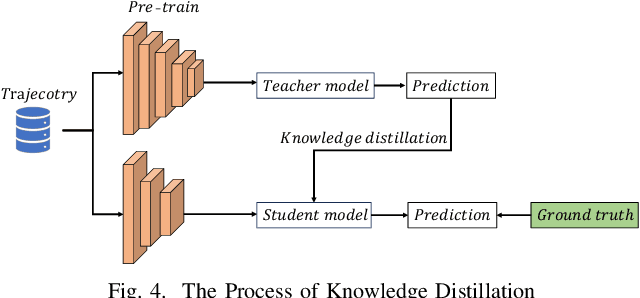
With the proliferation of GPS-equipped edge devices, huge trajectory data is generated and accumulated in various domains, motivating a variety of urban applications. Due to the limited acquisition capabilities of edge devices, a lot of trajectories are recorded at a low sampling rate, which may lead to the effectiveness drop of urban applications. We aim to recover a high-sampled trajectory based on the low-sampled trajectory in free space, i.e., without road network information, to enhance the usability of trajectory data and support urban applications more effectively. Recent proposals targeting trajectory recovery often assume that trajectories are available at a central location, which fail to handle the decentralized trajectories and hurt privacy. To bridge the gap between decentralized training and trajectory recovery, we propose a lightweight framework, LightTR, for federated trajectory recovery based on a client-server architecture, while keeping the data decentralized and private in each client/platform center (e.g., each data center of a company). Specifically, considering the limited processing capabilities of edge devices, LightTR encompasses a light local trajectory embedding module that offers improved computational efficiency without compromising its feature extraction capabilities. LightTR also features a meta-knowledge enhanced local-global training scheme to reduce communication costs between the server and clients and thus further offer efficiency improvement. Extensive experiments demonstrate the effectiveness and efficiency of the proposed framework.
A Unified Replay-based Continuous Learning Framework for Spatio-Temporal Prediction on Streaming Data
Apr 23, 2024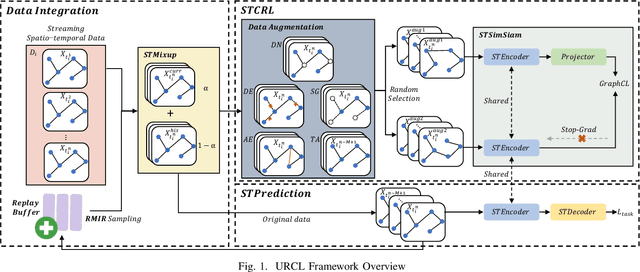
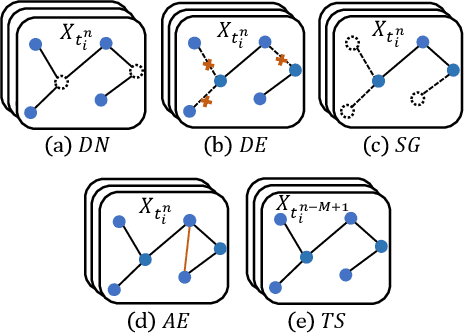
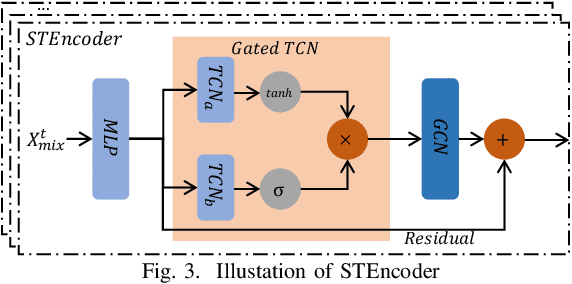
The widespread deployment of wireless and mobile devices results in a proliferation of spatio-temporal data that is used in applications, e.g., traffic prediction, human mobility mining, and air quality prediction, where spatio-temporal prediction is often essential to enable safety, predictability, or reliability. Many recent proposals that target deep learning for spatio-temporal prediction suffer from so-called catastrophic forgetting, where previously learned knowledge is entirely forgotten when new data arrives. Such proposals may experience deteriorating prediction performance when applied in settings where data streams into the system. To enable spatio-temporal prediction on streaming data, we propose a unified replay-based continuous learning framework. The framework includes a replay buffer of previously learned samples that are fused with training data using a spatio-temporal mixup mechanism in order to preserve historical knowledge effectively, thus avoiding catastrophic forgetting. To enable holistic representation preservation, the framework also integrates a general spatio-temporal autoencoder with a carefully designed spatio-temporal simple siamese (STSimSiam) network that aims to ensure prediction accuracy and avoid holistic feature loss by means of mutual information maximization. The framework further encompasses five spatio-temporal data augmentation methods to enhance the performance of STSimSiam. Extensive experiments on real data offer insight into the effectiveness of the proposed framework.
E2USD: Efficient-yet-effective Unsupervised State Detection for Multivariate Time Series
Mar 01, 2024


We propose E2USD that enables efficient-yet-accurate unsupervised MTS state detection. E2USD exploits a Fast Fourier Transform-based Time Series Compressor (FFTCompress) and a Decomposed Dual-view Embedding Module (DDEM) that together encode input MTSs at low computational overhead. Additionally, we propose a False Negative Cancellation Contrastive Learning method (FNCCLearning) to counteract the effects of false negatives and to achieve more cluster-friendly embedding spaces. To reduce computational overhead further in streaming settings, we introduce Adaptive Threshold Detection (ADATD). Comprehensive experiments with six baselines and six datasets offer evidence that E2USD is capable of SOTA accuracy at significantly reduced computational overhead. Our code is available at https://github.com/AI4CTS/E2Usd.
LB-KBQA: Large-language-model and BERT based Knowledge-Based Question and Answering System
Feb 09, 2024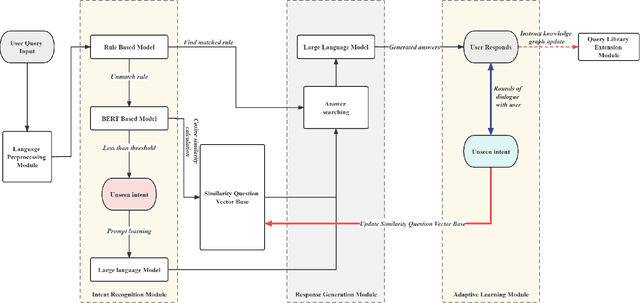
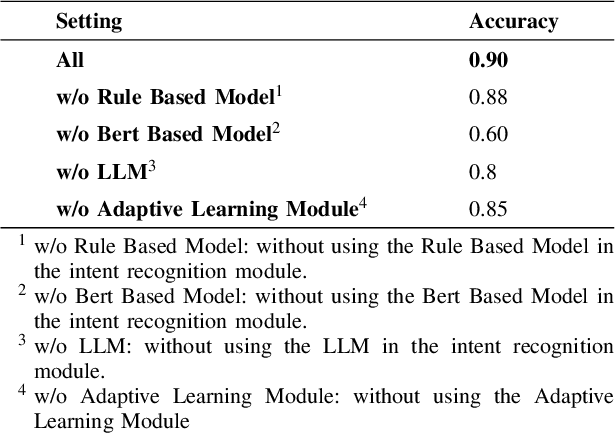
Generative Artificial Intelligence (AI), because of its emergent abilities, has empowered various fields, one typical of which is large language models (LLMs). One of the typical application fields of Generative AI is large language models (LLMs), and the natural language understanding capability of LLM is dramatically improved when compared with conventional AI-based methods. The natural language understanding capability has always been a barrier to the intent recognition performance of the Knowledge-Based-Question-and-Answer (KBQA) system, which arises from linguistic diversity and the newly appeared intent. Conventional AI-based methods for intent recognition can be divided into semantic parsing-based and model-based approaches. However, both of the methods suffer from limited resources in intent recognition. To address this issue, we propose a novel KBQA system based on a Large Language Model(LLM) and BERT (LB-KBQA). With the help of generative AI, our proposed method could detect newly appeared intent and acquire new knowledge. In experiments on financial domain question answering, our model has demonstrated superior effectiveness.
Emotion-Aware Contrastive Adaptation Network for Source-Free Cross-Corpus Speech Emotion Recognition
Jan 23, 2024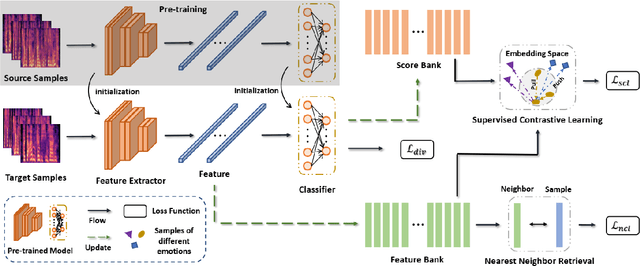


Cross-corpus speech emotion recognition (SER) aims to transfer emotional knowledge from a labeled source corpus to an unlabeled corpus. However, prior methods require access to source data during adaptation, which is unattainable in real-life scenarios due to data privacy protection concerns. This paper tackles a more practical task, namely source-free cross-corpus SER, where a pre-trained source model is adapted to the target domain without access to source data. To address the problem, we propose a novel method called emotion-aware contrastive adaptation network (ECAN). The core idea is to capture local neighborhood information between samples while considering the global class-level adaptation. Specifically, we propose a nearest neighbor contrastive learning to promote local emotion consistency among features of highly similar samples. Furthermore, relying solely on nearest neighborhoods may lead to ambiguous boundaries between clusters. Thus, we incorporate supervised contrastive learning to encourage greater separation between clusters representing different emotions, thereby facilitating improved class-level adaptation. Extensive experiments indicate that our proposed ECAN significantly outperforms state-of-the-art methods under the source-free cross-corpus SER setting on several speech emotion corpora.
Speech Swin-Transformer: Exploring a Hierarchical Transformer with Shifted Windows for Speech Emotion Recognition
Jan 19, 2024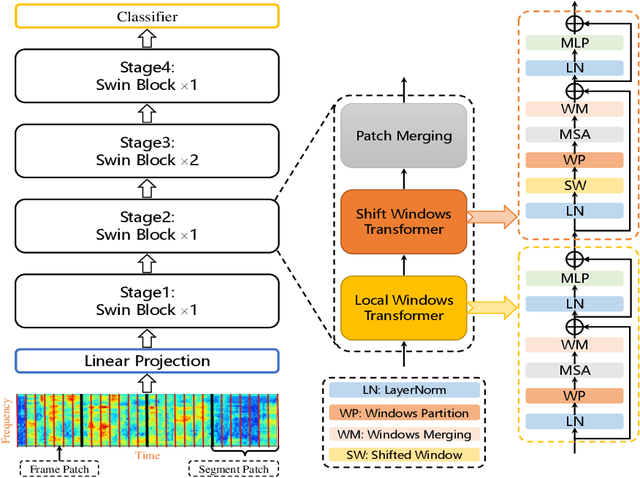

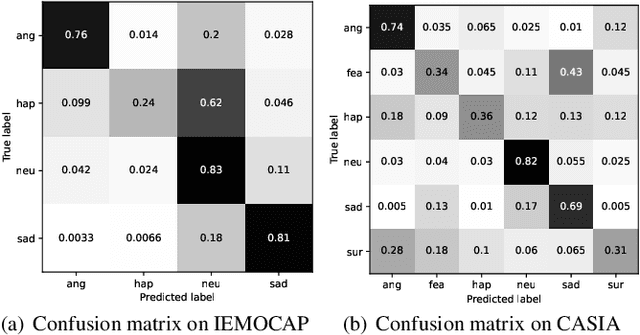
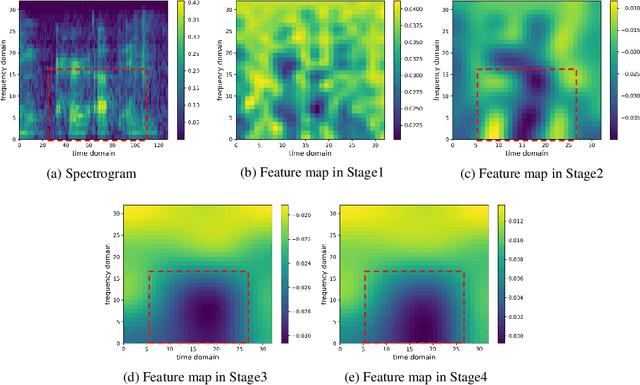
Swin-Transformer has demonstrated remarkable success in computer vision by leveraging its hierarchical feature representation based on Transformer. In speech signals, emotional information is distributed across different scales of speech features, e.\,g., word, phrase, and utterance. Drawing above inspiration, this paper presents a hierarchical speech Transformer with shifted windows to aggregate multi-scale emotion features for speech emotion recognition (SER), called Speech Swin-Transformer. Specifically, we first divide the speech spectrogram into segment-level patches in the time domain, composed of multiple frame patches. These segment-level patches are then encoded using a stack of Swin blocks, in which a local window Transformer is utilized to explore local inter-frame emotional information across frame patches of each segment patch. After that, we also design a shifted window Transformer to compensate for patch correlations near the boundaries of segment patches. Finally, we employ a patch merging operation to aggregate segment-level emotional features for hierarchical speech representation by expanding the receptive field of Transformer from frame-level to segment-level. Experimental results demonstrate that our proposed Speech Swin-Transformer outperforms the state-of-the-art methods.
Improving Speaker-independent Speech Emotion Recognition Using Dynamic Joint Distribution Adaptation
Jan 18, 2024
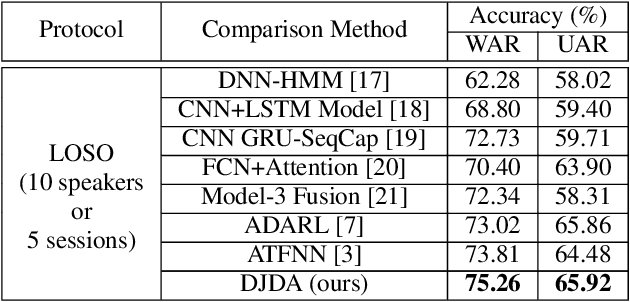

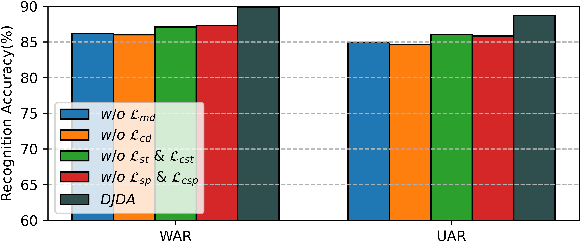
In speaker-independent speech emotion recognition, the training and testing samples are collected from diverse speakers, leading to a multi-domain shift challenge across the feature distributions of data from different speakers. Consequently, when the trained model is confronted with data from new speakers, its performance tends to degrade. To address the issue, we propose a Dynamic Joint Distribution Adaptation (DJDA) method under the framework of multi-source domain adaptation. DJDA firstly utilizes joint distribution adaptation (JDA), involving marginal distribution adaptation (MDA) and conditional distribution adaptation (CDA), to more precisely measure the multi-domain distribution shifts caused by different speakers. This helps eliminate speaker bias in emotion features, allowing for learning discriminative and speaker-invariant speech emotion features from coarse-level to fine-level. Furthermore, we quantify the adaptation contributions of MDA and CDA within JDA by using a dynamic balance factor based on $\mathcal{A}$-Distance, promoting to effectively handle the unknown distributions encountered in data from new speakers. Experimental results demonstrate the superior performance of our DJDA as compared to other state-of-the-art (SOTA) methods.
Towards Domain-Specific Cross-Corpus Speech Emotion Recognition Approach
Dec 11, 2023Cross-corpus speech emotion recognition (SER) poses a challenge due to feature distribution mismatch, potentially degrading the performance of established SER methods. In this paper, we tackle this challenge by proposing a novel transfer subspace learning method called acoustic knowledgeguided transfer linear regression (AKTLR). Unlike existing approaches, which often overlook domain-specific knowledge related to SER and simply treat cross-corpus SER as a generic transfer learning task, our AKTLR method is built upon a well-designed acoustic knowledge-guided dual sparsity constraint mechanism. This mechanism emphasizes the potential of minimalistic acoustic parameter feature sets to alleviate classifier overadaptation, which is empirically validated acoustic knowledge in SER, enabling superior generalization in cross-corpus SER tasks compared to using large feature sets. Through this mechanism, we extend a simple transfer linear regression model to AKTLR. This extension harnesses its full capability to seek emotiondiscriminative and corpus-invariant features from established acoustic parameter feature sets used for describing speech signals across two scales: contributive acoustic parameter groups and constituent elements within each contributive group. Our proposed method is evaluated through extensive cross-corpus SER experiments on three widely-used speech emotion corpora: EmoDB, eNTERFACE, and CASIA. The results confirm the effectiveness and superior performance of our method, outperforming recent state-of-the-art transfer subspace learning and deep transfer learning-based cross-corpus SER methods. Furthermore, our work provides experimental evidence supporting the feasibility and superiority of incorporating domain-specific knowledge into the transfer learning model to address cross-corpus SER tasks.