 Add to Chrome
 Add to Firefox
 Add to Edge
TokenBinder: Text-Video Retrieval with One-to-Many Alignment Paradigm
Sep 30, 2024
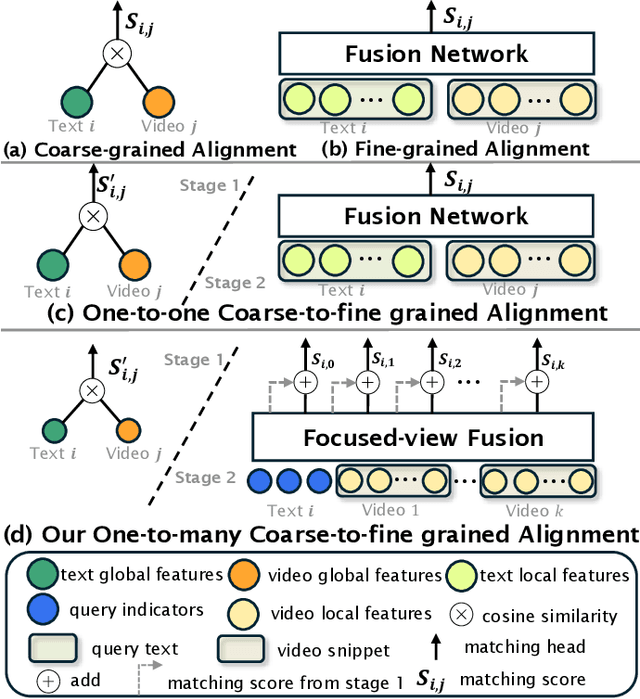
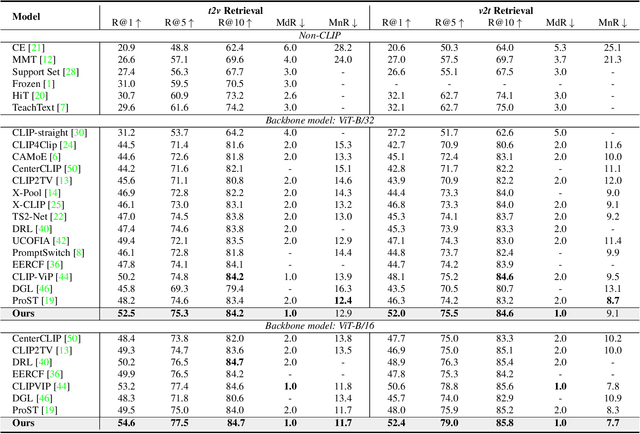
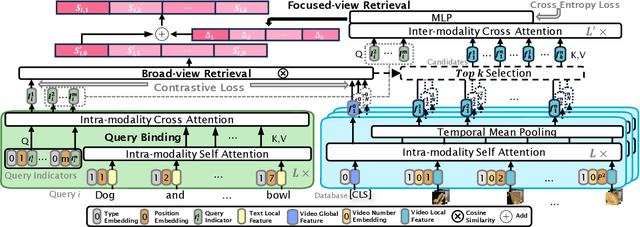
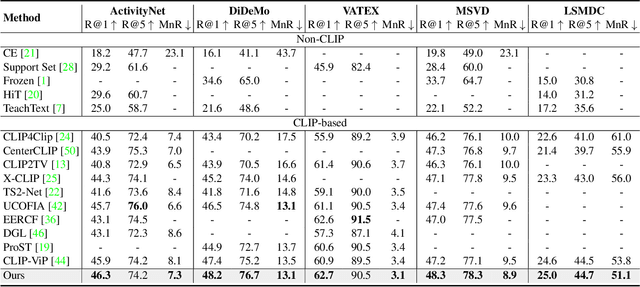
Text-Video Retrieval (TVR) methods typically match query-candidate pairs by aligning text and video features in coarse-grained, fine-grained, or combined (coarse-to-fine) manners. However, these frameworks predominantly employ a one(query)-to-one(candidate) alignment paradigm, which struggles to discern nuanced differences among candidates, leading to frequent mismatches. Inspired by Comparative Judgement in human cognitive science, where decisions are made by directly comparing items rather than evaluating them independently, we propose TokenBinder. This innovative two-stage TVR framework introduces a novel one-to-many coarse-to-fine alignment paradigm, imitating the human cognitive process of identifying specific items within a large collection. Our method employs a Focused-view Fusion Network with a sophisticated cross-attention mechanism, dynamically aligning and comparing features across multiple videos to capture finer nuances and contextual variations. Extensive experiments on six benchmark datasets confirm that TokenBinder substantially outperforms existing state-of-the-art methods. These results demonstrate its robustness and the effectiveness of its fine-grained alignment in bridging intra- and inter-modality information gaps in TVR tasks.

Contrastive Federated Learning with Tabular Data Silos
Sep 10, 2024Learning from data silos is a difficult task for organizations that need to obtain knowledge of objects that appeared in multiple independent data silos. Objects in multi-organizations, such as government agents, are referred by different identifiers, such as driver license, passport number, and tax file number. The data distributions in data silos are mostly non-IID (Independently and Identically Distributed), labelless, and vertically partitioned (i.e., having different attributes). Privacy concerns harden the above issues. Conditions inhibit enthusiasm for collaborative work. While Federated Learning (FL) has been proposed to address these issues, the difficulty of labeling, namely, label costliness, often hinders optimal model performance. A potential solution lies in contrastive learning, an unsupervised self-learning technique to represent semantic data by contrasting similar data pairs. However, contrastive learning is currently not designed to handle tabular data silos that existed within multiple organizations where data linkage by quasi identifiers are needed. To address these challenges, we propose using semi-supervised contrastive federated learning, which we refer to as Contrastive Federated Learning with Data Silos (CFL). Our approach tackles the aforementioned issues with an integrated solution. Our experimental results demonstrate that CFL outperforms current methods in addressing these challenges and providing improvements in accuracy. Additionally, we present positive results that showcase the advantages of our contrastive federated learning approach in complex client environments.
Optimizing Novelty of Top-k Recommendations using Large Language Models and Reinforcement Learning
Jun 20, 2024
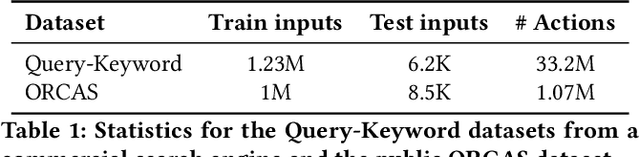

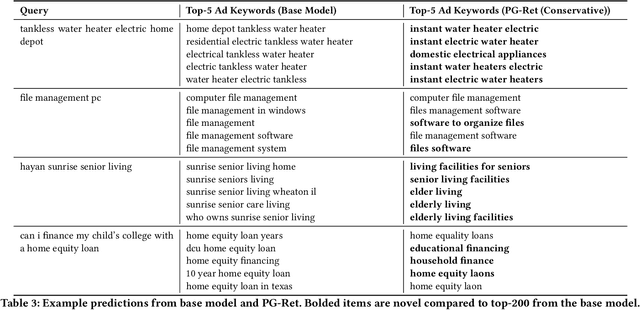
Given an input query, a recommendation model is trained using user feedback data (e.g., click data) to output a ranked list of items. In real-world systems, besides accuracy, an important consideration for a new model is novelty of its top-k recommendations w.r.t. an existing deployed model. However, novelty of top-k items is a difficult goal to optimize a model for, since it involves a non-differentiable sorting operation on the model's predictions. Moreover, novel items, by definition, do not have any user feedback data. Given the semantic capabilities of large language models, we address these problems using a reinforcement learning (RL) formulation where large language models provide feedback for the novel items. However, given millions of candidate items, the sample complexity of a standard RL algorithm can be prohibitively high. To reduce sample complexity, we reduce the top-k list reward to a set of item-wise rewards and reformulate the state space to consist of <query, item> tuples such that the action space is reduced to a binary decision; and show that this reformulation results in a significantly lower complexity when the number of items is large. We evaluate the proposed algorithm on improving novelty for a query-ad recommendation task on a large-scale search engine. Compared to supervised finetuning on recent <query, ad> pairs, the proposed RL-based algorithm leads to significant novelty gains with minimal loss in recall. We obtain similar results on the ORCAS query-webpage matching dataset and a product recommendation dataset based on Amazon reviews.
CaseGNN++: Graph Contrastive Learning for Legal Case Retrieval with Graph Augmentation
May 20, 2024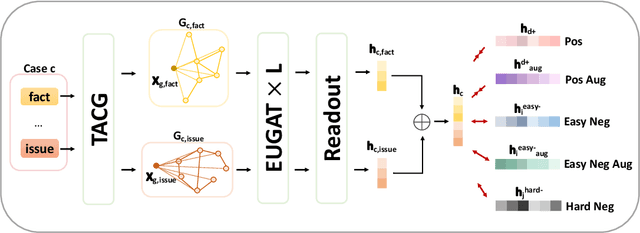
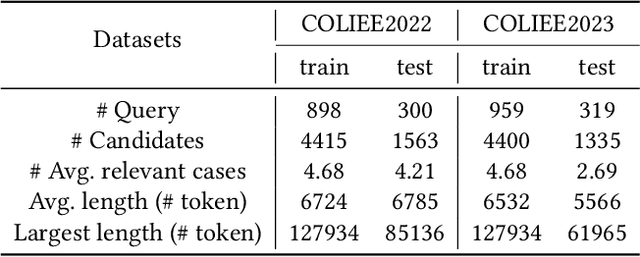
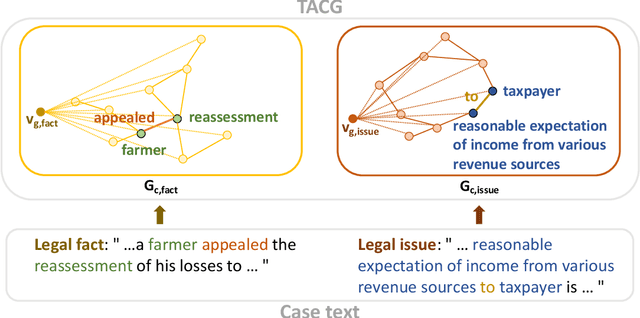
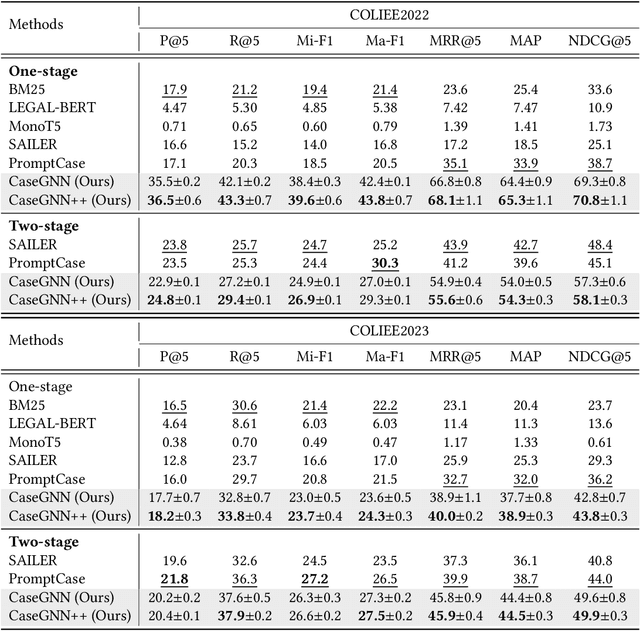
Legal case retrieval (LCR) is a specialised information retrieval task that aims to find relevant cases to a given query case. LCR holds pivotal significance in facilitating legal practitioners in finding precedents. Most of existing LCR methods are based on traditional lexical models and language models, which have gained promising performance in retrieval. However, the domain-specific structural information inherent in legal documents is yet to be exploited to further improve the performance. Our previous work CaseGNN successfully harnesses text-attributed graphs and graph neural networks to address the problem of legal structural information neglect. Nonetheless, there remain two aspects for further investigation: (1) The underutilization of rich edge information within text-attributed case graphs limits CaseGNN to generate informative case representation. (2) The inadequacy of labelled data in legal datasets hinders the training of CaseGNN model. In this paper, CaseGNN++, which is extended from CaseGNN, is proposed to simultaneously leverage the edge information and additional label data to discover the latent potential of LCR models. Specifically, an edge feature-based graph attention layer (EUGAT) is proposed to comprehensively update node and edge features during graph modelling, resulting in a full utilisation of structural information of legal cases. Moreover, a novel graph contrastive learning objective with graph augmentation is developed in CaseGNN++ to provide additional training signals, thereby enhancing the legal comprehension capabilities of CaseGNN++ model. Extensive experiments on two benchmark datasets from COLIEE 2022 and COLIEE 2023 demonstrate that CaseGNN++ not only significantly improves CaseGNN but also achieves supreme performance compared to state-of-the-art LCR methods. Code has been released on https://github.com/yanran-tang/CaseGNN.
On-device Online Learning and Semantic Management of TinyML Systems
May 15, 2024Recent advances in Tiny Machine Learning (TinyML) empower low-footprint embedded devices for real-time on-device Machine Learning. While many acknowledge the potential benefits of TinyML, its practical implementation presents unique challenges. This study aims to bridge the gap between prototyping single TinyML models and developing reliable TinyML systems in production: (1) Embedded devices operate in dynamically changing conditions. Existing TinyML solutions primarily focus on inference, with models trained offline on powerful machines and deployed as static objects. However, static models may underperform in the real world due to evolving input data distributions. We propose online learning to enable training on constrained devices, adapting local models towards the latest field conditions. (2) Nevertheless, current on-device learning methods struggle with heterogeneous deployment conditions and the scarcity of labeled data when applied across numerous devices. We introduce federated meta-learning incorporating online learning to enhance model generalization, facilitating rapid learning. This approach ensures optimal performance among distributed devices by knowledge sharing. (3) Moreover, TinyML's pivotal advantage is widespread adoption. Embedded devices and TinyML models prioritize extreme efficiency, leading to diverse characteristics ranging from memory and sensors to model architectures. Given their diversity and non-standardized representations, managing these resources becomes challenging as TinyML systems scale up. We present semantic management for the joint management of models and devices at scale. We demonstrate our methods through a basic regression example and then assess them in three real-world TinyML applications: handwritten character image classification, keyword audio classification, and smart building presence detection, confirming our approaches' effectiveness.
High Order Reasoning for Time Critical Recommendation in Evidence-based Medicine
May 05, 2024In time-critical decisions, human decision-makers can interact with AI-enabled situation-aware software to evaluate many imminent and possible scenarios, retrieve billions of facts, and estimate different outcomes based on trillions of parameters in a fraction of a second. In high-order reasoning, "what-if" questions can be used to challenge the assumptions or pre-conditions of the reasoning, "why-not" questions can be used to challenge on the method applied in the reasoning, "so-what" questions can be used to challenge the purpose of the decision, and "how-about" questions can be used to challenge the applicability of the method. When above high-order reasoning questions are applied to assist human decision-making, it can help humans to make time-critical decisions and avoid false-negative or false-positive types of errors. In this paper, we present a model of high-order reasoning to offer recommendations in evidence-based medicine in a time-critical fashion for the applications in ICU. The Large Language Model (LLM) is used in our system. The experiments demonstrated the LLM exhibited optimal performance in the "What-if" scenario, achieving a similarity of 88.52% with the treatment plans of human doctors. In the "Why-not" scenario, the best-performing model tended to opt for alternative treatment plans in 70% of cases for patients who died after being discharged from the ICU. In the "So-what" scenario, the optimal model provided a detailed analysis of the motivation and significance of treatment plans for ICU patients, with its reasoning achieving a similarity of 55.6% with actual diagnostic information. In the "How-about" scenario, the top-performing LLM demonstrated a content similarity of 66.5% in designing treatment plans transferring for similar diseases. Meanwhile, LLMs managed to predict the life status of patients after their discharge from the ICU with an accuracy of 70%.
CaseLink: Inductive Graph Learning for Legal Case Retrieval
Apr 10, 2024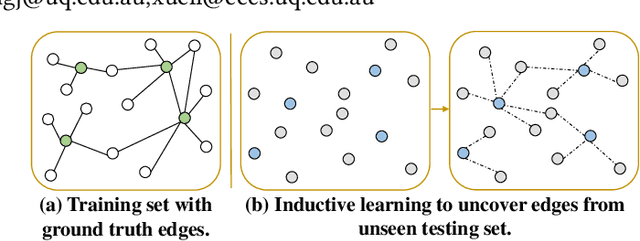
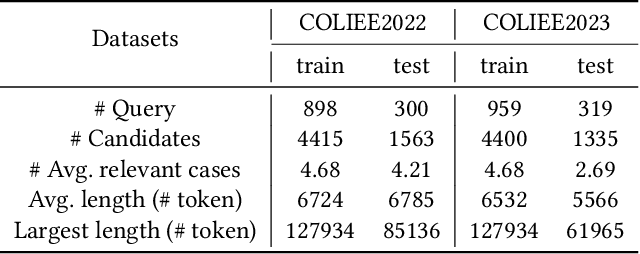
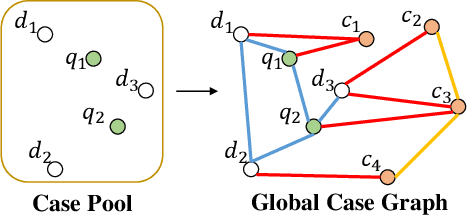
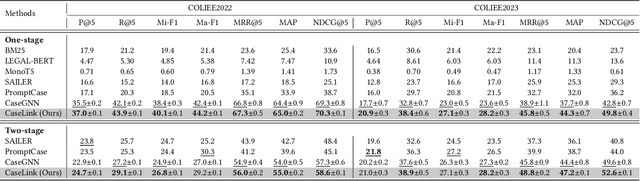
In case law, the precedents are the relevant cases that are used to support the decisions made by the judges and the opinions of lawyers towards a given case. This relevance is referred to as the case-to-case reference relation. To efficiently find relevant cases from a large case pool, retrieval tools are widely used by legal practitioners. Existing legal case retrieval models mainly work by comparing the text representations of individual cases. Although they obtain a decent retrieval accuracy, the intrinsic case connectivity relationships among cases have not been well exploited for case encoding, therefore limiting the further improvement of retrieval performance. In a case pool, there are three types of case connectivity relationships: the case reference relationship, the case semantic relationship, and the case legal charge relationship. Due to the inductive manner in the task of legal case retrieval, using case reference as input is not applicable for testing. Thus, in this paper, a CaseLink model based on inductive graph learning is proposed to utilise the intrinsic case connectivity for legal case retrieval, a novel Global Case Graph is incorporated to represent both the case semantic relationship and the case legal charge relationship. A novel contrastive objective with a regularisation on the degree of case nodes is proposed to leverage the information carried by the case reference relationship to optimise the model. Extensive experiments have been conducted on two benchmark datasets, which demonstrate the state-of-the-art performance of CaseLink. The code has been released on https://github.com/yanran-tang/CaseLink.
Unicron: Economizing Self-Healing LLM Training at Scale
Dec 30, 2023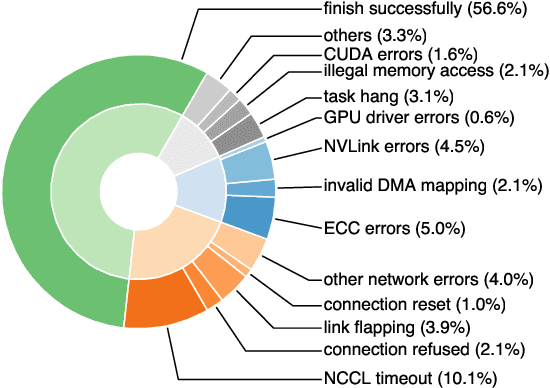
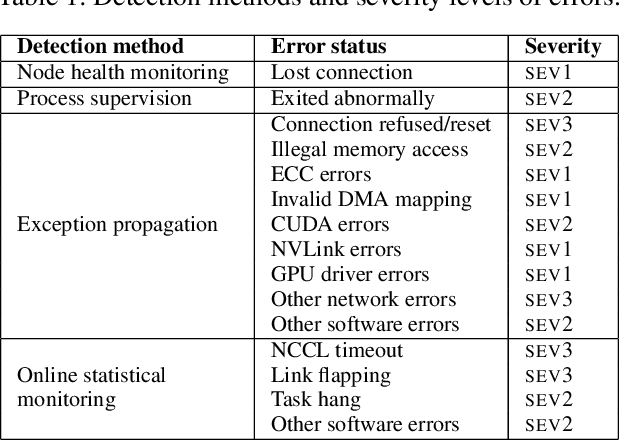
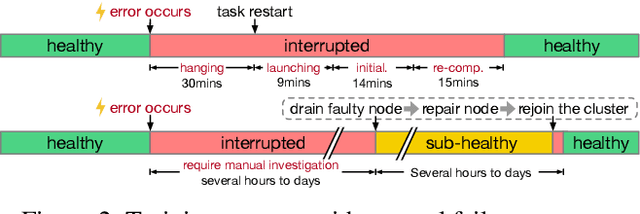
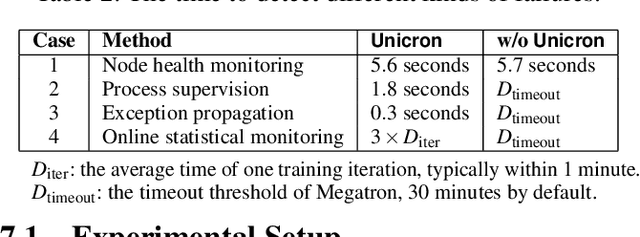
Training large-scale language models is increasingly critical in various domains, but it is hindered by frequent failures, leading to significant time and economic costs. Current failure recovery methods in cloud-based settings inadequately address the diverse and complex scenarios that arise, focusing narrowly on erasing downtime for individual tasks without considering the overall cost impact on a cluster. We introduce Unicron, a workload manager designed for efficient self-healing in large-scale language model training. Unicron optimizes the training process by minimizing failure-related costs across multiple concurrent tasks within a cluster. Its key features include in-band error detection for real-time error identification without extra overhead, a dynamic cost-aware plan generation mechanism for optimal reconfiguration, and an efficient transition strategy to reduce downtime during state changes. Deployed on a 128-GPU distributed cluster, Unicron demonstrates up to a 1.9x improvement in training efficiency over state-of-the-art methods, significantly reducing failure recovery costs and enhancing the reliability of large-scale language model training.
CaseGNN: Graph Neural Networks for Legal Case Retrieval with Text-Attributed Graphs
Dec 19, 2023Legal case retrieval is an information retrieval task in the legal domain, which aims to retrieve relevant cases with a given query case. Recent research of legal case retrieval mainly relies on traditional bag-of-words models and language models. Although these methods have achieved significant improvement in retrieval accuracy, there are still two challenges: (1) Legal structural information neglect. Previous neural legal case retrieval models mostly encode the unstructured raw text of case into a case representation, which causes the lack of important legal structural information in a case and leads to poor case representation; (2) Lengthy legal text limitation. When using the powerful BERT-based models, there is a limit of input text lengths, which inevitably requires to shorten the input via truncation or division with a loss of legal context information. In this paper, a graph neural networks-based legal case retrieval model, CaseGNN, is developed to tackle these challenges. To effectively utilise the legal structural information during encoding, a case is firstly converted into a Text-Attributed Case Graph (TACG), followed by a designed Edge Graph Attention Layer and a readout function to obtain the case graph representation. The CaseGNN model is optimised with a carefully designed contrastive loss with easy and hard negative sampling. Since the text attributes in the case graph come from individual sentences, the restriction of using language models is further avoided without losing the legal context. Extensive experiments have been conducted on two benchmarks from COLIEE 2022 and COLIEE 2023, which demonstrate that CaseGNN outperforms other state-of-the-art legal case retrieval methods. The code has been released on https://github.com/yanran-tang/CaseGNN.
Prompt-based Effective Input Reformulation for Legal Case Retrieval
Sep 06, 2023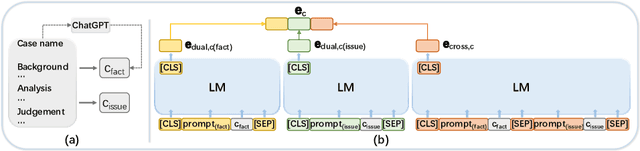
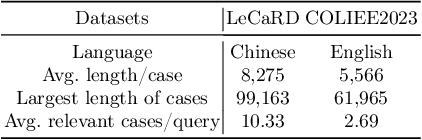
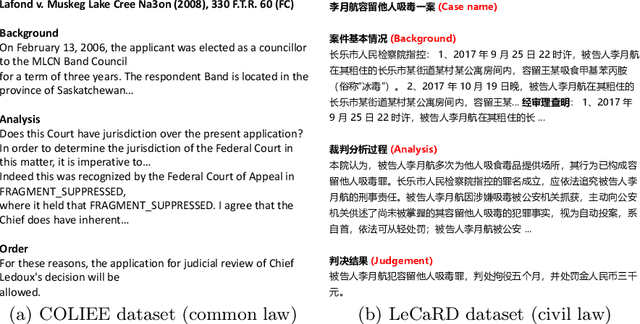
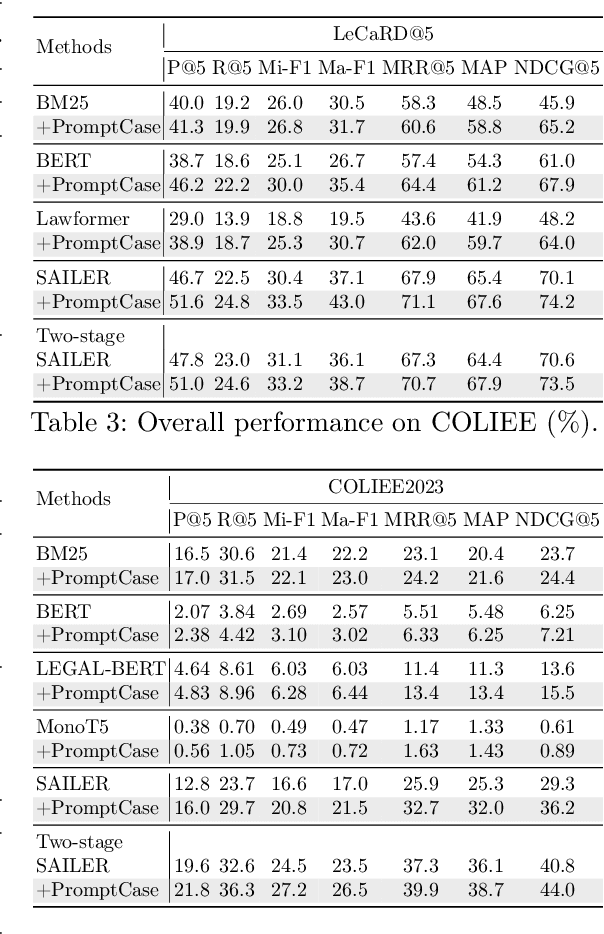
Legal case retrieval plays an important role for legal practitioners to effectively retrieve relevant cases given a query case. Most existing neural legal case retrieval models directly encode the whole legal text of a case to generate a case representation, which is then utilised to conduct a nearest neighbour search for retrieval. Although these straightforward methods have achieved improvement over conventional statistical methods in retrieval accuracy, two significant challenges are identified in this paper: (1) Legal feature alignment: the usage of the whole case text as the input will generally incorporate redundant and noisy information because, from the legal perspective, the determining factor of relevant cases is the alignment of key legal features instead of whole text matching; (2) Legal context preservation: furthermore, since the existing text encoding models usually have an input length limit shorter than the case, the whole case text needs to be truncated or divided into paragraphs, which leads to the loss of the global context of legal information. In this paper, a novel legal case retrieval framework, PromptCase, is proposed to tackle these challenges. Firstly, legal facts and legal issues are identified and formally defined as the key features facilitating legal case retrieval based on a thorough study of the definition of relevant cases from a legal perspective. Secondly, with the determining legal features, a prompt-based encoding scheme is designed to conduct an effective encoding with language models. Extensive zero-shot experiments have been conducted on two benchmark datasets in legal case retrieval, which demonstrate the superior retrieval effectiveness of the proposed PromptCase. The code has been released on https://github.com/yanran-tang/PromptCase.