 Add to Chrome
 Add to Firefox
 Add to Edge
The Compliance Trap: Diagnosing How AI Agents Consume Conflicting Memory
Jul 12, 2026
Memory is becoming a core component of long-horizon AI agents, allowing agents to reuse past experience when operating web browsers, software tools, and other interactive environments. Existing work mostly treats memory as a supply problem, asking what experience to write, how to store it, and which entry to retrieve for the next task. Yet we still lack a clear account of how models consume retrieved memory across a multi-step action trajectory. This consumption process matters because it determines not only what memories should be retrieved, but also what models and control policies are needed to use them safely. To diagnose this process, we propose Entry--Propagation--Recovery (E-P-R), a trajectory-level framework that asks where memory first changes an action, whether that change carries forward, and whether the agent can recover after leaving a correct path. We instantiate E-P-R on WebArena and on MemTrapBench, a controlled benchmark we build to isolate these phases. We find that the main failure often begins at entry: agents adopt conflicting memory at the first exposed decision point even when it is task-wrong. Repeated exposure then amplifies this early error, while recovery after divergence is weak. Together, these effects create a compliance trap: across models, conflicting memory induces similar compliance rates, but once agents comply, their success rates collapse to a low floor. Stronger agents therefore suffer larger absolute damage because each compliance event erases more baseline capability. These results suggest that memory-augmented agents should be evaluated not only by retrieval quality or final success rate, but by how they consume memory throughout the trajectory.

Pluralis v0.1: Towards a Multicultural, Multimodal, Multilingual Benchmark for AI Risk and Reliability
Jul 07, 2026Current AI safety evaluation and benchmarking frameworks predominantly rely on Western-centric culture-agnostic defaults that mask critical regional laws, socio-linguistic nuances, and cultural taboos, leaving Vision-Language Models (VLMs) vulnerable in global deployments. We introduce Pluralis v0.1: a novel multimodal, multi-regional, and multilingual dataset built from a culture-first perspective. Spanning 6,448 prompts across six Asia-Pacific countries (Bangladesh, India, Korea, Pakistan, Singapore, Taiwan) and eight languages, Pluralis diverges from prior work by natively sourcing localized safety hazards rather than adapting Western datasets. Crucially, it introduces a multimodal evaluation paradigm: user text (e.g., "Should I gift this?") and an image referring to "this" (e.g., a clock) - both innocuous in isolation, but synergistically triggering specific legal or cultural violations. Pluralis disentangles universal safety violations from localized cultural appropriateness, establishing the latter as a first-class evaluation axis. To operationalize this, we present Judge-Pluralis, an agreement-gated LLM-as-a-Judge ensemble trained on examples classified in an empirically derived cultural taxonomy. Observing VLM behavior on a subset of the Pluralis surfaces recurring, locale-specific failure modes such as image misidentifications with downstream harm, missed item-context-locale interactions, and inadequate refusals. These failure modes vary systematically across locales and languages, exposing blind spots that globally averaged metrics conceal. Ultimately, Pluralis is not presented as a solved evaluation framework for cultural alignment, but rather as a first step and catalyst for future innovation. We call upon the research community to utilize this foundation to advance the science of multilingual, multicultural evaluation to better support AI cultural alignment globally.
Meissa: Multi-modal Medical Agentic Intelligence
Mar 09, 2026Multi-modal large language models (MM-LLMs) have shown strong performance in medical image understanding and clinical reasoning. Recent medical agent systems extend them with tool use and multi-agent collaboration, enabling complex decision-making. However, these systems rely almost entirely on frontier models (e.g., GPT), whose API-based deployment incurs high cost, high latency, and privacy risks that conflict with on-premise clinical requirements. We present Meissa, a lightweight 4B-parameter medical MM-LLM that brings agentic capability offline. Instead of imitating static answers, Meissa learns both when to engage external interaction (strategy selection) and how to execute multi-step interaction (strategy execution) by distilling structured trajectories from frontier models. Specifically, we propose: (1) Unified trajectory modeling: trajectories (reasoning and action traces) are represented within a single state-action-observation formalism, allowing one model to generalize across heterogeneous medical environments. (2) Three-tier stratified supervision: the model's own errors trigger progressive escalation from direct reasoning to tool-augmented and multi-agent interaction, explicitly learning difficulty-aware strategy selection. (3) Prospective-retrospective supervision: pairing exploratory forward traces with hindsight-rationalized execution traces enables stable learning of effective interaction policies. Trained on 40K curated trajectories, Meissa matches or exceeds proprietary frontier agents in 10 of 16 evaluation settings across 13 medical benchmarks spanning radiology, pathology, and clinical reasoning. Using over 25x fewer parameters than typical frontier models like Gemini-3, Meissa operates fully offline with 22x lower end-to-end latency compared to API-based deployment. Data, models, and environments are released at https://github.com/Schuture/Meissa.
MMMT-IF: A Challenging Multimodal Multi-Turn Instruction Following Benchmark
Sep 26, 2024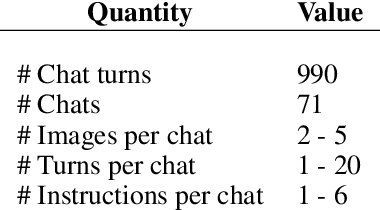
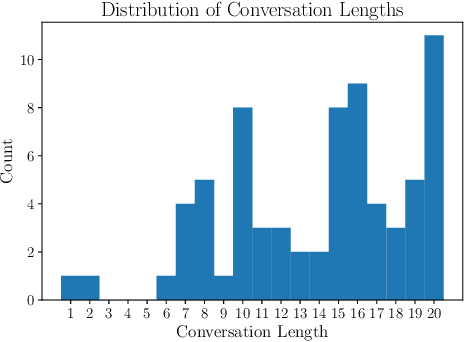


Evaluating instruction following capabilities for multimodal, multi-turn dialogue is challenging. With potentially multiple instructions in the input model context, the task is time-consuming for human raters and we show LLM based judges are biased towards answers from the same model. We propose MMMT-IF, an image based multi-turn Q$\&$A evaluation set with added global instructions between questions, constraining the answer format. This challenges models to retrieve instructions dispersed across long dialogues and reason under instruction constraints. All instructions are objectively verifiable through code execution. We introduce the Programmatic Instruction Following ($\operatorname{PIF}$) metric to measure the fraction of the instructions that are correctly followed while performing a reasoning task. The $\operatorname{PIF-N-K}$ set of metrics further evaluates robustness by measuring the fraction of samples in a corpus where, for each sample, at least K out of N generated model responses achieve a $\operatorname{PIF}$ score of one. The $\operatorname{PIF}$ metric aligns with human instruction following ratings, showing 60 percent correlation. Experiments show Gemini 1.5 Pro, GPT-4o, and Claude 3.5 Sonnet, have a $\operatorname{PIF}$ metric that drops from 0.81 on average at turn 1 across the models, to 0.64 at turn 20. Across all turns, when each response is repeated 4 times ($\operatorname{PIF-4-4}$), GPT-4o and Gemini successfully follow all instructions only $11\%$ of the time. When all the instructions are also appended to the end of the model input context, the $\operatorname{PIF}$ metric improves by 22.3 points on average, showing that the challenge with the task lies not only in following the instructions, but also in retrieving the instructions spread out in the model context. We plan to open source the MMMT-IF dataset and metric computation code.
Muskits-ESPnet: A Comprehensive Toolkit for Singing Voice Synthesis in New Paradigm
Sep 11, 2024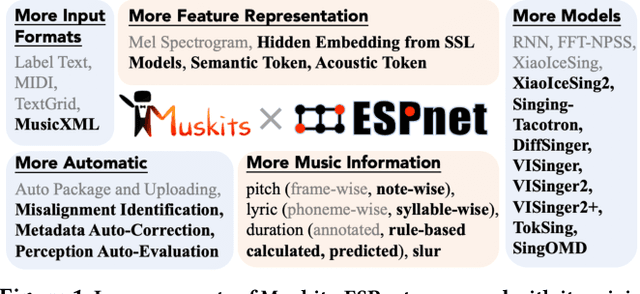

This research presents Muskits-ESPnet, a versatile toolkit that introduces new paradigms to Singing Voice Synthesis (SVS) through the application of pretrained audio models in both continuous and discrete approaches. Specifically, we explore discrete representations derived from SSL models and audio codecs and offer significant advantages in versatility and intelligence, supporting multi-format inputs and adaptable data processing workflows for various SVS models. The toolkit features automatic music score error detection and correction, as well as a perception auto-evaluation module to imitate human subjective evaluating scores. Muskits-ESPnet is available at \url{https://github.com/espnet/espnet}.
Entity-Aware Biaffine Attention Model for Improved Constituent Parsing with Reduced Entity Violations
Sep 01, 2024Constituency parsing involves analyzing a sentence by breaking it into sub-phrases, or constituents. While many deep neural models have achieved state-of-the-art performance in this task, they often overlook the entity-violating issue, where an entity fails to form a complete sub-tree in the resultant parsing tree. To address this, we propose an entity-aware biaffine attention model for constituent parsing. This model incorporates entity information into the biaffine attention mechanism by using additional entity role vectors for potential phrases, which enhances the parsing accuracy. We introduce a new metric, the Entity Violating Rate (EVR), to quantify the extent of entity violations in parsing results. Experiments on three popular datasets-ONTONOTES, PTB, and CTB-demonstrate that our model achieves the lowest EVR while maintaining high precision, recall, and F1-scores comparable to existing models. Further evaluation in downstream tasks, such as sentence sentiment analysis, highlights the effectiveness of our model and the validity of the proposed EVR metric.
Singing Voice Data Scaling-up: An Introduction to ACE-Opencpop and KiSing-v2
Jan 31, 2024


In singing voice synthesis (SVS), generating singing voices from musical scores faces challenges due to limited data availability, a constraint less common in text-to-speech (TTS). This study proposes a new approach to address this data scarcity. We utilize an existing singing voice synthesizer for data augmentation and apply precise manual tuning to reduce unnatural voice synthesis. Our development of two extensive singing voice corpora, ACE-Opencpop and KiSing-v2, facilitates large-scale, multi-singer voice synthesis. Utilizing pre-trained models derived from these corpora, we achieve notable improvements in voice quality, evident in both in-domain and out-of-domain scenarios. The corpora, pre-trained models, and their related training recipes are publicly available at Muskits-ESPnet (https://github.com/espnet/espnet).
Faithful Persona-based Conversational Dataset Generation with Large Language Models
Dec 15, 2023


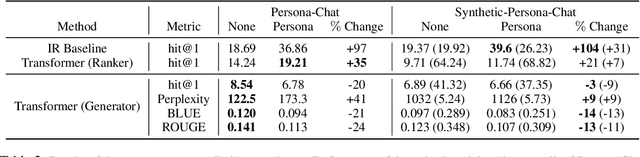
High-quality conversational datasets are essential for developing AI models that can communicate with users. One way to foster deeper interactions between a chatbot and its user is through personas, aspects of the user's character that provide insights into their personality, motivations, and behaviors. Training Natural Language Processing (NLP) models on a diverse and comprehensive persona-based dataset can lead to conversational models that create a deeper connection with the user, and maintain their engagement. In this paper, we leverage the power of Large Language Models (LLMs) to create a large, high-quality conversational dataset from a seed dataset. We propose a Generator-Critic architecture framework to expand the initial dataset, while improving the quality of its conversations. The Generator is an LLM prompted to output conversations. The Critic consists of a mixture of expert LLMs that control the quality of the generated conversations. These experts select the best generated conversations, which we then use to improve the Generator. We release Synthetic-Persona-Chat, consisting of 20k conversations seeded from Persona-Chat. We evaluate the quality of Synthetic-Persona-Chat and our generation framework on different dimensions through extensive experiments, and observe that the losing rate of Synthetic-Persona-Chat against Persona-Chat during Turing test decreases from 17.2% to 8.8% over three iterations.
GPU Accelerated Color Correction and Frame Warping for Real-time Video Stitching
Aug 17, 2023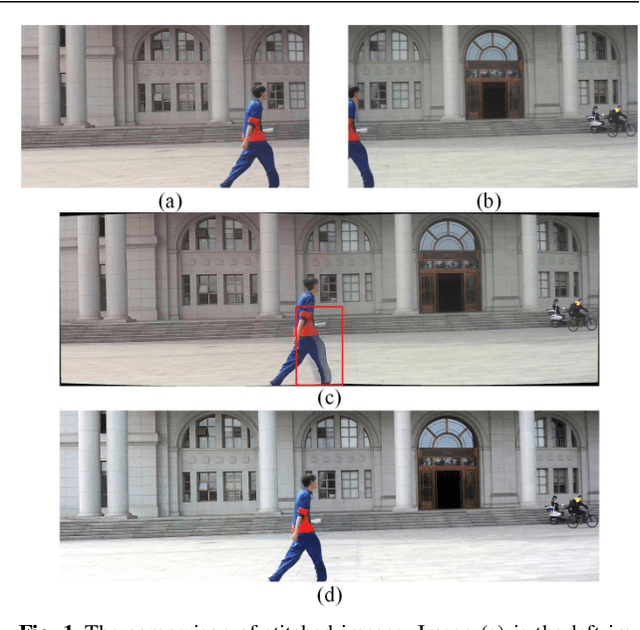
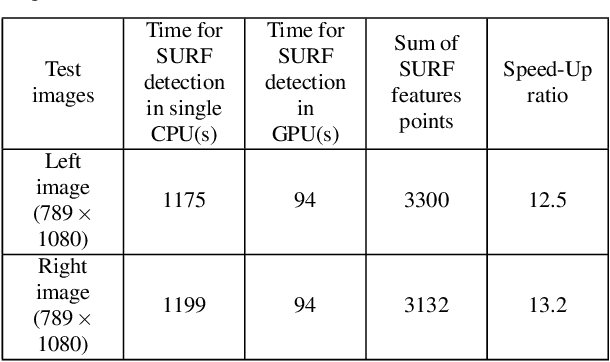
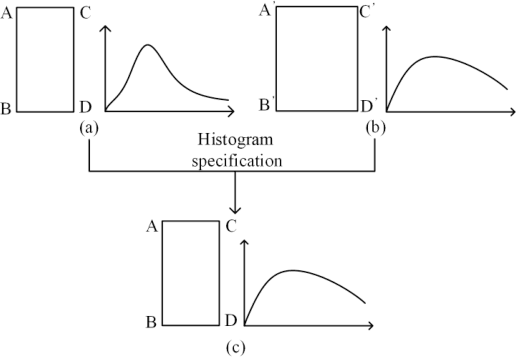
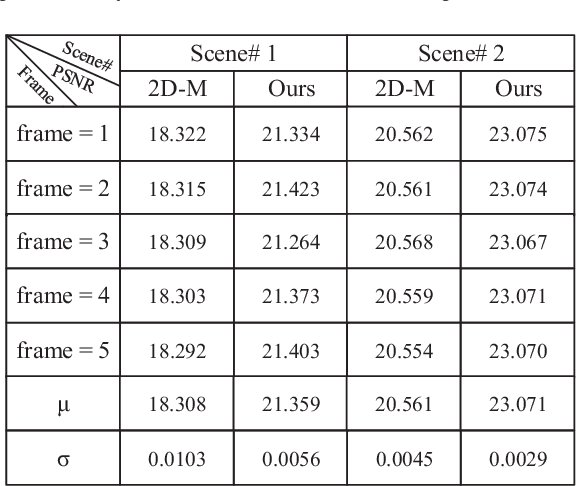
Traditional image stitching focuses on a single panorama frame without considering the spatial-temporal consistency in videos. The straightforward image stitching approach will cause temporal flicking and color inconstancy when it is applied to the video stitching task. Besides, inaccurate camera parameters will cause artifacts in the image warping. In this paper, we propose a real-time system to stitch multiple video sequences into a panoramic video, which is based on GPU accelerated color correction and frame warping without accurate camera parameters. We extend the traditional 2D-Matrix (2D-M) color correction approach and a present spatio-temporal 3D-Matrix (3D-M) color correction method for the overlap local regions with online color balancing using a piecewise function on global frames. Furthermore, we use pairwise homography matrices given by coarse camera calibration for global warping followed by accurate local warping based on the optical flow. Experimental results show that our system can generate highquality panorama videos in real time.
Close-up View synthesis by Interpolating Optical Flow
Jul 12, 2023The virtual viewpoint is perceived as a new technique in virtual navigation, as yet not supported due to the lack of depth information and obscure camera parameters. In this paper, a method for achieving close-up virtual view is proposed and it only uses optical flow to build parallax effects to realize pseudo 3D projection without using depth sensor. We develop a bidirectional optical flow method to obtain any virtual viewpoint by proportional interpolation of optical flow. Moreover, with the ingenious application of the optical-flow-value, we achieve clear and visual-fidelity magnified results through lens stretching in any corner, which overcomes the visual distortion and image blur through viewpoint magnification and transition in Google Street View system.