 Add to Chrome
 Add to Firefox
 Add to Edge
Conan-embedding: General Text Embedding with More and Better Negative Samples
Aug 29, 2024

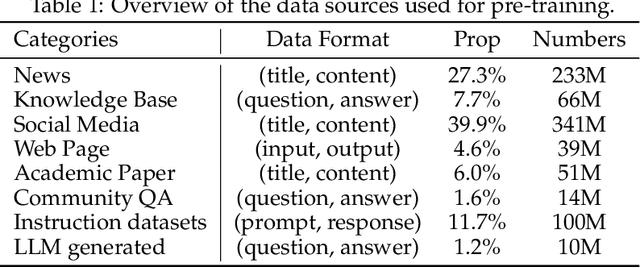

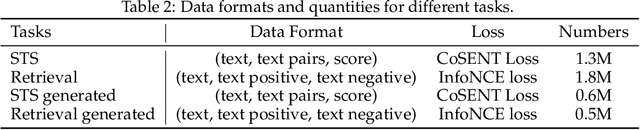
With the growing popularity of RAG, the capabilities of embedding models are gaining increasing attention. Embedding models are primarily trained through contrastive loss learning, with negative examples being a key component. Previous work has proposed various hard negative mining strategies, but these strategies are typically employed as preprocessing steps. In this paper, we propose the conan-embedding model, which maximizes the utilization of more and higher-quality negative examples. Specifically, since the model's ability to handle preprocessed negative examples evolves during training, we propose dynamic hard negative mining method to expose the model to more challenging negative examples throughout the training process. Secondly, contrastive learning requires as many negative examples as possible but is limited by GPU memory constraints. Therefore, we use a Cross-GPU balancing Loss to provide more negative examples for embedding training and balance the batch size across multiple tasks. Moreover, we also discovered that the prompt-response pairs from LLMs can be used for embedding training. Our approach effectively enhances the capabilities of embedding models, currently ranking first on the Chinese leaderboard of Massive text embedding benchmark

A Low-dose CT Reconstruction Network Based on TV-regularized OSEM Algorithm
Aug 25, 2024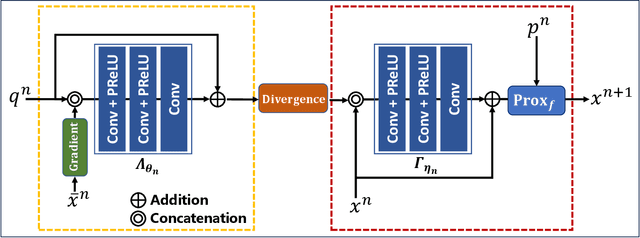
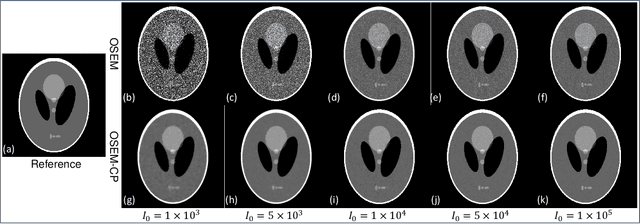
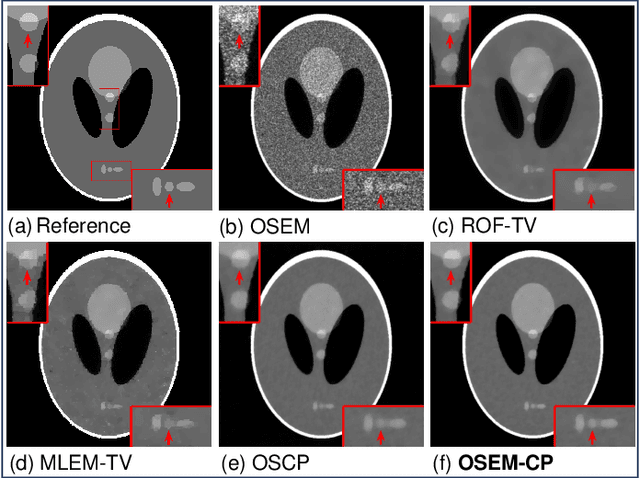
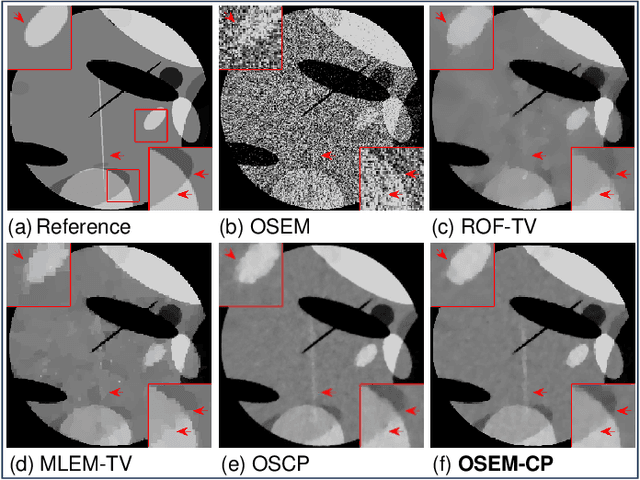
Low-dose computed tomography (LDCT) offers significant advantages in reducing the potential harm to human bodies. However, reducing the X-ray dose in CT scanning often leads to severe noise and artifacts in the reconstructed images, which might adversely affect diagnosis. By utilizing the expectation maximization (EM) algorithm, statistical priors could be combined with artificial priors to improve LDCT reconstruction quality. However, conventional EM-based regularization methods adopt an alternating solving strategy, i.e. full reconstruction followed by image-regularization, resulting in over-smoothing and slow convergence. In this paper, we propose to integrate TV regularization into the ``M''-step of the EM algorithm, thus achieving effective and efficient regularization. Besides, by employing the Chambolle-Pock (CP) algorithm and the ordered subset (OS) strategy, we propose the OSEM-CP algorithm for LDCT reconstruction, in which both reconstruction and regularization are conducted view-by-view. Furthermore, by unrolling OSEM-CP, we propose an end-to-end reconstruction neural network (NN), named OSEM-CPNN, with remarkable performance and efficiency that achieves high-quality reconstructions in just one full-view iteration. Experiments on different models and datasets demonstrate our methods' outstanding performance compared to traditional and state-of-the-art deep-learning methods.
Learning Robust Treatment Rules for Censored Data
Aug 17, 2024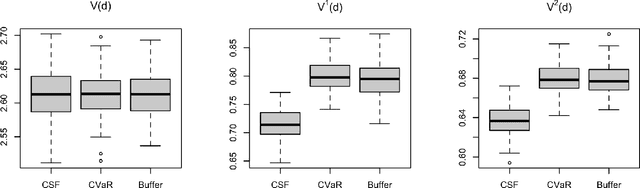
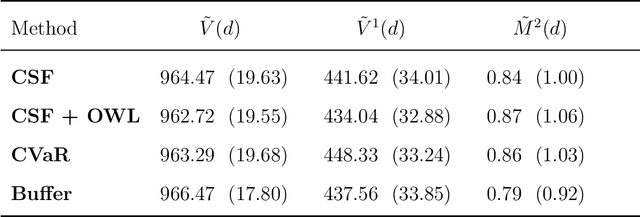
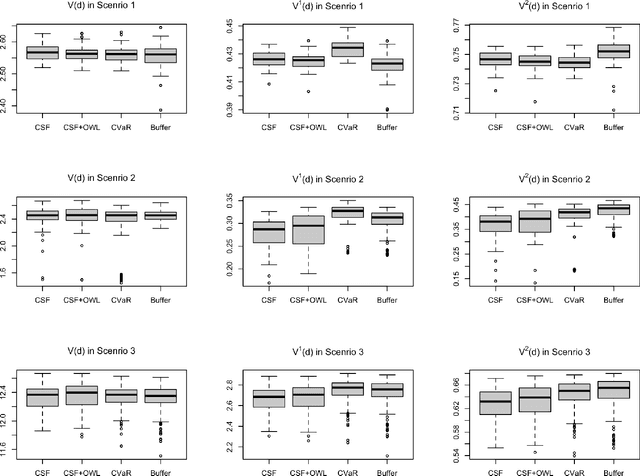
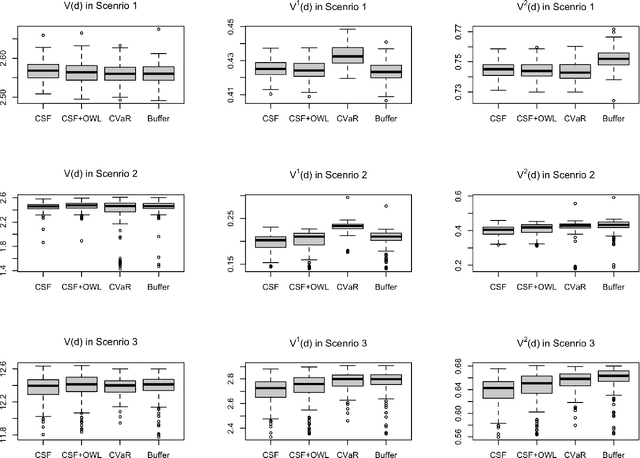
There is a fast-growing literature on estimating optimal treatment rules directly by maximizing the expected outcome. In biomedical studies and operations applications, censored survival outcome is frequently observed, in which case the restricted mean survival time and survival probability are of great interest. In this paper, we propose two robust criteria for learning optimal treatment rules with censored survival outcomes; the former one targets at an optimal treatment rule maximizing the restricted mean survival time, where the restriction is specified by a given quantile such as median; the latter one targets at an optimal treatment rule maximizing buffered survival probabilities, where the predetermined threshold is adjusted to account the restricted mean survival time. We provide theoretical justifications for the proposed optimal treatment rules and develop a sampling-based difference-of-convex algorithm for learning them. In simulation studies, our estimators show improved performance compared to existing methods. We also demonstrate the proposed method using AIDS clinical trial data.
Conformal Trajectory Prediction with Multi-View Data Integration in Cooperative Driving
Aug 02, 2024Current research on trajectory prediction primarily relies on data collected by onboard sensors of an ego vehicle. With the rapid advancement in connected technologies, such as vehicle-to-vehicle (V2V) and vehicle-to-infrastructure (V2I) communication, valuable information from alternate views becomes accessible via wireless networks. The integration of information from alternative views has the potential to overcome the inherent limitations associated with a single viewpoint, such as occlusions and limited field of view. In this work, we introduce V2INet, a novel trajectory prediction framework designed to model multi-view data by extending existing single-view models. Unlike previous approaches where the multi-view data is manually fused or formulated as a separate training stage, our model supports end-to-end training, enhancing both flexibility and performance. Moreover, the predicted multimodal trajectories are calibrated by a post-hoc conformal prediction module to get valid and efficient confidence regions. We evaluated the entire framework using the real-world V2I dataset V2X-Seq. Our results demonstrate superior performance in terms of Final Displacement Error (FDE) and Miss Rate (MR) using a single GPU. The code is publicly available at: \url{https://github.com/xichennn/V2I_trajectory_prediction}.
MSMA: Multi-agent Trajectory Prediction in Connected and Autonomous Vehicle Environment with Multi-source Data Integration
Jul 31, 2024The prediction of surrounding vehicle trajectories is crucial for collision-free path planning. In this study, we focus on a scenario where a connected and autonomous vehicle (CAV) serves as the central agent, utilizing both sensors and communication technologies to perceive its surrounding traffics consisting of autonomous vehicles (AVs), connected vehicles (CVs), and human-driven vehicles (HDVs). Our trajectory prediction task is aimed at all the detected surrounding vehicles. To effectively integrate the multi-source data from both sensor and communication technologies, we propose a deep learning framework called MSMA utilizing a cross-attention module for multi-source data fusion. Vector map data is utilized to provide contextual information. The trajectory dataset is collected in CARLA simulator with synthesized data errors introduced. Numerical experiments demonstrate that in a mixed traffic flow scenario, the integration of data from different sources enhances our understanding of the environment. This notably improves trajectory prediction accuracy, particularly in situations with a high CV market penetration rate. The code is available at: https://github.com/xichennn/MSMA.
DTFormer: A Transformer-Based Method for Discrete-Time Dynamic Graph Representation Learning
Jul 26, 2024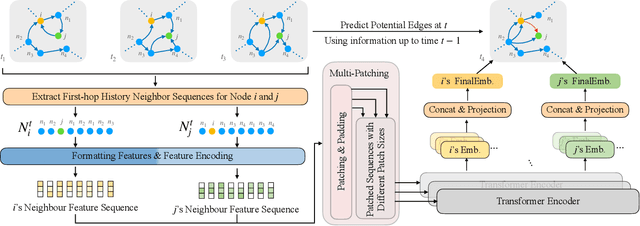

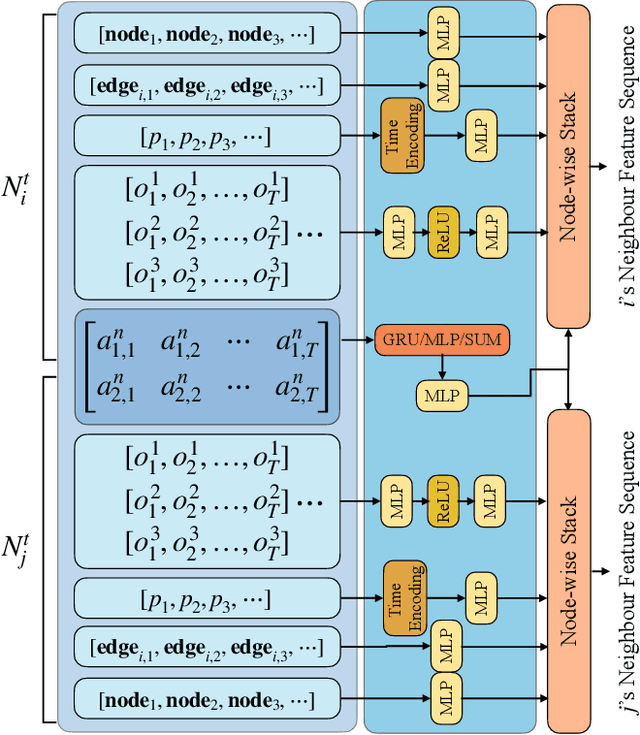

Discrete-Time Dynamic Graphs (DTDGs), which are prevalent in real-world implementations and notable for their ease of data acquisition, have garnered considerable attention from both academic researchers and industry practitioners. The representation learning of DTDGs has been extensively applied to model the dynamics of temporally changing entities and their evolving connections. Currently, DTDG representation learning predominantly relies on GNN+RNN architectures, which manifest the inherent limitations of both Graph Neural Networks (GNNs) and Recurrent Neural Networks (RNNs). GNNs suffer from the over-smoothing issue as the models architecture goes deeper, while RNNs struggle to capture long-term dependencies effectively. GNN+RNN architectures also grapple with scaling to large graph sizes and long sequences. Additionally, these methods often compute node representations separately and focus solely on individual node characteristics, thereby overlooking the behavior intersections between the two nodes whose link is being predicted, such as instances where the two nodes appear together in the same context or share common neighbors. This paper introduces a novel representation learning method DTFormer for DTDGs, pivoting from the traditional GNN+RNN framework to a Transformer-based architecture. Our approach exploits the attention mechanism to concurrently process topological information within the graph at each timestamp and temporal dynamics of graphs along the timestamps, circumventing the aforementioned fundamental weakness of both GNNs and RNNs. Moreover, we enhance the model's expressive capability by incorporating the intersection relationships among nodes and integrating a multi-patching module. Extensive experiments conducted on six public dynamic graph benchmark datasets confirm our model's efficacy, achieving the SOTA performance.
Self-Reasoning Assistant Learning for non-Abelian Gauge Fields Design
Jul 23, 2024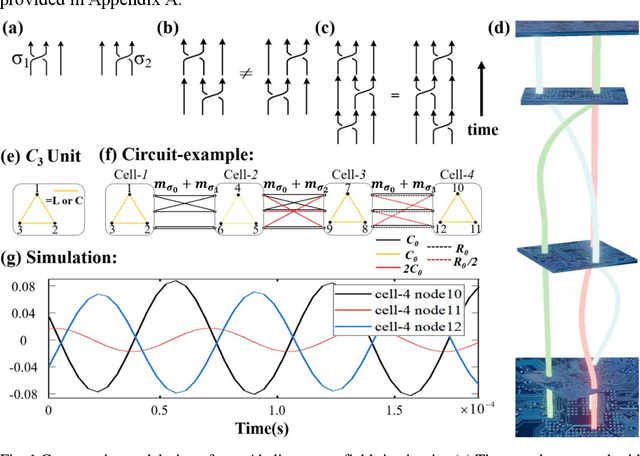
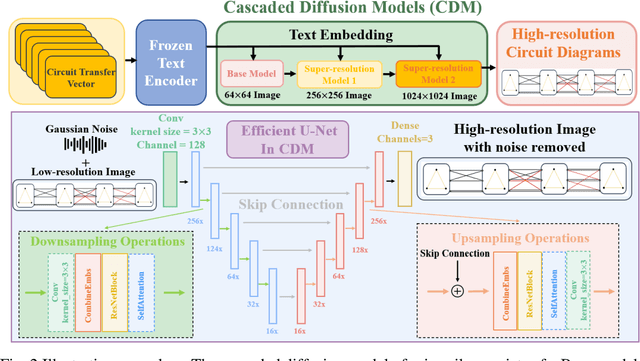
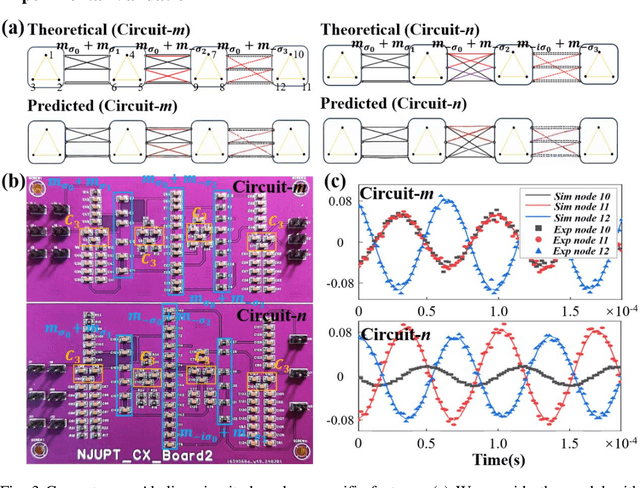
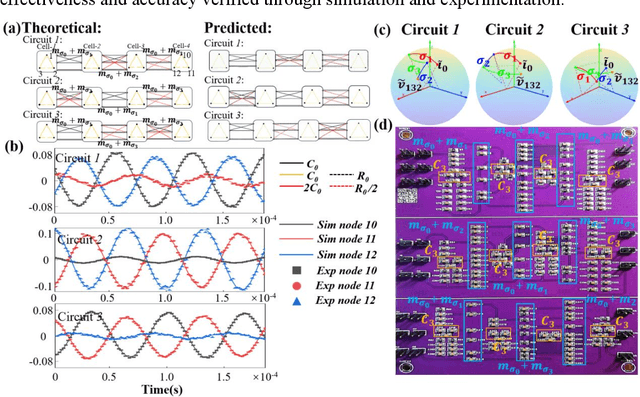
Non-Abelian braiding has attracted substantial attention because of its pivotal role in describing the exchange behaviour of anyons, in which the input and outcome of non-Abelian braiding are connected by a unitary matrix. Implementing braiding in a classical system can assist the experimental investigation of non-Abelian physics. However, the design of non-Abelian gauge fields faces numerous challenges stemmed from the intricate interplay of group structures, Lie algebra properties, representation theory, topology, and symmetry breaking. The extreme diversity makes it a powerful tool for the study of condensed matter physics. Whereas the widely used artificial intelligence with data-driven approaches has greatly promoted the development of physics, most works are limited on the data-to-data design. Here we propose a self-reasoning assistant learning framework capable of directly generating non-Abelian gauge fields. This framework utilizes the forward diffusion process to capture and reproduce the complex patterns and details inherent in the target distribution through continuous transformation. Then the reverse diffusion process is used to make the generated data closer to the distribution of the original situation. Thus, it owns strong self-reasoning capabilities, allowing to automatically discover the feature representation and capture more subtle relationships from the dataset. Moreover, the self-reasoning eliminates the need for manual feature engineering and simplifies the process of model building. Our framework offers a disruptive paradigm shift to parse complex physical processes, automatically uncovering patterns from massive datasets.
LLaST: Improved End-to-end Speech Translation System Leveraged by Large Language Models
Jul 22, 2024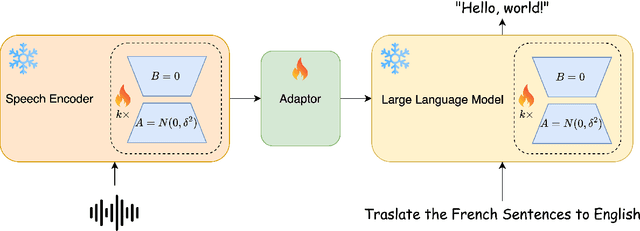
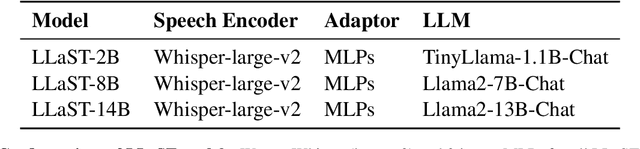
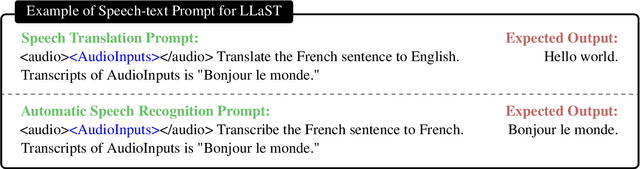
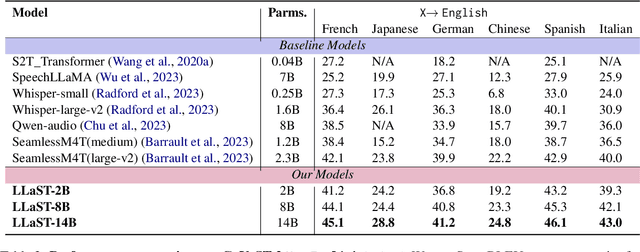
We introduces LLaST, a framework for building high-performance Large Language model based Speech-to-text Translation systems. We address the limitations of end-to-end speech translation(E2E ST) models by exploring model architecture design and optimization techniques tailored for LLMs. Our approach includes LLM-based speech translation architecture design, ASR-augmented training, multilingual data augmentation, and dual-LoRA optimization. Our approach demonstrates superior performance on the CoVoST-2 benchmark and showcases exceptional scaling capabilities powered by LLMs. We believe this effective method will serve as a strong baseline for speech translation and provide insights for future improvements of the LLM-based speech translation framework. We release the data, code and models in https://github.com/openaudiolab/LLaST.
Gaussian Process Model with Tensorial Inputs and Its Application to the Design of 3D Printed Antennas
Jul 19, 2024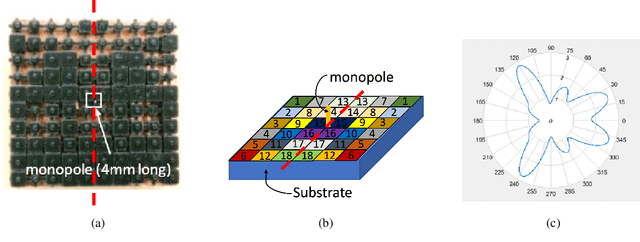

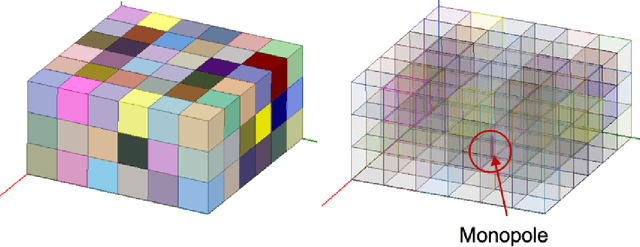

In simulation-based engineering design with time-consuming simulators, Gaussian process (GP) models are widely used as fast emulators to speed up the design optimization process. In its most commonly used form, the input of GP is a simple list of design parameters. With rapid development of additive manufacturing (also known as 3D printing), design inputs with 2D/3D spatial information become prevalent in some applications, for example, neighboring relations between pixels/voxels and material distributions in heterogeneous materials. Such spatial information, vital to 3D printed designs, is hard to incorporate into existing GP models with common kernels such as squared exponential or Mat\'ern. In this work, we propose to embed a generalized distance measure into a GP kernel, offering a novel and convenient technique to incorporate spatial information from freeform 3D printed designs into the GP framework. The proposed method allows complex design problems for 3D printed objects to take advantage of a plethora of tools available from the GP surrogate-based simulation optimization such as designed experiments and GP-based optimizations including Bayesian optimization. We investigate the properties of the proposed method and illustrate its performance by several numerical examples of 3D printed antennas. The dataset is publicly available at: https://github.com/xichennn/GP_dataset.
LogoSticker: Inserting Logos into Diffusion Models for Customized Generation
Jul 18, 2024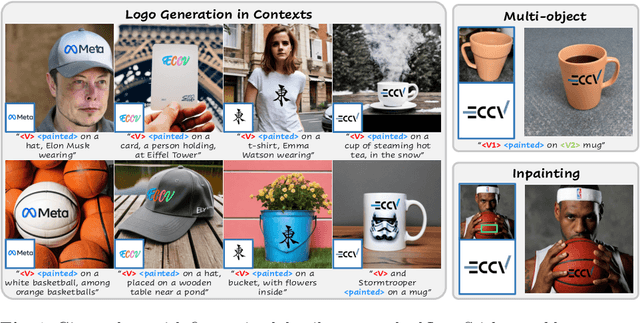
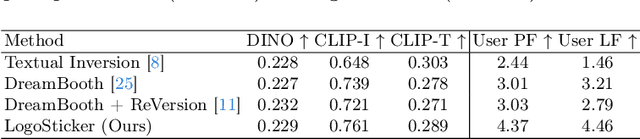
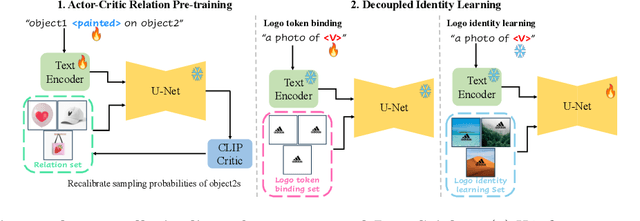
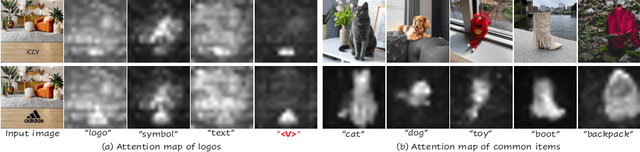
Recent advances in text-to-image model customization have underscored the importance of integrating new concepts with a few examples. Yet, these progresses are largely confined to widely recognized subjects, which can be learned with relative ease through models' adequate shared prior knowledge. In contrast, logos, characterized by unique patterns and textual elements, are hard to establish shared knowledge within diffusion models, thus presenting a unique challenge. To bridge this gap, we introduce the task of logo insertion. Our goal is to insert logo identities into diffusion models and enable their seamless synthesis in varied contexts. We present a novel two-phase pipeline LogoSticker to tackle this task. First, we propose the actor-critic relation pre-training algorithm, which addresses the nontrivial gaps in models' understanding of the potential spatial positioning of logos and interactions with other objects. Second, we propose a decoupled identity learning algorithm, which enables precise localization and identity extraction of logos. LogoSticker can generate logos accurately and harmoniously in diverse contexts. We comprehensively validate the effectiveness of LogoSticker over customization methods and large models such as DALLE~3. \href{https://mingkangz.github.io/logosticker}{Project page}.