 Add to Chrome
 Add to Firefox
 Add to Edge
Prescribed Fire Modeling using Knowledge-Guided Machine Learning for Land Management
Oct 02, 2023
In recent years, the increasing threat of devastating wildfires has underscored the need for effective prescribed fire management. Process-based computer simulations have traditionally been employed to plan prescribed fires for wildfire prevention. However, even simplified process models like QUIC-Fire are too compute-intensive to be used for real-time decision-making, especially when weather conditions change rapidly. Traditional ML methods used for fire modeling offer computational speedup but struggle with physically inconsistent predictions, biased predictions due to class imbalance, biased estimates for fire spread metrics (e.g., burned area, rate of spread), and generalizability in out-of-distribution wind conditions. This paper introduces a novel machine learning (ML) framework that enables rapid emulation of prescribed fires while addressing these concerns. By incorporating domain knowledge, the proposed method helps reduce physical inconsistencies in fuel density estimates in data-scarce scenarios. To overcome the majority class bias in predictions, we leverage pre-existing source domain data to augment training data and learn the spread of fire more effectively. Finally, we overcome the problem of biased estimation of fire spread metrics by incorporating a hierarchical modeling structure to capture the interdependence in fuel density and burned area. Notably, improvement in fire metric (e.g., burned area) estimates offered by our framework makes it useful for fire managers, who often rely on these fire metric estimates to make decisions about prescribed burn management. Furthermore, our framework exhibits better generalization capabilities than the other ML-based fire modeling methods across diverse wind conditions and ignition patterns.

Message Propagation Through Time: An Algorithm for Sequence Dependency Retention in Time Series Modeling
Sep 28, 2023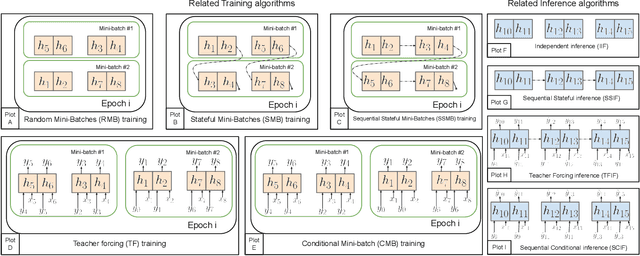

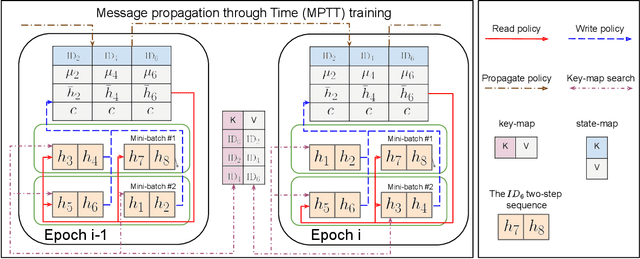

Time series modeling, a crucial area in science, often encounters challenges when training Machine Learning (ML) models like Recurrent Neural Networks (RNNs) using the conventional mini-batch training strategy that assumes independent and identically distributed (IID) samples and initializes RNNs with zero hidden states. The IID assumption ignores temporal dependencies among samples, resulting in poor performance. This paper proposes the Message Propagation Through Time (MPTT) algorithm to effectively incorporate long temporal dependencies while preserving faster training times relative to the stateful solutions. MPTT utilizes two memory modules to asynchronously manage initial hidden states for RNNs, fostering seamless information exchange between samples and allowing diverse mini-batches throughout epochs. MPTT further implements three policies to filter outdated and preserve essential information in the hidden states to generate informative initial hidden states for RNNs, facilitating robust training. Experimental results demonstrate that MPTT outperforms seven strategies on four climate datasets with varying levels of temporal dependencies.
Koopman Invertible Autoencoder: Leveraging Forward and Backward Dynamics for Temporal Modeling
Sep 19, 2023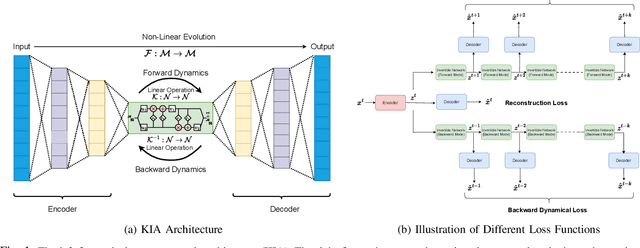


Accurate long-term predictions are the foundations for many machine learning applications and decision-making processes. However, building accurate long-term prediction models remains challenging due to the limitations of existing temporal models like recurrent neural networks (RNNs), as they capture only the statistical connections in the training data and may fail to learn the underlying dynamics of the target system. To tackle this challenge, we propose a novel machine learning model based on Koopman operator theory, which we call Koopman Invertible Autoencoders (KIA), that captures the inherent characteristic of the system by modeling both forward and backward dynamics in the infinite-dimensional Hilbert space. This enables us to efficiently learn low-dimensional representations, resulting in more accurate predictions of long-term system behavior. Moreover, our method's invertibility design guarantees reversibility and consistency in both forward and inverse operations. We illustrate the utility of KIA on pendulum and climate datasets, demonstrating 300% improvements in long-term prediction capability for pendulum while maintaining robustness against noise. Additionally, our method excels in long-term climate prediction, further validating our method's effectiveness.
Time Series Predictions in Unmonitored Sites: A Survey of Machine Learning Techniques in Water Resources
Aug 18, 2023Prediction of dynamic environmental variables in unmonitored sites remains a long-standing challenge for water resources science. The majority of the world's freshwater resources have inadequate monitoring of critical environmental variables needed for management. Yet, the need to have widespread predictions of hydrological variables such as river flow and water quality has become increasingly urgent due to climate and land use change over the past decades, and their associated impacts on water resources. Modern machine learning methods increasingly outperform their process-based and empirical model counterparts for hydrologic time series prediction with their ability to extract information from large, diverse data sets. We review relevant state-of-the art applications of machine learning for streamflow, water quality, and other water resources prediction and discuss opportunities to improve the use of machine learning with emerging methods for incorporating watershed characteristics into deep learning models, transfer learning, and incorporating process knowledge into machine learning models. The analysis here suggests most prior efforts have been focused on deep learning learning frameworks built on many sites for predictions at daily time scales in the United States, but that comparisons between different classes of machine learning methods are few and inadequate. We identify several open questions for time series predictions in unmonitored sites that include incorporating dynamic inputs and site characteristics, mechanistic understanding and spatial context, and explainable AI techniques in modern machine learning frameworks.
Reflections from the Workshop on AI-Assisted Decision Making for Conservation
Jul 17, 2023


In this white paper, we synthesize key points made during presentations and discussions from the AI-Assisted Decision Making for Conservation workshop, hosted by the Center for Research on Computation and Society at Harvard University on October 20-21, 2022. We identify key open research questions in resource allocation, planning, and interventions for biodiversity conservation, highlighting conservation challenges that not only require AI solutions, but also require novel methodological advances. In addition to providing a summary of the workshop talks and discussions, we hope this document serves as a call-to-action to orient the expansion of algorithmic decision-making approaches to prioritize real-world conservation challenges, through collaborative efforts of ecologists, conservation decision-makers, and AI researchers.
The Future of Fundamental Science Led by Generative Closed-Loop Artificial Intelligence
Jul 09, 2023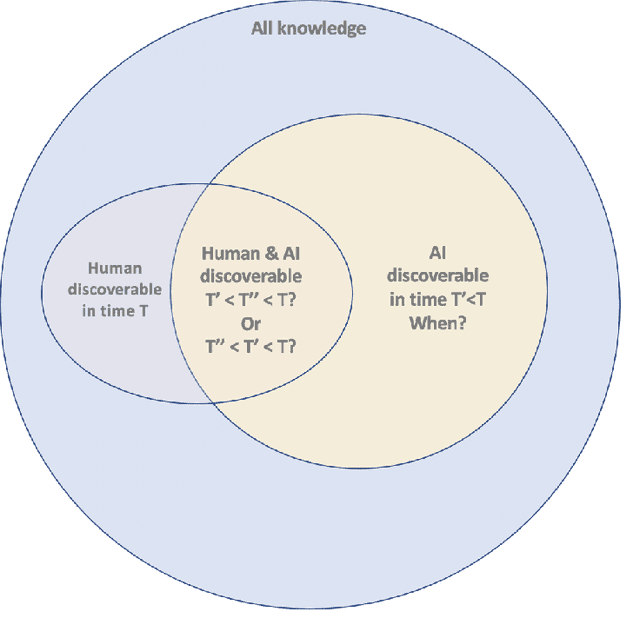

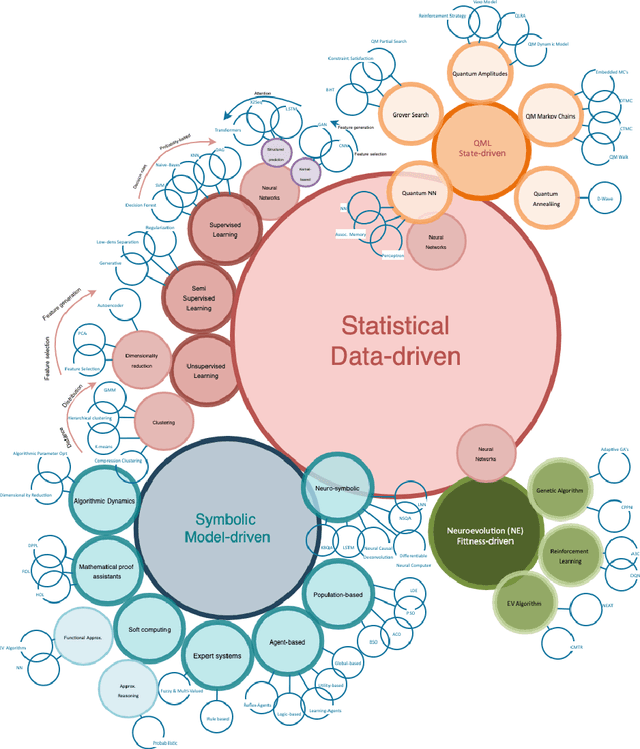

Recent advances in machine learning and AI, including Generative AI and LLMs, are disrupting technological innovation, product development, and society as a whole. AI's contribution to technology can come from multiple approaches that require access to large training data sets and clear performance evaluation criteria, ranging from pattern recognition and classification to generative models. Yet, AI has contributed less to fundamental science in part because large data sets of high-quality data for scientific practice and model discovery are more difficult to access. Generative AI, in general, and Large Language Models in particular, may represent an opportunity to augment and accelerate the scientific discovery of fundamental deep science with quantitative models. Here we explore and investigate aspects of an AI-driven, automated, closed-loop approach to scientific discovery, including self-driven hypothesis generation and open-ended autonomous exploration of the hypothesis space. Integrating AI-driven automation into the practice of science would mitigate current problems, including the replication of findings, systematic production of data, and ultimately democratisation of the scientific process. Realising these possibilities requires a vision for augmented AI coupled with a diversity of AI approaches able to deal with fundamental aspects of causality analysis and model discovery while enabling unbiased search across the space of putative explanations. These advances hold the promise to unleash AI's potential for searching and discovering the fundamental structure of our world beyond what human scientists have been able to achieve. Such a vision would push the boundaries of new fundamental science rather than automatize current workflows and instead open doors for technological innovation to tackle some of the greatest challenges facing humanity today.
Bayesian Federated Learning: A Survey
Apr 26, 2023Federated learning (FL) demonstrates its advantages in integrating distributed infrastructure, communication, computing and learning in a privacy-preserving manner. However, the robustness and capabilities of existing FL methods are challenged by limited and dynamic data and conditions, complexities including heterogeneities and uncertainties, and analytical explainability. Bayesian federated learning (BFL) has emerged as a promising approach to address these issues. This survey presents a critical overview of BFL, including its basic concepts, its relations to Bayesian learning in the context of FL, and a taxonomy of BFL from both Bayesian and federated perspectives. We categorize and discuss client- and server-side and FL-based BFL methods and their pros and cons. The limitations of the existing BFL methods and the future directions of BFL research further address the intricate requirements of real-life FL applications.
Entity Aware Modelling: A Survey
Feb 16, 2023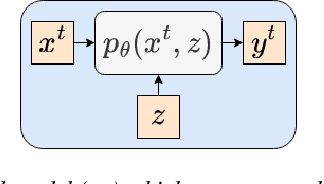
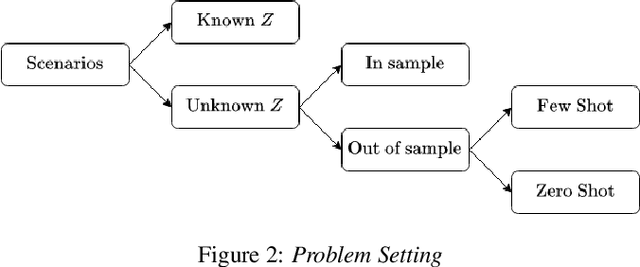
Personalized prediction of responses for individual entities caused by external drivers is vital across many disciplines. Recent machine learning (ML) advances have led to new state-of-the-art response prediction models. Models built at a population level often lead to sub-optimal performance in many personalized prediction settings due to heterogeneity in data across entities (tasks). In personalized prediction, the goal is to incorporate inherent characteristics of different entities to improve prediction performance. In this survey, we focus on the recent developments in the ML community for such entity-aware modeling approaches. ML algorithms often modulate the network using these entity characteristics when they are readily available. However, these entity characteristics are not readily available in many real-world scenarios, and different ML methods have been proposed to infer these characteristics from the data. In this survey, we have organized the current literature on entity-aware modeling based on the availability of these characteristics as well as the amount of training data. We highlight how recent innovations in other disciplines, such as uncertainty quantification, fairness, and knowledge-guided machine learning, can improve entity-aware modeling.
Mapping smallholder cashew plantations to inform sustainable tree crop expansion in Benin
Jan 01, 2023

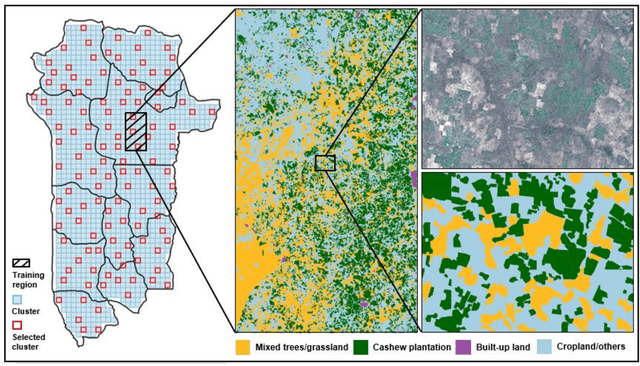

Cashews are grown by over 3 million smallholders in more than 40 countries worldwide as a principal source of income. As the third largest cashew producer in Africa, Benin has nearly 200,000 smallholder cashew growers contributing 15% of the country's national export earnings. However, a lack of information on where and how cashew trees grow across the country hinders decision-making that could support increased cashew production and poverty alleviation. By leveraging 2.4-m Planet Basemaps and 0.5-m aerial imagery, newly developed deep learning algorithms, and large-scale ground truth datasets, we successfully produced the first national map of cashew in Benin and characterized the expansion of cashew plantations between 2015 and 2021. In particular, we developed a SpatioTemporal Classification with Attention (STCA) model to map the distribution of cashew plantations, which can fully capture texture information from discriminative time steps during a growing season. We further developed a Clustering Augmented Self-supervised Temporal Classification (CASTC) model to distinguish high-density versus low-density cashew plantations by automatic feature extraction and optimized clustering. Results show that the STCA model has an overall accuracy of 80% and the CASTC model achieved an overall accuracy of 77.9%. We found that the cashew area in Benin has doubled from 2015 to 2021 with 60% of new plantation development coming from cropland or fallow land, while encroachment of cashew plantations into protected areas has increased by 70%. Only half of cashew plantations were high-density in 2021, suggesting high potential for intensification. Our study illustrates the power of combining high-resolution remote sensing imagery and state-of-the-art deep learning algorithms to better understand tree crops in the heterogeneous smallholder landscape.
Realization of Causal Representation Learning to Adjust Confounding Bias in Latent Space
Nov 15, 2022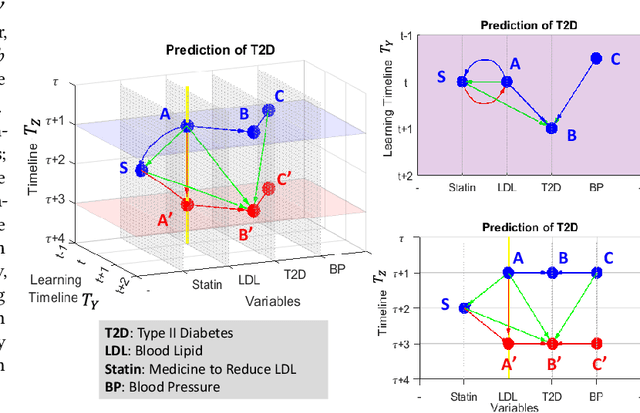
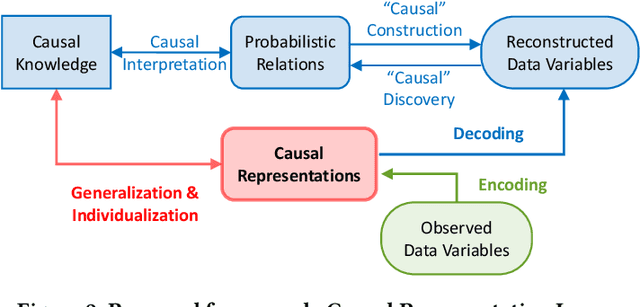
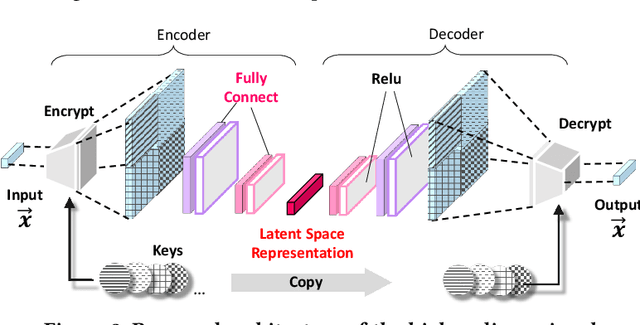
Applying Deep Learning (DL) models to graphical causal learning has brought outstanding effectiveness and efficiency but is still far from widespread use in domain sciences. In research of EHR (Electronic Healthcare Records), we realize that some confounding bias inherently exists in the causally formed data, which DL cannot automatically adjust. Trace to the source is because the Acyclic Causal Graph can be Multi-Dimensional, so the bias and causal learning happen in two subspaces, which makes it unobservable from the learning process. This paper initially raises the concept of Dimensionality for causal graphs. In our case, the 3-Dimensional DAG (Directed Acyclic Graph) space is defined by the axes of causal variables, the Absolute timeline, and Relative timelines; This is also the essential difference between Causality and Correlation problems. We propose a novel new framework Causal Representation Learning (CRL), to realize Graphical Causal Learning in latent space, which aims to provide general solutions for 1) the inherent bias adjustment and 2) the DL causal models generalization problem. We will also demonstrate the realization of CRL with originally designed architecture and experimentally confirm its feasibility.