 Add to Chrome
 Add to Firefox
 Add to Edge
Evaluating Communicative Belief Updates in Large Language Models via Implicature Recognition and Cancellation
Jul 29, 2026
Human language is driven by unspoken beliefs and belief updates, making these critical to model for successful communication between large language models (LLMs) and their users. In this paper, we evaluate the ability of LLMs to recognize unspoken beliefs made through implicatures and to understand their updates through implicature cancellation: the pragmatic phenomenon whereby an utterance's implied meaning is weakened or negated. We create the first expert-annotated implicature cancellation dataset, ImplicatureX, crowdsourced for human judgements of implicatures and their corresponding cancellations. We find that LLM belief update understanding lags behind that of humans, especially in more naturally-occurring scenarios. Additional control experiments suggest that successes in LLM belief updates may stem in part from a reliance on prior beliefs, and that failures in belief updates may depend on their type and on their form. Overall, our study suggests that current LLMs have not yet reached human-level understanding of unspoken beliefs and belief updates. Code and data are available at https://github.com/cesare-spinoso/ImplicatureX.

CRAG-MM-Diagnostics: Enabling Stage-Wise Analysis of Knowledge-Intensive VQA
Jul 23, 2026Knowledge-Intensive Visual Question Answering (KI-VQA) benchmarks evaluate Vision-Language Models (VLMs) as multimodal knowledge assistants by requiring external information beyond a provided image to answer questions. KI-VQA involves multiple sub-problems -referring expression understanding, visual grounding, object recognition, knowledge retrieval, and reasoning-yet existing benchmarks typically report only end-task accuracy, obscuring where failures arise. To analyze the full KI-VQA pipeline, we introduce CRAG-MM-Diagnostics, a diagnostic benchmark with stage-wise data annotations that isolate 1) language-based visual grounding, 2) object identification, and 3) knowledge retrieval and reasoning. We evaluate fully parametric and retrieval-augmented VLMs, providing fine-grained analyses using newly collected metadata, such as target ROIs, entity names, and visual complexity scores. Our results point to knowledge retrieval and reasoning as the primary bottleneck, but also highlight issues in the other parts of the KI-VQA pipeline, such as the fact that VLMs struggle with target object identification or that image retrievers struggle to integrate textual cues. These findings expose fundamental limitations in current KI-VQA systems and motivate stage-aware evaluation. We, lastly, leverage these findings to propose a grounded bimodal RAG pipeline that integrates a visual grounding module to crop targets before image retrieval, boosting GPT-5 and Qwen's respective accuracies by 13.3 and 8.5 percentage points.
LACUNA: A Testbed for Evaluating Localization Precision for LLM Unlearning
Jul 02, 2026LLMs memorize sensitive training data, including personally identifiable information (PII), creating a pressing need for reliable post hoc removal methods. Unlearning has emerged as a promising solution, with state-of-the-art(SOTA) methods often following a localize-first, unlearn-second paradigm that targets specific model parameters. However, existing benchmarks evaluate unlearning solely at the output level, leaving open the question of whether unlearning truly erases knowledge from a model's parameters or merely obfuscates it, a concern reinforced by the success of resurfacing attacks. To bridge this gap, we introduce LACUNA: the first unlearning testbed with ground-truth parameter-level localization. LACUNA injects PII of synthetic individuals into predefined parameters of 1B and 7B OLMo-based models via masked continual pretraining, enabling direct evaluation of whether unlearning targets the weights responsible for knowledge storage. We use LACUNA to benchmark current SOTA unlearning methods and find that, despite strong output-level performance, existing methods are highly imprecise and susceptible to resurfacing attacks. We further show that when localization is successful, even a simple gradient-based unlearning method achieves strong erasure and robustness to resurfacing attacks, highlighting the importance of precise unlearning. We release LACUNA to complement behavioral evaluations and drive further advances in robust, localization-based unlearning.
Toward Open Weight Models Without Risks: Separating Public and Private Capabilities in LLMs
Jun 19, 2026Open-weight Large Language Models (LLMs) enable scientific progress and broad deployment. However, they make it difficult to control access to sensitive capabilities. Current practice either suppresses dangerous capabilities before release or mediates access through closed services that use specialized model variants, input/output monitors, and API permissions. The former is susceptible to jailbreaks while sacrificing capability for all users to mitigate the risks posed by a few, and the latter is fundamentally incompatible with open-weight release. In this paper, we propose Tiered Language Models (TLMs), where a single set of released weights supports multiple capability levels. In its default public configuration, a TLM behaves as a conventional LLM. A compact secret key specifies a permutation over a small parameter subset, inducing an alternative computation graph over the same weights that exposes additional capabilities. We develop a training protocol that jointly pretrains both configurations from scratch, then fine-tunes the keyed configuration on private data with regularization to preserve the public model's behavior. We pretrain 180M- and 650M-parameter TLMs and demonstrate that the keyed configuration can acquire a new language, gain instruction-following ability, and memorize private factual knowledge, whereas the public configuration exhibits none of these capabilities. Moreover, we show that our approach extends naturally to multiple hierarchical tiers. Because authorization operates on the model's weight structure rather than in the input space, the mechanism resists fine-tuning-based extraction and partial key compromise. In general, TLMs take a step toward reconciling open-weight release with selective capability control.
Leveraging Routing Dynamics in Mixture-of-Experts Models for Efficient Language Adaptation
May 28, 2026Mixture-of-Experts (MoE) models are widely used to scale language models, yet their expert routing behavior and adaptation in a multilingual setting remain underexplored. In this work, we study multilingual routing dynamics during continual pre-training of an English-centric MoE model on a multilingual corpus, analyzing how expert usage varies across languages. We find that continual multilingual pre-training leads to diffused, language-agnostic routing in early and middle layers, with language specialization primarily emerging in the final layers. We also show that token-level vocabulary overlap between languages plays an important role in how languages are routed. Motivated by these findings, we propose a parameter-efficient adaptation strategy that updates language-specific and shared experts in the final MoE layers. Experiments on MultiBLiMP and Belebele show that our method achieves a strong performance-efficiency trade-off, attaining competitive performance relative to fine-tuning complete final layers, while updating less than 2% of the parameters. Overall, our findings provide insights into where and how language specialization emerges in MoEs during continual pre-training and provide practical insights for low-resource multilingual adaptation. Our code is available at https://github.com/aditi184/moe-routing-adaptation.
Memorization Inheritance in Sequence-Level Knowledge Distillation for Neural Machine Translation
Feb 03, 2025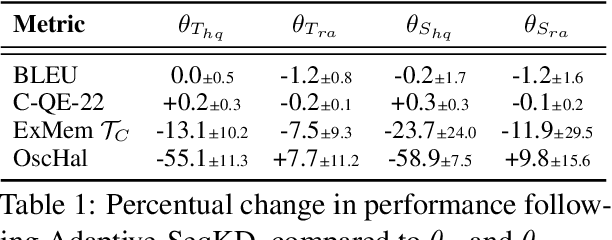
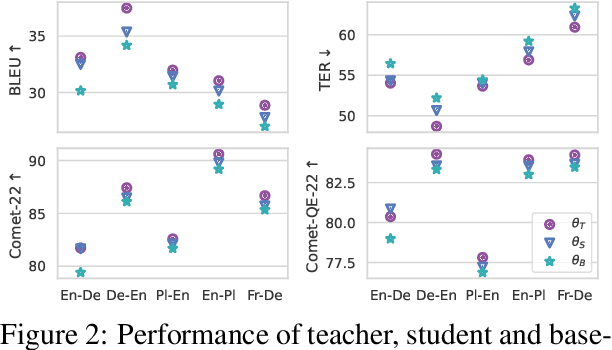
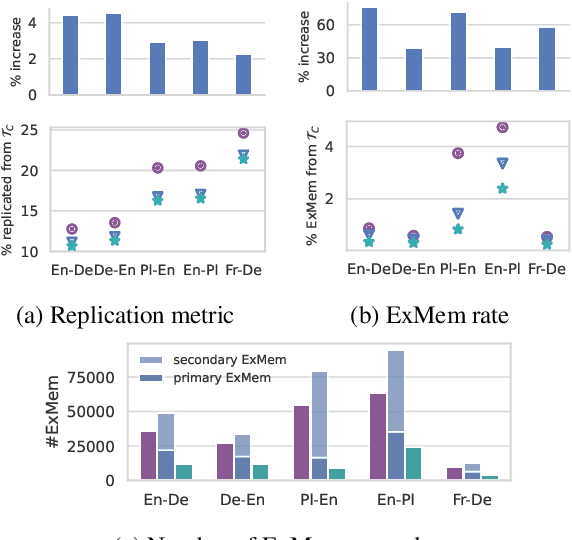
In this work, we explore how instance-level memorization in the teacher Neural Machine Translation (NMT) model gets inherited by the student model in sequence-level knowledge distillation (SeqKD). We find that despite not directly seeing the original training data, students memorize more than baseline models (models of the same size, trained on the original data) -- 3.4% for exact matches and 57% for extractive memorization -- and show increased hallucination rates. Further, under this SeqKD setting, we also characterize how students behave on specific training data subgroups, such as subgroups with low quality and specific counterfactual memorization (CM) scores, and find that students exhibit amplified denoising on low-quality subgroups. Finally, we propose a modification to SeqKD named Adaptive-SeqKD, which intervenes in SeqKD to reduce memorization and hallucinations. Overall, we recommend caution when applying SeqKD: students inherit both their teachers' superior performance and their fault modes, thereby requiring active monitoring.
Generalisation First, Memorisation Second? Memorisation Localisation for Natural Language Classification Tasks
Aug 09, 2024Memorisation is a natural part of learning from real-world data: neural models pick up on atypical input-output combinations and store those training examples in their parameter space. That this happens is well-known, but how and where are questions that remain largely unanswered. Given a multi-layered neural model, where does memorisation occur in the millions of parameters? Related work reports conflicting findings: a dominant hypothesis based on image classification is that lower layers learn generalisable features and that deeper layers specialise and memorise. Work from NLP suggests this does not apply to language models, but has been mainly focused on memorisation of facts. We expand the scope of the localisation question to 12 natural language classification tasks and apply 4 memorisation localisation techniques. Our results indicate that memorisation is a gradual process rather than a localised one, establish that memorisation is task-dependent, and give nuance to the generalisation first, memorisation second hypothesis.
Evaluating Subword Tokenization: Alien Subword Composition and OOV Generalization Challenge
Apr 20, 2024
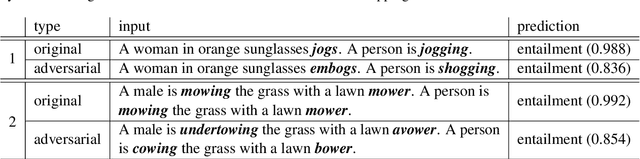

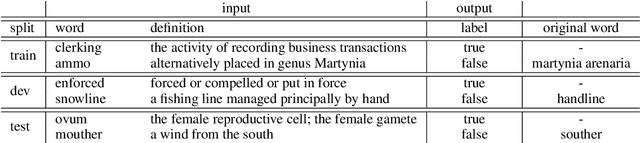
The popular subword tokenizers of current language models, such as Byte-Pair Encoding (BPE), are known not to respect morpheme boundaries, which affects the downstream performance of the models. While many improved tokenization algorithms have been proposed, their evaluation and cross-comparison is still an open problem. As a solution, we propose a combined intrinsic-extrinsic evaluation framework for subword tokenization. Intrinsic evaluation is based on our new UniMorph Labeller tool that classifies subword tokenization as either morphological or alien. Extrinsic evaluation, in turn, is performed via the Out-of-Vocabulary Generalization Challenge 1.0 benchmark, which consists of three newly specified downstream text classification tasks. Our empirical findings show that the accuracy of UniMorph Labeller is 98%, and that, in all language models studied (including ALBERT, BERT, RoBERTa, and DeBERTa), alien tokenization leads to poorer generalizations compared to morphological tokenization for semantic compositionality of word meanings.
Latent Feature-based Data Splits to Improve Generalisation Evaluation: A Hate Speech Detection Case Study
Nov 16, 2023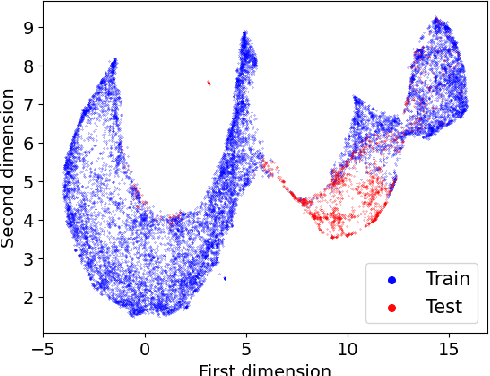
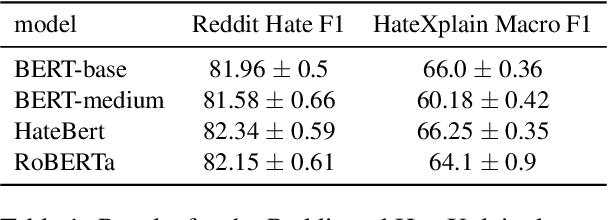
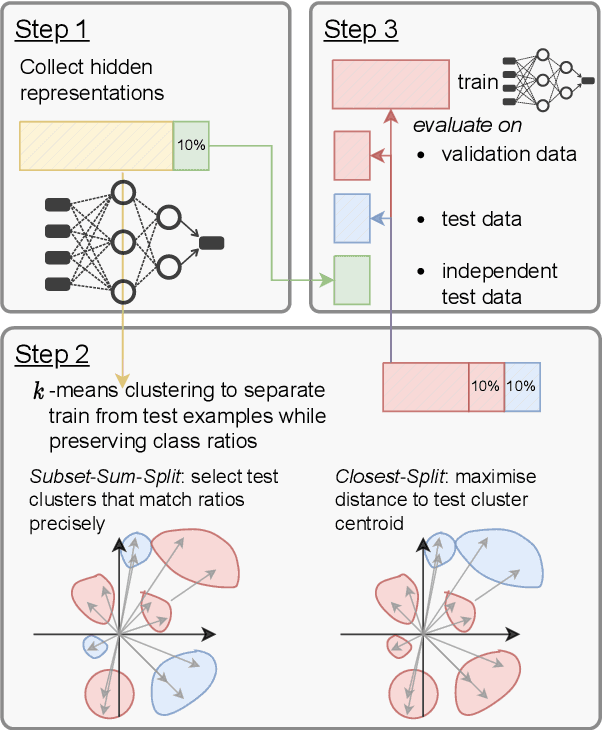
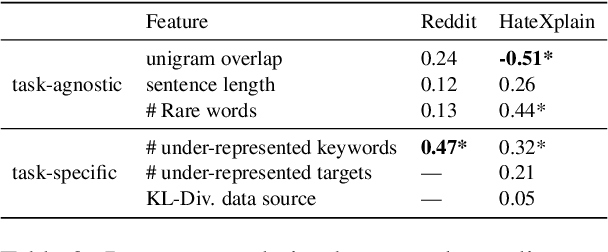
With the ever-growing presence of social media platforms comes the increased spread of harmful content and the need for robust hate speech detection systems. Such systems easily overfit to specific targets and keywords, and evaluating them without considering distribution shifts that might occur between train and test data overestimates their benefit. We challenge hate speech models via new train-test splits of existing datasets that rely on the clustering of models' hidden representations. We present two split variants (Subset-Sum-Split and Closest-Split) that, when applied to two datasets using four pretrained models, reveal how models catastrophically fail on blind spots in the latent space. This result generalises when developing a split with one model and evaluating it on another. Our analysis suggests that there is no clear surface-level property of the data split that correlates with the decreased performance, which underscores that task difficulty is not always humanly interpretable. We recommend incorporating latent feature-based splits in model development and release two splits via the GenBench benchmark.
Memorisation Cartography: Mapping out the Memorisation-Generalisation Continuum in Neural Machine Translation
Nov 09, 2023


When training a neural network, it will quickly memorise some source-target mappings from your dataset but never learn some others. Yet, memorisation is not easily expressed as a binary feature that is good or bad: individual datapoints lie on a memorisation-generalisation continuum. What determines a datapoint's position on that spectrum, and how does that spectrum influence neural models' performance? We address these two questions for neural machine translation (NMT) models. We use the counterfactual memorisation metric to (1) build a resource that places 5M NMT datapoints on a memorisation-generalisation map, (2) illustrate how the datapoints' surface-level characteristics and a models' per-datum training signals are predictive of memorisation in NMT, (3) and describe the influence that subsets of that map have on NMT systems' performance.