 Add to Chrome
 Add to Firefox
 Add to Edge
The Heterophilic Graph Learning Handbook: Benchmarks, Models, Theoretical Analysis, Applications and Challenges
Jul 12, 2024


Homophily principle, \ie{} nodes with the same labels or similar attributes are more likely to be connected, has been commonly believed to be the main reason for the superiority of Graph Neural Networks (GNNs) over traditional Neural Networks (NNs) on graph-structured data, especially on node-level tasks. However, recent work has identified a non-trivial set of datasets where GNN's performance compared to the NN's is not satisfactory. Heterophily, i.e. low homophily, has been considered the main cause of this empirical observation. People have begun to revisit and re-evaluate most existing graph models, including graph transformer and its variants, in the heterophily scenario across various kinds of graphs, e.g. heterogeneous graphs, temporal graphs and hypergraphs. Moreover, numerous graph-related applications are found to be closely related to the heterophily problem. In the past few years, considerable effort has been devoted to studying and addressing the heterophily issue. In this survey, we provide a comprehensive review of the latest progress on heterophilic graph learning, including an extensive summary of benchmark datasets and evaluation of homophily metrics on synthetic graphs, meticulous classification of the most updated supervised and unsupervised learning methods, thorough digestion of the theoretical analysis on homophily/heterophily, and broad exploration of the heterophily-related applications. Notably, through detailed experiments, we are the first to categorize benchmark heterophilic datasets into three sub-categories: malignant, benign and ambiguous heterophily. Malignant and ambiguous datasets are identified as the real challenging datasets to test the effectiveness of new models on the heterophily challenge. Finally, we propose several challenges and future directions for heterophilic graph representation learning.

A Universal Class of Sharpness-Aware Minimization Algorithms
Jun 06, 2024Recently, there has been a surge in interest in developing optimization algorithms for overparameterized models as achieving generalization is believed to require algorithms with suitable biases. This interest centers on minimizing sharpness of the original loss function; the Sharpness-Aware Minimization (SAM) algorithm has proven effective. However, most literature only considers a few sharpness measures, such as the maximum eigenvalue or trace of the training loss Hessian, which may not yield meaningful insights for non-convex optimization scenarios like neural networks. Additionally, many sharpness measures are sensitive to parameter invariances in neural networks, magnifying significantly under rescaling parameters. Motivated by these challenges, we introduce a new class of sharpness measures in this paper, leading to new sharpness-aware objective functions. We prove that these measures are \textit{universally expressive}, allowing any function of the training loss Hessian matrix to be represented by appropriate hyperparameters. Furthermore, we show that the proposed objective functions explicitly bias towards minimizing their corresponding sharpness measures, and how they allow meaningful applications to models with parameter invariances (such as scale-invariances). Finally, as instances of our proposed general framework, we present \textit{Frob-SAM} and \textit{Det-SAM}, which are specifically designed to minimize the Frobenius norm and the determinant of the Hessian of the training loss, respectively. We also demonstrate the advantages of our general framework through extensive experiments.
The Empirical Impact of Neural Parameter Symmetries, or Lack Thereof
May 30, 2024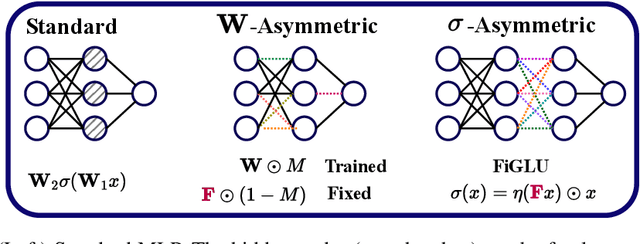

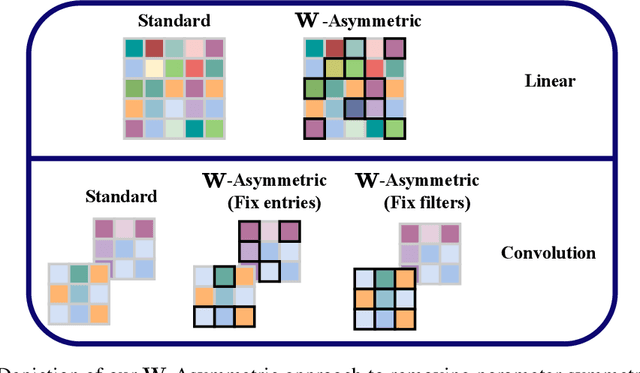
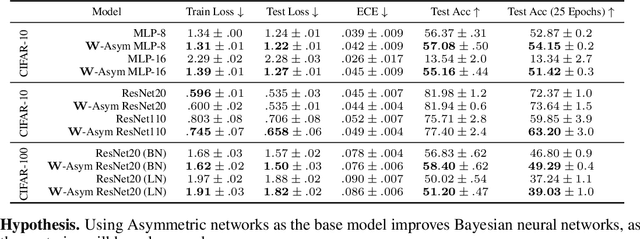
Many algorithms and observed phenomena in deep learning appear to be affected by parameter symmetries -- transformations of neural network parameters that do not change the underlying neural network function. These include linear mode connectivity, model merging, Bayesian neural network inference, metanetworks, and several other characteristics of optimization or loss-landscapes. However, theoretical analysis of the relationship between parameter space symmetries and these phenomena is difficult. In this work, we empirically investigate the impact of neural parameter symmetries by introducing new neural network architectures that have reduced parameter space symmetries. We develop two methods, with some provable guarantees, of modifying standard neural networks to reduce parameter space symmetries. With these new methods, we conduct a comprehensive experimental study consisting of multiple tasks aimed at assessing the effect of removing parameter symmetries. Our experiments reveal several interesting observations on the empirical impact of parameter symmetries; for instance, we observe linear mode connectivity between our networks without alignment of weight spaces, and we find that our networks allow for faster and more effective Bayesian neural network training.
A Canonization Perspective on Invariant and Equivariant Learning
May 29, 2024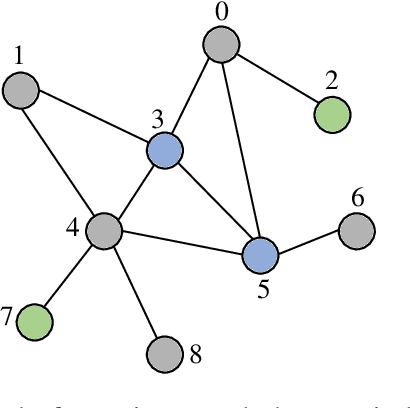

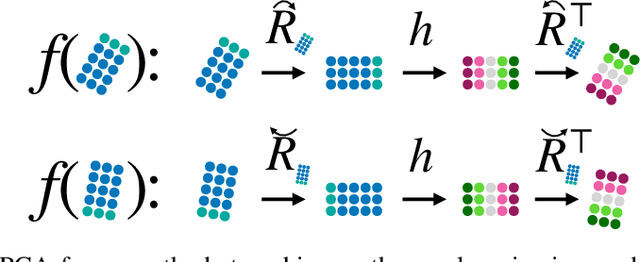
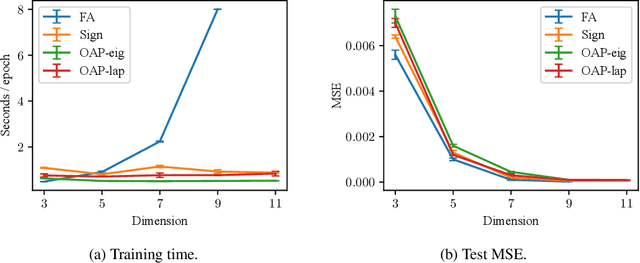
In many applications, we desire neural networks to exhibit invariance or equivariance to certain groups due to symmetries inherent in the data. Recently, frame-averaging methods emerged to be a unified framework for attaining symmetries efficiently by averaging over input-dependent subsets of the group, i.e., frames. What we currently lack is a principled understanding of the design of frames. In this work, we introduce a canonization perspective that provides an essential and complete view of the design of frames. Canonization is a classic approach for attaining invariance by mapping inputs to their canonical forms. We show that there exists an inherent connection between frames and canonical forms. Leveraging this connection, we can efficiently compare the complexity of frames as well as determine the optimality of certain frames. Guided by this principle, we design novel frames for eigenvectors that are strictly superior to existing methods -- some are even optimal -- both theoretically and empirically. The reduction to the canonization perspective further uncovers equivalences between previous methods. These observations suggest that canonization provides a fundamental understanding of existing frame-averaging methods and unifies existing equivariant and invariant learning methods.
On the Role of Attention Masks and LayerNorm in Transformers
May 29, 2024


Self-attention is the key mechanism of transformers, which are the essential building blocks of modern foundation models. Recent studies have shown that pure self-attention suffers from an increasing degree of rank collapse as depth increases, limiting model expressivity and further utilization of model depth. The existing literature on rank collapse, however, has mostly overlooked other critical components in transformers that may alleviate the rank collapse issue. In this paper, we provide a general analysis of rank collapse under self-attention, taking into account the effects of attention masks and layer normalization (LayerNorm). In particular, we find that although pure masked attention still suffers from exponential collapse to a rank one subspace, local masked attention can provably slow down the collapse rate. In the case of self-attention with LayerNorm, we first show that for certain classes of value matrices, collapse to a rank one subspace still happens exponentially. However, through construction of nontrivial counterexamples, we then establish that with proper choice of value matrices, a general class of sequences may not converge to a rank one subspace, and the self-attention dynamics with LayerNorm can simultaneously possess a rich set of equilibria with any possible rank between one and full. Our result refutes the previous hypothesis that LayerNorm plays no role in the rank collapse of self-attention and suggests that self-attention with LayerNorm constitutes a much more expressive, versatile nonlinear dynamical system than what was originally thought.
A Theoretical Understanding of Self-Correction through In-context Alignment
May 28, 2024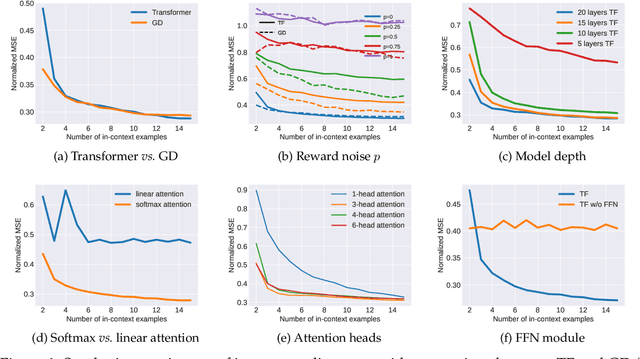
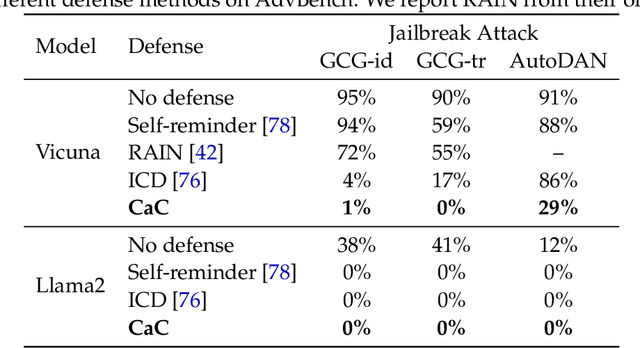

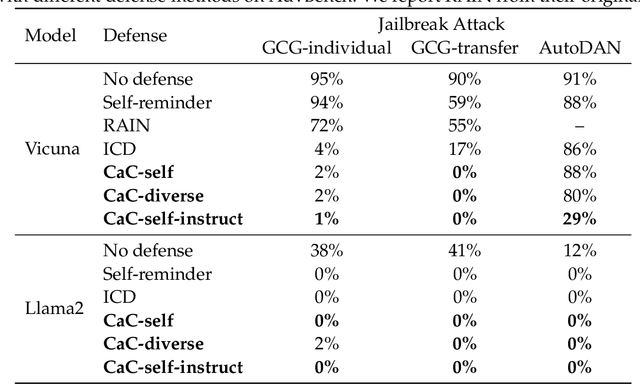
Going beyond mimicking limited human experiences, recent studies show initial evidence that, like humans, large language models (LLMs) are capable of improving their abilities purely by self-correction, i.e., correcting previous responses through self-examination, in certain circumstances. Nevertheless, little is known about how such capabilities arise. In this work, based on a simplified setup akin to an alignment task, we theoretically analyze self-correction from an in-context learning perspective, showing that when LLMs give relatively accurate self-examinations as rewards, they are capable of refining responses in an in-context way. Notably, going beyond previous theories on over-simplified linear transformers, our theoretical construction underpins the roles of several key designs of realistic transformers for self-correction: softmax attention, multi-head attention, and the MLP block. We validate these findings extensively on synthetic datasets. Inspired by these findings, we also illustrate novel applications of self-correction, such as defending against LLM jailbreaks, where a simple self-correction step does make a large difference. We believe that these findings will inspire further research on understanding, exploiting, and enhancing self-correction for building better foundation models.
In-Context Symmetries: Self-Supervised Learning through Contextual World Models
May 28, 2024At the core of self-supervised learning for vision is the idea of learning invariant or equivariant representations with respect to a set of data transformations. This approach, however, introduces strong inductive biases, which can render the representations fragile in downstream tasks that do not conform to these symmetries. In this work, drawing insights from world models, we propose to instead learn a general representation that can adapt to be invariant or equivariant to different transformations by paying attention to context -- a memory module that tracks task-specific states, actions, and future states. Here, the action is the transformation, while the current and future states respectively represent the input's representation before and after the transformation. Our proposed algorithm, Contextual Self-Supervised Learning (ContextSSL), learns equivariance to all transformations (as opposed to invariance). In this way, the model can learn to encode all relevant features as general representations while having the versatility to tail down to task-wise symmetries when given a few examples as the context. Empirically, we demonstrate significant performance gains over existing methods on equivariance-related tasks, supported by both qualitative and quantitative evaluations.
Future Directions in Foundations of Graph Machine Learning
Feb 03, 2024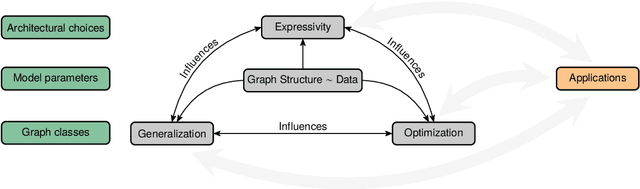

Machine learning on graphs, especially using graph neural networks (GNNs), has seen a surge in interest due to the wide availability of graph data across a broad spectrum of disciplines, from life to social and engineering sciences. Despite their practical success, our theoretical understanding of the properties of GNNs remains highly incomplete. Recent theoretical advancements primarily focus on elucidating the coarse-grained expressive power of GNNs, predominantly employing combinatorial techniques. However, these studies do not perfectly align with practice, particularly in understanding the generalization behavior of GNNs when trained with stochastic first-order optimization techniques. In this position paper, we argue that the graph machine learning community needs to shift its attention to developing a more balanced theory of graph machine learning, focusing on a more thorough understanding of the interplay of expressive power, generalization, and optimization.
On the hardness of learning under symmetries
Jan 03, 2024
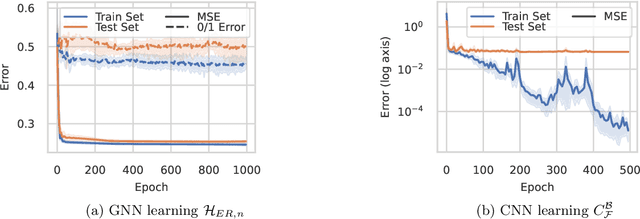
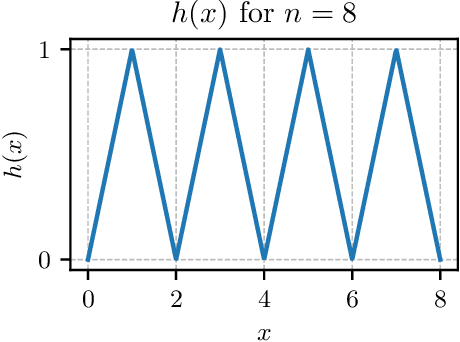
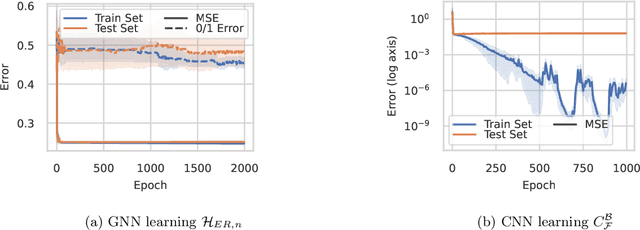
We study the problem of learning equivariant neural networks via gradient descent. The incorporation of known symmetries ("equivariance") into neural nets has empirically improved the performance of learning pipelines, in domains ranging from biology to computer vision. However, a rich yet separate line of learning theoretic research has demonstrated that actually learning shallow, fully-connected (i.e. non-symmetric) networks has exponential complexity in the correlational statistical query (CSQ) model, a framework encompassing gradient descent. In this work, we ask: are known problem symmetries sufficient to alleviate the fundamental hardness of learning neural nets with gradient descent? We answer this question in the negative. In particular, we give lower bounds for shallow graph neural networks, convolutional networks, invariant polynomials, and frame-averaged networks for permutation subgroups, which all scale either superpolynomially or exponentially in the relevant input dimension. Therefore, in spite of the significant inductive bias imparted via symmetry, actually learning the complete classes of functions represented by equivariant neural networks via gradient descent remains hard.
Expressive Sign Equivariant Networks for Spectral Geometric Learning
Dec 04, 2023Recent work has shown the utility of developing machine learning models that respect the structure and symmetries of eigenvectors. These works promote sign invariance, since for any eigenvector v the negation -v is also an eigenvector. However, we show that sign invariance is theoretically limited for tasks such as building orthogonally equivariant models and learning node positional encodings for link prediction in graphs. In this work, we demonstrate the benefits of sign equivariance for these tasks. To obtain these benefits, we develop novel sign equivariant neural network architectures. Our models are based on a new analytic characterization of sign equivariant polynomials and thus inherit provable expressiveness properties. Controlled synthetic experiments show that our networks can achieve the theoretically predicted benefits of sign equivariant models. Code is available at https://github.com/cptq/Sign-Equivariant-Nets.