 Add to Chrome
 Add to Firefox
 Add to Edge
Any-Subgroup Equivariant Networks via Symmetry Breaking
Mar 19, 2026
The inclusion of symmetries as an inductive bias, known as equivariance, often improves generalization on geometric data (e.g. grids, sets, and graphs). However, equivariant architectures are usually highly constrained, designed for symmetries chosen a priori, and not applicable to datasets with other symmetries. This precludes the development of flexible, multi-modal foundation models capable of processing diverse data equivariantly. In this work, we build a single model -- the Any-Subgroup Equivariant Network (ASEN) -- that can be simultaneously equivariant to several groups, simply by modulating a certain auxiliary input feature. In particular, we start with a fully permutation-equivariant base model, and then obtain subgroup equivariance by using a symmetry-breaking input whose automorphism group is that subgroup. However, finding an input with the desired automorphism group is computationally hard. We overcome this by relaxing from exact to approximate symmetry breaking, leveraging the notion of 2-closure to derive fast algorithms. Theoretically, we show that our subgroup-equivariant networks can simulate equivariant MLPs, and their universality can be guaranteed if the base model is universal. Empirically, we validate our method on symmetry selection for graph and image tasks, as well as multitask and transfer learning for sequence tasks, showing that a single network equivariant to multiple permutation subgroups outperforms both separate equivariant models and a single non-equivariant model.

Quantitative Approximation Rates for Group Equivariant Learning
Feb 23, 2026The universal approximation theorem establishes that neural networks can approximate any continuous function on a compact set. Later works in approximation theory provide quantitative approximation rates for ReLU networks on the class of $α$-Hölder functions $f: [0,1]^N \to \mathbb{R}$. The goal of this paper is to provide similar quantitative approximation results in the context of group equivariant learning, where the learned $α$-Hölder function is known to obey certain group symmetries. While there has been much interest in the literature in understanding the universal approximation properties of equivariant models, very few quantitative approximation results are known for equivariant models. In this paper, we bridge this gap by deriving quantitative approximation rates for several prominent group-equivariant and invariant architectures. The architectures that we consider include: the permutation-invariant Deep Sets architecture; the permutation-equivariant Sumformer and Transformer architectures; joint invariance to permutations and rigid motions using invariant networks based on frame averaging; and general bi-Lipschitz invariant models. Overall, we show that equally-sized ReLU MLPs and equivariant architectures are equally expressive over equivariant functions. Thus, hard-coding equivariance does not result in a loss of expressivity or approximation power in these models.
Improving Equivariant Networks with Probabilistic Symmetry Breaking
Mar 27, 2025Equivariance encodes known symmetries into neural networks, often enhancing generalization. However, equivariant networks cannot break symmetries: the output of an equivariant network must, by definition, have at least the same self-symmetries as the input. This poses an important problem, both (1) for prediction tasks on domains where self-symmetries are common, and (2) for generative models, which must break symmetries in order to reconstruct from highly symmetric latent spaces. This fundamental limitation can be addressed by considering equivariant conditional distributions, instead of equivariant functions. We present novel theoretical results that establish necessary and sufficient conditions for representing such distributions. Concretely, this representation provides a practical framework for breaking symmetries in any equivariant network via randomized canonicalization. Our method, SymPE (Symmetry-breaking Positional Encodings), admits a simple interpretation in terms of positional encodings. This approach expands the representational power of equivariant networks while retaining the inductive bias of symmetry, which we justify through generalization bounds. Experimental results demonstrate that SymPE significantly improves performance of group-equivariant and graph neural networks across diffusion models for graphs, graph autoencoders, and lattice spin system modeling.
Equivariant Frames and the Impossibility of Continuous Canonicalization
Feb 25, 2024Canonicalization provides an architecture-agnostic method for enforcing equivariance, with generalizations such as frame-averaging recently gaining prominence as a lightweight and flexible alternative to equivariant architectures. Recent works have found an empirical benefit to using probabilistic frames instead, which learn weighted distributions over group elements. In this work, we provide strong theoretical justification for this phenomenon: for commonly-used groups, there is no efficiently computable choice of frame that preserves continuity of the function being averaged. In other words, unweighted frame-averaging can turn a smooth, non-symmetric function into a discontinuous, symmetric function. To address this fundamental robustness problem, we formally define and construct \emph{weighted} frames, which provably preserve continuity, and demonstrate their utility by constructing efficient and continuous weighted frames for the actions of $SO(2)$, $SO(3)$, and $S_n$ on point clouds.
On the hardness of learning under symmetries
Jan 03, 2024
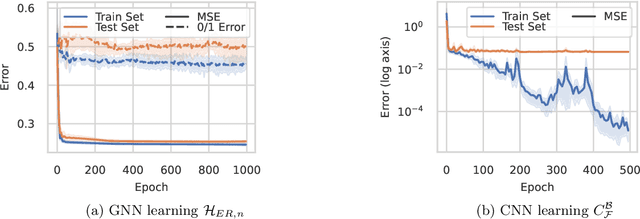
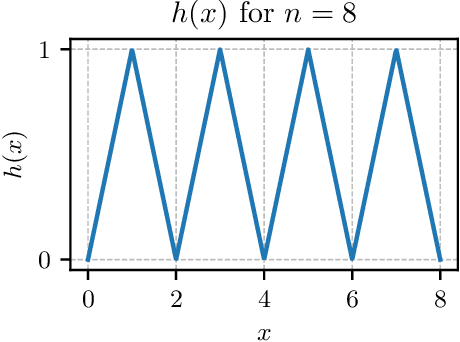
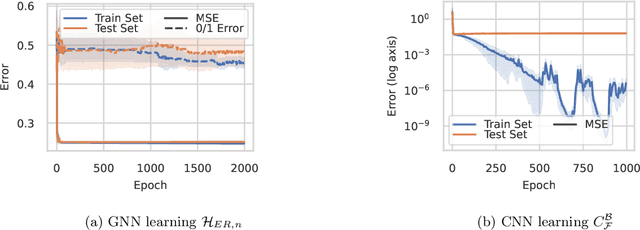
We study the problem of learning equivariant neural networks via gradient descent. The incorporation of known symmetries ("equivariance") into neural nets has empirically improved the performance of learning pipelines, in domains ranging from biology to computer vision. However, a rich yet separate line of learning theoretic research has demonstrated that actually learning shallow, fully-connected (i.e. non-symmetric) networks has exponential complexity in the correlational statistical query (CSQ) model, a framework encompassing gradient descent. In this work, we ask: are known problem symmetries sufficient to alleviate the fundamental hardness of learning neural nets with gradient descent? We answer this question in the negative. In particular, we give lower bounds for shallow graph neural networks, convolutional networks, invariant polynomials, and frame-averaged networks for permutation subgroups, which all scale either superpolynomially or exponentially in the relevant input dimension. Therefore, in spite of the significant inductive bias imparted via symmetry, actually learning the complete classes of functions represented by equivariant neural networks via gradient descent remains hard.
Learning Polynomial Problems with $SL(2,\mathbb{R})$ Equivariance
Dec 04, 2023Optimizing and certifying the positivity of polynomials are fundamental primitives across mathematics and engineering applications, from dynamical systems to operations research. However, solving these problems in practice requires large semidefinite programs, with poor scaling in dimension and degree. In this work, we demonstrate for the first time that neural networks can effectively solve such problems in a data-driven fashion, achieving tenfold speedups while retaining high accuracy. Moreover, we observe that these polynomial learning problems are equivariant to the non-compact group $SL(2,\mathbb{R})$, which consists of area-preserving linear transformations. We therefore adapt our learning pipelines to accommodate this structure, including data augmentation, a new $SL(2,\mathbb{R})$-equivariant architecture, and an architecture equivariant with respect to its maximal compact subgroup, $SO(2, \mathbb{R})$. Surprisingly, the most successful approaches in practice do not enforce equivariance to the entire group, which we prove arises from an unusual lack of architecture universality for $SL(2,\mathbb{R})$ in particular. A consequence of this result, which is of independent interest, is that there exists an equivariant function for which there is no sequence of equivariant polynomials multiplied by arbitrary invariants that approximates the original function. This is a rare example of a symmetric problem where data augmentation outperforms a fully equivariant architecture, and provides interesting lessons in both theory and practice for other problems with non-compact symmetries.
Artificial Intelligence for Science in Quantum, Atomistic, and Continuum Systems
Jul 17, 2023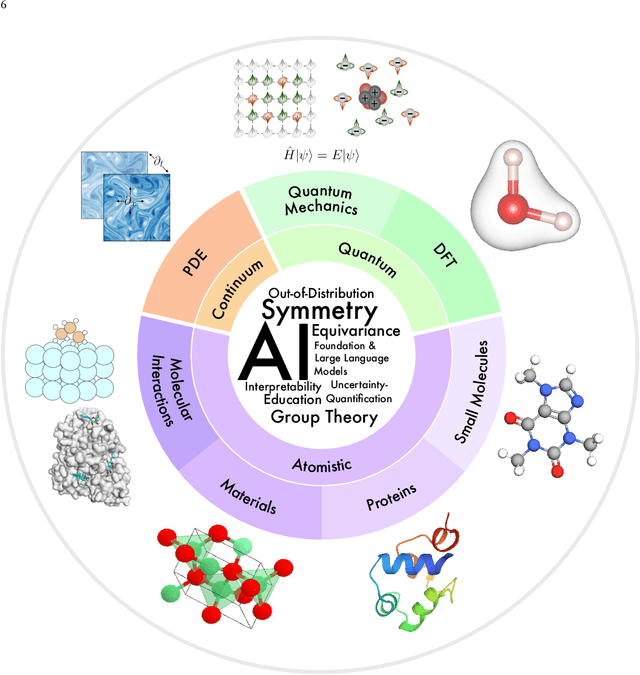
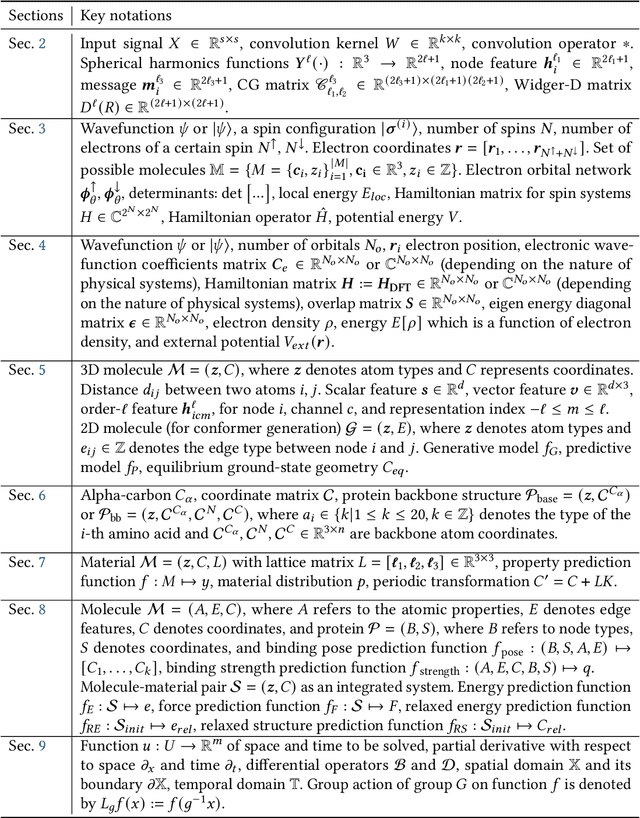
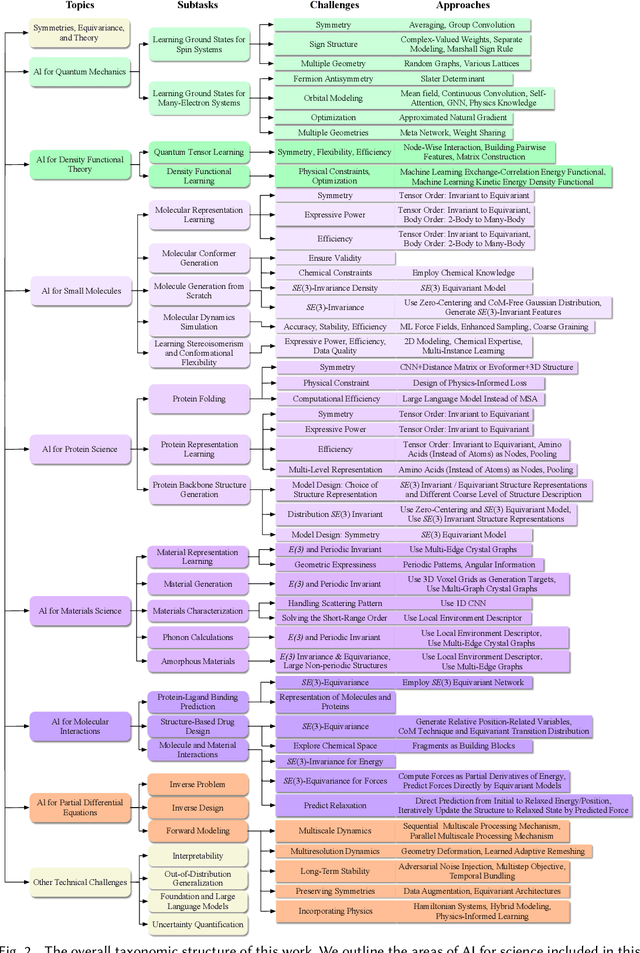
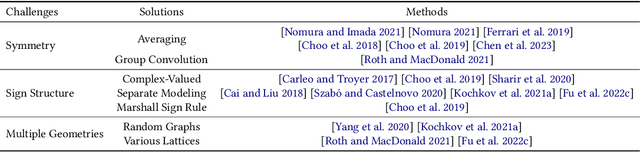
Advances in artificial intelligence (AI) are fueling a new paradigm of discoveries in natural sciences. Today, AI has started to advance natural sciences by improving, accelerating, and enabling our understanding of natural phenomena at a wide range of spatial and temporal scales, giving rise to a new area of research known as AI for science (AI4Science). Being an emerging research paradigm, AI4Science is unique in that it is an enormous and highly interdisciplinary area. Thus, a unified and technical treatment of this field is needed yet challenging. This paper aims to provide a technically thorough account of a subarea of AI4Science; namely, AI for quantum, atomistic, and continuum systems. These areas aim at understanding the physical world from the subatomic (wavefunctions and electron density), atomic (molecules, proteins, materials, and interactions), to macro (fluids, climate, and subsurface) scales and form an important subarea of AI4Science. A unique advantage of focusing on these areas is that they largely share a common set of challenges, thereby allowing a unified and foundational treatment. A key common challenge is how to capture physics first principles, especially symmetries, in natural systems by deep learning methods. We provide an in-depth yet intuitive account of techniques to achieve equivariance to symmetry transformations. We also discuss other common technical challenges, including explainability, out-of-distribution generalization, knowledge transfer with foundation and large language models, and uncertainty quantification. To facilitate learning and education, we provide categorized lists of resources that we found to be useful. We strive to be thorough and unified and hope this initial effort may trigger more community interests and efforts to further advance AI4Science.
Self-Supervised Learning with Lie Symmetries for Partial Differential Equations
Jul 11, 2023Machine learning for differential equations paves the way for computationally efficient alternatives to numerical solvers, with potentially broad impacts in science and engineering. Though current algorithms typically require simulated training data tailored to a given setting, one may instead wish to learn useful information from heterogeneous sources, or from real dynamical systems observations that are messy or incomplete. In this work, we learn general-purpose representations of PDEs from heterogeneous data by implementing joint embedding methods for self-supervised learning (SSL), a framework for unsupervised representation learning that has had notable success in computer vision. Our representation outperforms baseline approaches to invariant tasks, such as regressing the coefficients of a PDE, while also improving the time-stepping performance of neural solvers. We hope that our proposed methodology will prove useful in the eventual development of general-purpose foundation models for PDEs.
GULP: a prediction-based metric between representations
Oct 12, 2022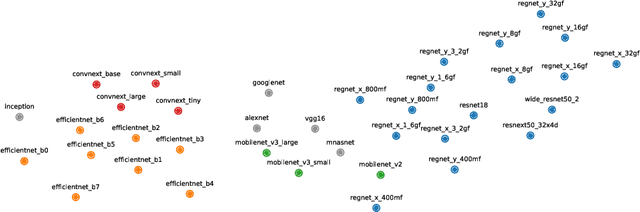
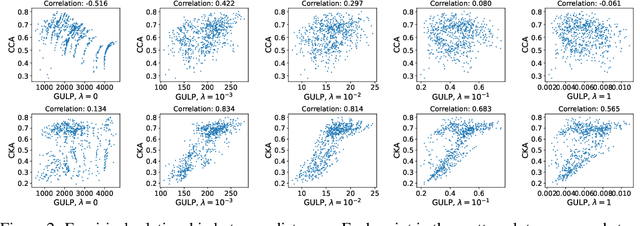
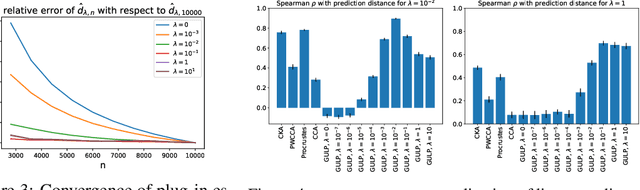
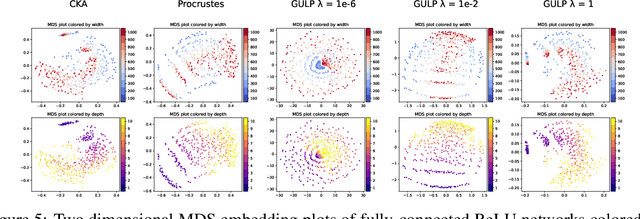
Comparing the representations learned by different neural networks has recently emerged as a key tool to understand various architectures and ultimately optimize them. In this work, we introduce GULP, a family of distance measures between representations that is explicitly motivated by downstream predictive tasks. By construction, GULP provides uniform control over the difference in prediction performance between two representations, with respect to regularized linear prediction tasks. Moreover, it satisfies several desirable structural properties, such as the triangle inequality and invariance under orthogonal transformations, and thus lends itself to data embedding and visualization. We extensively evaluate GULP relative to other methods, and demonstrate that it correctly differentiates between architecture families, converges over the course of training, and captures generalization performance on downstream linear tasks.
Distilling Model Failures as Directions in Latent Space
Jun 29, 2022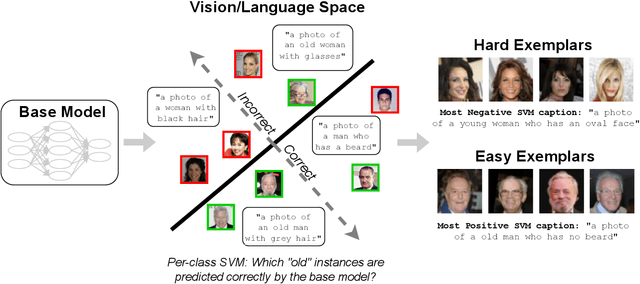

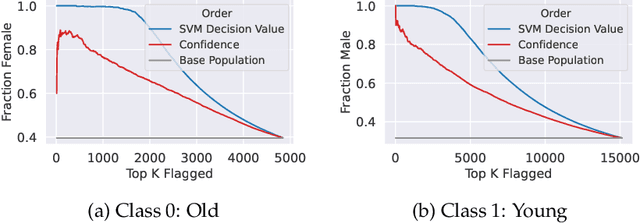
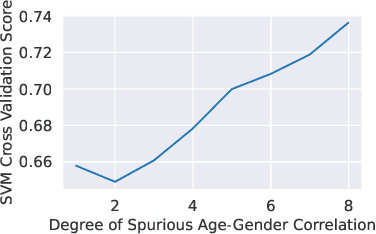
Existing methods for isolating hard subpopulations and spurious correlations in datasets often require human intervention. This can make these methods labor-intensive and dataset-specific. To address these shortcomings, we present a scalable method for automatically distilling a model's failure modes. Specifically, we harness linear classifiers to identify consistent error patterns, and, in turn, induce a natural representation of these failure modes as directions within the feature space. We demonstrate that this framework allows us to discover and automatically caption challenging subpopulations within the training dataset, and intervene to improve the model's performance on these subpopulations. Code available at https://github.com/MadryLab/failure-directions