 Add to Chrome
 Add to Firefox
 Add to Edge
Rethinking Graph Masked Autoencoders through Alignment and Uniformity
Feb 11, 2024
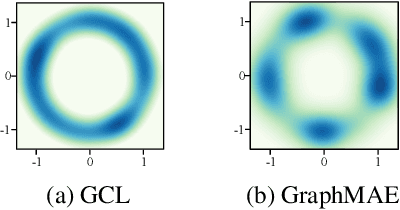
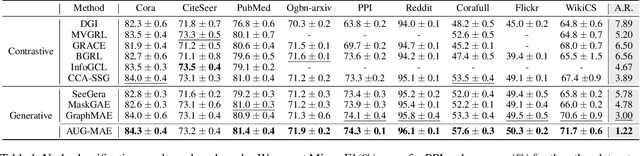
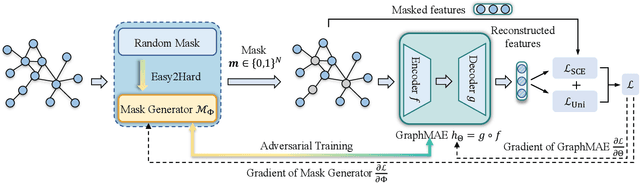
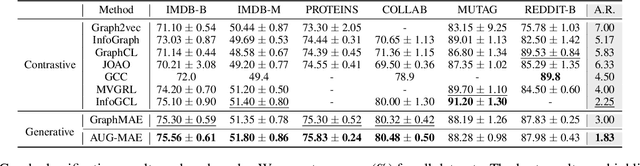
Self-supervised learning on graphs can be bifurcated into contrastive and generative methods. Contrastive methods, also known as graph contrastive learning (GCL), have dominated graph self-supervised learning in the past few years, but the recent advent of graph masked autoencoder (GraphMAE) rekindles the momentum behind generative methods. Despite the empirical success of GraphMAE, there is still a dearth of theoretical understanding regarding its efficacy. Moreover, while both generative and contrastive methods have been shown to be effective, their connections and differences have yet to be thoroughly investigated. Therefore, we theoretically build a bridge between GraphMAE and GCL, and prove that the node-level reconstruction objective in GraphMAE implicitly performs context-level GCL. Based on our theoretical analysis, we further identify the limitations of the GraphMAE from the perspectives of alignment and uniformity, which have been considered as two key properties of high-quality representations in GCL. We point out that GraphMAE's alignment performance is restricted by the masking strategy, and the uniformity is not strictly guaranteed. To remedy the aforementioned limitations, we propose an Alignment-Uniformity enhanced Graph Masked AutoEncoder, named AUG-MAE. Specifically, we propose an easy-to-hard adversarial masking strategy to provide hard-to-align samples, which improves the alignment performance. Meanwhile, we introduce an explicit uniformity regularizer to ensure the uniformity of the learned representations. Experimental results on benchmark datasets demonstrate the superiority of our model over existing state-of-the-art methods.

Can Large Language Models Detect Rumors on Social Media?
Feb 08, 2024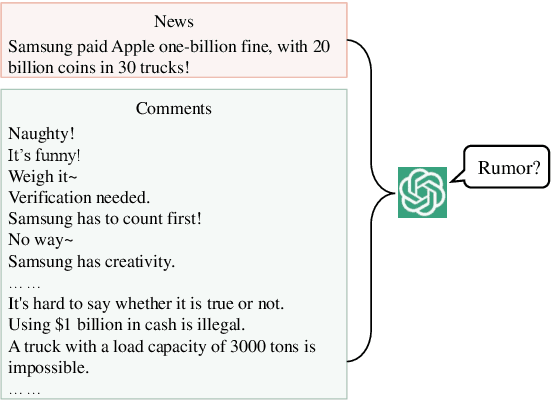


In this work, we investigate to use Large Language Models (LLMs) for rumor detection on social media. However, it is challenging for LLMs to reason over the entire propagation information on social media, which contains news contents and numerous comments, due to LLMs may not concentrate on key clues in the complex propagation information, and have trouble in reasoning when facing massive and redundant information. Accordingly, we propose an LLM-empowered Rumor Detection (LeRuD) approach, in which we design prompts to teach LLMs to reason over important clues in news and comments, and divide the entire propagation information into a Chain-of-Propagation for reducing LLMs' burden. We conduct extensive experiments on the Twitter and Weibo datasets, and LeRuD outperforms several state-of-the-art rumor detection models by 3.2% to 7.7%. Meanwhile, by applying LLMs, LeRuD requires no data for training, and thus shows more promising rumor detection ability in few-shot or zero-shot scenarios.
AdaFlow: Imitation Learning with Variance-Adaptive Flow-Based Policies
Feb 06, 2024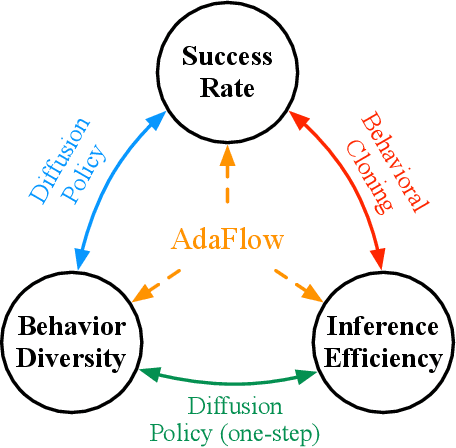
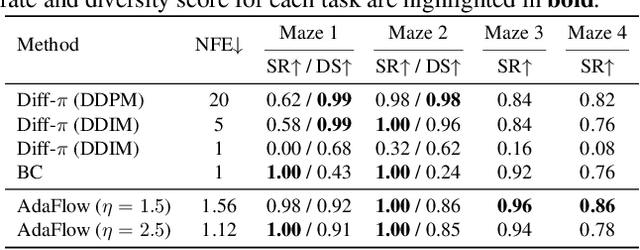
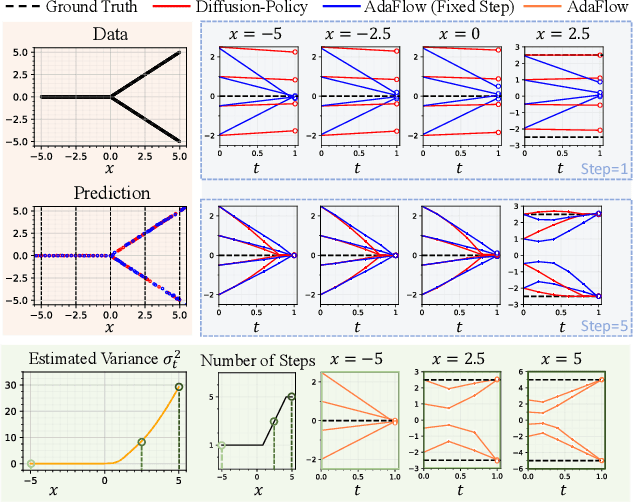
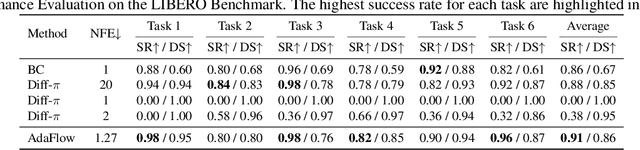
Diffusion-based imitation learning improves Behavioral Cloning (BC) on multi-modal decision-making, but comes at the cost of significantly slower inference due to the recursion in the diffusion process. It urges us to design efficient policy generators while keeping the ability to generate diverse actions. To address this challenge, we propose AdaFlow, an imitation learning framework based on flow-based generative modeling. AdaFlow represents the policy with state-conditioned ordinary differential equations (ODEs), which are known as probability flows. We reveal an intriguing connection between the conditional variance of their training loss and the discretization error of the ODEs. With this insight, we propose a variance-adaptive ODE solver that can adjust its step size in the inference stage, making AdaFlow an adaptive decision-maker, offering rapid inference without sacrificing diversity. Interestingly, it automatically reduces to a one-step generator when the action distribution is uni-modal. Our comprehensive empirical evaluation shows that AdaFlow achieves high performance across all dimensions, including success rate, behavioral diversity, and inference speed. The code is available at https://github.com/hxixixh/AdaFlow
Fast and Scalable Network Slicing by Integrating Deep Learning with Lagrangian Methods
Jan 22, 2024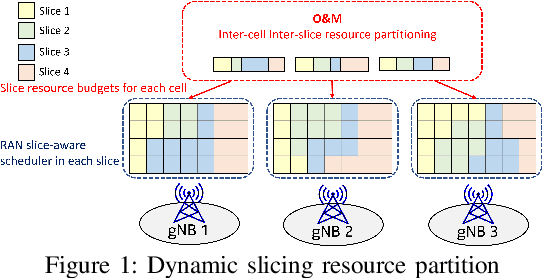
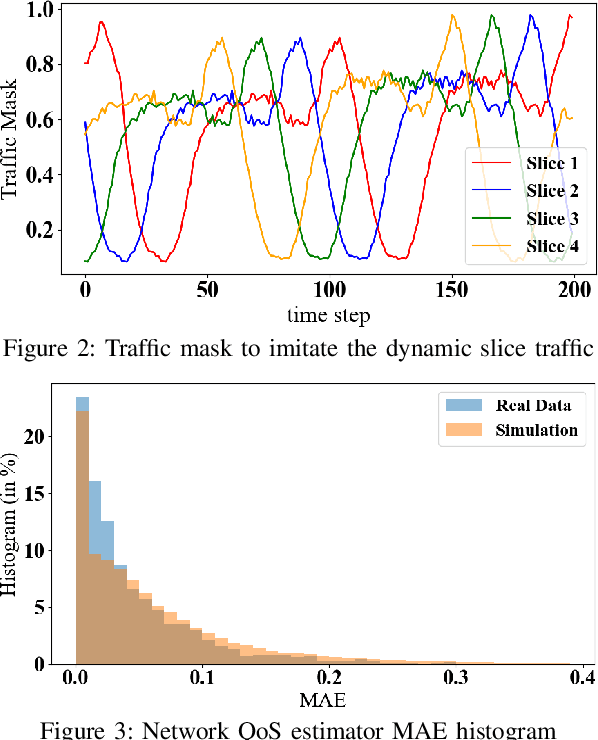
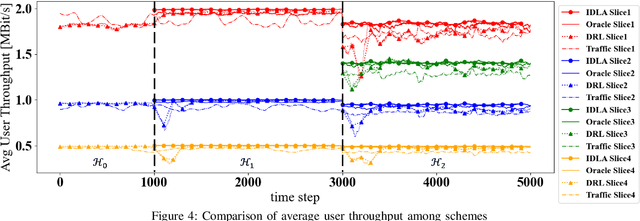
Network slicing is a key technique in 5G and beyond for efficiently supporting diverse services. Many network slicing solutions rely on deep learning to manage complex and high-dimensional resource allocation problems. However, deep learning models suffer limited generalization and adaptability to dynamic slicing configurations. In this paper, we propose a novel framework that integrates constrained optimization methods and deep learning models, resulting in strong generalization and superior approximation capability. Based on the proposed framework, we design a new neural-assisted algorithm to allocate radio resources to slices to maximize the network utility under inter-slice resource constraints. The algorithm exhibits high scalability, accommodating varying numbers of slices and slice configurations with ease. We implement the proposed solution in a system-level network simulator and evaluate its performance extensively by comparing it to state-of-the-art solutions including deep reinforcement learning approaches. The numerical results show that our solution obtains near-optimal quality-of-service satisfaction and promising generalization performance under different network slicing scenarios.
SteinDreamer: Variance Reduction for Text-to-3D Score Distillation via Stein Identity
Dec 31, 2023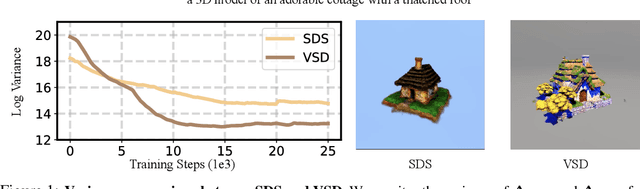
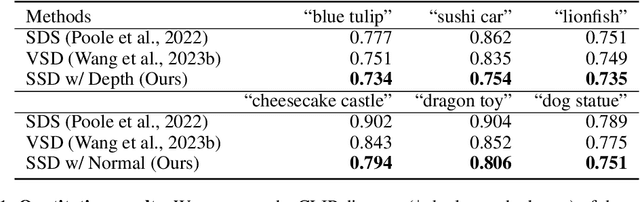
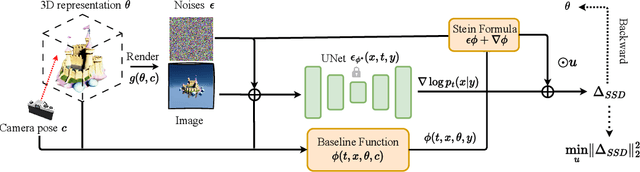
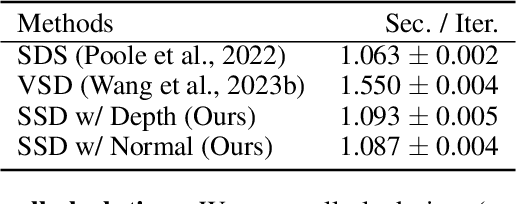
Score distillation has emerged as one of the most prevalent approaches for text-to-3D asset synthesis. Essentially, score distillation updates 3D parameters by lifting and back-propagating scores averaged over different views. In this paper, we reveal that the gradient estimation in score distillation is inherent to high variance. Through the lens of variance reduction, the effectiveness of SDS and VSD can be interpreted as applications of various control variates to the Monte Carlo estimator of the distilled score. Motivated by this rethinking and based on Stein's identity, we propose a more general solution to reduce variance for score distillation, termed Stein Score Distillation (SSD). SSD incorporates control variates constructed by Stein identity, allowing for arbitrary baseline functions. This enables us to include flexible guidance priors and network architectures to explicitly optimize for variance reduction. In our experiments, the overall pipeline, dubbed SteinDreamer, is implemented by instantiating the control variate with a monocular depth estimator. The results suggest that SSD can effectively reduce the distillation variance and consistently improve visual quality for both object- and scene-level generation. Moreover, we demonstrate that SteinDreamer achieves faster convergence than existing methods due to more stable gradient updates.
Taming Mode Collapse in Score Distillation for Text-to-3D Generation
Dec 31, 2023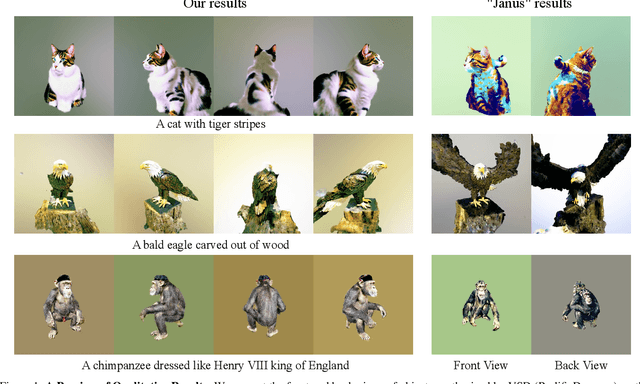
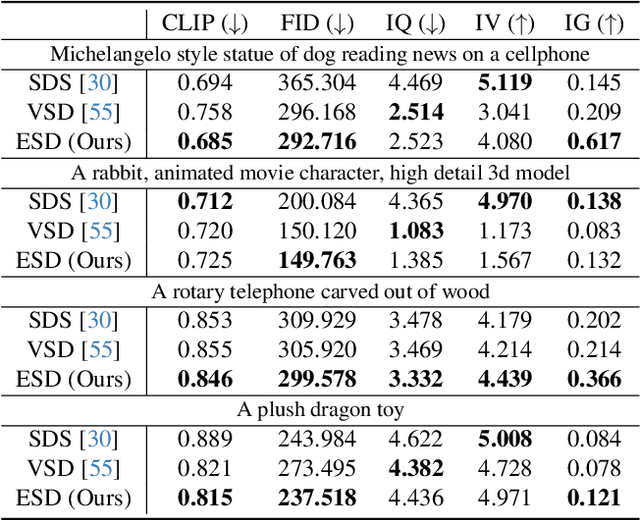
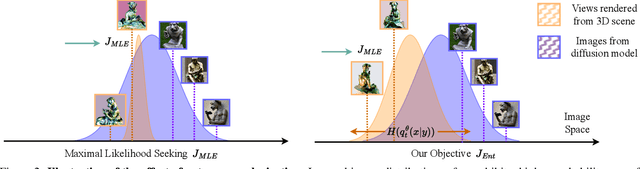
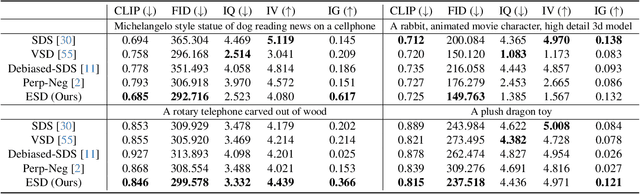
Despite the remarkable performance of score distillation in text-to-3D generation, such techniques notoriously suffer from view inconsistency issues, also known as "Janus" artifact, where the generated objects fake each view with multiple front faces. Although empirically effective methods have approached this problem via score debiasing or prompt engineering, a more rigorous perspective to explain and tackle this problem remains elusive. In this paper, we reveal that the existing score distillation-based text-to-3D generation frameworks degenerate to maximal likelihood seeking on each view independently and thus suffer from the mode collapse problem, manifesting as the Janus artifact in practice. To tame mode collapse, we improve score distillation by re-establishing in entropy term in the corresponding variational objective, which is applied to the distribution of rendered images. Maximizing the entropy encourages diversity among different views in generated 3D assets, thereby mitigating the Janus problem. Based on this new objective, we derive a new update rule for 3D score distillation, dubbed Entropic Score Distillation (ESD). We theoretically reveal that ESD can be simplified and implemented by just adopting the classifier-free guidance trick upon variational score distillation. Although embarrassingly straightforward, our extensive experiments successfully demonstrate that ESD can be an effective treatment for Janus artifacts in score distillation.
Uncertainty-aware Surrogate Models for Airfoil Flow Simulations with Denoising Diffusion Probabilistic Models
Dec 08, 2023Leveraging neural networks as surrogate models for turbulence simulation is a topic of growing interest. At the same time, embodying the inherent uncertainty of simulations in the predictions of surrogate models remains very challenging. The present study makes a first attempt to use denoising diffusion probabilistic models (DDPMs) to train an uncertainty-aware surrogate model for turbulence simulations. Due to its prevalence, the simulation of flows around airfoils with various shapes, Reynolds numbers, and angles of attack is chosen as the learning objective. Our results show that DDPMs can successfully capture the whole distribution of solutions and, as a consequence, accurately estimate the uncertainty of the simulations. The performance of DDPMs is also compared with varying baselines in the form of Bayesian neural networks and heteroscedastic models. Experiments demonstrate that DDPMs outperform the other methods regarding a variety of accuracy metrics. Besides, it offers the advantage of providing access to the complete distributions of uncertainties rather than providing a set of parameters. As such, it can yield realistic and detailed samples from the distribution of solutions. All source codes and datasets utilized in this study are publicly available.
ControlRec: Bridging the Semantic Gap between Language Model and Personalized Recommendation
Nov 28, 2023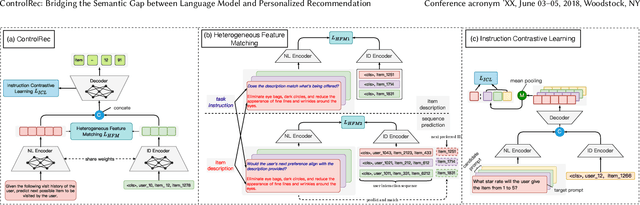
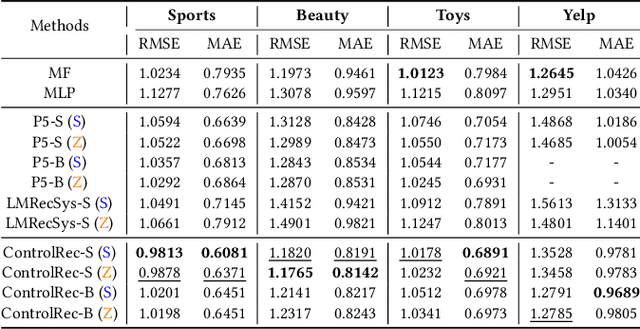
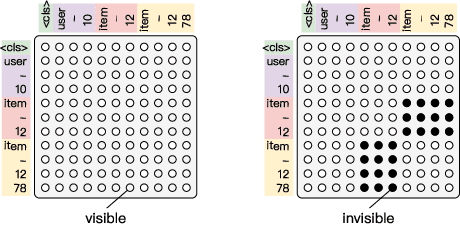
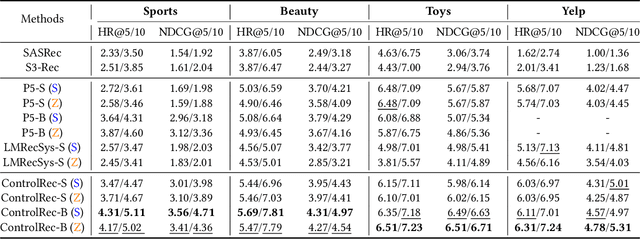
The successful integration of large language models (LLMs) into recommendation systems has proven to be a major breakthrough in recent studies, paving the way for more generic and transferable recommendations. However, LLMs struggle to effectively utilize user and item IDs, which are crucial identifiers for successful recommendations. This is mainly due to their distinct representation in a semantic space that is different from the natural language (NL) typically used to train LLMs. To tackle such issue, we introduce ControlRec, an innovative Contrastive prompt learning framework for Recommendation systems. ControlRec treats user IDs and NL as heterogeneous features and encodes them individually. To promote greater alignment and integration between them in the semantic space, we have devised two auxiliary contrastive objectives: (1) Heterogeneous Feature Matching (HFM) aligning item description with the corresponding ID or user's next preferred ID based on their interaction sequence, and (2) Instruction Contrastive Learning (ICL) effectively merging these two crucial data sources by contrasting probability distributions of output sequences generated by diverse tasks. Experimental results on four public real-world datasets demonstrate the effectiveness of the proposed method on improving model performance.
Monkey: Image Resolution and Text Label Are Important Things for Large Multi-modal Models
Nov 24, 2023


Large Multimodal Models (LMMs) have shown promise in vision-language tasks but struggle with high-resolution input and detailed scene understanding. Addressing these challenges, we introduce Monkey to enhance LMM capabilities. Firstly, Monkey processes input images by dividing them into uniform patches, each matching the size (e.g., 448x448) used in the original training of the well-trained vision encoder. Equipped with individual adapter for each patch, Monkey can handle higher resolutions up to 1344x896 pixels, enabling the detailed capture of complex visual information. Secondly, it employs a multi-level description generation method, enriching the context for scene-object associations. This two-part strategy ensures more effective learning from generated data: the higher resolution allows for a more detailed capture of visuals, which in turn enhances the effectiveness of comprehensive descriptions. Extensive ablative results validate the effectiveness of our designs. Additionally, experiments on 18 datasets further demonstrate that Monkey surpasses existing LMMs in many tasks like Image Captioning and various Visual Question Answering formats. Specially, in qualitative tests focused on dense text question answering, Monkey has exhibited encouraging results compared with GPT4V. Code is available at https://github.com/Yuliang-Liu/Monkey.
Learn to Augment Network Simulators Towards Digital Network Twins
Nov 21, 2023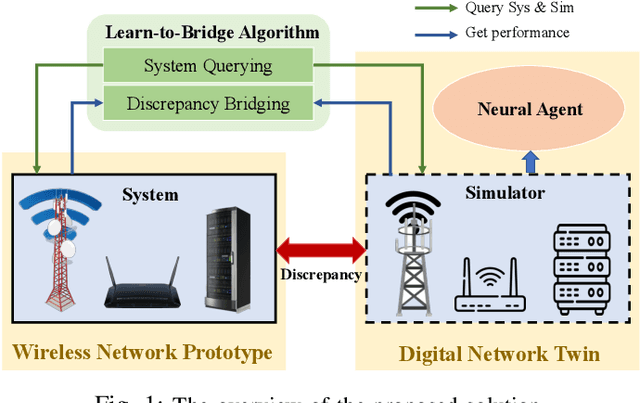
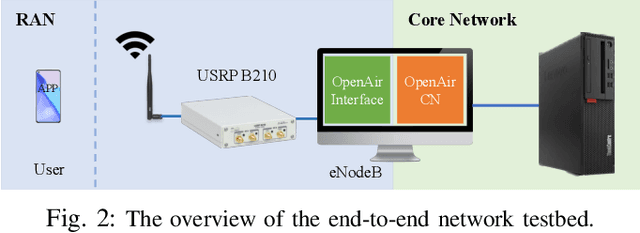
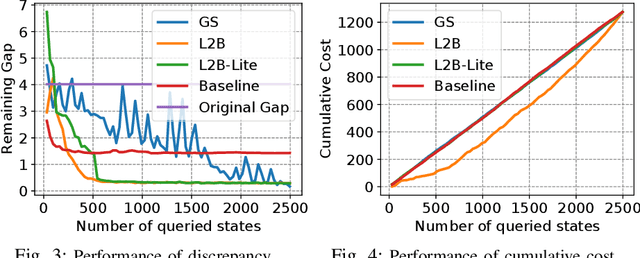
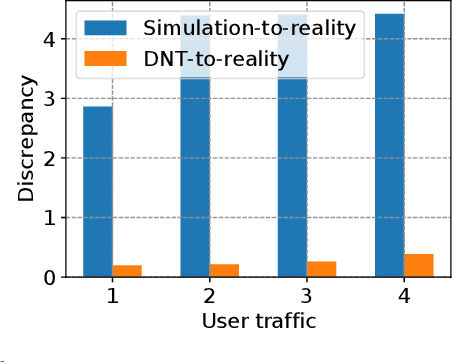
Digital network twin (DNT) is a promising paradigm to replicate real-world cellular networks toward continual assessment, proactive management, and what-if analysis. Existing discussions have been focusing on using only deep learning techniques to build DNTs, which raises widespread concerns regarding their generalization, explainability, and transparency. In this paper, we explore an alternative approach to augment network simulators with context-aware neural agents. The main challenge lies in the non-trivial simulation-to-reality (sim-to-real) discrepancy between offline simulators and real-world networks. To solve the challenge, we propose a new learn-to-bridge algorithm to cost-efficiently bridge the sim-to-real discrepancy in two alternative stages. In the first stage, we select states to query performances in real-world networks by using newly-designed cost-aware Bayesian optimization. In the second stage, we train the neural agent to learn the state context and bridge the probabilistic discrepancy based on Bayesian neural networks (BNN). In addition, we build a small-scale end-to-end network testbed based on OpenAirInterface RAN and Core with USRP B210 and a smartphone, and replicate the network in NS-3. The evaluation results show that, our proposed solution substantially outperforms existing methods, with more than 92\% reduction in the sim-to-real discrepancy.