 Add to Chrome
 Add to Firefox
 Add to Edge
Online Conformal Prediction Beyond Feedback
Aug 07, 2026
Uncertainty quantification is essential when deploying machine learning models in safety-critical applications. Online conformal prediction (OCP) provides theoretically principled uncertainty quantification for arbitrary black-box classifiers and non-i.i.d. data streams by constructing prediction sets that are guaranteed to contain the true label at a user-specified frequency. OCP usually updates prediction sets using feedback from previously deployed predictions. We instead study an OCP setting beyond feedback: on each round, the learner can either output a prediction set or query the correct label, but not both. Thus, no deployed prediction is ever evaluated directly. We reduce this problem to a partial monitoring game in which prediction actions return no observation and a separate query action reveals the label. The reward function is constructed in a way that encourages the learner to output small prediction sets while ensuring that the correct label is covered with a sufficiently high probability. To solve this game, we develop OCP with queries (OCPQ) by adapting the label efficient forecaster of Cesa-Bianchi, Lugosi, and Stoltz (2004) to our setting. For any black box classifier and any (non-i.i.d.) oblivious data stream of length $T$, OCPQ has $O(T^{2/3})$ expected regret and expected coverage at least $β-O(T^{-1/3})$ for a user-defined $β$, while querying only an expected $T^{-1/3}$ fraction of rounds. This provides coverage comparable to bandit-based OCP methods while requiring no feedback from deployed prediction sets. Experiments on real-world datasets further demonstrate the effectiveness of our approach.

Robust Counterfactual Policy Optimisation via Nondeterministic Causal Models
Aug 03, 2026Counterfactual inference approaches for sequential decision-making typically assume deterministic causal models, where all randomness stems from latent variables. However, Markov Decision Processes (MDPs) are inherently stochastic. We address this by formalising counterfactual policy optimisation under probabilistic nondeterministic causal models, which properly separates latent confounding from irreducible stochasticity, and here propose a first practical optimisation problem for identifying robust counterfactual policies under a sensitivity analysis framework. We validate our approach on a sepsis treatment simulator, where diabetes status acts as a hidden global confounder.
On the QUEST for Uncertainty Quantification via Highest Density Regions
Jun 17, 2026Uncertainty quantification (UQ) is essential for reliable decision-making in safety-critical applications in probabilistic machine learning. For regression problems, dominant scalar UQ approaches - notably, those based on proper scoring rules - measure uncertainty via pointwise predictive risk. This can lead to counterintuitive results when the target statistic is not the conditional expectation. We propose an alternative framework, in which uncertainty is characterised by the volume of the most probable subset of a distribution's support. QUEST (Quantifying Uncertainty via highest dEnSiTy regions) is a novel approach to UQ based on the concentration of Lebesgue measure at a distribution's peak(s), evaluated at one or more values of a robustness parameter $α$. We establish connections between our measures and classical statistics from information theory and economics. We show that, unlike popular alternatives based on proper scoring rules, QUEST measures of epistemic and aleatoric uncertainty satisfy a set of axioms adapted from the UQ literature, including monotonicity under distributional spread and invariance to location shifts. Selective prediction benchmarks confirm that QUEST performs favourably against standard measures such as variance and differential entropy.
PreAct-Bench: Benchmarking Predictive Monitoring in LLMs
Jun 03, 2026Large language models (LLMs) are increasingly deployed as autonomous agents capable of executing multi-step action trajectories toward a given objective. While existing safety research has focused on detecting unethical behavior from complete trajectories, this paradigm is fundamentally retrospective: it identifies harm only after it has already occurred. In this work, we study a critical yet overlooked safety task, which we term Predictive Monitoring: given only a partial action trajectory, can a model infer whether it will culminate in an unethical action before the overt action is executed? To support this task, we present PreActBench, a benchmark of 1,000 paired ethical and unethical action trajectories spanning five domains. We evaluate a range of LLMs, safety guardrail models, and latent probing methods across varying fractions of the action trajectory using our Prefix Foresight F1 metric. Results show that while humans achieve promising performance, predictive monitoring remains challenging even for strong models, highlighting the need for future-oriented risk reasoning in LLM safety.
Calibrate-Then-Delegate: Safety Monitoring with Risk and Budget Guarantees via Model Cascades
Apr 15, 2026Monitoring LLM safety at scale requires balancing cost and accuracy: a cheap latent-space probe can screen every input, but hard cases should be escalated to a more expensive expert. Existing cascades delegate based on probe uncertainty, but uncertainty is a poor proxy for delegation benefit, as it ignores whether the expert would actually correct the error. To address this problem, we introduce Calibrate-Then-Delegate (CTD), a model-cascade approach that provides probabilistic guarantees on the computation cost while enabling instance-level (streaming) decisions. CTD builds on a novel delegation value (DV) probe, a lightweight model operating on the same internal representations as the safety probe that directly predicts the benefit of escalation. To enforce budget constraints, CTD calibrates a threshold on the DV signal using held-out data via multiple hypothesis testing, yielding finite-sample guarantees on the delegation rate. Evaluated on four safety datasets, CTD consistently outperforms uncertainty-based delegation at every budget level, avoids harmful over-delegation, and adapts budget allocation to input difficulty without requiring group labels.
Physics-Informed Neural Operators for Cardiac Electrophysiology
Nov 11, 2025Accurately simulating systems governed by PDEs, such as voltage fields in cardiac electrophysiology (EP) modelling, remains a significant modelling challenge. Traditional numerical solvers are computationally expensive and sensitive to discretisation, while canonical deep learning methods are data-hungry and struggle with chaotic dynamics and long-term predictions. Physics-Informed Neural Networks (PINNs) mitigate some of these issues by incorporating physical constraints in the learning process, yet they remain limited by mesh resolution and long-term predictive stability. In this work, we propose a Physics-Informed Neural Operator (PINO) approach to solve PDE problems in cardiac EP. Unlike PINNs, PINO models learn mappings between function spaces, allowing them to generalise to multiple mesh resolutions and initial conditions. Our results show that PINO models can accurately reproduce cardiac EP dynamics over extended time horizons and across multiple propagation scenarios, including zero-shot evaluations on scenarios unseen during training. Additionally, our PINO models maintain high predictive quality in long roll-outs (where predictions are recursively fed back as inputs), and can scale their predictive resolution by up to 10x the training resolution. These advantages come with a significant reduction in simulation time compared to numerical PDE solvers, highlighting the potential of PINO-based approaches for efficient and scalable cardiac EP simulations.
DRMD: Deep Reinforcement Learning for Malware Detection under Concept Drift
Aug 26, 2025Malware detection in real-world settings must deal with evolving threats, limited labeling budgets, and uncertain predictions. Traditional classifiers, without additional mechanisms, struggle to maintain performance under concept drift in malware domains, as their supervised learning formulation cannot optimize when to defer decisions to manual labeling and adaptation. Modern malware detection pipelines combine classifiers with monthly active learning (AL) and rejection mechanisms to mitigate the impact of concept drift. In this work, we develop a novel formulation of malware detection as a one-step Markov Decision Process and train a deep reinforcement learning (DRL) agent, simultaneously optimizing sample classification performance and rejecting high-risk samples for manual labeling. We evaluated the joint detection and drift mitigation policy learned by the DRL-based Malware Detection (DRMD) agent through time-aware evaluations on Android malware datasets subject to realistic drift requiring multi-year performance stability. The policies learned under these conditions achieve a higher Area Under Time (AUT) performance compared to standard classification approaches used in the domain, showing improved resilience to concept drift. Specifically, the DRMD agent achieved a $5.18\pm5.44$, $14.49\pm12.86$, and $10.06\pm10.81$ average AUT performance improvement for the classification only, classification with rejection, and classification with rejection and AL settings, respectively. Our results demonstrate for the first time that DRL can facilitate effective malware detection and improved resiliency to concept drift in the dynamic environment of the Android malware domain.
LTL Verification of Memoryful Neural Agents
Mar 04, 2025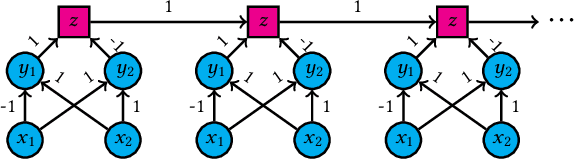

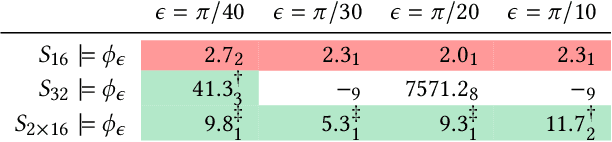
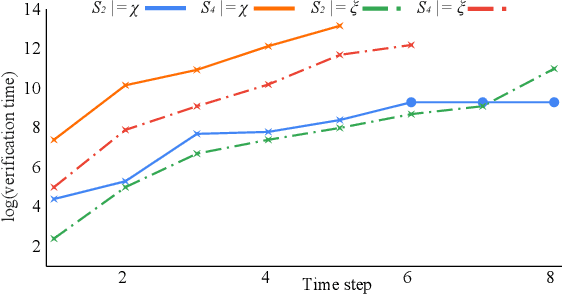
We present a framework for verifying Memoryful Neural Multi-Agent Systems (MN-MAS) against full Linear Temporal Logic (LTL) specifications. In MN-MAS, agents interact with a non-deterministic, partially observable environment. Examples of MN-MAS include multi-agent systems based on feed-forward and recurrent neural networks or state-space models. Different from previous approaches, we support the verification of both bounded and unbounded LTL specifications. We leverage well-established bounded model checking techniques, including lasso search and invariant synthesis, to reduce the verification problem to that of constraint solving. To solve these constraints, we develop efficient methods based on bound propagation, mixed-integer linear programming, and adaptive splitting. We evaluate the effectiveness of our algorithms in single and multi-agent environments from the Gymnasium and PettingZoo libraries, verifying unbounded specifications for the first time and improving the verification time for bounded specifications by an order of magnitude compared to the SoA.
Robust Counterfactual Inference in Markov Decision Processes
Feb 19, 2025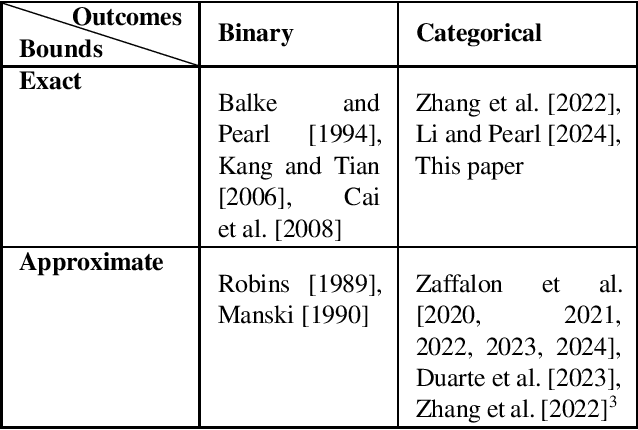
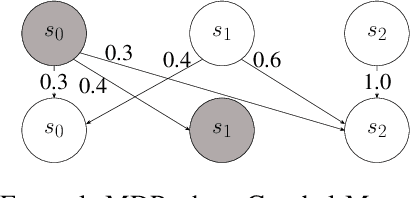
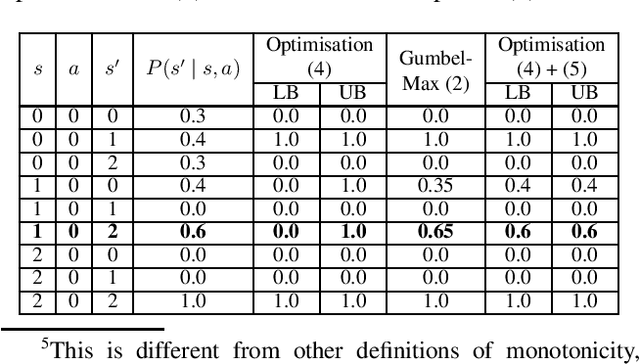
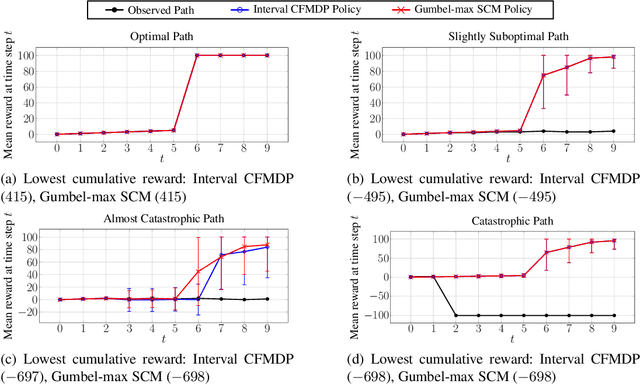
This paper addresses a key limitation in existing counterfactual inference methods for Markov Decision Processes (MDPs). Current approaches assume a specific causal model to make counterfactuals identifiable. However, there are usually many causal models that align with the observational and interventional distributions of an MDP, each yielding different counterfactual distributions, so fixing a particular causal model limits the validity (and usefulness) of counterfactual inference. We propose a novel non-parametric approach that computes tight bounds on counterfactual transition probabilities across all compatible causal models. Unlike previous methods that require solving prohibitively large optimisation problems (with variables that grow exponentially in the size of the MDP), our approach provides closed-form expressions for these bounds, making computation highly efficient and scalable for non-trivial MDPs. Once such an interval counterfactual MDP is constructed, our method identifies robust counterfactual policies that optimise the worst-case reward w.r.t. the uncertain interval MDP probabilities. We evaluate our method on various case studies, demonstrating improved robustness over existing methods.
Distilling Calibration via Conformalized Credal Inference
Jan 10, 2025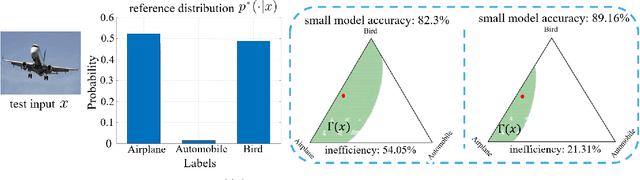
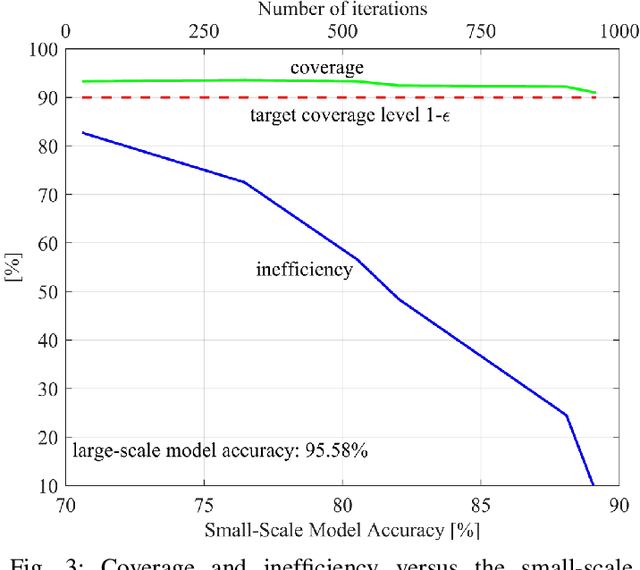
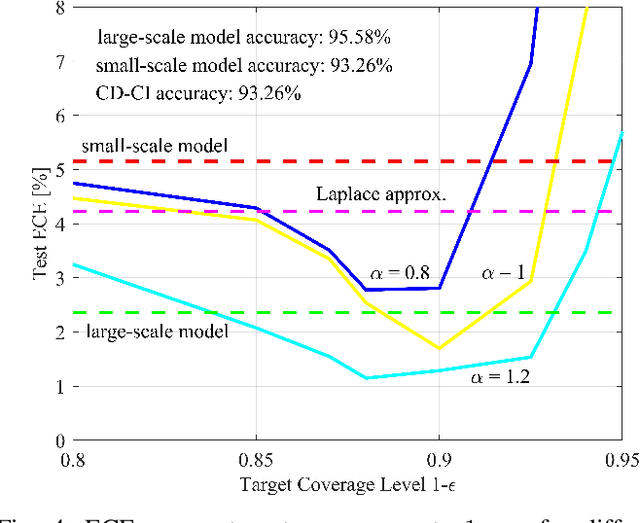
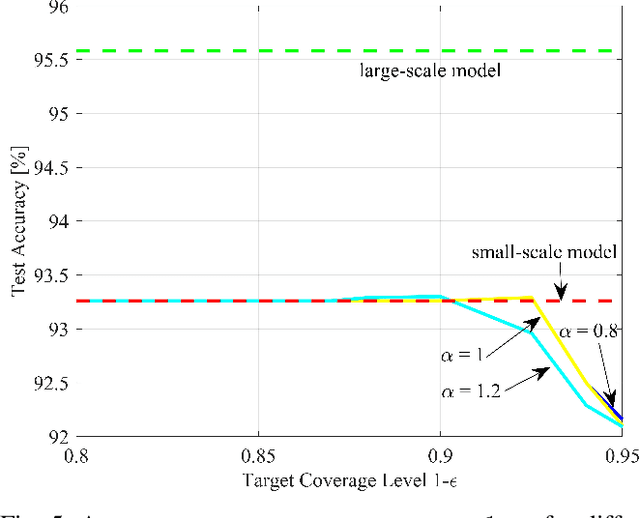
Deploying artificial intelligence (AI) models on edge devices involves a delicate balance between meeting stringent complexity constraints, such as limited memory and energy resources, and ensuring reliable performance in sensitive decision-making tasks. One way to enhance reliability is through uncertainty quantification via Bayesian inference. This approach, however, typically necessitates maintaining and running multiple models in an ensemble, which may exceed the computational limits of edge devices. This paper introduces a low-complexity methodology to address this challenge by distilling calibration information from a more complex model. In an offline phase, predictive probabilities generated by a high-complexity cloud-based model are leveraged to determine a threshold based on the typical divergence between the cloud and edge models. At run time, this threshold is used to construct credal sets -- ranges of predictive probabilities that are guaranteed, with a user-selected confidence level, to include the predictions of the cloud model. The credal sets are obtained through thresholding of a divergence measure in the simplex of predictive probabilities. Experiments on visual and language tasks demonstrate that the proposed approach, termed Conformalized Distillation for Credal Inference (CD-CI), significantly improves calibration performance compared to low-complexity Bayesian methods, such as Laplace approximation, making it a practical and efficient solution for edge AI deployments.