 Add to Chrome
 Add to Firefox
 Add to Edge
PreAct-Bench: Benchmarking Predictive Monitoring in LLMs
Jun 03, 2026
Large language models (LLMs) are increasingly deployed as autonomous agents capable of executing multi-step action trajectories toward a given objective. While existing safety research has focused on detecting unethical behavior from complete trajectories, this paradigm is fundamentally retrospective: it identifies harm only after it has already occurred. In this work, we study a critical yet overlooked safety task, which we term Predictive Monitoring: given only a partial action trajectory, can a model infer whether it will culminate in an unethical action before the overt action is executed? To support this task, we present PreActBench, a benchmark of 1,000 paired ethical and unethical action trajectories spanning five domains. We evaluate a range of LLMs, safety guardrail models, and latent probing methods across varying fractions of the action trajectory using our Prefix Foresight F1 metric. Results show that while humans achieve promising performance, predictive monitoring remains challenging even for strong models, highlighting the need for future-oriented risk reasoning in LLM safety.

Weak Reward Model Transforms Generative Models into Robust Causal Event Extraction Systems
Jun 27, 2024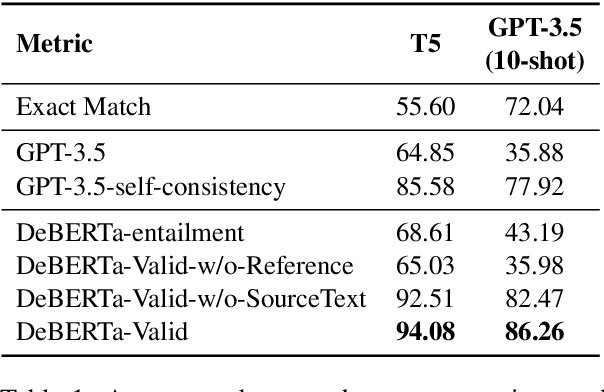
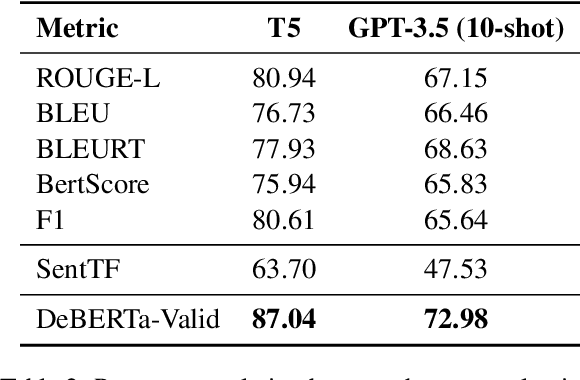
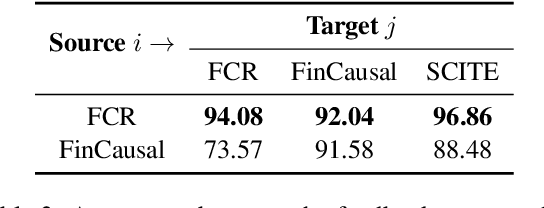
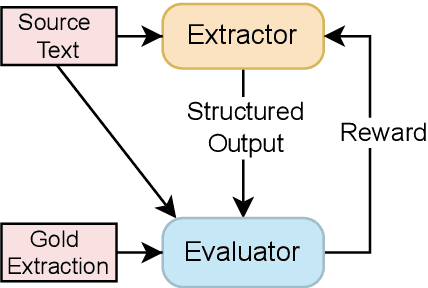
The inherent ambiguity of cause and effect boundaries poses a challenge in evaluating causal event extraction tasks. Traditional metrics like Exact Match and BertScore poorly reflect model performance, so we trained evaluation models to approximate human evaluation, achieving high agreement. We used them to perform Reinforcement Learning with extraction models to align them with human preference, prioritising semantic understanding. We successfully explored our approach through multiple datasets, including transferring an evaluator trained on one dataset to another as a way to decrease the reliance on human-annotated data. In that vein, we also propose a weak-to-strong supervision method that uses a fraction of the annotated data to train an evaluation model while still achieving high performance in training an RL model. Our code is available at https://github.com/oyarsa/event_extraction/tree/causal-event-extraction.