 Add to Chrome
 Add to Firefox
 Add to Edge
Anthropogenic Regional Adaptation in Multimodal Vision-Language Model
Apr 13, 2026
While the field of vision-language (VL) has achieved remarkable success in integrating visual and textual information across multiple languages and domains, there is still no dedicated framework for assessing human-centric alignment in vision-language systems. We offer two contributions to address this gap. First, we introduce Anthropogenic Regional Adaptation: a novel paradigm that aims to optimize model relevance to specific regional contexts while ensuring the retention of global generalization capabilities. Second, we present a simple, but effective adaptation method named Geographical-generalization-made-easy (GG-EZ), which utilizes regional data filtering and model merging. Through comprehensive experiments on 3 VL architectures: large vision-language models, text-to-image diffusion models, and vision-language embedding models, and a case study in Southeast Asia (SEA) regional adaptation, we demonstrate the importance of Anthropogenic Regional Adaptation and the effectiveness of GG-EZ, showing 5-15% gains in cultural relevance metrics across SEA while maintaining over 98% of global performance and even occasionally surpassing it. Our findings establish Anthropogenic Regional Alignment as a foundational paradigm towards applicability of multimodal vision-language models in diverse regions and demonstrate a simple-yet-effective baseline method that optimizes regional value alignment while preserving global generalization.

Resurfacing Paralinguistic Awareness in Large Audio Language Models
Mar 12, 2026Large Audio Language Models (LALMs) have expanded the interaction with human to speech modality, which introduces great interactive potential, due to the paralinguistic cues implicitly indicating the user context. However, building on the current content-centred paradigm, LALMs usually neglect such paralinguistic cues and respond solely based on query content. In this work, to resurface the paralinguistic awareness in LALMs, we introduce five diverse layer-wise analyses to jointly identify paralinguistic layers and semantic understanding layers. Based on these insights, we propose a paralinguistic-enhanced fine-tuning (PE-FT) protocol accordingly to equip LALMs with paralinguistic-aware capabilities, including (1) selective-layer fine-tuning, and (2) an auxiliary dual-level classification head. Our experiments demonstrate that PE-FT protocol efficiently and effectively resurfaces the paralinguistic awareness, even surpassing the performance of the all-layer fine-tuning strategy.
GTS: Inference-Time Scaling of Latent Reasoning with a Learnable Gaussian Thought Sampler
Feb 15, 2026Inference-time scaling (ITS) in latent reasoning models typically introduces stochasticity through heuristic perturbations, such as dropout or fixed Gaussian noise. While these methods increase trajectory diversity, their exploration behavior is not explicitly modeled and can be inefficient under finite sampling budgets. We observe that stronger perturbations do not necessarily translate into more effective candidate trajectories, as unguided noise may disrupt internal decision structure rather than steer it. To provide a more structured alternative, we model latent thought exploration as conditional sampling from learnable densities and instantiate this idea as a Gaussian Thought Sampler (GTS). GTS predicts context-dependent perturbation distributions over continuous reasoning states and is trained with GRPO-style policy optimization while keeping the backbone frozen. Experiments on GSM8K with two latent reasoning architectures show that GTS achieves more reliable inference-time scaling than heuristic baselines. These findings indicate that improving latent ITS requires structured and optimizable exploration mechanisms rather than simply amplifying stochasticity.
Research on Dead Reckoning Algorithm for Self-Propelled Pipeline Robots in Three-Dimensional Complex Pipelines
Dec 19, 2025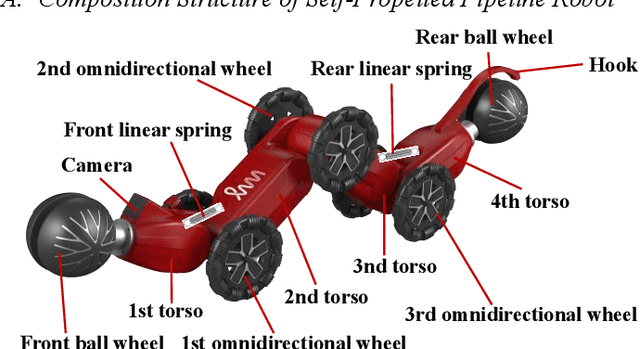
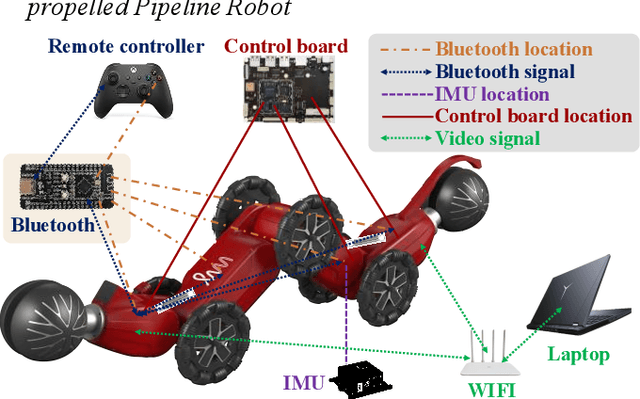
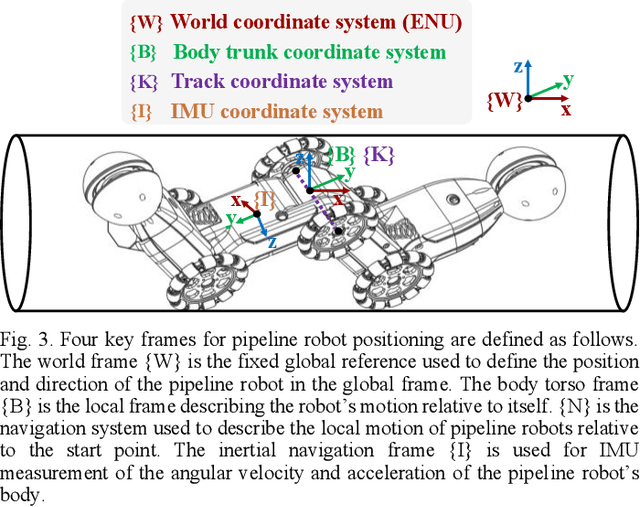
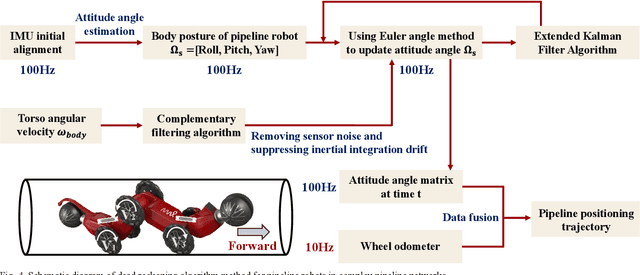
In the field of gas pipeline location, existing pipeline location methods mostly rely on pipeline location instruments. However, when faced with complex and curved pipeline scenarios, these methods often fail due to problems such as cable entanglement and insufficient equipment flexibility. To address this pain point, we designed a self-propelled pipeline robot. This robot can autonomously complete the location work of complex and curved pipelines in complex pipe networks without external dragging. In terms of pipeline mapping technology, traditional visual mapping and laser mapping methods are easily affected by lighting conditions and insufficient features in the confined space of pipelines, resulting in mapping drift and divergence problems. In contrast, the pipeline location method that integrates inertial navigation and wheel odometers is less affected by pipeline environmental factors. Based on this, this paper proposes a pipeline robot location method based on extended Kalman filtering (EKF). Firstly, the body attitude angle is initially obtained through an inertial measurement unit (IMU). Then, the extended Kalman filtering algorithm is used to improve the accuracy of attitude angle estimation. Finally, high-precision pipeline location is achieved by combining wheel odometers. During the testing phase, the roll wheels of the pipeline robot needed to fit tightly against the pipe wall to reduce slippage. However, excessive tightness would reduce the flexibility of motion control due to excessive friction. Therefore, a balance needed to be struck between the robot's motion capability and positioning accuracy. Experiments were conducted using the self-propelled pipeline robot in a rectangular loop pipeline, and the results verified the effectiveness of the proposed dead reckoning algorithm.
A Machine Learning-Based Multimodal Framework for Wearable Sensor-Based Archery Action Recognition and Stress Estimation
Nov 18, 2025In precision sports such as archery, athletes' performance depends on both biomechanical stability and psychological resilience. Traditional motion analysis systems are often expensive and intrusive, limiting their use in natural training environments. To address this limitation, we propose a machine learning-based multimodal framework that integrates wearable sensor data for simultaneous action recognition and stress estimation. Using a self-developed wrist-worn device equipped with an accelerometer and photoplethysmography (PPG) sensor, we collected synchronized motion and physiological data during real archery sessions. For motion recognition, we introduce a novel feature--Smoothed Differential Acceleration (SmoothDiff)--and employ a Long Short-Term Memory (LSTM) model to identify motion phases, achieving 96.8% accuracy and 95.9% F1-score. For stress estimation, we extract heart rate variability (HRV) features from PPG signals and apply a Multi-Layer Perceptron (MLP) classifier, achieving 80% accuracy in distinguishing high- and low-stress levels. The proposed framework demonstrates that integrating motion and physiological sensing can provide meaningful insights into athletes' technical and mental states. This approach offers a foundation for developing intelligent, real-time feedback systems for training optimization in archery and other precision sports.
Discourse Graph Guided Document Translation with Large Language Models
Nov 10, 2025Adapting large language models to full document translation remains challenging due to the difficulty of capturing long-range dependencies and preserving discourse coherence throughout extended texts. While recent agentic machine translation systems mitigate context window constraints through multi-agent orchestration and persistent memory, they require substantial computational resources and are sensitive to memory retrieval strategies. We introduce TransGraph, a discourse-guided framework that explicitly models inter-chunk relationships through structured discourse graphs and selectively conditions each translation segment on relevant graph neighbourhoods rather than relying on sequential or exhaustive context. Across three document-level MT benchmarks spanning six languages and diverse domains, TransGraph consistently surpasses strong baselines in translation quality and terminology consistency while incurring significantly lower token overhead.
Discrete Minds in a Continuous World: Do Language Models Know Time Passes?
Jun 06, 2025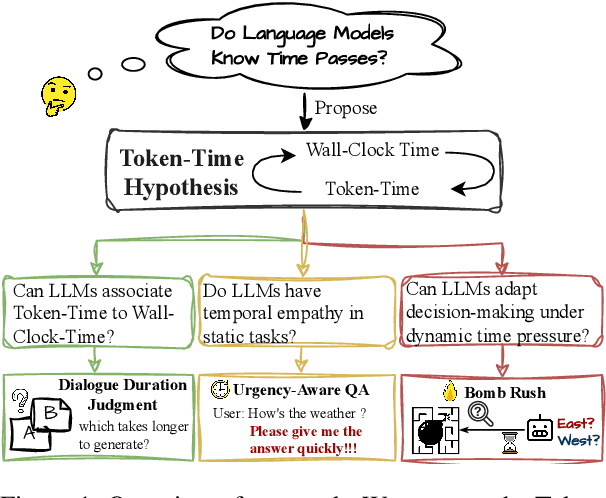
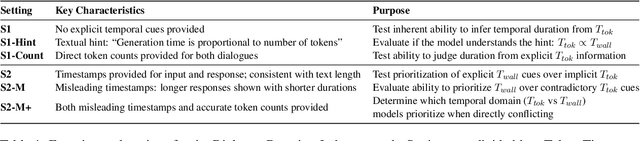
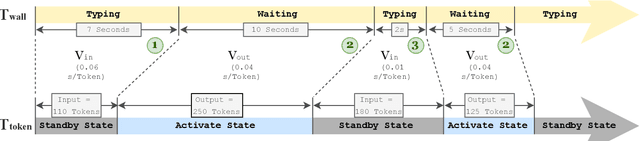
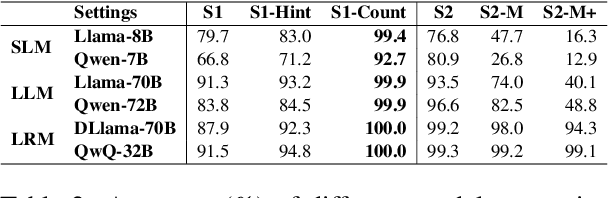
While Large Language Models (LLMs) excel at temporal reasoning tasks like event ordering and duration estimation, their ability to perceive the actual passage of time remains unexplored. We investigate whether LLMs perceive the passage of time and adapt their decision-making accordingly through three complementary experiments. First, we introduce the Token-Time Hypothesis, positing that LLMs can map discrete token counts to continuous wall-clock time, and validate this through a dialogue duration judgment task. Second, we demonstrate that LLMs could use this awareness to adapt their response length while maintaining accuracy when users express urgency in question answering tasks. Finally, we develop BombRush, an interactive navigation challenge that examines how LLMs modify behavior under progressive time pressure in dynamic environments. Our findings indicate that LLMs possess certain awareness of time passage, enabling them to bridge discrete linguistic tokens and continuous physical time, though this capability varies with model size and reasoning abilities. This work establishes a theoretical foundation for enhancing temporal awareness in LLMs for time-sensitive applications.
MAPLE: Multi-Agent Adaptive Planning with Long-Term Memory for Table Reasoning
Jun 06, 2025Table-based question answering requires complex reasoning capabilities that current LLMs struggle to achieve with single-pass inference. Existing approaches, such as Chain-of-Thought reasoning and question decomposition, lack error detection mechanisms and discard problem-solving experiences, contrasting sharply with how humans tackle such problems. In this paper, we propose MAPLE (Multi-agent Adaptive Planning with Long-term mEmory), a novel framework that mimics human problem-solving through specialized cognitive agents working in a feedback-driven loop. MAPLE integrates 4 key components: (1) a Solver using the ReAct paradigm for reasoning, (2) a Checker for answer verification, (3) a Reflector for error diagnosis and strategy correction, and (4) an Archiver managing long-term memory for experience reuse and evolution. Experiments on WiKiTQ and TabFact demonstrate significant improvements over existing methods, achieving state-of-the-art performance across multiple LLM backbones.
SpeechDialogueFactory: Generating High-Quality Speech Dialogue Data to Accelerate Your Speech-LLM Development
Mar 31, 2025High-quality speech dialogue datasets are crucial for Speech-LLM development, yet existing acquisition methods face significant limitations. Human recordings incur high costs and privacy concerns, while synthetic approaches often lack conversational authenticity. To address these challenges, we introduce \textsc{SpeechDialogueFactory}, a production-ready framework for generating natural speech dialogues efficiently. Our solution employs a comprehensive pipeline including metadata generation, dialogue scripting, paralinguistic-enriched utterance simulation, and natural speech synthesis with voice cloning. Additionally, the system provides an interactive UI for detailed sample inspection and a high-throughput batch synthesis mode. Evaluations show that dialogues generated by our system achieve a quality comparable to human recordings while significantly reducing production costs. We release our work as an open-source toolkit, alongside example datasets available in English and Chinese, empowering researchers and developers in Speech-LLM research and development.
Qorgau: Evaluating LLM Safety in Kazakh-Russian Bilingual Contexts
Feb 19, 2025Large language models (LLMs) are known to have the potential to generate harmful content, posing risks to users. While significant progress has been made in developing taxonomies for LLM risks and safety evaluation prompts, most studies have focused on monolingual contexts, primarily in English. However, language- and region-specific risks in bilingual contexts are often overlooked, and core findings can diverge from those in monolingual settings. In this paper, we introduce Qorgau, a novel dataset specifically designed for safety evaluation in Kazakh and Russian, reflecting the unique bilingual context in Kazakhstan, where both Kazakh (a low-resource language) and Russian (a high-resource language) are spoken. Experiments with both multilingual and language-specific LLMs reveal notable differences in safety performance, emphasizing the need for tailored, region-specific datasets to ensure the responsible and safe deployment of LLMs in countries like Kazakhstan. Warning: this paper contains example data that may be offensive, harmful, or biased.