 Add to Chrome
 Add to Firefox
 Add to Edge
AlphaPruning: Using Heavy-Tailed Self Regularization Theory for Improved Layer-wise Pruning of Large Language Models
Oct 14, 2024


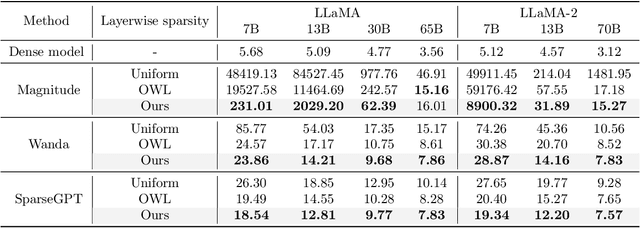

Recent work on pruning large language models (LLMs) has shown that one can eliminate a large number of parameters without compromising performance, making pruning a promising strategy to reduce LLM model size. Existing LLM pruning strategies typically assign uniform pruning ratios across layers, limiting overall pruning ability; and recent work on layerwise pruning of LLMs is often based on heuristics that can easily lead to suboptimal performance. In this paper, we leverage Heavy-Tailed Self-Regularization (HT-SR) Theory, in particular the shape of empirical spectral densities (ESDs) of weight matrices, to design improved layerwise pruning ratios for LLMs. Our analysis reveals a wide variability in how well-trained, and thus relatedly how prunable, different layers of an LLM are. Based on this, we propose AlphaPruning, which uses shape metrics to allocate layerwise sparsity ratios in a more theoretically principled manner. AlphaPruning can be used in conjunction with multiple existing LLM pruning methods. Our empirical results show that AlphaPruning prunes LLaMA-7B to 80% sparsity while maintaining reasonable perplexity, marking a first in the literature on LLMs. We have open-sourced our code at https://github.com/haiquanlu/AlphaPruning.

Elucidating the Design Choice of Probability Paths in Flow Matching for Forecasting
Oct 04, 2024Flow matching has recently emerged as a powerful paradigm for generative modeling and has been extended to probabilistic time series forecasting in latent spaces. However, the impact of the specific choice of probability path model on forecasting performance remains under-explored. In this work, we demonstrate that forecasting spatio-temporal data with flow matching is highly sensitive to the selection of the probability path model. Motivated by this insight, we propose a novel probability path model designed to improve forecasting performance. Our empirical results across various dynamical system benchmarks show that our model achieves faster convergence during training and improved predictive performance compared to existing probability path models. Importantly, our approach is efficient during inference, requiring only a few sampling steps. This makes our proposed model practical for real-world applications and opens new avenues for probabilistic forecasting.
Mitigating Memorization In Language Models
Oct 03, 2024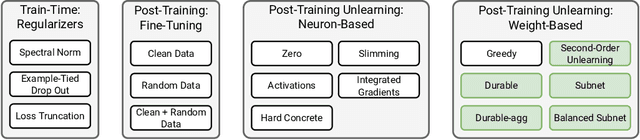

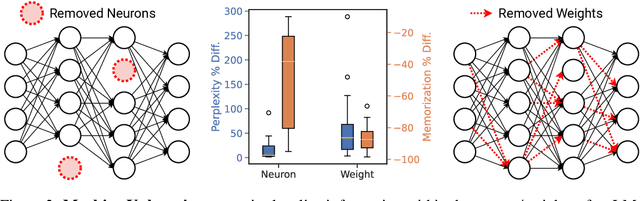

Language models (LMs) can "memorize" information, i.e., encode training data in their weights in such a way that inference-time queries can lead to verbatim regurgitation of that data. This ability to extract training data can be problematic, for example, when data are private or sensitive. In this work, we investigate methods to mitigate memorization: three regularizer-based, three finetuning-based, and eleven machine unlearning-based methods, with five of the latter being new methods that we introduce. We also introduce TinyMem, a suite of small, computationally-efficient LMs for the rapid development and evaluation of memorization-mitigation methods. We demonstrate that the mitigation methods that we develop using TinyMem can successfully be applied to production-grade LMs, and we determine via experiment that: regularizer-based mitigation methods are slow and ineffective at curbing memorization; fine-tuning-based methods are effective at curbing memorization, but overly expensive, especially for retaining higher accuracies; and unlearning-based methods are faster and more effective, allowing for the precise localization and removal of memorized information from LM weights prior to inference. We show, in particular, that our proposed unlearning method BalancedSubnet outperforms other mitigation methods at removing memorized information while preserving performance on target tasks.
Tuning Frequency Bias of State Space Models
Oct 02, 2024


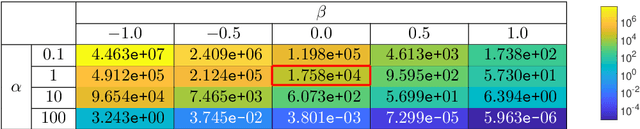
State space models (SSMs) leverage linear, time-invariant (LTI) systems to effectively learn sequences with long-range dependencies. By analyzing the transfer functions of LTI systems, we find that SSMs exhibit an implicit bias toward capturing low-frequency components more effectively than high-frequency ones. This behavior aligns with the broader notion of frequency bias in deep learning model training. We show that the initialization of an SSM assigns it an innate frequency bias and that training the model in a conventional way does not alter this bias. Based on our theory, we propose two mechanisms to tune frequency bias: either by scaling the initialization to tune the inborn frequency bias; or by applying a Sobolev-norm-based filter to adjust the sensitivity of the gradients to high-frequency inputs, which allows us to change the frequency bias via training. Using an image-denoising task, we empirically show that we can strengthen, weaken, or even reverse the frequency bias using both mechanisms. By tuning the frequency bias, we can also improve SSMs' performance on learning long-range sequences, averaging an 88.26% accuracy on the Long-Range Arena (LRA) benchmark tasks.
Learning Physics for Unveiling Hidden Earthquake Ground Motions via Conditional Generative Modeling
Jul 21, 2024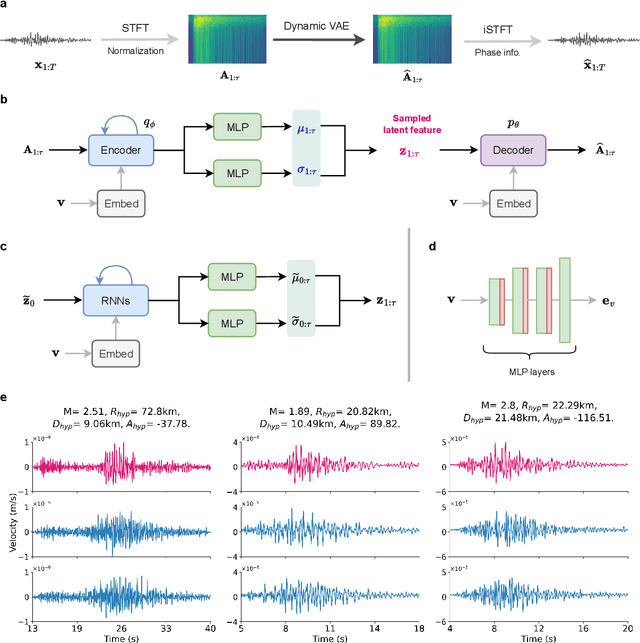
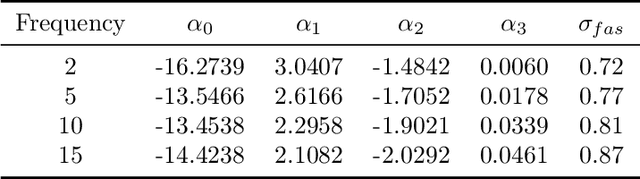
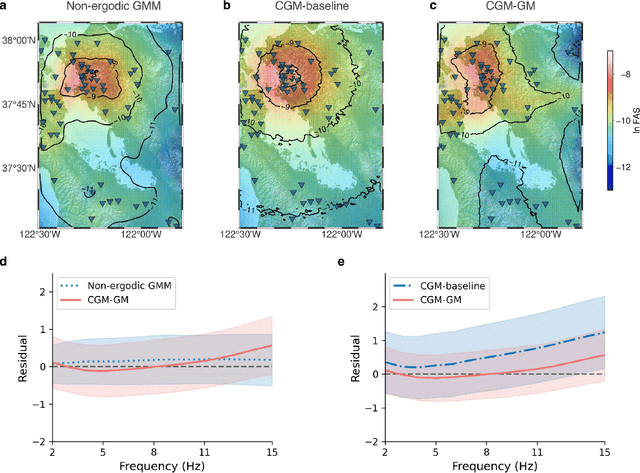
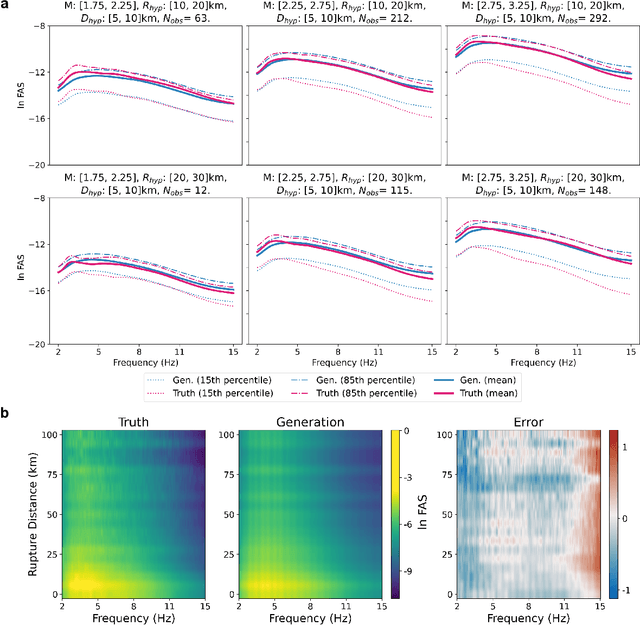
Predicting high-fidelity ground motions for future earthquakes is crucial for seismic hazard assessment and infrastructure resilience. Conventional empirical simulations suffer from sparse sensor distribution and geographically localized earthquake locations, while physics-based methods are computationally intensive and require accurate representations of Earth structures and earthquake sources. We propose a novel artificial intelligence (AI) simulator, Conditional Generative Modeling for Ground Motion (CGM-GM), to synthesize high-frequency and spatially continuous earthquake ground motion waveforms. CGM-GM leverages earthquake magnitudes and geographic coordinates of earthquakes and sensors as inputs, learning complex wave physics and Earth heterogeneities, without explicit physics constraints. This is achieved through a probabilistic autoencoder that captures latent distributions in the time-frequency domain and variational sequential models for prior and posterior distributions. We evaluate the performance of CGM-GM using small-magnitude earthquake records from the San Francisco Bay Area, a region with high seismic risks. CGM-GM demonstrates a strong potential for outperforming a state-of-the-art non-ergodic empirical ground motion model and shows great promise in seismology and beyond.
Comparing and Contrasting Deep Learning Weather Prediction Backbones on Navier-Stokes and Atmospheric Dynamics
Jul 19, 2024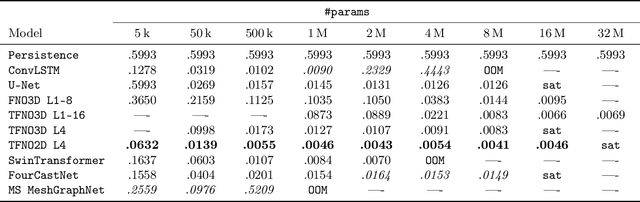
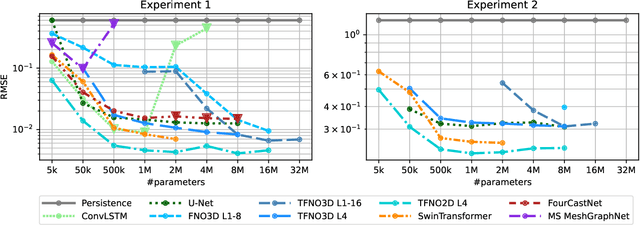
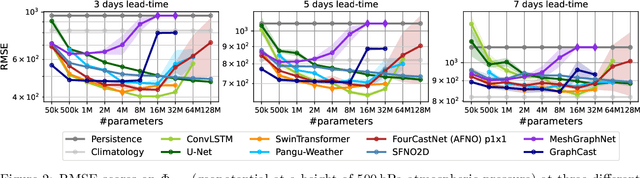
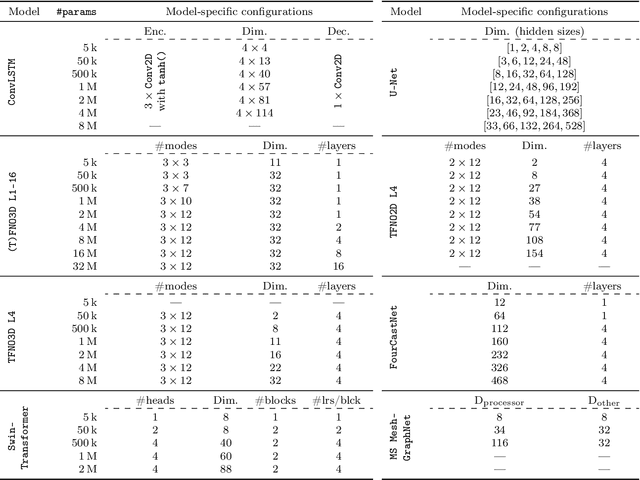
Remarkable progress in the development of Deep Learning Weather Prediction (DLWP) models positions them to become competitive with traditional numerical weather prediction (NWP) models. Indeed, a wide number of DLWP architectures -- based on various backbones, including U-Net, Transformer, Graph Neural Network (GNN), and Fourier Neural Operator (FNO) -- have demonstrated their potential at forecasting atmospheric states. However, due to differences in training protocols, forecast horizons, and data choices, it remains unclear which (if any) of these methods and architectures are most suitable for weather forecasting and for future model development. Here, we step back and provide a detailed empirical analysis, under controlled conditions, comparing and contrasting the most prominent DLWP models, along with their backbones. We accomplish this by predicting synthetic two-dimensional incompressible Navier-Stokes and real-world global weather dynamics. In terms of accuracy, memory consumption, and runtime, our results illustrate various tradeoffs. For example, on synthetic data, we observe favorable performance of FNO; and on the real-world WeatherBench dataset, our results demonstrate the suitability of ConvLSTM and SwinTransformer for short-to-mid-ranged forecasts. For long-ranged weather rollouts of up to 365 days, we observe superior stability and physical soundness in architectures that formulate a spherical data representation, i.e., GraphCast and Spherical FNO. In addition, we observe that all of these model backbones ``saturate,'' i.e., none of them exhibit so-called neural scaling, which highlights an important direction for future work on these and related models.
Sharpness-diversity tradeoff: improving flat ensembles with SharpBalance
Jul 17, 2024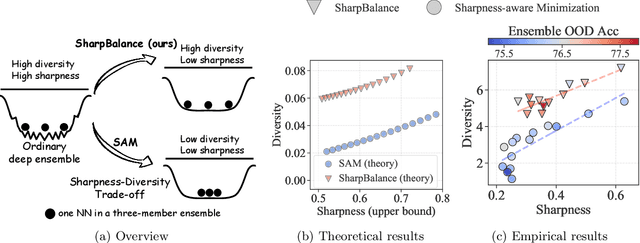
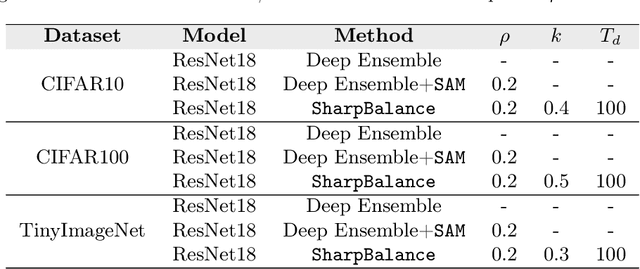
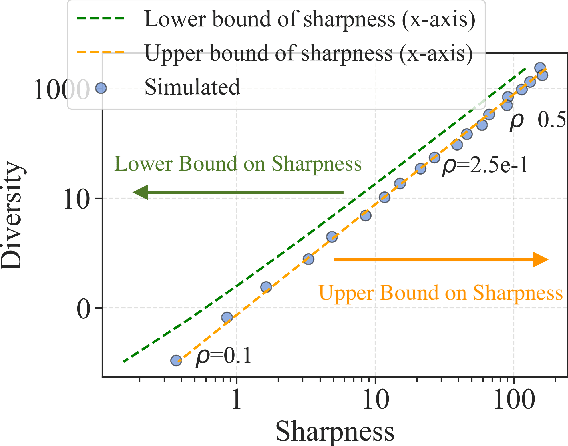

Recent studies on deep ensembles have identified the sharpness of the local minima of individual learners and the diversity of the ensemble members as key factors in improving test-time performance. Building on this, our study investigates the interplay between sharpness and diversity within deep ensembles, illustrating their crucial role in robust generalization to both in-distribution (ID) and out-of-distribution (OOD) data. We discover a trade-off between sharpness and diversity: minimizing the sharpness in the loss landscape tends to diminish the diversity of individual members within the ensemble, adversely affecting the ensemble's improvement. The trade-off is justified through our theoretical analysis and verified empirically through extensive experiments. To address the issue of reduced diversity, we introduce SharpBalance, a novel training approach that balances sharpness and diversity within ensembles. Theoretically, we show that our training strategy achieves a better sharpness-diversity trade-off. Empirically, we conducted comprehensive evaluations in various data sets (CIFAR-10, CIFAR-100, TinyImageNet) and showed that SharpBalance not only effectively improves the sharpness-diversity trade-off, but also significantly improves ensemble performance in ID and OOD scenarios.
Reliable edge machine learning hardware for scientific applications
Jun 27, 2024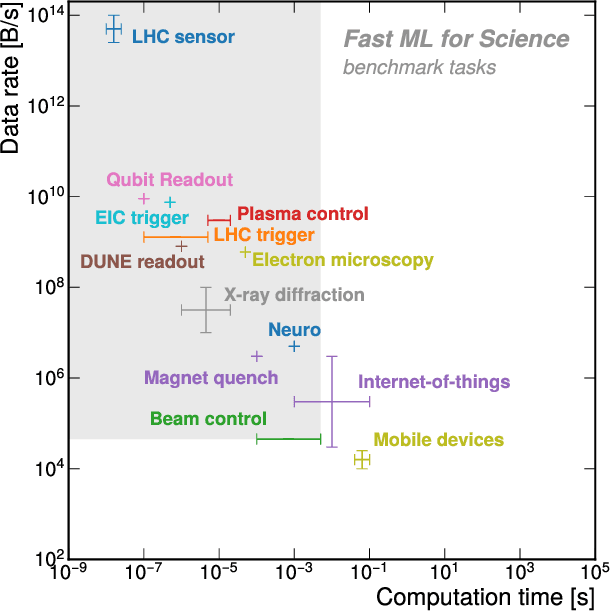
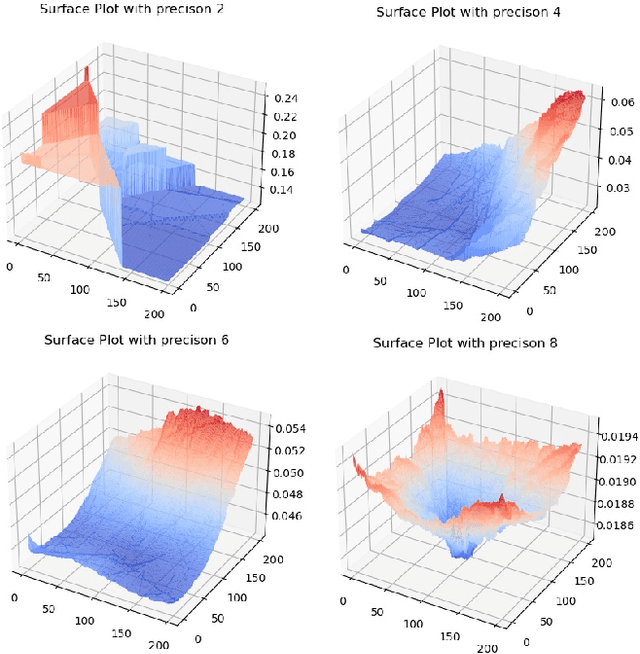
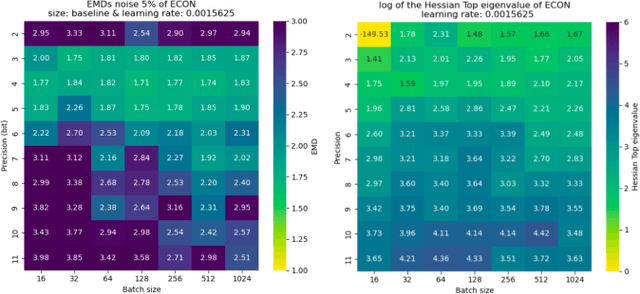
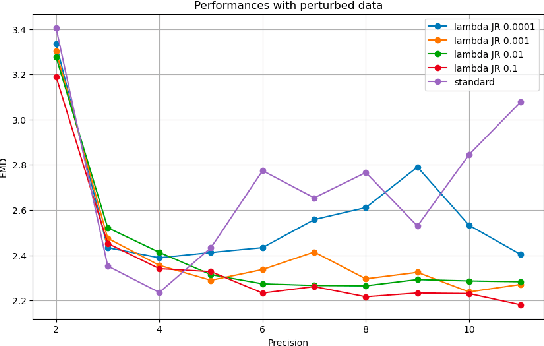
Extreme data rate scientific experiments create massive amounts of data that require efficient ML edge processing. This leads to unique validation challenges for VLSI implementations of ML algorithms: enabling bit-accurate functional simulations for performance validation in experimental software frameworks, verifying those ML models are robust under extreme quantization and pruning, and enabling ultra-fine-grained model inspection for efficient fault tolerance. We discuss approaches to developing and validating reliable algorithms at the scientific edge under such strict latency, resource, power, and area requirements in extreme experimental environments. We study metrics for developing robust algorithms, present preliminary results and mitigation strategies, and conclude with an outlook of these and future directions of research towards the longer-term goal of developing autonomous scientific experimentation methods for accelerated scientific discovery.
Recent and Upcoming Developments in Randomized Numerical Linear Algebra for Machine Learning
Jun 17, 2024


Large matrices arise in many machine learning and data analysis applications, including as representations of datasets, graphs, model weights, and first and second-order derivatives. Randomized Numerical Linear Algebra (RandNLA) is an area which uses randomness to develop improved algorithms for ubiquitous matrix problems. The area has reached a certain level of maturity; but recent hardware trends, efforts to incorporate RandNLA algorithms into core numerical libraries, and advances in machine learning, statistics, and random matrix theory, have lead to new theoretical and practical challenges. This article provides a self-contained overview of RandNLA, in light of these developments.
Towards Scalable and Versatile Weight Space Learning
Jun 14, 2024Learning representations of well-trained neural network models holds the promise to provide an understanding of the inner workings of those models. However, previous work has either faced limitations when processing larger networks or was task-specific to either discriminative or generative tasks. This paper introduces the SANE approach to weight-space learning. SANE overcomes previous limitations by learning task-agnostic representations of neural networks that are scalable to larger models of varying architectures and that show capabilities beyond a single task. Our method extends the idea of hyper-representations towards sequential processing of subsets of neural network weights, thus allowing one to embed larger neural networks as a set of tokens into the learned representation space. SANE reveals global model information from layer-wise embeddings, and it can sequentially generate unseen neural network models, which was unattainable with previous hyper-representation learning methods. Extensive empirical evaluation demonstrates that SANE matches or exceeds state-of-the-art performance on several weight representation learning benchmarks, particularly in initialization for new tasks and larger ResNet architectures.