 Add to Chrome
 Add to Firefox
 Add to Edge
GAMMA: Generalizable Articulation Modeling and Manipulation for Articulated Objects
Oct 04, 2023
Articulated objects like cabinets and doors are widespread in daily life. However, directly manipulating 3D articulated objects is challenging because they have diverse geometrical shapes, semantic categories, and kinetic constraints. Prior works mostly focused on recognizing and manipulating articulated objects with specific joint types. They can either estimate the joint parameters or distinguish suitable grasp poses to facilitate trajectory planning. Although these approaches have succeeded in certain types of articulated objects, they lack generalizability to unseen objects, which significantly impedes their application in broader scenarios. In this paper, we propose a novel framework of Generalizable Articulation Modeling and Manipulating for Articulated Objects (GAMMA), which learns both articulation modeling and grasp pose affordance from diverse articulated objects with different categories. In addition, GAMMA adopts adaptive manipulation to iteratively reduce the modeling errors and enhance manipulation performance. We train GAMMA with the PartNet-Mobility dataset and evaluate with comprehensive experiments in SAPIEN simulation and real-world Franka robot. Results show that GAMMA significantly outperforms SOTA articulation modeling and manipulation algorithms in unseen and cross-category articulated objects. We will open-source all codes and datasets in both simulation and real robots for reproduction in the final version. Images and videos are published on the project website at: http://sites.google.com/view/gamma-articulation

Differentiable Frank-Wolfe Optimization Layer
Aug 21, 2023Differentiable optimization has received a significant amount of attention due to its foundational role in the domain of machine learning based on neural networks. The existing methods leverages the optimality conditions and implicit function theorem to obtain the Jacobian matrix of the output, which increases the computational cost and limits the application of differentiable optimization. In addition, some non-differentiable constraints lead to more challenges when using prior differentiable optimization layers. This paper proposes a differentiable layer, named Differentiable Frank-Wolfe Layer (DFWLayer), by rolling out the Frank-Wolfe method, a well-known optimization algorithm which can solve constrained optimization problems without projections and Hessian matrix computations, thus leading to a efficient way of dealing with large-scale problems. Theoretically, we establish a bound on the suboptimality gap of the DFWLayer in the context of l1-norm constraints. Experimental assessments demonstrate that the DFWLayer not only attains competitive accuracy in solutions and gradients but also consistently adheres to constraints. Moreover, it surpasses the baselines in both forward and backward computational speeds.
Image-based Geolocalization by Ground-to-2.5D Map Matching
Aug 11, 2023We study the image-based geolocalization problem that aims to locate ground-view query images on cartographic maps. Previous methods often utilize cross-view localization techniques to match ground-view query images with 2D maps. However, the performance of these methods is frequently unsatisfactory due to the significant cross-view appearance differences. In this paper, we extend cross-view matching to 2.5D spaces, where the heights of the structures - such as trees, buildings, and other objects - can provide additional information to guide the cross-view matching. We present a new approach to learning representative embeddings from multi-model data. Specifically, we first align 2D maps to ground-view panoramic images with polar transform to reduce the gap between panoramic images and maps. Then we leverage global fusion to fuse the multi-modal features from 2D and 2.5D maps to increase the distinctiveness of location embeddings. We construct the first large-scale ground-to-2.5D map geolocalization dataset to validate our method and facilitate the research. We test our learned embeddings on two popular localization approaches, i.e., single-image based localization, and route based localization. Extensive experiments demonstrate that our proposed method achieves significantly higher localization accuracy and faster convergence than previous 2D map-based approaches.
ROFusion: Efficient Object Detection using Hybrid Point-wise Radar-Optical Fusion
Jul 17, 2023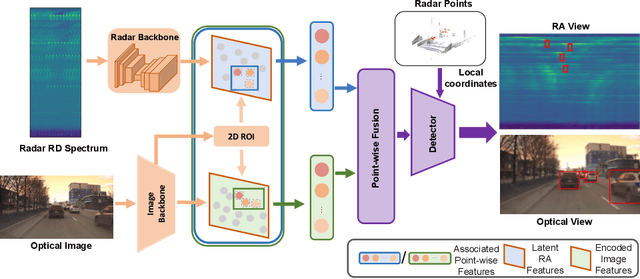
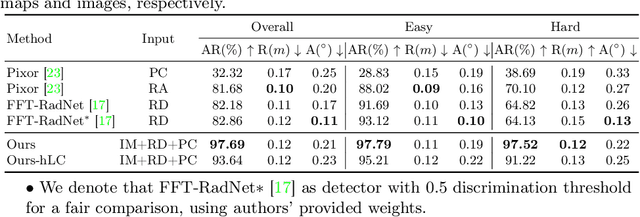
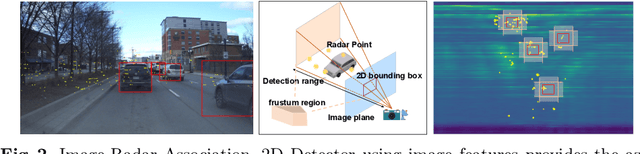
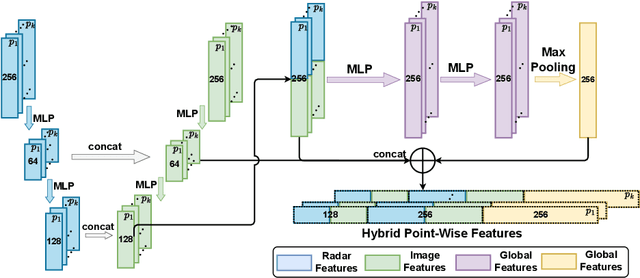
Radars, due to their robustness to adverse weather conditions and ability to measure object motions, have served in autonomous driving and intelligent agents for years. However, Radar-based perception suffers from its unintuitive sensing data, which lack of semantic and structural information of scenes. To tackle this problem, camera and Radar sensor fusion has been investigated as a trending strategy with low cost, high reliability and strong maintenance. While most recent works explore how to explore Radar point clouds and images, rich contextual information within Radar observation are discarded. In this paper, we propose a hybrid point-wise Radar-Optical fusion approach for object detection in autonomous driving scenarios. The framework benefits from dense contextual information from both the range-doppler spectrum and images which are integrated to learn a multi-modal feature representation. Furthermore, we propose a novel local coordinate formulation, tackling the object detection task in an object-centric coordinate. Extensive results show that with the information gained from optical images, we could achieve leading performance in object detection (97.69\% recall) compared to recent state-of-the-art methods FFT-RadNet (82.86\% recall). Ablation studies verify the key design choices and practicability of our approach given machine generated imperfect detections. The code will be available at https://github.com/LiuLiu-55/ROFusion.
GujiBERT and GujiGPT: Construction of Intelligent Information Processing Foundation Language Models for Ancient Texts
Jul 11, 2023
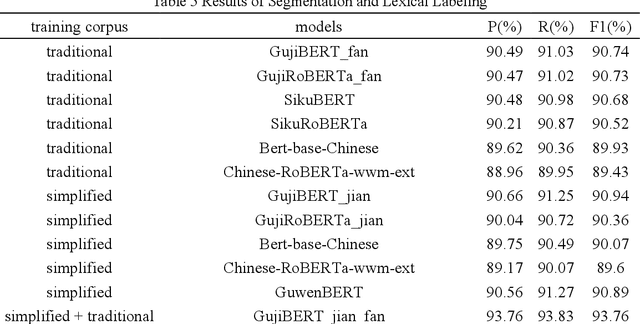
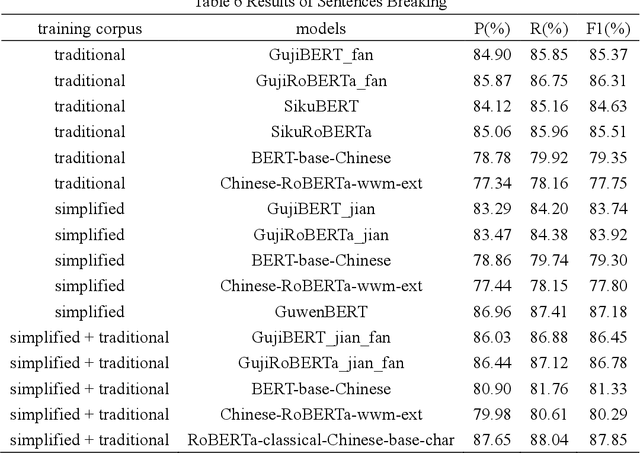
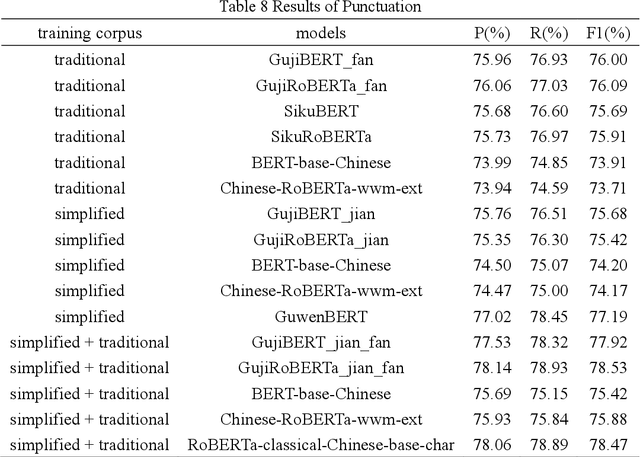
In the context of the rapid development of large language models, we have meticulously trained and introduced the GujiBERT and GujiGPT language models, which are foundational models specifically designed for intelligent information processing of ancient texts. These models have been trained on an extensive dataset that encompasses both simplified and traditional Chinese characters, allowing them to effectively handle various natural language processing tasks related to ancient books, including but not limited to automatic sentence segmentation, punctuation, word segmentation, part-of-speech tagging, entity recognition, and automatic translation. Notably, these models have exhibited exceptional performance across a range of validation tasks using publicly available datasets. Our research findings highlight the efficacy of employing self-supervised methods to further train the models using classical text corpora, thus enhancing their capability to tackle downstream tasks. Moreover, it is worth emphasizing that the choice of font, the scale of the corpus, and the initial model selection all exert significant influence over the ultimate experimental outcomes. To cater to the diverse text processing preferences of researchers in digital humanities and linguistics, we have developed three distinct categories comprising a total of nine model variations. We believe that by sharing these foundational language models specialized in the domain of ancient texts, we can facilitate the intelligent processing and scholarly exploration of ancient literary works and, consequently, contribute to the global dissemination of China's rich and esteemed traditional culture in this new era.
On Exploring Node-feature and Graph-structure Diversities for Node Drop Graph Pooling
Jun 22, 2023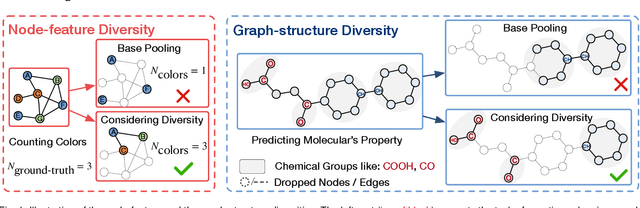
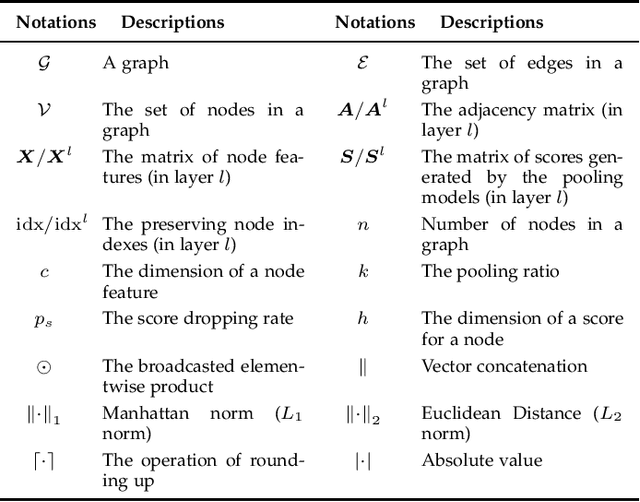
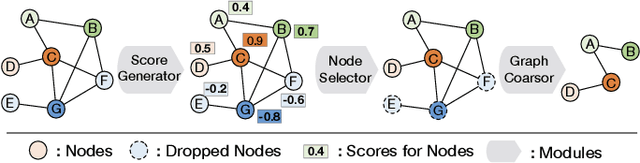
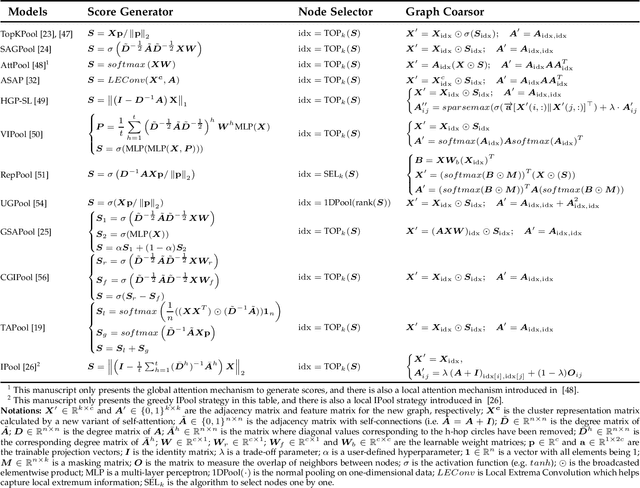
A pooling operation is essential for effective graph-level representation learning, where the node drop pooling has become one mainstream graph pooling technology. However, current node drop pooling methods usually keep the top-k nodes according to their significance scores, which ignore the graph diversity in terms of the node features and the graph structures, thus resulting in suboptimal graph-level representations. To address the aforementioned issue, we propose a novel plug-and-play score scheme and refer to it as MID, which consists of a \textbf{M}ultidimensional score space with two operations, \textit{i.e.}, fl\textbf{I}pscore and \textbf{D}ropscore. Specifically, the multidimensional score space depicts the significance of nodes through multiple criteria; the flipscore encourages the maintenance of dissimilar node features; and the dropscore forces the model to notice diverse graph structures instead of being stuck in significant local structures. To evaluate the effectiveness of our proposed MID, we perform extensive experiments by applying it to a wide variety of recent node drop pooling methods, including TopKPool, SAGPool, GSAPool, and ASAP. Specifically, the proposed MID can efficiently and consistently achieve about 2.8\% average improvements over the above four methods on seventeen real-world graph classification datasets, including four social datasets (IMDB-BINARY, IMDB-MULTI, REDDIT-BINARY, and COLLAB), and thirteen biochemical datasets (D\&D, PROTEINS, NCI1, MUTAG, PTC-MR, NCI109, ENZYMES, MUTAGENICITY, FRANKENSTEIN, HIV, BBBP, TOXCAST, and TOX21). Code is available at~\url{https://github.com/whuchuang/mid}.
One-shot neural band selection for spectral recovery
May 16, 2023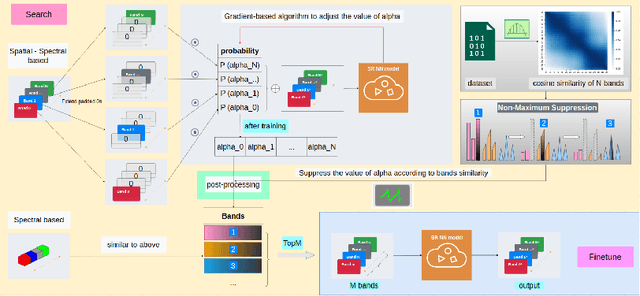


Band selection has a great impact on the spectral recovery quality. To solve this ill-posed inverse problem, most band selection methods adopt hand-crafted priors or exploit clustering or sparse regularization constraints to find most prominent bands. These methods are either very slow due to the computational cost of repeatedly training with respect to different selection frequencies or different band combinations. Many traditional methods rely on the scene prior and thus are not applicable to other scenarios. In this paper, we present a novel one-shot Neural Band Selection (NBS) framework for spectral recovery. Unlike conventional searching approaches with a discrete search space and a non-differentiable search strategy, our NBS is based on the continuous relaxation of the band selection process, thus allowing efficient band search using gradient descent. To enable the compatibility for se- lecting any number of bands in one-shot, we further exploit the band-wise correlation matrices to progressively suppress similar adjacent bands. Extensive evaluations on the NTIRE 2022 Spectral Reconstruction Challenge demonstrate that our NBS achieves consistent performance gains over competitive baselines when examined with four different spectral recov- ery methods. Our code will be publicly available.
Reweighted Mixup for Subpopulation Shift
Apr 09, 2023Subpopulation shift exists widely in many real-world applications, which refers to the training and test distributions that contain the same subpopulation groups but with different subpopulation proportions. Ignoring subpopulation shifts may lead to significant performance degradation and fairness concerns. Importance reweighting is a classical and effective way to handle the subpopulation shift. However, recent studies have recognized that most of these approaches fail to improve the performance especially when applied to over-parameterized neural networks which are capable of fitting any training samples. In this work, we propose a simple yet practical framework, called reweighted mixup (RMIX), to mitigate the overfitting issue in over-parameterized models by conducting importance weighting on the ''mixed'' samples. Benefiting from leveraging reweighting in mixup, RMIX allows the model to explore the vicinal space of minority samples more, thereby obtaining more robust model against subpopulation shift. When the subpopulation memberships are unknown, the training-trajectories-based uncertainty estimation is equipped in the proposed RMIX to flexibly characterize the subpopulation distribution. We also provide insightful theoretical analysis to verify that RMIX achieves better generalization bounds over prior works. Further, we conduct extensive empirical studies across a wide range of tasks to validate the effectiveness of the proposed method.
Deploying Offline Reinforcement Learning with Human Feedback
Mar 13, 2023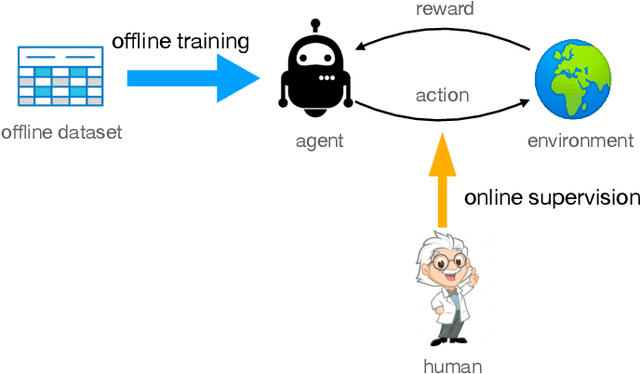
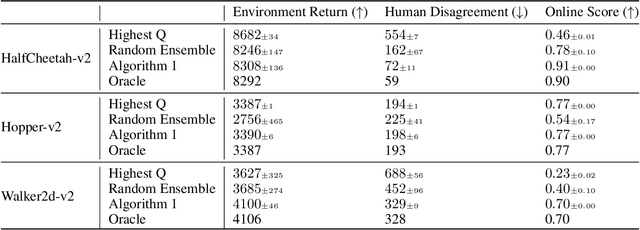
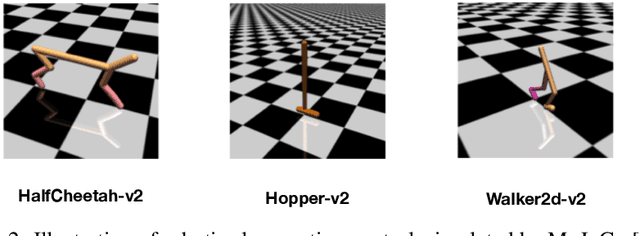
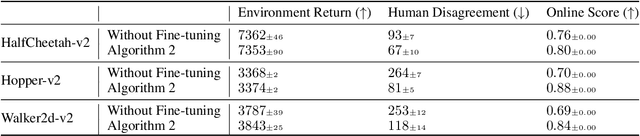
Reinforcement learning (RL) has shown promise for decision-making tasks in real-world applications. One practical framework involves training parameterized policy models from an offline dataset and subsequently deploying them in an online environment. However, this approach can be risky since the offline training may not be perfect, leading to poor performance of the RL models that may take dangerous actions. To address this issue, we propose an alternative framework that involves a human supervising the RL models and providing additional feedback in the online deployment phase. We formalize this online deployment problem and develop two approaches. The first approach uses model selection and the upper confidence bound algorithm to adaptively select a model to deploy from a candidate set of trained offline RL models. The second approach involves fine-tuning the model in the online deployment phase when a supervision signal arrives. We demonstrate the effectiveness of these approaches for robot locomotion control and traffic light control tasks through empirical validation.
CyberLoc: Towards Accurate Long-term Visual Localization
Jan 06, 2023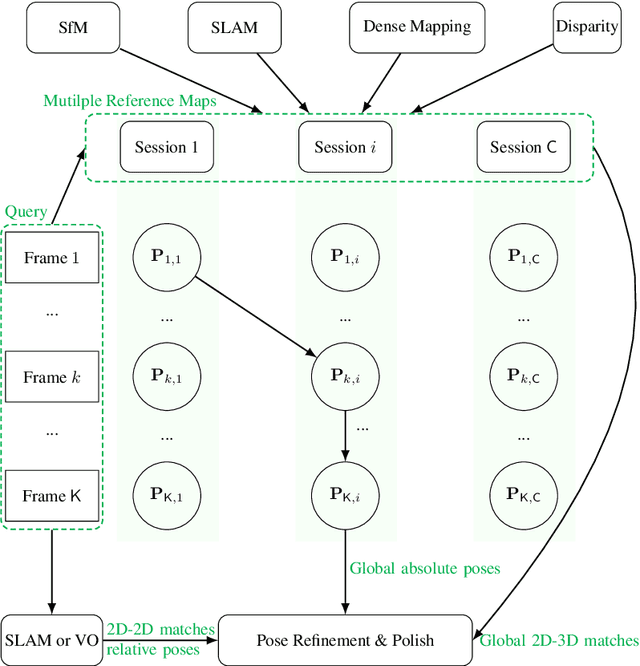

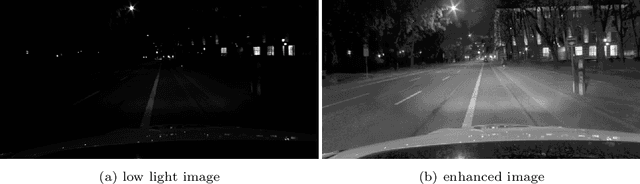
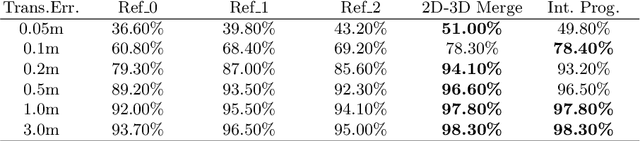
This technical report introduces CyberLoc, an image-based visual localization pipeline for robust and accurate long-term pose estimation under challenging conditions. The proposed method comprises four modules connected in a sequence. First, a mapping module is applied to build accurate 3D maps of the scene, one map for each reference sequence if there exist multiple reference sequences under different conditions. Second, a single-image-based localization pipeline (retrieval--matching--PnP) is performed to estimate 6-DoF camera poses for each query image, one for each 3D map. Third, a consensus set maximization module is proposed to filter out outlier 6-DoF camera poses, and outputs one 6-DoF camera pose for a query. Finally, a robust pose refinement module is proposed to optimize 6-DoF query poses, taking candidate global 6-DoF camera poses and their corresponding global 2D-3D matches, sparse 2D-2D feature matches between consecutive query images and SLAM poses of the query sequence as input. Experiments on the 4seasons dataset show that our method achieves high accuracy and robustness. In particular, our approach wins the localization challenge of ECCV 2022 workshop on Map-based Localization for Autonomous Driving (MLAD-ECCV2022).